

For system integrators, panel builders, procurement teams and electrical engineers, a 4U 19-inch chassis is not just a mechanical box. It is the mounting interface that determines whether power supplies, controllers, measurement electronics, cabling, cooling airflow and service access can be integrated without last-minute redesign. The TPS 4U-Chassis is a rack-compatible 19-inch chassis platform for industrial electronics, power supply integration and project-specific rack assemblies where mechanical fit, material quality and RFQ clarity matter from the first quotation.
Use this article to qualify the 4U-Chassis for your next rack-based system, compare the key dimensions, define the right RFQ data package and decide when a standard chassis is enough – or when TPS should support a complete 19-inch cabinet, power distribution and integration concept.
View TPS 4U-Chassis product pageDiscuss a 19-inch chassis solution
Why 4U chassis selection affects RFQ risk
In a BoFu purchasing situation, most buyers already know that they need a 19-inch rack mount chassis. The remaining question is whether the selected chassis will help the project move through mechanical review, electrical integration, procurement approval and final commissioning without rework. A 4U chassis is often chosen because it gives more vertical room than 1U to 3U formats while still preserving valuable rack space. That extra space can be critical for power modules, heat sinks, fans, cable bend radius, terminal areas, control boards or serviceable subassemblies.
The risk appears when the chassis is treated as a commodity. A low-cost enclosure can look acceptable in a drawing and still fail during integration because the hole spacing is not aligned with the rack, the rear panel cannot be adapted to connectors, the surface finish is unsuitable for the environment, or internal components cannot be accessed safely. For system integrators, the mechanical platform must support the entire electrical architecture. For panel builders, it must fit into the rack or cabinet without field modification. For procurement, it must be orderable with clear article data and documentation. For electrical engineers, it must provide a stable base for wiring, grounding, thermal paths and maintenance.
That is why TPS positions the 4U-Chassis as part of a broader 19-inch power and electronics integration capability. A customer may start with a single chassis requirement, then need matching power supplies, programmable DC sources, regenerative loads, bidirectional power modules or a complete 19-inch cabinet. TPS can support both the product selection and the project-level discussion, which shortens the path from RFQ to a technically defensible quotation.
482.6 mm 19-inch format and mounting hole spacing
Power supplies, controls, test electronics and wiring
Airflow, rear panel openings and service clearance
Drawings, quantities, options and project timing
Figure: use the chassis decision as a structured RFQ process, not only as a part-number search.
TPS 4U-Chassis overview
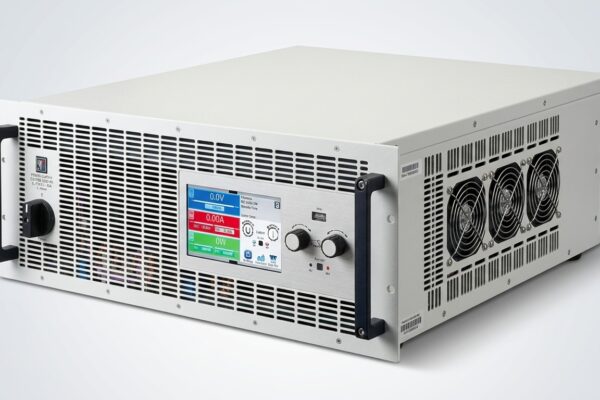
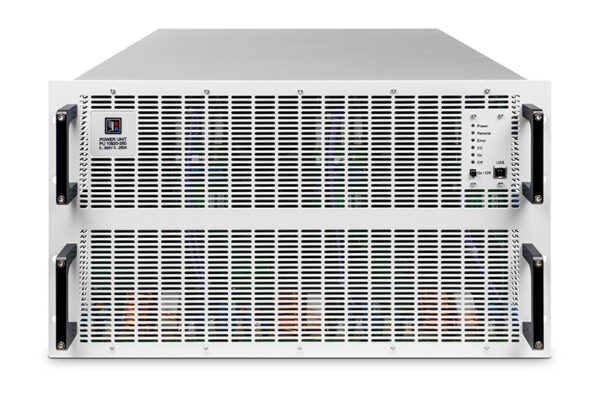
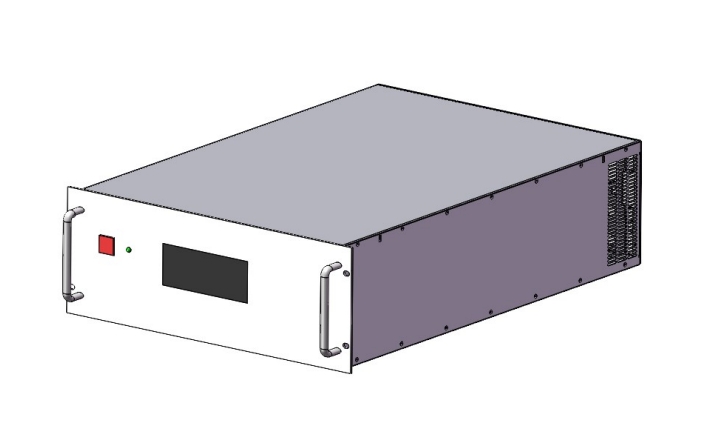
The TPS 4U-Chassis is a 19-inch rack mount chassis for industrial electronics and power-related assemblies. The shop listing identifies the product as TPS 4U Chassis BJ9900004, article number RA1079, manufacturer TPS. The platform follows the standard 482.6 mm 19-inch width and provides a 4U panel height of 177 mm. The overall depth is approximately 671 mm, giving the integrator meaningful internal room for modules, backplates, wiring and mechanical support parts.
From a supplier qualification perspective, the important point is not only the nominal size. The chassis is built with sheet steel, aluminum and galvanized plate construction. The front plate, side plates, top plate and bottom plate are powder-coated. The rear plate can be powder-coated or nickel-coated, depending on the requirement. Handles use colorless oxidation. The standard visual finish is RAL 7035, with customization possible for project or customer branding requirements.
The product supply includes the front plate, side plates, top and bottom plates and handle. For an RFQ, this makes the mechanical scope clear: the buyer is sourcing the chassis platform, while the final integrated system may still require power modules, connectors, fans, cable routing components, protective devices, labels, documentation and testing. TPS can help define that boundary. For projects that need a wider cabinet concept, the TPS 19-inch cabinets and chassis solution page is the right place to start the consultation.
Engineers comparing 4U with larger formats can also review the TPS article on 6U 19-inch chassis power supply integration. The 4U version is typically attractive when the project needs more integration space than a slim chassis, but does not require the vertical capacity of a 6U drawer or a full custom cabinet.
Key technical parameters and dimensions
A 4U chassis should be evaluated with the same discipline as any electromechanical component in an industrial rack. The TPS 4U-Chassis uses a 482.6 mm overall width, a 465 mm mounting hole spacing and a 449 mm case body width. For the 4U version, the panel height is 177 mm, the vertical mounting hole spacing is 101.6 mm, and the handle spacing in the height direction is 125/128 mm. The case body depth is 666 mm; the overall depth is 670.5 mm, commonly rounded to approximately 671 mm in purchasing discussions. Handle depth options are 35/38 mm.
These values should be checked against the target rack, cabinet rail design, internal module depth and rear wiring space. Do not qualify the chassis by width only. In power electronics, the depth dimension is often more important than expected, because internal components need clearance for terminals, busbars, ferrules, cable markers, strain relief and airflow. A chassis that fits the rack can still be unsuitable if the rear connector area is too tight or if internal wiring cannot be serviced after installation.
| RFQ item | TPS 4U-Chassis reference data | Why it matters |
|---|---|---|
| Product reference | TPS 4U-Chassis BJ9900004, article RA1079 | Clear part identification for purchasing and repeat orders |
| Rack format | 482.6 mm / 19-inch width | Mechanical compatibility with standard rack concepts |
| Height | 4U, panel height 177 mm | Internal room for power modules, cooling and wiring |
| Depth | Case body 666 mm; overall 670.5 mm / approx. 671 mm | Defines internal module depth and rear service clearance |
| Material and finish | Sheet steel, aluminum, galvanized plate; RAL 7035 or custom finish | Supports durable industrial installation and project-specific appearance |
If your project must follow a formal 19-inch mechanical structure standard, align the mechanical review with the relevant IEC 60297 series documentation and project-specific rack requirements. The standard reference is useful for terminology and mechanical interfaces, but final suitability still depends on the actual rack, load, wiring, airflow and installation environment.
Overall width: 482.6 mm
Case body depth: 666 mm
Overall depth: approx. 671 mm
Figure: dimension checks should include front panel, case body, handles, rear wiring and service clearance.
Application fit for power and electronics systems
The 4U-Chassis is especially relevant for projects where the rack drawer must carry electronics that are larger, warmer or more service-sensitive than typical low-profile devices. Examples include industrial power supply assemblies, programmable power supply integration, DC test equipment, control electronics, monitoring modules, communication interfaces and compact subsystems for test benches. It can also serve as a mechanical platform for customer-specific devices where a stable 19-inch interface is needed without moving immediately to a full floor-standing cabinet.
For a rack system with DIN rail supplies, the chassis can be part of a larger cabinet design that also includes compact auxiliary power. TPS offers related DIN rail content such as the TPS010-100W GP Series compact switching power supply, the TPS030-130W Pro Series 24V DIN rail power supply and the TPS100-320W Peak DR+ power boost concept. These products address auxiliary or control power, while the 4U chassis provides the mechanical housing or rack interface for the related electronics.
For lab, test or production systems, the chassis decision is connected to the power architecture. A project may combine rack-mounted mechanics with a desktop or programmable power unit such as the EA-PS 3200-02 C programmable DC power supply or the EA-PSI 9000 DT programmable DC power platform. In higher-power test systems, TPS can also discuss related system elements such as regenerative DC loads, AC/DC bidirectional power modules for cell formation or 750V bidirectional power modules.
The core selection logic is simple: choose the 4U-Chassis when the payload, wiring and service requirements fit into a 4U envelope and when a rack-based mechanical platform is the right system architecture. Choose a larger chassis or cabinet when there is substantial power distribution, safety hardware, operator controls, high-current busbar work, cabinet-level cooling or documentation beyond a mechanical drawer. In that case, start with the TPS 19-inch cabinets and chassis consultation page and let TPS help define the mechanical and electrical scope together.
Integration, installation and service considerations
Mechanical integration and mounting
Before ordering, check the actual rack rail geometry, front panel clearance, handle clearance, load distribution and installation method. The product dimensions are suitable for 19-inch rack planning, but the final fit depends on the target cabinet and rails. If the chassis will carry heavy power components, specify whether additional internal brackets, rail support or reinforcement are needed. Procurement should ask for this early because mechanical extras can affect lead time and cost.
Thermal and airflow planning
Thermal performance is not defined by chassis size alone. Power electronics require a clear airflow path, predictable intake and exhaust zones, suitable perforations or fan areas and enough spacing around heat-generating components. When the 4U-Chassis is used with power supplies, DC loads or bidirectional modules, TPS can review the layout concept and help decide whether the chassis is sufficient or whether a cabinet-level cooling strategy is required. For high-density power systems, compare the 4U approach with a Sentinel-Y 42U 19-inch power cabinet concept, where power distribution, rack structure and safety features can be treated as one system.
Wiring, connectors and service access
Electrical engineers should define cable exits, connector areas, protective earth points, internal terminal locations and maintenance access before the RFQ is released. The rear plate can be a decisive element because it may carry connectors, filters, labels, cable glands or ventilation features. If the rear panel needs openings, plating options or custom machining, include that in the RFQ. A controlled definition avoids the common problem of ordering a standard chassis and then modifying it manually during assembly.
Confirm support depth, fasteners and load path.
Plan intake, exhaust and component spacing.
Define connectors, labels, ventilation and coatings.
Allow safe inspection and replacement paths.
Figure: integration risks are easier to solve before the RFQ than after the chassis has been purchased.
Standards, compliance and reliability checks
The TPS 4U-Chassis product page lists legislation and compliance references including RoHS, CE, WEEE and UKCA. For purchasing teams, the practical recommendation is to request the current compliance documents with the quotation, especially when the chassis is part of a regulated end product or exported project. For system builders, remember that chassis-level markings do not automatically certify the complete electrical system. Once the chassis is populated with power supplies, controllers, wiring, protective devices and user interfaces, the finished equipment must be evaluated according to the applicable system-level requirements.
In North American industrial control applications, cabinet or panel projects may need UL 508A-oriented engineering. TPS describes its custom 19-inch power cabinet solutions as supporting UL 508A-oriented engineering with alignment to NFPA 79 and ISO 13849 requirements where project scope requires it. This is most relevant when the project includes power distribution, protective architecture, emergency-stop functions, door interlocks, safety relays or remote control functions. A bare 4U chassis is a mechanical platform; a wired cabinet or integrated power system is a different compliance conversation.
Reliability should also be reviewed in mechanical terms: material selection, coating, corrosion exposure, vibration environment, rack support, maintenance access and thermal ageing. Sheet steel, aluminum and galvanized plate construction give the chassis a practical industrial basis, while powder coating and optional rear panel finish choices support different installation expectations. If vibration, transport shock or unusual environmental conditions are expected, include those conditions in the RFQ so TPS can advise whether standard execution, custom adaptation or a cabinet-level solution is the safer route.
RFQ checklist for fast supplier qualification
A good RFQ does more than ask for price and lead time. It allows TPS to confirm whether the standard 4U-Chassis is the right product, whether a small adaptation is needed or whether the project should be handled as a broader 19-inch integration concept. The following checklist helps system integrators, panel builders and procurement teams reduce clarification loops.
| RFQ question | Recommended input |
|---|---|
| Which chassis size is required? | Specify 4U, 19-inch rack installation and confirm target rack depth. |
| Which TPS product is being requested? | Reference the TPS 4U-Chassis product listing, article RA1079 / BJ9900004. |
| What will be installed inside? | Provide module list, weight, heat dissipation, connector positions and service requirements. |
| Is customization required? | Mention color, rear panel machining, coatings, ventilation, labeling or special mounting needs. |
| Is the chassis part of a full cabinet project? | Use the TPS 19-inch cabinets and chassis RFQ route when wiring, safety or power distribution is in scope. |
| What documentation is needed? | Ask for current datasheet, compliance documents and quotation-specific technical notes. |
When the RFQ includes a wider test or measurement setup, TPS can also help evaluate related instruments such as the ATO Series automotive tablet oscilloscope or supporting power architecture. This keeps the mechanical purchase aligned with the real electrical system instead of treating the chassis as an isolated component.
RA1079 / BJ9900004
Prototype to series
Color, rear panel, airflow
Datasheet and compliance
Figure: the clearer the RFQ package, the faster TPS can determine product fit or propose an adapted solution.
How TPS supports product and solution projects
TPS can provide this class of 19-inch chassis product and can also support the surrounding solution. That distinction matters for global B2B customers. Some buyers need a standard 4U rack mount chassis with clear article data and documentation. Others need a chassis as part of a custom rack, power cabinet, power supply integration, test system or production equipment package. TPS can help decide which route is appropriate before the purchase order is placed.
For a simple purchase, start with the 4U-Chassis product page and send the quantity, target delivery date and documentation requirements. For a project with electrical integration, cabinet architecture or safety-related requirements, use the TPS 19-inch cabinets and chassis consultation page. The commercial goal is not to force every customer into a custom solution; it is to make sure the selected scope matches the project risk.
For system integrators, TPS can support early architecture decisions and interface definition. For panel builders, TPS can help align the mechanical platform with cabinet construction, wiring and power distribution. For procurement, TPS can provide a cleaner supplier discussion around part numbers, options, documentation and repeatability. For electrical engineers, TPS can review the consequences of heat, cable routing, grounding and service access before the build phase.
Bring TPS into the RFQ when the chassis must support real-world integration, not just rack occupancy. Share the application, dimensional restrictions, installed components, environmental assumptions, required standards, annual quantity and any customization needs. TPS will help confirm whether the standard 4U-Chassis is the right choice, whether a modified chassis is required or whether a complete 19-inch cabinet solution will reduce integration risk.
Open the TPS 4U-Chassis listingRequest a 19-inch chassis or cabinet consultation
FAQ
What does 4U mean for this TPS chassis?
4U describes the rack height class. For the TPS 4U-Chassis, the panel height is 177 mm, with a standard 19-inch overall width of 482.6 mm and an overall depth of approximately 671 mm.
Can the 4U-Chassis be used for power supply integration?
Yes, it is suitable as a rack-based mechanical platform for power-related electronics when the payload, thermal concept, wiring and service access fit the 4U envelope. For higher-power systems or safety-related power distribution, TPS can also discuss a complete 19-inch cabinet concept.
Can TPS customize the chassis?
The standard finish is RAL 7035, and customization can be discussed for color, panel execution, rear panel details, ventilation or project-specific integration needs. Provide drawings or functional requirements with the RFQ.
Which compliance documents should procurement request?
Ask for the current datasheet and the current RoHS, CE, WEEE or UKCA documentation relevant to the order. If the chassis becomes part of a wired industrial control panel or machine system, the full system must be evaluated against the applicable project standards.
What information should be included in the RFQ?
Reference the TPS 4U-Chassis RA1079 / BJ9900004, required quantity, schedule, target rack, installed components, approximate weight, heat dissipation, rear panel requirements, customization wishes and documentation needs.