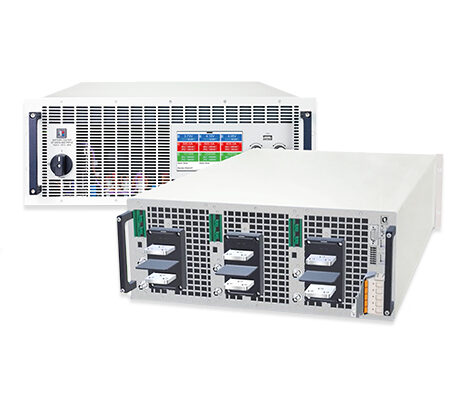


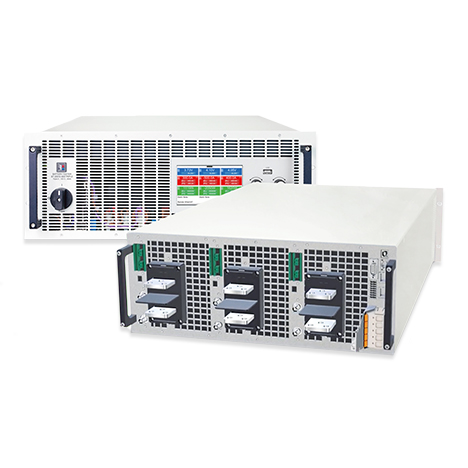
When an RFQ for battery, charger, fuel cell, or other high-power DC test equipment reaches the final supplier shortlist, the decision is rarely about whether a programmable load exists in the market. The real question is whether the selected platform reduces integration risk, supports the required voltage class, fits the cabinet concept, returns usable test data, and helps the project team move from specification to commissioning without avoidable redesigns. That is exactly where the EA-PUL 10000 6U class becomes relevant.
This 60 kW, 6U programmable regenerative DC load category fits a very specific BoFu requirement profile: system integrators need a stable test backbone, panel builders need realistic cabinet and wiring data, procurement needs a supplier that can quote the right voltage-current combination without ambiguity, and electrical engineers need confidence in control behavior, protection logic, and interface compatibility. The uploaded datasheet shows the core reasons this platform is attractive in that context: 380 V – 480 V three-phase AC input, active PFC around 0.99, regenerative operation with up to roughly 96% efficiency, CV/CC/CP/CR regulation modes, a 0 V to 2000 V model envelope, and parallel scalability up to 64 units in the 10000 series for very high-power systems.
For TPS, this is not just a catalog discussion. TPS can support this class of programmable DC load, related programmable power solutions, integration-oriented selection, and project-level consultation for global B2B customers. If your team is already evaluating voltage class, current envelope, cooling method, cabinet depth, industrial communication, and grid-feedback economics, you are in the exact stage where an RFQ should be shaped around application fit rather than brand familiarity. You can review the relevant product options directly through the 360 V / 480 A version, the 500 V / 360 A version, the 1000 V / 160 A version, or the 2000 V / 80 A version. For broader solution alignment, the best next step is to contact TPS about programmable power solutions.
Why this 6U programmable DC load class matters at the RFQ stage
In early research, buyers often compare product names. In late-stage evaluation, experienced teams compare risk concentration. A regenerative 6U, 60 kW DC load is usually selected because it consolidates three cost drivers at once: electrical performance, installation density, and operational efficiency. In practical terms, it lets a project team absorb significant DC power during test while feeding energy back to the grid instead of dissipating that power as heat. That changes facility planning, HVAC burden, and total test-cell economics.
For a BoFu reader, the value is not theoretical. The same platform can cover very different voltage-current windows by model selection instead of forcing a completely different cabinet concept for each project. In the 60 kW class, the series spans from low-voltage high-current work up to high-voltage lower-current use cases. That matters when one quotation package includes battery modules, another includes OBC test, and a third includes HV pack or fuel-cell stack work. Rather than over-specifying one dimension and compromising another, the RFQ can be built around the actual DUT envelope.
It is also important to avoid making the decision based on a familiar incumbent model alone. In many factories, an older reference product or previously approved vendor becomes the default. But for new projects, the right selection logic should focus on voltage class, current requirement at minimum DUT voltage, constant-power behavior, communication interfaces, parallel growth path, cooling method, and service coordination. TPS can support this solution-oriented comparison process and help align the chosen product to the project architecture instead of letting the architecture be distorted by a legacy preference.
| 360 V 480 A | 500 V 360 A | 750 V 240 A | 920 V 250 A | 1000 V 160 A | 1500 V 120 A | 2000 V 80 A |
What the datasheet means for supplier selection
The published data tells a serious buyer more than the headline 60 kW rating. First, the AC side is industrially realistic: 380 V – 480 V, plus 10%, three-phase input, 45 Hz – 65 Hz, with active power factor correction. That makes planning easier in globally distributed projects where site power conditions differ. Second, the platform is regenerative, which means absorbed DC energy can be returned to the local grid. In long duty-cycle validation work, that can significantly reduce both energy waste and cooling overhead.
Third, the load supports CV, CC, CP, and CR modes with fast crossover. That matters because many test procedures move between different control strategies instead of staying in a single static mode. Engineers also care about measurement credibility, and the datasheet addresses that with high-resolution digital control plus voltage accuracy up to 0.05% FS and current accuracy up to 0.1% FS. In an RFQ context, this is the type of information that supports repeatable test claims rather than generic “high precision” marketing language.
The model table is also useful for real selection work. If your DUT lives in the lower-voltage, higher-current range, the 360 V / 480 A or 500 V / 360 A variants will usually be the logical start. If your application is centered around EV pack, stack, or HV subsystem work, the 1000 V, 1500 V, or 2000 V classes deserve early attention. TPS can help interpret these ranges against actual operating points, because headline maximum voltage does not answer the most important question: what current is still available at the voltages that dominate your test cycle?
The same applies to autoranging. A programmable DC load with constant-power behavior can cover a wider practical window than a rigid fixed-ratio alternative. That is valuable when one lab or production line supports multiple DUT families. It can reduce the number of separate load platforms required, simplify spare strategy, and improve quote competitiveness for integrators who must offer scalable systems instead of one-off test benches.
For teams standardizing around automation and data collection, the interface set is another decision point. Built-in USB, Ethernet, analog, Master-Slave bus, and Share-Bus are already helpful. Optional industrial interfaces such as CAN, CANopen, RS232, Profibus, EtherCAT, Profinet, Modbus, and additional Ethernet variants make the platform easier to align with existing control architecture. If your project needs a lower-power desktop platform for development or pre-validation before moving into cabinet-level testing, TPS also provides context through related resources such as the EA-PS 3200 02 C desktop programmable DC power supply and the EA-PSI 9000 DT desktop programmable DC power supply.
Application fit: battery, OBC, fuel cell, and high-power DC test
According to the datasheet, typical target applications include battery testing for electro-mobility, fuel-cell testing, on-board charger testing, and battery recycling workflows. These examples are important because they reflect the kind of project environment in which RFQ criteria become demanding. A battery test project may need accurate discharge behavior, logging consistency, and system expandability. An OBC project may need stable dynamic interaction and adjustable control speed. A recycling or second-life project may need maximum discharge capability even at very low battery voltage. These are not the same engineering problems, even if they all use a “programmable electronic load.”
Battery test and battery pack validation
For battery module or pack work, the key questions are usually voltage class, discharge current, cycle reproducibility, energy cost, and system scaling. A regenerative load is valuable because long battery test programs consume a lot of energy. Returning that energy to the grid improves operating economics and reduces thermal stress inside the test area. If you already work on cell formation or AC/DC energy architecture, TPS’s related perspective on bidirectional power modules for cell formation can also help frame broader system design discussions.
OBC and fuel-cell test environments
On-board chargers and fuel-cell systems place a premium on control stability and interface fit. The datasheet highlights selectable controller speed, which is especially relevant when avoiding control-loop interaction between the DUT and the test device. For automated systems, that can be the difference between clean repeatable data and frustrating commissioning delays. In fuel-cell work, reproducibility and parallel expansion also matter, because current demand may grow from subsystem test to complete system validation.
Recycling and second-life assessment
For second-life assessment and controlled discharge before recycling, the wide operating range and constant-power behavior become commercially meaningful. Projects in this area often face varying initial conditions and strong pressure to process batteries safely, consistently, and with good energy efficiency. If your quotation package includes not only the DC load but also cabinet auxiliaries, TPS can support adjacent infrastructure planning through resources such as the TPS030-130W Pro DIN rail power supply and the TPS100-320W Peak DR+ DIN rail power supply, which are relevant for control power design in industrial cabinets.
| Higher voltage Lower current | → | 60 kW constant power window | → | Lower voltage Higher current |
Integration and installation considerations before PO release
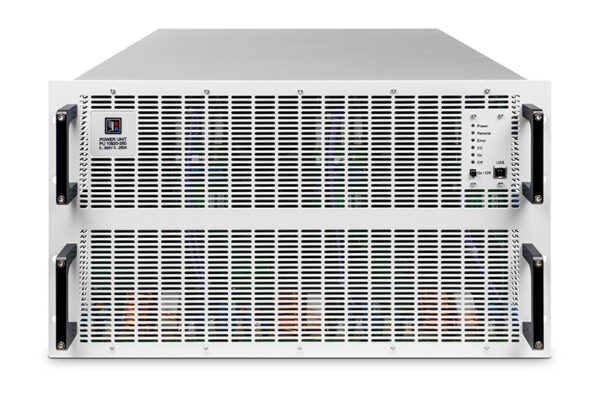
Many purchase problems are created before the order is placed, because integration questions are left unresolved until panel design or FAT. The 6U format helps avoid that. The datasheet provides usable physical information: 19-inch width, 6U height, 668 mm enclosure depth, and at least 818 mm overall depth. That means cabinet planners can verify rail position, rear clearance, cable bend radius, and service access before a layout is frozen. Weight is another real project input: about 76 kg for the air-cooled unit and about 82 kg for the water-cooled version.
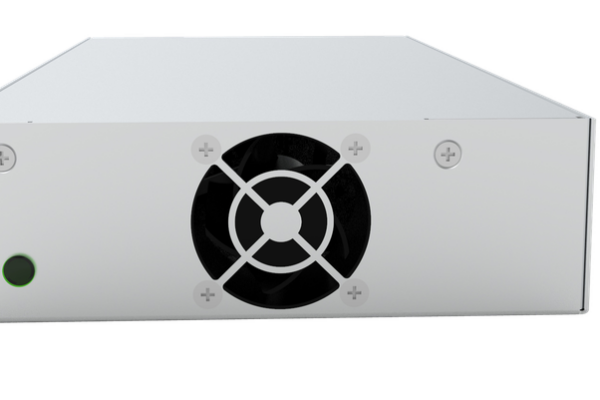
Cooling concept deserves special attention. Standard units use front-to-rear forced-air cooling with temperature-controlled fans. That fits many industrial rack environments, but it should still be checked against room temperature, cabinet ventilation, noise expectations, contamination exposure, and thermal density. If the installation is dense, ambient conditions are demanding, or the test area has stricter thermal requirements, the stainless-steel water-cooling option can be the better path. TPS can support that decision as part of a broader solution discussion instead of leaving the choice to guesswork.
On the DC side, the rear connection is designed for serious power handling through copper blades and parallel linking with vertical copper rails. This is not a minor detail. It affects busbar planning, protection concept, physical safety, and installation time. If the application is expected to grow, the built-in Master-Slave bus and Share-Bus should be considered from the start so the first cabinet does not become a dead-end architecture. According to the series concept, up to 64 units can be combined, and mixed power classes within the 10000 series can be used as long as the voltage class remains constant. That gives integrators flexibility when building staged systems.
Interface planning should also be finalized early. Analog programming and monitoring, Ethernet, USB, and optional fieldbus choices influence PLC mapping, HMI design, SCADA integration, and commissioning sequence. A small amount of pre-order clarification here can eliminate weeks of avoidable adjustment later. If your wider machine or line architecture needs dependable auxiliary 24 V control power, TPS can also support that layer through compact options such as the TPS010-100W GP DIN rail power supply.
| Front air intake | 6U 19-inch programmable DC load | Rear service and exhaust zone |
| Rear DC copper, AC, and I/O access | Optional water cooling |
Standards, protections, and reliability signals procurement should verify
Procurement teams and engineering leads often ask the same question in different language: can this platform survive approval, installation, and daily operation without becoming a support burden? The clearest answers come from the protection set, insulation data, and compliance references. Here the platform provides adjustable OVP, OCP, OPP, and overtemperature protection, plus defined insulation values between AC input, DC terminals, interfaces, and protective earth. These are the details that should be checked before quoting into regulated industrial, automotive-adjacent, or international projects.
The stated safety and EMC references are also relevant for supplier qualification. The published list includes EN 61010-1, IEC 61010-1, UL 61010-1, CSA C22.2 No 61010-1, and BS EN 61010-1, along with EMC references such as EN 55011 Class A Group 1, CISPR 11 Class A Group 1, FCC Part 15B Class A, and EN 61326-1 with the relevant immunity test framework. For many B2B buyers, this is not a checkbox exercise. It directly affects documentation acceptance, site approval, and customer confidence in cross-border projects.
Reliability is also about predictable operation. The operating temperature range of 0 C to 50 C, pollution degree 2, altitude up to 2000 m, appliance class I, and IP20 enclosure information give useful boundaries for deployment. Meanwhile, remote sense capability, dynamic response, and measurement repeatability support better test consistency. These factors matter because RFQ success is often decided by which supplier can explain not only what a unit can do on paper, but how it will behave in the customer’s real cabinet, lab, or production environment.
How TPS supports product selection, integration, and global project delivery
This is the point where many product pages stop and the real project work starts. TPS can support more than the unit reference itself. For system integrators, TPS can help translate DUT requirements into a practical configuration, including voltage class, current margin, communication choice, cooling concept, and scalability plan. For panel builders, TPS can support cabinet-oriented thinking around installation depth, rear access, auxiliaries, and integration sequence. For procurement, TPS can help reduce quote ambiguity by aligning the commercial request to the actual technical envelope. For electrical engineers, TPS can support selection with a stronger focus on system behavior and project fit.
That matters especially when the market conversation starts with a known third-party model or a legacy reference. TPS does not need to make the project about another brand. The better path is to define the required solution class clearly, evaluate the technical requirements objectively, and then confirm the right product or equivalent solution through TPS. In practice, that means using the provided product pages as starting points, then moving quickly into solution consultation. You can start with the 360 V water-cooled version, the 750 V water-cooled version, or the 2000 V water-cooled version if your environment demands higher thermal control.
If your team is comparing bench-level development tools with cabinet-level high-power infrastructure, TPS can also support that progression. The same applies if the project combines regenerative test hardware, programmable power, and industrial auxiliary power inside one broader test architecture. For a quicker next step, review the full programmable power portfolio at TPS, then send the application window, interface requirements, and preferred cooling concept for a guided quotation discussion.
| DUT window | → | Voltage / current fit | → | Integration review | → | Standards & I/O | → | TPS RFQ |
RFQ checklist for faster technical clarification
Before contacting sales, it helps to prepare five pieces of information. First, define the DUT voltage range, not just the maximum nameplate voltage. Second, define the required current and power across the actual operating window. Third, clarify whether the installation will be air-cooled or whether water cooling is preferred or required. Fourth, specify the control and communication layer, including any fieldbus requirement. Fifth, define the growth path: standalone unit, cabinet expansion, or multi-unit system. With these points, TPS can respond faster and more accurately.
If your project is already in supplier comparison mode, the best commercial move is to send the application summary and let TPS confirm the right model or equivalent solution rather than spending more engineering time on internal guesswork. Start from the relevant product page, such as the 750 V / 240 A version or the 1500 V / 120 A version, and then move to a broader TPS programmable power consultation for application-level guidance.
For BoFu buyers, the goal is simple: shorten supplier qualification, reduce technical ambiguity, and get to an RFQ that can actually be executed. TPS can support this product class, related programmable power solutions, and engineering-oriented discussion for global B2B projects.
FAQ
1. How do I choose between the 360 V, 500 V, 1000 V, 1500 V, and 2000 V models?
Start with the DUT’s real operating voltage range, then verify the current required at the lowest relevant voltage points. After that, confirm whether your site and cabinet concept favor air cooling or water cooling, and whether future system expansion is likely.
2. Why is regenerative operation important in a high-power DC load?
Regenerative operation feeds absorbed energy back to the grid instead of turning it mainly into heat. In sustained test programs, that can reduce energy waste, ease HVAC requirements, and improve total operating economics.
3. Is this platform suitable for automated test systems?
Yes, the built-in and optional communication interfaces, analog control capability, and multi-unit Master-Slave / Share-Bus architecture make it suitable for automated environments, provided the interface concept is defined early in the project.
4. When should I consider the water-cooled option?
Consider water cooling when cabinet density is high, room cooling is limited, thermal load is difficult to manage with air alone, or the site has operational preferences that make liquid cooling more practical.
5. Can TPS help even if my RFQ starts from another reference model?
Yes. TPS can help compare the required solution class objectively, identify the correct product or equivalent solution, and support selection, integration, and commercial clarification without making the project dependent on a legacy brand reference.