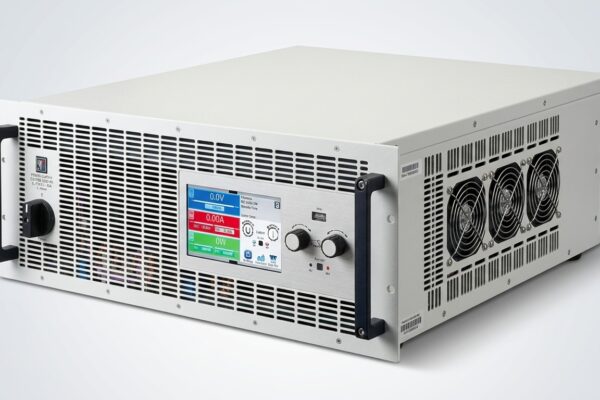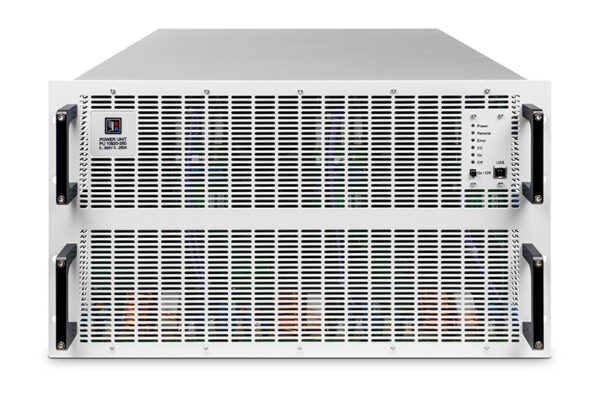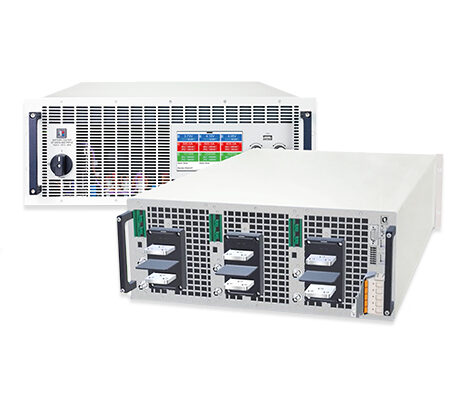


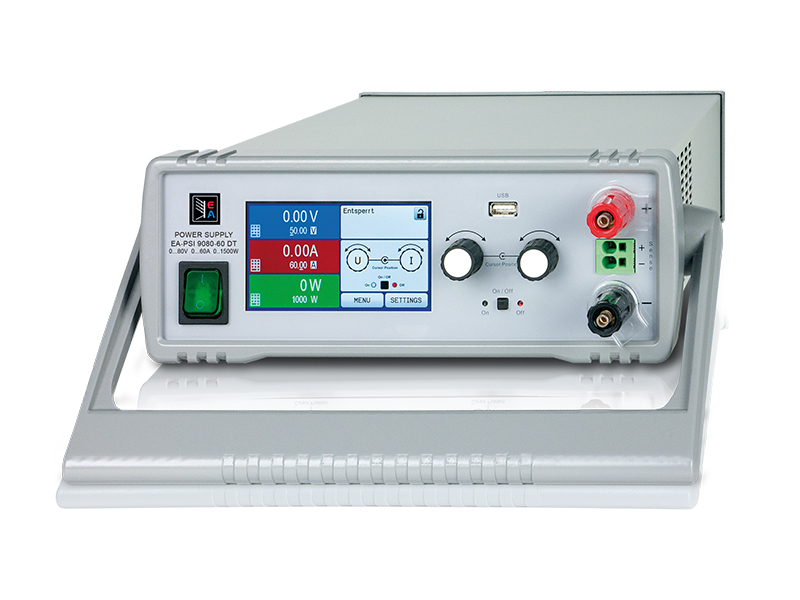
For system integrators, panel builders, procurement teams, and electrical engineers, a typical bench power supply can quickly become a limitation when it must:
- validate designs
- support semi-automated testing
- behave predictably under fault conditions
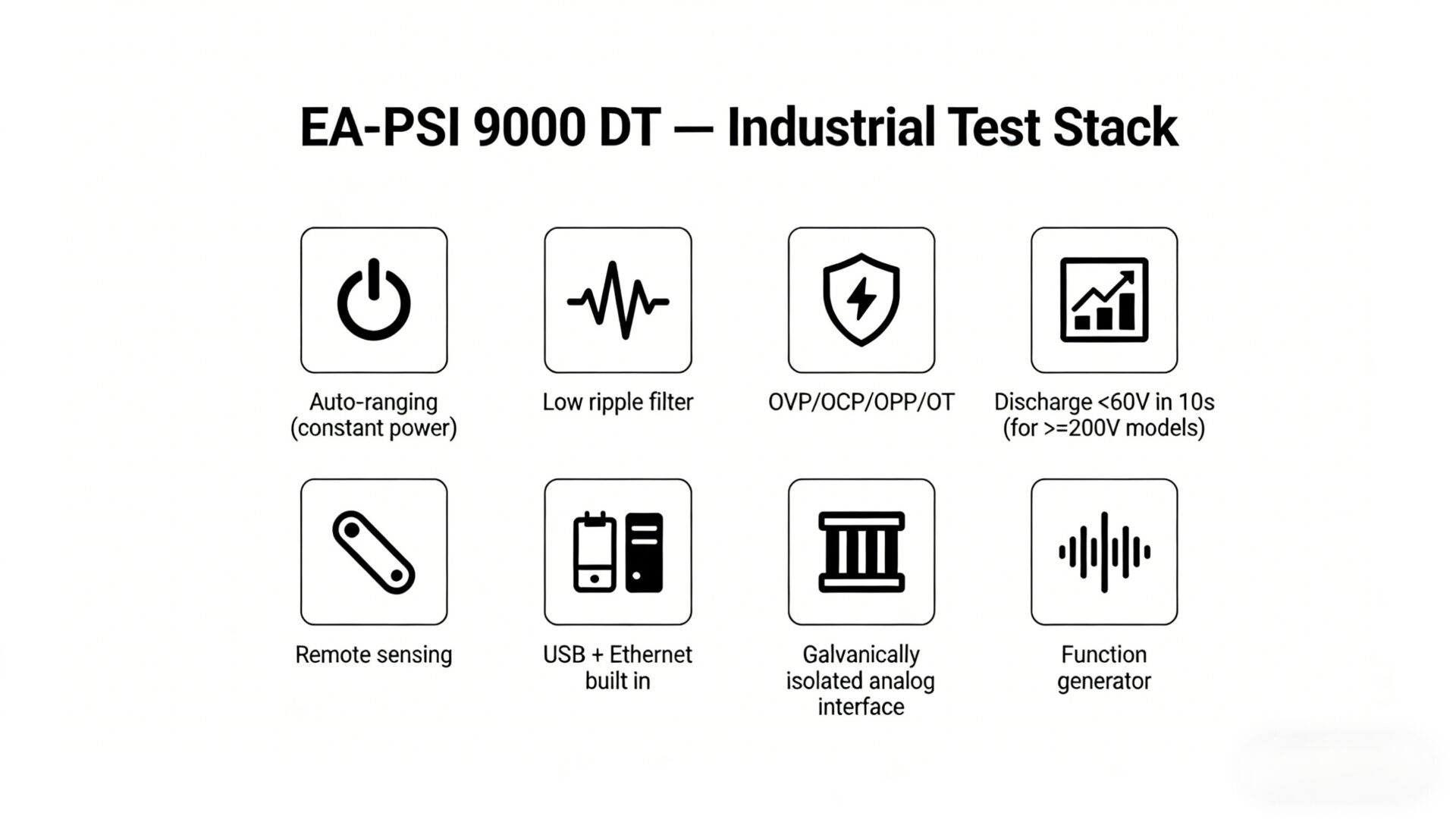
The EA-PSI 9000 DT series is designed for such use cases. It combines:
- auto-ranging (constant-power) output
- low ripple characteristics
- configurable protection functions
- USB and Ethernet interfaces
- galvanically isolated analog control
- integrated function generator
All functions are accessible via a touch-based user interface designed for fast operation in both laboratory and production environments.
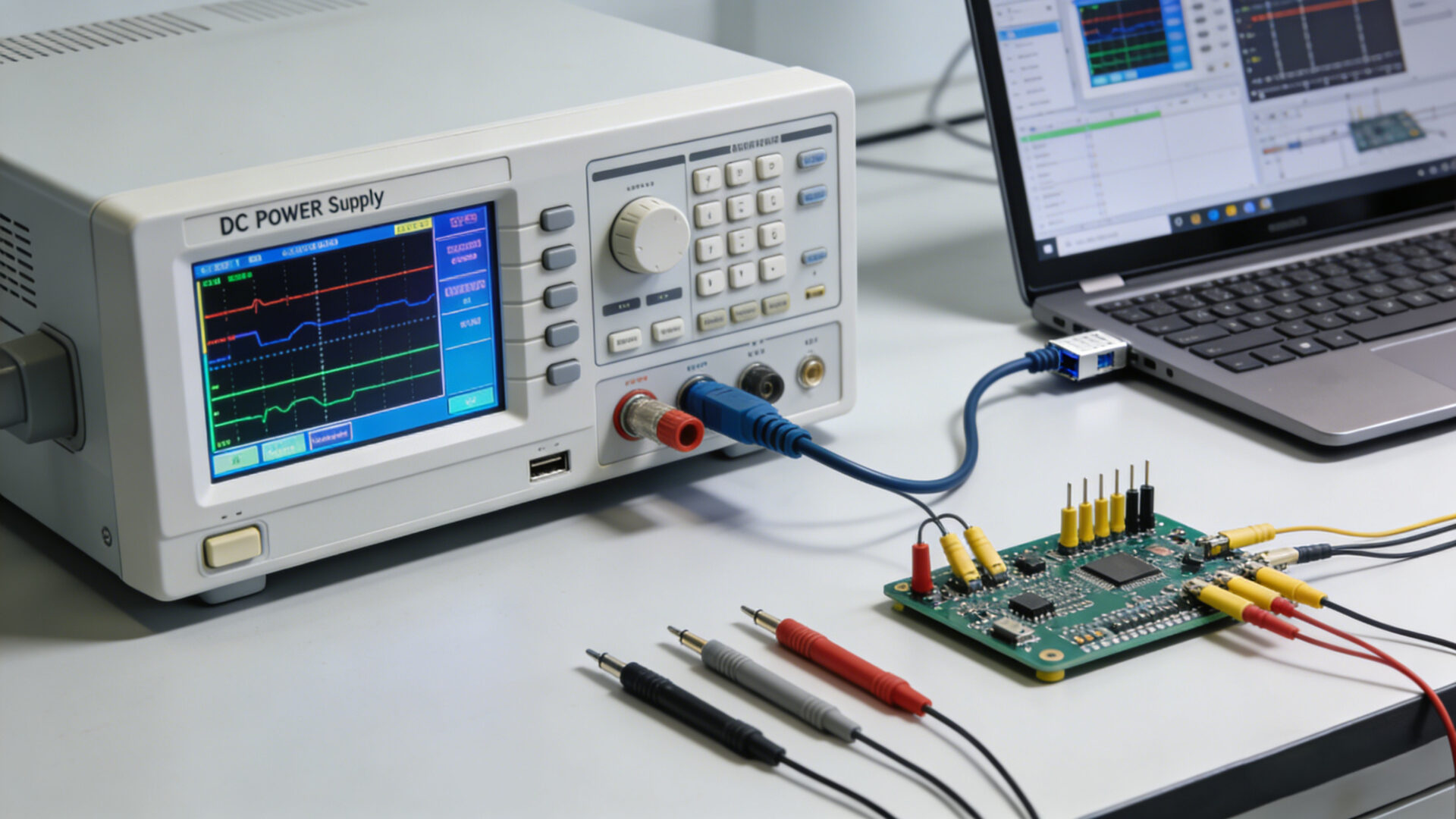
Why EA-PSI 9000 DT for Industrial Testing
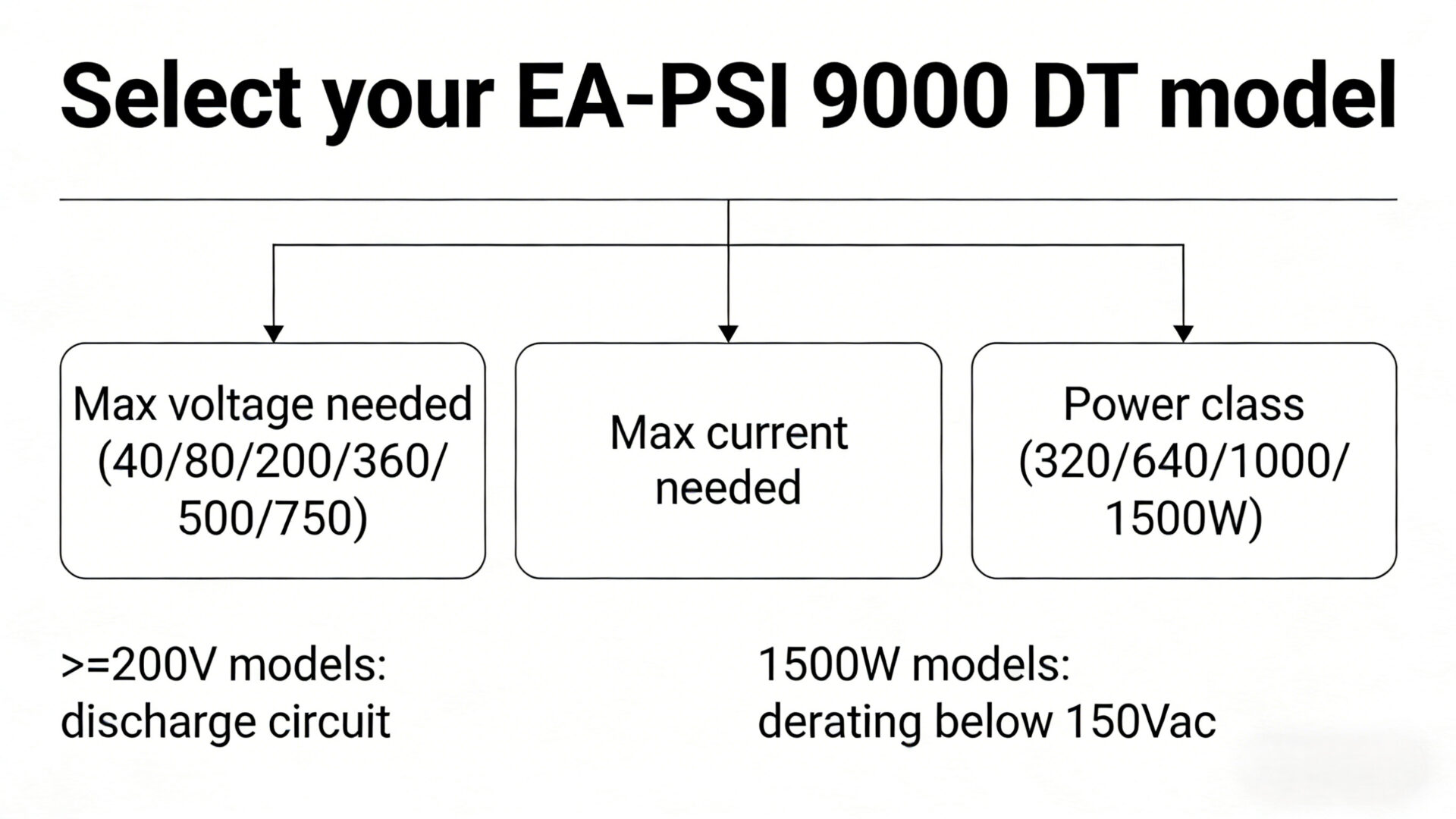
The EA-PSI 9000 DT series covers a broad operating range from 320 W to 1500 W, with output voltages up to 750 V.
It is suitable for environments where:
- R&D requires flexibility
- production requires repeatability and controlled behavior
Key characteristics
- Wide voltage and current coverage within a single device
- Digital and analog control options
- Configurable supervision and protection thresholds
- Remote sensing capability
- Discharge behavior for higher-voltage models
AC input note (important for deployment)
The devices support 90–264 Vac input with active PFC.
For 1.5 kW models, output power may be reduced to approximately 1 kW below 150 Vac input.
This should be considered when operating in regions or facilities with lower mains voltage.
Model Selection Overview
Typical selection criteria include voltage class, current requirement, and total output power.
Examples:
- 40 V class → low-voltage, higher-current applications
- 80 V class → control systems and automation rails
- 200 V and above → power electronics validation and stress testing
For higher-voltage models (≥200 V), ensure that:
- discharge behavior is aligned with internal safety procedures
- appropriate handling and test protocols are defined
Availability, pricing, and project quantities can be confirmed via the TPS Shop RFQ process.
Auto-Ranging Output (Constant-Power Behavior)
Auto-ranging enables the power supply to operate within a constant power envelope, rather than a fixed voltage/current rectangle.
This means:
- higher voltage is available at lower current
- higher current is available at lower voltage
- total output remains limited by nominal power
Practical implications
- Fewer device variants may be required across test benches
- Reduced need for reconfiguration between test cases
- Simplified replication of test setups across locations
Low Ripple and Measurement Consistency
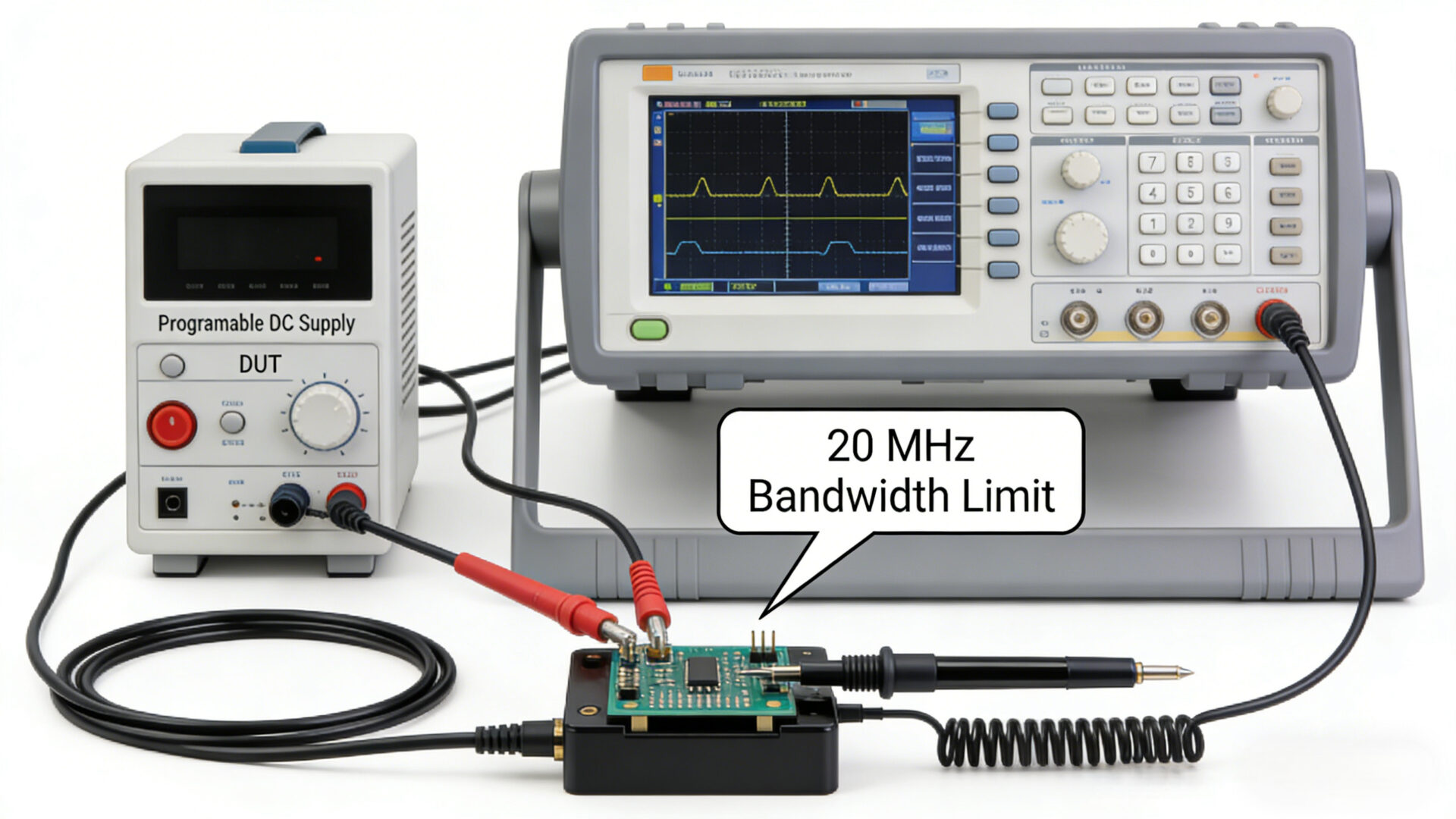
For DUTs with sensitive components (e.g., analog front-ends, sensors, RF modules), output ripple can influence measurement results.
The EA-PSI 9000 DT includes an additional output filter to support low ripple operation.
Measurement recommendations
To ensure consistent results across benches:
- standardize oscilloscope bandwidth
- use consistent probe grounding
- align fixture layout and cabling
Safety and Fault Handling
Discharge Circuit (≥200 V models)
For higher-voltage models, the integrated discharge circuit supports reducing the output voltage to below 60 V DC after switch-off, particularly under low-load conditions.
This can help:
- reduce waiting times between test steps
- support safer handling during setup changes
Protection Functions
The system includes configurable:
- OVP – overvoltage protection
- OCP – overcurrent protection
- OPP – overpower protection
- OT – overtemperature protection
When thresholds are exceeded:
- the output is switched off
- status and alarm signals are provided
This supports predictable system behavior in automated environments.
Remote Sensing
Remote sensing compensates voltage drops across cables and fixtures by regulating directly at the load.
Benefits
- improved accuracy at the DUT
- reduced variation between test stations
- better reproducibility in production environments
Interfaces and Automation
The EA-PSI 9000 DT supports both digital and analog integration:
Digital interfaces
- USB
- Ethernet (SCPI-based control)
Analog interface (galvanically isolated)
- Selectable 0–5 V / 0–10 V ranges
- Control of voltage, current, power, resistance
- Monitor outputs and status signals
Typical workflow
- Engineering defines limits and supervision parameters
- Procurement standardizes selected models
- Production executes repeatable test sequences
Integrated Function Generator and Test Sequences
The integrated function generator can apply waveforms to:
- output voltage
- output current
Features
- Predefined waveform types (e.g., ramps, step profiles)
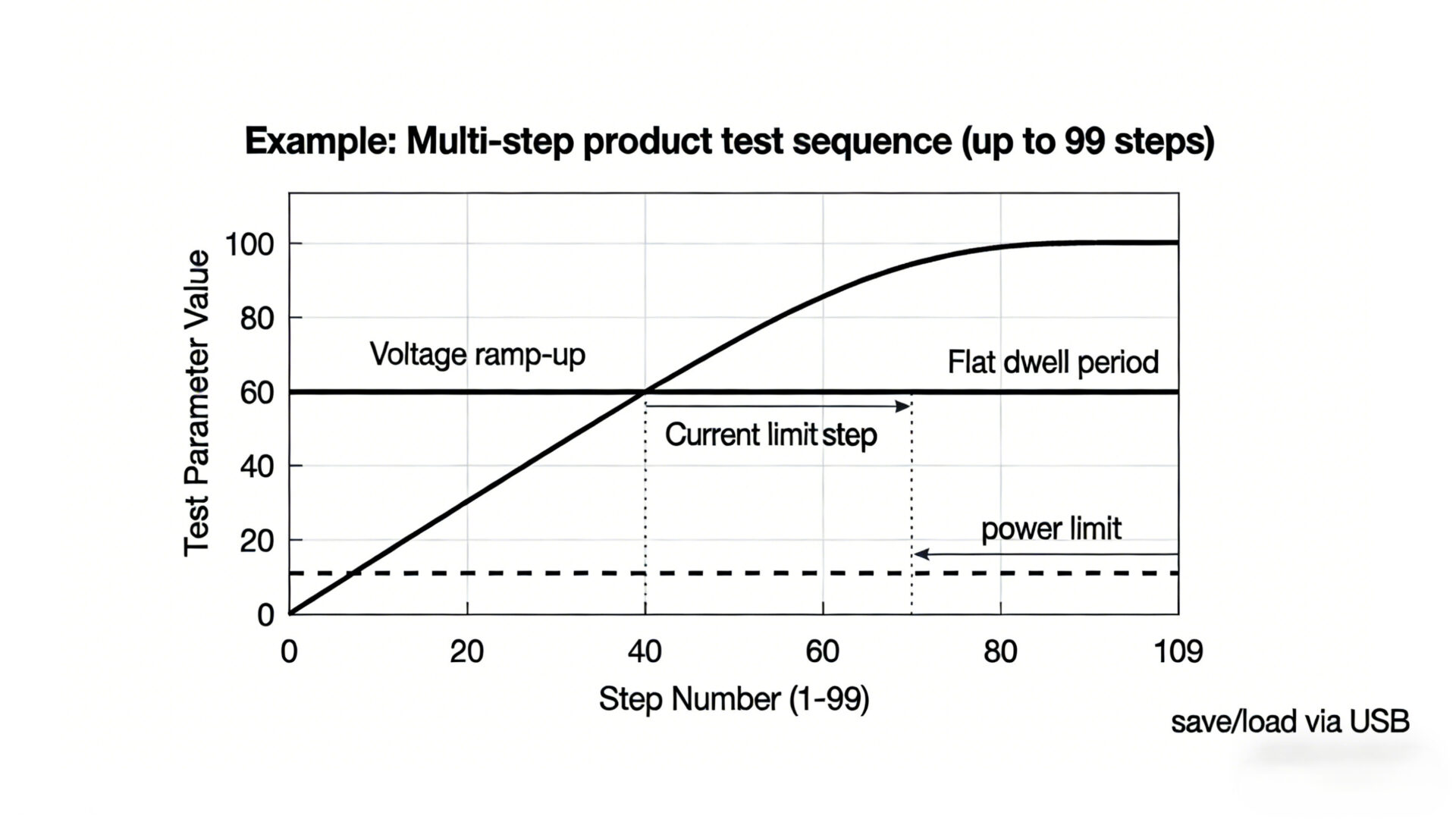
- Arbitrary sequences with up to 99 steps
- Save/load via USB interface
This allows implementation of structured test routines without additional external equipment in many cases.
RFQ Checklist for Procurement
Before requesting a quotation, confirm:
- Required output range (current and future needs)
- Mains conditions (possible derating at low input voltage)
- Safety procedures (especially for ≥200 V operation)
- Integration method (digital vs analog control)
- Test assets (sequences, calibration, documentation)
When Other Power Supply Types May Be More Suitable
A programmable desktop power supply is typically used for:
- validation
- characterization
- production testing
For continuous operation inside systems, other form factors may be more appropriate:
DIN-rail power supplies
- control cabinet applications
- continuous industrial operation
IPC / ATX power supplies
- embedded systems
- IT and industrial PCs
FAQ
Is the EA-PSI 9000 DT suitable for production environments?
It can be used in production test setups where controlled limits, repeatability, and interface integration are required.
What does auto-ranging change in practice?
It expands usable voltage/current combinations within a constant power limit.
Are USB and Ethernet included?
Yes, along with an isolated analog interface.
When is discharge behavior relevant?
For models with nominal output voltages ≥200 V.
Can complex test profiles be implemented without external equipment?
In many cases, yes, using the integrated function generator and sequence capability.