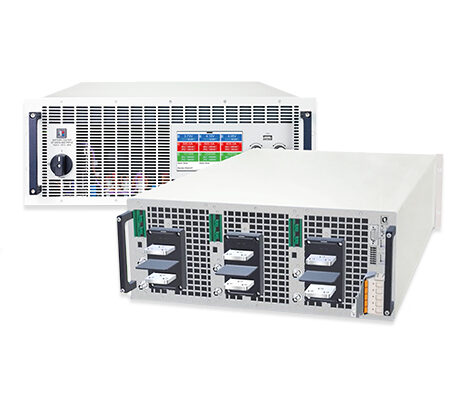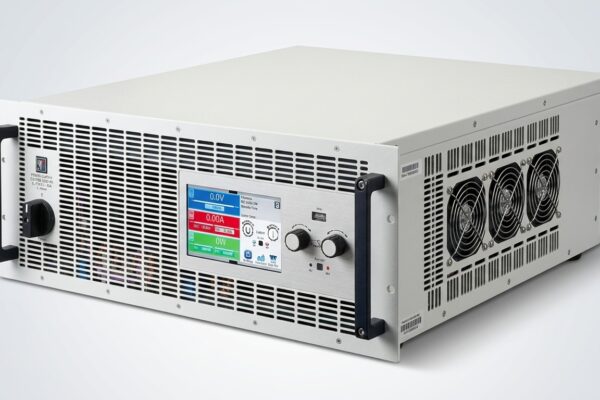


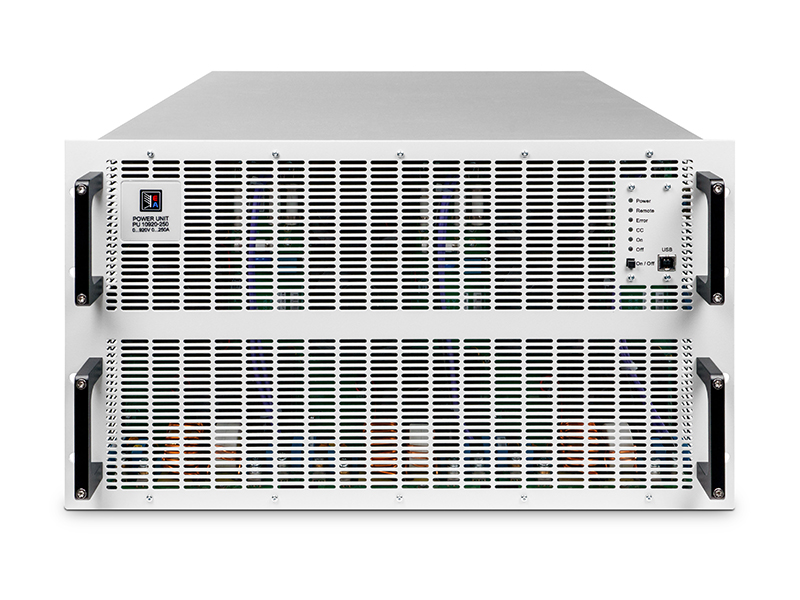
For system integrators, panel builders, procurement teams, and electrical engineers, a 60 kW programmable DC power unit is not a catalog-only decision. It affects AC infrastructure, cabinet design, cooling concept, test automation, safety documentation, delivery planning, and the long-term ability to scale from one rack-mounted unit to a multi-cabinet power system. The EA-PU 10000 6U programmable DC power supply class is relevant when the RFQ is already close to supplier selection and the project team needs a clear answer: which voltage/current range fits, which communication interface is needed, how the unit will be integrated, and how TPS can support the project beyond a single line item.
TPS ELEKTRONIK supports global B2B customers with programmable power products, equivalent solution sourcing, project-level selection, cabinet integration, and engineering consultation. Start with the TPS programmable power overview or request a project discussion here: programmable DC power supply solutions from TPS.
Contact TPS for RFQ / Solution ConsultationView EA-PU 10360-480 6U
Why this 6U programmable DC power supply matters in BoFu RFQs
At the bottom of the funnel, buyers are no longer asking whether programmable DC power exists. They are asking whether a selected product can be specified, purchased, installed, commissioned, and maintained without creating hidden project risk. The EA-PU 10000 6U class addresses high-power DC source requirements with up to 60 kW per 6U unit, a three-phase AC input, high efficiency, programmable control modes, and scalable parallel operation. This makes it a practical candidate for projects where a conventional bench supply is far too small and a custom power cabinet would take too long to engineer from scratch.
For procurement, the key question is supplier confidence. A purchase order for a 60 kW programmable DC source often comes with accessories, interface cards, cooling decisions, documentation, logistics, and sometimes matching DC loads or bidirectional modules. TPS helps convert this from a fragmented sourcing task into a controlled RFQ path: confirm the operating envelope, choose the correct output class, evaluate air versus water cooling, verify communication requirements, and align delivery with the customer project schedule.
For electrical engineers and integrators, the value is in the controllable output. The unit supports CV, CC, CP, and CR operation with fast crossover, 16-bit digital regulation, and remote programming through standard and optional interfaces. This supports repeatable test sequences, process power control, automated validation, and scalable racks where multiple units must behave as one coordinated source. For panel builders, the important details are physical size, rear copper DC connections, AC input, ventilation path, weight, IP20 environment, safety category, and cabinet service access.
360 V to 2000 V classes
80 A to 480 A classes
380-480 V 3ph AC
PFC and efficiency review
6U / 19 inch rack
rear DC copper blades
USB, Ethernet, analog
industrial fieldbus options
product supply, alternatives
engineering consultation
Selection logic: voltage, current, power, and autoranging
The first selection step is not the model name; it is the operating profile. Define the maximum voltage, maximum current, typical operating point, transient profile, duty cycle, required regulation mode, and expected future expansion. A 60 kW supply can be electrically unsuitable if the voltage class is too low, the current range is too narrow, or the cooling concept is incompatible with the cabinet room. The EA-PU 10000 6U family covers output classes from 0-360 V up to 0-2000 V and current ranges from 0-80 A up to 0-480 A. The power limit remains 60 kW, but the available voltage/current combination depends on the model.
Autoranging is central to the value proposition. Instead of a narrow rectangular output area, the supply uses a flexible power-regulated output stage that allows the user to work across a broader voltage-current operating field. In practice, one unit can support multiple test conditions or process points that would otherwise require different fixed-range supplies. This matters in EV component testing, inverter validation, fuel cell simulation, electrolysis development, and end-of-line production where test profiles rarely stay at a single fixed operating point.
When preparing an RFQ, engineers should provide at least three operating points: nominal, maximum stress, and minimum useful output. If the supply will be used for automated testing, include required voltage and current rise/fall behavior, accuracy expectations, ripple limits, and interface commands. If the supply will power an industrial process, include the expected duty cycle, ambient temperature, cooling availability, and service concept. TPS can review these conditions and help determine whether a specific EA-PU 10500-360 6U, EA-PU 10750-240 6U, EA-PU 11000-160 6U, or higher-voltage variant fits the application.
Control modes engineers should specify
For a clear technical comparison, specify whether the system will primarily run in constant voltage, constant current, constant power, or constant resistance behavior. CV is typical for powering devices under test. CC and CP are common in process power and test profiles. CR can be useful in simulation and controlled behavior scenarios. The fast crossover between modes helps maintain stable control as a load transitions from one operating region into another. This is especially important when testing DC/DC converters, traction inverter input stages, relays, contactors, fuses, PV inverters, and hydrogen-related process equipment.
Do not select only by maximum voltage. Confirm the real operating curve, automation mode, ripple requirements, thermal conditions, and expansion plan. TPS can help map the load profile to a model and supply path.
EA-PU 10000 6U model matrix and TPS shop links
The model matrix below is designed for RFQ screening. It helps procurement and engineering teams quickly shortlist the appropriate voltage/current class and identify whether the standard air-cooled or water-cooled version is preferred. Air cooling is straightforward when the cabinet room can handle front-to-rear airflow and heat load. Water cooling can reduce heat rejection into the room and may be preferred in dense multi-unit systems or process environments where thermal management is tightly controlled.
| Output class | Standard model | Water-cooled model | Typical RFQ fit |
|---|---|---|---|
| 0-360 V / 0-480 A / 60 kW | EA-PU 10360-480 6U | EA-PU 10360-480 6U WC | High-current DC bus, component test, low-voltage process power. |
| 0-500 V / 0-360 A / 60 kW | EA-PU 10500-360 6U | EA-PU 10500-360 6U WC | Automotive electronics, inverter input tests, mixed voltage/current profiles. |
| 0-750 V / 0-240 A / 60 kW | EA-PU 10750-240 6U | EA-PU 10750-240 6U WC | 750 V platforms, EV component validation, industrial DC source racks. |
| 0-920 V / 0-250 A / 60 kW | EA-PU 10920-250 6U | EA-PU 10920-250 6U WC | High-voltage battery emulation front ends and converter testing. |
| 0-1000 V / 0-160 A / 60 kW | EA-PU 11000-160 6U | EA-PU 11000-160 6U WC | 1000 V DC labs, PV inverter testing, high-voltage DC supply systems. |
| 0-1500 V / 0-120 A / 60 kW | EA-PU 11500-120 6U | EA-PU 11500-120 6U WC | Higher-voltage PV, DC infrastructure, and research test benches. |
| 0-2000 V / 0-80 A / 60 kW | EA-PU 12000-80 6U | EA-PU 12000-80 6U WC | Very high voltage validation, insulation-sensitive setups, advanced R&D. |
When a project needs more than one unit, TPS can also support a scalable configuration rather than a one-device purchase. For matched loading or bidirectional test benches, review the EA-PUL 10000 6U regenerative DC load and AC/DC bidirectional power module solutions as part of the same power architecture discussion.
Integration, installation, interfaces, and cooling
A 6U programmable DC power supply must be evaluated as part of a system, not as a loose instrument. The unit is built for a 19 inch environment, with an enclosure size of 483 mm x 266 mm x 668 mm and an overall depth requirement of at least 818 mm. Weight is approximately 76 kg for the standard version and approximately 82 kg with water cooling. Panel builders should therefore confirm rack rails, service access, lifting method, rear cable radius, copper bar protection, AC feeder routing, PE bonding, and airflow clearances before releasing cabinet drawings.
Cooling is often the point where RFQs fail late. Standard versions use forced airflow from front to rear with temperature-controlled fans. This is suitable when the cabinet layout and room HVAC can remove the generated heat. Water-cooled versions add water inlet and outlet connections and can be preferred when multiple 60 kW units are placed in a dense rack or when room heat load must be reduced. TPS can help customers compare air-cooled and water-cooled variants in the context of the wider cabinet concept, including 19 inch cabinet options such as the Sentinel-Y 42U 19 inch power cabinet and mechanical integration topics covered in 6U 19 inch chassis power supply integration.
On the control side, standard communication includes USB, Ethernet, analog interface, Master-Slave-Bus, Share-Bus, and front USB. Optional industrial interfaces include CAN, CANopen, RS232, Profibus, EtherCAT, Profinet, Modbus, and additional Ethernet configurations. This allows the supply to fit PLC-based lines, automated test systems, laboratory control software, and customer-specific supervisory systems. Command-language support such as SCPI and ModBus, plus LabVIEW and IVI driver availability, can reduce engineering time when the system must be integrated into existing test software.
380-480 V 3ph AC
PFC, PE, feeder sizing
60 kW unit
CV / CC / CP / CR
rear copper blades
remote sense
Ethernet, USB, analog
fieldbus options
front-rear airflow
or water cooling
Application fit: electrolysis, EV components, fuel cells, PV, and production test
The EA-PU 10000 6U class is a strong fit for applications where high power must be programmable, repeatable, and integrated into a controlled test or process environment. In hydrogen electrolysis development, the supply can act as a controllable DC power system with CC, CP, or CV behavior, allowing process engineers to reproduce operating points and evaluate stack or subsystem behavior. When a project requires multiple units, parallel operation can increase system power while the Master-Slave-Bus and Share-Bus help the system behave like one source.
In electric vehicle component testing, the supply can support traction inverter inputs, DC/DC converters, fuses, relays, contactors, and other high-voltage devices under test. The integrated function generator option and programmable control behavior help reproduce real operating profiles more consistently than manual supply adjustment. For fuel cell simulation, programmable output and protection functions help create repeatable source behavior while protecting the connected device. In PV inverter testing, high-voltage variants support solar array simulation workflows, and TPS can help align power source selection with matching loads or regenerative test infrastructure.
Production test also benefits from programmable precision. Relay and contactor manufacturers may need controlled voltage/current profiles, threshold detection, current capability checks, and documented test data. Automated test systems benefit from isolated communication interfaces and standard drivers. For smaller engineering benches or service applications where a 60 kW rack unit is too large, TPS can also guide customers to desktop programmable supplies such as the EA-PS 3200-02 C desktop programmable DC power supply or the EA-PSI 9000 DT desktop programmable DC power supply.
Controlled DC process power, scalable systems, efficiency-focused operation.
Inverter, DC/DC, fuse, relay, and contactor validation.
Reproducible source behavior with protection and alarms.
High-voltage source for solar array simulation workflows.
Programmable profiles, repeatable data, automated interfaces.
Standards, reliability, and RFQ documentation
For global B2B projects, standards and documentation are commercial decision factors. The EA-PU 10000 6U class is positioned with safety references including EN 61010-1, IEC 61010-1, UL 61010-1, CSA C22.2 No. 61010-1, and BS EN 61010-1, plus EMC references such as EN 55011 class A group 1, CISPR 11 class A group 1, FCC 47 CFR part 15B class A, and EN 61326-1 test references. These details are important for procurement teams that must compare technically similar offers and for panel builders who must document the larger machine, test bench, or process installation.
Reliability also depends on correct use. Operating environment should be reviewed: 0-50 °C operating temperature, non-condensing humidity, altitude limitation, pollution degree, appliance class, IP20 protection, and cooling path. Protection functions such as adjustable OVP, OCP, OPP, and overtemperature shutdown reduce risk, but they do not replace proper system design. For high-voltage systems, the RFQ should also include insulation expectations, contact protection, emergency-off concept, grounding, remote sense wiring, and maintenance procedures.
TPS can support these discussions before the order is placed. This is especially useful when multiple stakeholders are involved: procurement needs pricing and lead time; engineers need data and communication details; panel builders need mechanical and thermal constraints; integrators need system behavior and interface documentation. A well-prepared TPS RFQ can reduce clarification loops and increase the chance that the first proposed configuration is technically and commercially viable.
How TPS supports product supply, alternatives, and project execution
TPS does not position this topic as a generic brand article. The practical question is whether TPS can provide the right programmable DC power product, an equivalent solution where appropriate, and the project support required to make it work in a real system. For 60 kW rack power, TPS can support model selection, accessory clarification, interface planning, and coordination with related power products. When the project requires a complete power cabinet, TPS can also discuss enclosure, wiring, cooling, serviceability, and integration support.
Many RFQs arrive with only a target voltage and power value. TPS can help turn that into a complete specification: voltage class, current class, AC input, cooling, required fieldbus, software control, protection limits, rack layout, parallel scaling, delivery location, and documentation expectations. If a customer is comparing multiple market-available supply families, TPS keeps the discussion focused on technical fit, availability, integration risk, and total project execution rather than brand promotion.
For related subsystems, TPS can support DIN rail power supplies for control cabinets, including compact TPS010-100W GP Series switching power supplies, TPS030-130W Pro Series 24 V DIN rail supplies, and TPS100-320W Peak DR+ DIN rail power supplies. For high-power test ecosystems, TPS can also discuss 750 V bidirectional power modules and regenerative load paths depending on the application.
To move forward, share your operating profile and project constraints with TPS through the programmable power consultation page. TPS can help validate whether a listed EA-PU 12000-80 6U, a water-cooled version, a parallel cabinet, or an alternative architecture best fits your RFQ.
Application profile
Model and cooling choice
Interface and control concept
Cabinet / integration check
RFQ, delivery, documentation
RFQ checklist for faster technical clarification
Use the following checklist when contacting TPS for a quotation or solution consultation. It helps TPS respond with a technically relevant proposal instead of a generic price-only answer.
- Required voltage range, current range, and maximum power.
- Typical operating points and future expansion plan.
- Preferred model or output class, including air-cooled or water-cooled preference.
- AC input infrastructure, cabinet location, ambient temperature, and cooling constraints.
- Control mode requirements: CV, CC, CP, CR, dynamic profile, function generator, or simulation mode.
- Required interfaces: Ethernet, USB, analog, CAN, Profinet, EtherCAT, Modbus, Profibus, or other automation requirements.
- Parallel operation requirements, rack count, cabinet concept, and service access.
- Documentation, standards, delivery region, project timeline, and procurement process.
FAQ
Which EA-PU 10000 6U model should I select for my RFQ?
Select by operating envelope, not only by maximum voltage. Confirm voltage, current, power, regulation mode, ripple expectations, cooling, and interface requirements. TPS can review your operating profile and suggest a suitable model or equivalent solution.
When should I choose water cooling?
Water cooling is useful when cabinet density is high, room heat load must be reduced, or the installation has a defined liquid cooling infrastructure. Air cooling may be simpler when front-to-rear airflow and HVAC capacity are sufficient.
Can multiple 60 kW units be operated in parallel?
Yes. The family supports parallel operation with Master-Slave-Bus and Share-Bus. For multi-unit systems, TPS can help review cabinet layout, copper connections, control behavior, and safety documentation.
Can TPS support complete test-bench power architecture?
Yes. TPS can support programmable DC supplies, regenerative loads, bidirectional modules, cabinet considerations, DIN rail control power, and project-level consultation for global B2B customers.
What should I send TPS to get a useful quotation?
Send the voltage/current profile, power requirement, cooling preference, interface needs, application, delivery region, required documentation, and timeline. Use the TPS programmable power consultation page to start.