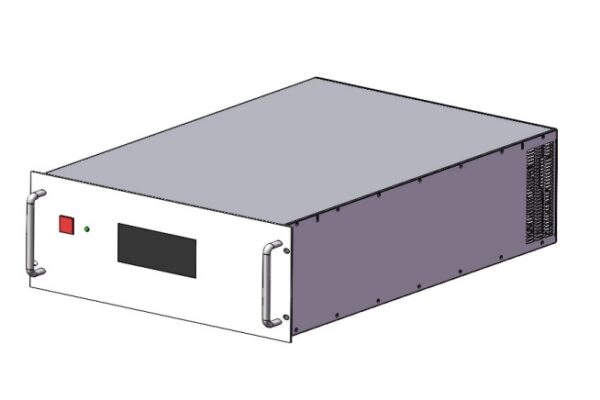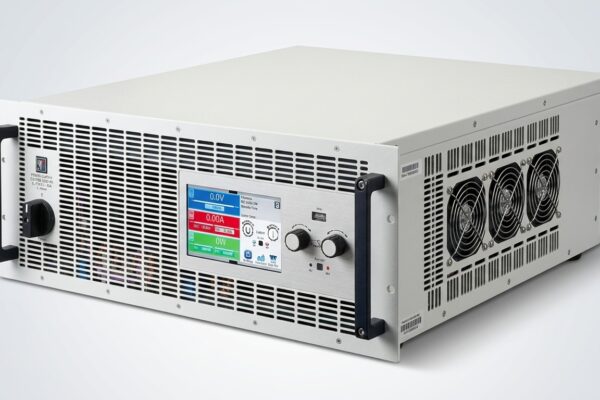


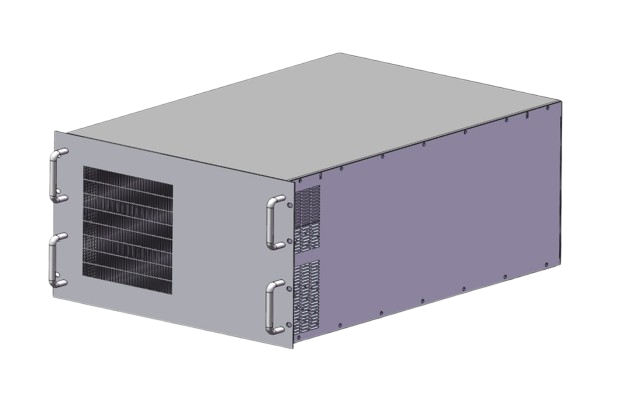
For BoFu buyers, a 6U 19-inch chassis is not only a metal housing. It is the mechanical baseline that determines whether power supplies, programmable DC devices, control electronics, wiring, cooling and service access can be integrated without late-stage rework. The TPS 6U chassis is designed for standard 482.6 mm rack integration with a 6U height and an approximately 671 mm depth, making it relevant for power electronics, industrial test systems, rack-mounted automation hardware and project-specific power supply assemblies.
This article is written for system integrators, panel builders, procurement teams and electrical engineers who are already close to supplier selection. You may be comparing rack housings, validating a bill of materials, preparing an RFQ, or checking whether a supplier can support more than a single component. TPS can support this type of product and solution requirement with 19-inch chassis, cabinet concepts, power supply integration, engineering consultation and project-level coordination for global B2B customers.
To start from the product page, review the TPS 6U-Chassis shop entry. For a broader project discussion, use the TPS 19-inch cabinets and chassis RFQ page and share the target rack layout, installed devices and expected quantity.
When a 6U 19-inch chassis is the right choice
A 6U chassis is usually selected when the project needs more vertical space than a compact 1U, 2U or 3U enclosure can provide, but still needs to remain inside the 19-inch rack ecosystem. In practical terms, this means the mechanical design must support higher device volume, stronger cable separation, easier rear access and better airflow planning. For electrical engineers, the first question is whether the internal devices fit with enough clearance for connectors, wiring radius and maintenance. For panel builders, the question is whether the chassis can be installed repeatedly without mechanical improvisation. For procurement, the question is whether the supplier can provide a stable part number, documentation and project communication before purchase approval.
The TPS 6U-Chassis is a strong candidate when the rack build involves power supply assemblies, programmable DC power sources, DC load equipment, control electronics, embedded test hardware, data acquisition devices or industrial communication modules. Compared with a generic enclosure, a chassis sourced from a power electronics supplier helps align the housing decision with the power architecture. That is important when the same project also needs DIN rail supplies, programmable power, bidirectional modules, cooling, busbar concepts or cabinet-level engineering.

Application fit before price comparison
A 6U rack chassis should be evaluated together with the installed electronics, service concept and project documentation. This is where TPS can support both the product selection and the surrounding solution discussion.
Decision criteria by buyer role
System integrators typically look for repeatable mechanical interfaces, predictable assembly time and fewer supplier handovers. Panel builders focus on rack compatibility, mounting hole positions, surface treatment and how the chassis works with cabinet ventilation, cable ducts and protective components. Procurement teams evaluate article numbers, expected availability, supplier responsiveness, customization limits and whether consultation is required before purchase. Electrical engineers check the equipment envelope, thermal path, grounding concept, creepage and clearance around power circuits, connector access and the ability to document the installed system.
For these stakeholders, the best chassis decision is not the cheapest housing on a list. It is the housing that reduces uncertainty before build approval. If the 6U unit will be part of a cabinet or test system, early communication with TPS helps define whether a standard chassis is sufficient, whether a customized finish is needed, or whether a broader 19-inch cabinet and chassis solution should be quoted.
Key technical parameters for evaluation
The available TPS specification identifies the 19-inch chassis system as a power supply chassis system using the standard 482.6 mm front width. For the 6U version, the relevant product reference is manufacturer code BJ9900006, also listed in the TPS shop environment as the 6U-Chassis. The key RFQ dimensions are 482.6 mm overall width, 465 mm mounting hole spacing, 449 mm case body width, 437 mm handle width direction center distance, 449 mm rear panel width, 666 mm case body depth, 670.5 mm overall case body depth, 35/38 mm handle depth options, 265.9 mm panel height and 192/203 mm handle spacing in height direction. The 6U version also includes the specific 57.2 mm mounting reference noted for this size.
Material and surface treatment are equally important. The chassis concept can involve sheet steel, aluminium and galvanized plate. Front, side, top and bottom plates are powder-coated; rear plates can be powder-coated or nickel-coated; handles are treated by colorless oxidation. Standard color is RAL 7035, with customization possible for project-specific requirements. The supply scope includes front plate, side plates, top and bottom plates and handles. For many panel builders, this is useful because the mechanical baseline and visible surface requirements can be defined early instead of being negotiated after the electrical design is almost complete.

Core 6U parameters to confirm
- Overall width: 482.6 mm
- Overall depth: approx. 670.5–671 mm
- Panel height: 265.9 mm
- Material options: sheet steel, aluminium, galvanized plate
- Finish: powder-coated surfaces, RAL 7035 or custom color
RFQ-ready specification snapshot
| Parameter | 6U chassis reference | Why it matters in supplier selection |
|---|---|---|
| Manufacturer code | BJ9900006 | Keeps purchasing, engineering and quotation records aligned. |
| Width | 482.6 mm overall; 465 mm mounting hole spacing | Supports standard 19-inch rack integration and front mounting planning. |
| Depth | 666 mm case body; 670.5 mm overall case body depth | Determines cabinet depth, rear cable clearance and service access. |
| Height | 265.9 mm panel height | Defines rack space allocation and vertical device envelope. |
| Finish | Powder-coated plates; RAL 7035 or customized color | Supports visual consistency, corrosion resistance expectations and project branding. |
When preparing a comparison sheet, include a direct link to the 6U-Chassis product record so that purchasing and engineering teams reference the same item. If the chassis is part of a larger power cabinet or test system, add a second link to the TPS consultation page for 19-inch cabinets and chassis.
Integration and installation considerations
A 6U chassis decision should be made together with the full system architecture. If the chassis houses programmable DC power, verify the front and rear connector concept, the exhaust path and the minimum bend radius for power cables. If it houses control electronics, consider signal separation, grounding and access for maintenance. If it sits in a test cabinet, make sure operators can remove or service the unit without disturbing neighboring modules. Mechanical compatibility is only the first checkpoint; long-term uptime depends on the complete integration concept.
TPS is especially relevant when the chassis is part of a wider power solution. For example, a compact auxiliary control circuit can use a TPS010 10–100 W DIN rail power supply, while more demanding control panels may call for a TPS030–130 W PRO Series DIN rail supply or the TPS100–320 W PEAK DR PLUS when peak power reserve is important. For laboratory or automated test environments, the chassis discussion may be connected to programmable power such as the EA-PS 3200-02 C desktop programmable DC power supply or higher-performance programmable platforms like EA-PSI 9000 DT.

Dimensioning is a system task
Check W, D and H dimensions together with mounting rails, cable exits, airflow direction, connector protrusion and the installed equipment mass. If the cabinet is not yet fixed, TPS can help align the chassis and rack concept before RFQ release.
Thermal path, service access and cable routing
Thermal and service details are often the reason a technically acceptable enclosure becomes a costly integration problem. A 6U chassis gives more space than lower-height housings, but the additional volume must be managed. Confirm whether cooling air enters from the front, side or bottom, and whether the rear panel has enough clearance for connectors and heat exhaust. Reserve room for strain relief and future replacement. In high-current DC or battery test environments, avoid routing control wiring directly beside high-power cables unless the system design includes appropriate separation and shielding.
If the project involves regenerative test equipment or energy-intensive DC loads, the mechanical conversation should include the full rack environment. TPS can also support adjacent power electronics topics such as AC/DC bidirectional power modules for cell formation or the EA-PUL 10000 6U regenerative DC load. These links are not a reason to overspecify a chassis; they show why a supplier with power electronics context can make the rack integration discussion more productive.
Standards, reliability and project risk
The term 19-inch is not a marketing label. It refers to a widely used rack framework based on the 482.6 mm series. For mechanical background, the IEC 60297 family describes dimensions of mechanical structures for the 482.6 mm series, and IEC information on 19-inch technological schemes can be checked through the official IEC webstore. In North American industrial control panel projects, cabinet-level engineering may also need to consider UL 508A requirements; the official UL Standards page for UL 508A is an appropriate external reference. These standards references do not automatically certify a standalone chassis. They help buyers ask the right questions when the chassis becomes part of a larger panel, cabinet or machine system.
Reliability is also about manufacturability and documentation. A powder-coated surface, RAL 7035 default color and defined plate set make the chassis easier to specify. A known manufacturer code reduces purchasing errors. A supplier that can discuss both component-level and cabinet-level needs reduces the chance of a gap between mechanical purchasing and electrical commissioning. TPS communicates 19-inch chassis as a complementary option for rack-based device integration and also supports configurable cabinet solutions where power distribution, thermal management, alarms and project-specific control functions need to be engineered together.

Reduce uncertainty before supplier approval
The most effective RFQ packages combine drawings, installed device list, expected environment, customization needs, delivery schedule and documentation requirements. TPS can review these inputs and propose a chassis or equivalent solution path.
What to include in your RFQ
For a fast and technically useful quotation, send the rack layout, target quantity, expected annual demand if known, cabinet depth, installed equipment list, cable entry direction, cooling assumptions, color or surface requirements, documentation requirements and any regional compliance constraints. If the project is still open, describe the function rather than forcing a fixed part number. For example, “6U rack chassis for power supply and test electronics inside an industrial cabinet” gives TPS room to confirm whether the 6U-Chassis is the best fit, whether a related 19-inch size is more efficient, or whether a cabinet-level solution should be discussed.
Procurement teams should also request the expected commercial scope: chassis only, chassis plus accessories, project-specific surface treatment, documentation support, packaging, delivery schedule and any engineering consultation required before release. Electrical engineers should include heat dissipation assumptions, internal component mass, connector protrusions and a preliminary wiring path. Panel builders should share cabinet constraints, rail depth, service clearance and whether the chassis needs to match an existing RAL color or customer standard.
Once the basic parameters are clear, the next step is to contact TPS for a project-specific 19-inch chassis or cabinet consultation. This is especially useful if your purchasing team needs a supplier capable of standard products, equivalent alternatives, customization support and engineering coordination for global B2B projects.
Practical RFQ checklist
- Confirm product reference: 6U-Chassis, BJ9900006 / RA1080 if applicable.
- Confirm mechanical envelope: 482.6 mm width, approx. 671 mm depth, 265.9 mm height.
- Define installed equipment: power supplies, DC loads, controls, data acquisition, modules or custom electronics.
- State material and finish expectations: sheet steel, aluminium, galvanized plate, RAL 7035 or custom color.
- Describe cable routing, rear access and thermal assumptions.
- Ask TPS whether a standard chassis, equivalent alternative, customized chassis or cabinet-level solution is recommended.
Ready to validate the 6U chassis for your project?
Share your rack layout, device list, expected quantity and customization requirements with TPS. The team can support product selection, equivalent solution review, chassis customization and broader 19-inch power cabinet planning.
FAQ
Is the TPS 6U-Chassis a standard 19-inch rack product?
Yes. The chassis uses the standard 482.6 mm 19-inch width and is intended for rack-based integration. Buyers should still confirm depth, rail position, rear clearance and the installed device envelope before approving the build.
Can TPS support customization beyond the standard chassis?
TPS can support project consultation for 19-inch chassis and cabinet solutions, including material, finish, RAL 7035 or customized color discussions and broader cabinet-level engineering where required. Use the TPS RFQ page to start the discussion.
What information should I send before asking for a quotation?
Send the target rack layout, installed devices, quantity, cable routing, cooling assumptions, cabinet constraints, required finish and any compliance or documentation requirements. Include the 6U-Chassis product link if you already know this is the preferred baseline.
Is this chassis only for power supplies?
No. It is especially relevant for power supply and power electronics integration, but it can also support test electronics, control modules, communication devices and other industrial rack-mounted equipment when dimensions and thermal conditions are suitable.
How does TPS help procurement teams reduce risk?
TPS can help align article references, technical scope, customization needs and project consultation before purchase approval. This reduces the risk of buying a mechanically compatible but system-inappropriate enclosure.