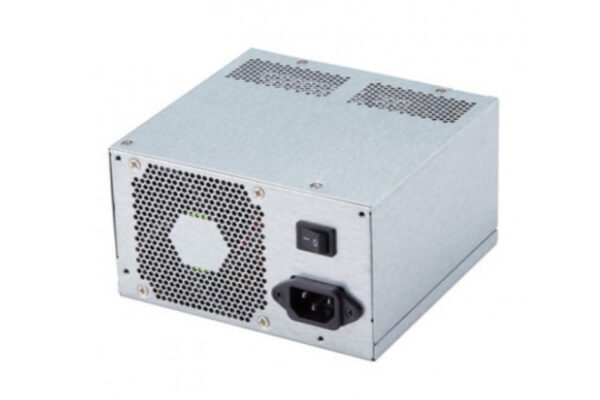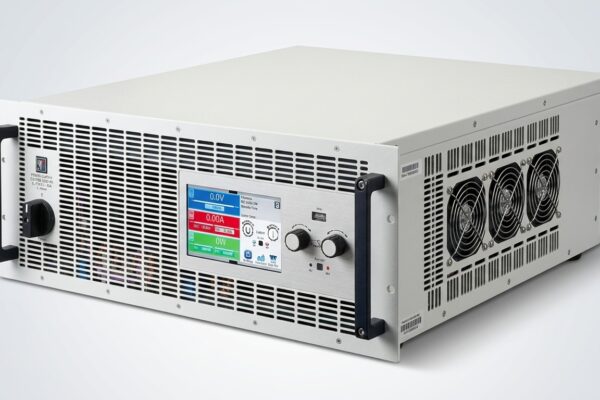


System integrators, panel builders, and procurement teams deploying hyperconverged infrastructure face a fundamental challenge: the rack is no longer just a mechanical enclosure. It is a power distribution platform. As data center densities climb past 15 kW per rack and AI workloads push toward 100 kW+, the transition from 12V to 48V DC distribution has redefined how power is delivered, managed, and cabled within the rack. The 48V busbar running down the back of the rack has become the backbone of modern data center power architecture. And the cable assemblies that connect power shelves, IT gear, and busbars are no longer commodity items. They are mission-critical engineered components.
TPS Elektronik’s Power and Cable Integration Service for hyperconverged data center racks delivers pre-terminated, tested, and documented cable assemblies purpose-built for 48V busbar architectures, ORv3-compliant power shelves, and hot-swap power distribution systems. This is not generic wiring—it is EMS-grade cable integration designed to reduce installation time, eliminate field termination errors. And ensure that your rack-level power system performs to specification from the first power-on.
1. What Is Power and Cable Integration for Data Center Racks?
Power and cable integration for data center racks is the engineering discipline of designing, manufacturing, and testing the complete cable harness and interconnect system that distributes electrical power from the facility feed. Through the power shelf, along the 48V busbar, and into each IT tray, server, or storage device within the rack. It encompasses everything from AC input power whips and DC busbar connections to signal harnesses and control cabling that enable hot-swap functionality, load sharing, and system monitoring.
In hyperconverged and hyperscale environments, power and cable integration is not an afterthought. It is a core engineering deliverable. The cable assembly must deliver high current capacity (up to 500A per UL and CSA criteria), maintain low voltage drop across the distribution path, withstand the thermal environment of high-density racks. And support hot-swap operations without arcing or connector damage. TPS Elektronik’s Power and Cable Integration Service addresses these requirements through an EMS-based approach: every assembly engineered to a bill of materials, manufactured under controlled processes. And tested to documented acceptance criteria before it leaves the facility.
For system integrators and panel builders, this means receiving cable assemblies that are ready for immediate installation—cut to exact length, terminated with the correct connectors, labeled for clarity. And accompanied by test reports that confirm electrical integrity. For procurement teams, it means predictable lead times, consistent quality across production runs, and traceability that supports compliance and field serviceability.

Image Generation Prompt: “48V busbar running vertically down the back of an open data center rack with pre-terminated power cable assemblies connected to hot-swap power shelf modules, labeled harnesses routed through cable management fingers, professional data center integration environment, photorealistic, wide shot” — Alt: 48V busbar vertical rack with pre-terminated power cable assemblies and hot-swap power shelf modules
2. Why 48V Busbar Architecture Demands Engineered Cable Integration
The migration from 12V to 48V DC distribution is one of the most significant shifts in data center power architecture in the past decade. By distributing power at 48V rather than 12V, the required current for a given power level drops by a factor of four (P = V × I). And resistive losses (I²R) decrease by a factor of 16. This efficiency improvement is critical as rack power demands escalate. A rack running AI training workloads can draw 20 kW or more, and next-generation racks expected to exceed 100 kW.
However, the 48V architecture introduces new challenges for cable integration. Higher voltage means stricter clearance and creepage requirements. Higher current densities demand larger conductor gauges, careful connector selection, and meticulous attention to contact resistance. The 48V busbar itself—typically a copper conductor running the full height of the rack. Which must interface with power shelves, battery backup units (BBUs), and IT gear through connectors that can handle hundreds of amps while maintaining low milli-volt drop.
2.1 Power Loss Reduction and Efficiency Gains
The efficiency advantage of 48V distribution well documented. A 48V system can maintain nearly 90% power efficiency for a rack requiring more than 15 kW, compared to significantly lower efficiency at 12V. This translates directly to operational cost savings and reduced cooling requirements. Every watt lost as heat in the power distribution path is a watt that must be removed by the cooling system.
For system integrators, the practical implication is that cable assemblies must engineered to minimize contact resistance and voltage drop across every connection point. TPS achieves this through precise crimping, welded terminals, and connector selection that prioritizes low-resistance interfaces. Each assembly tested for continuity and, where specified, for voltage drop under load. To ensuring that the efficiency gains of the 48V architecture realized in the field—not lost to poor-quality terminations.
2.2 ORv3 Compliance and Standardization
The Open Compute Project’s Open Rack Version 3 (ORv3) specification provides a standardized framework for 48V rack power distribution. ORv3-compliant systems use a 48V busbar, power shelves, and IT gear cable assemblies that are interoperable across vendors. For system integrators and procurement teams, ORv3 compliance reduces vendor lock-in and simplifies qualification. But it also imposes specific requirements on cable assemblies.
ORv3 power shelf cable assemblies must provide ±3.00 mm float in vertical and horizontal directions to compensate for misalignment. They must support hot-swap operation with optional sense contacts for system protection. They must meet current ratings up to 360A in still air and 500A with airflow. TPS’s Power and Cable Integration Service designed around these requirements. Which delivering ORv3-compliant assemblies that are tested, documented, and ready for integration into OCP-compliant racks.
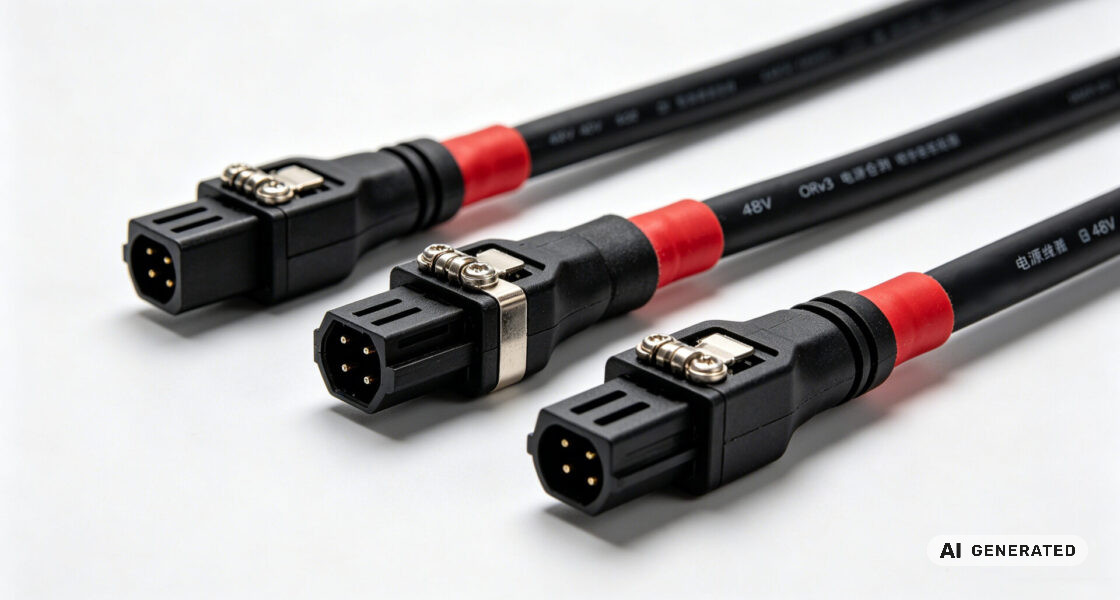
Image Generation Prompt: “ORv3-compliant power shelf cable assembly with welded terminals, ±3.00mm float connectors, and sense contacts for hot-swap controllers, technical callouts showing current rating and connector specifications, engineering drawing style with photorealistic rendering” — Alt: ORv3 power shelf cable assembly with float connectors and sense contacts
For detailed guidance on connector types used in these assemblies, refer to our BNC connector complete guide and SMA connector guide.
3. Hot-Swap Power Shelf Cabling: Design and Reliability Considerations
Hot-swap capability is a defining feature of modern data center power distribution. Power shelves contain multiple hot-swappable power supply modules (PSUs) that can inserted or removed while the rack remains powered. This enables N+1 or N+N redundancy, active current sharing, and field serviceability without downtime.
However, hot-swap operation places unique demands on cable assemblies. When a PSU module inserted into a live power shelf, the connection must handle inrush current without arcing or damaging the connector contacts. When a module removed, the cable assembly must break the connection cleanly without sustaining damage that could affect future reliability. The cable assembly must also accommodate the mechanical float required for alignment while maintaining consistent electrical performance across hundreds or thousands of insertion cycles.
TPS addresses these challenges through a combination of connector selection, cable construction, and testing. We use connectors rated for hot-swap operation with silver-plated contacts that provide low contact resistance and high durability. Cable assemblies are built with strain relief and over-molding where required to protect terminations from mechanical stress during insertion and removal. Every assembly tested for continuity and insulation resistance, and where specified, we perform insertion/withdrawal force testing to verify that the assembly meets the mechanical requirements of the application.
For system integrators, the benefit is predictable field performance. Hot-swap operations proceed without unexpected failures, and the cable assemblies maintain their electrical and mechanical integrity over the life of the rack.
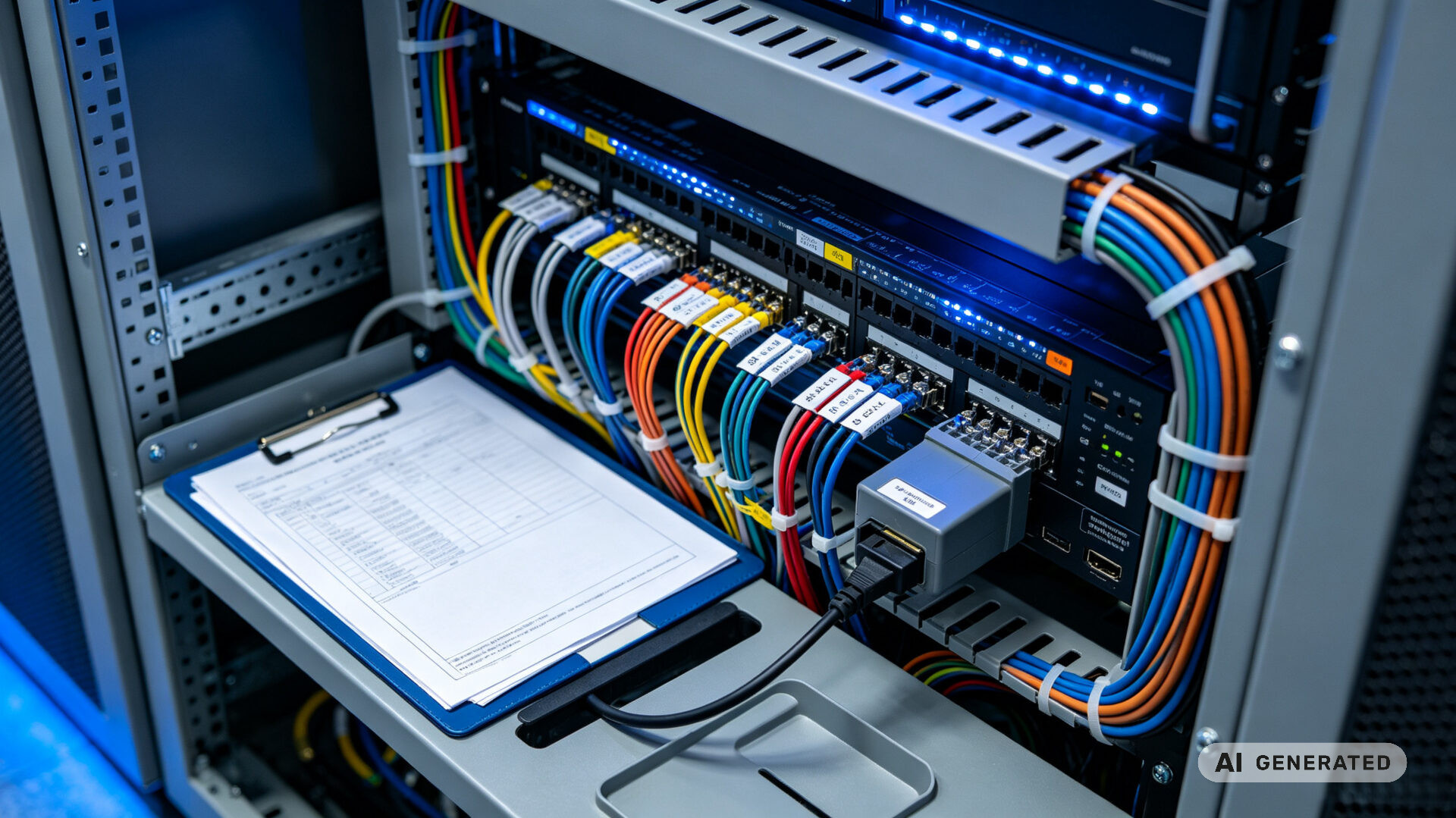
Image Generation Prompt: “Hot-swap power supply module being inserted into a live power shelf with pre-terminated cable assembly, close-up showing connector alignment and sense contacts, professional data center integration environment, photorealistic, medium shot” — Alt: Hot-swap PSU module insertion into power shelf with cable assembly
4. The TPS Approach: EMS-Grade Cable Assembly for Rack Power Distribution
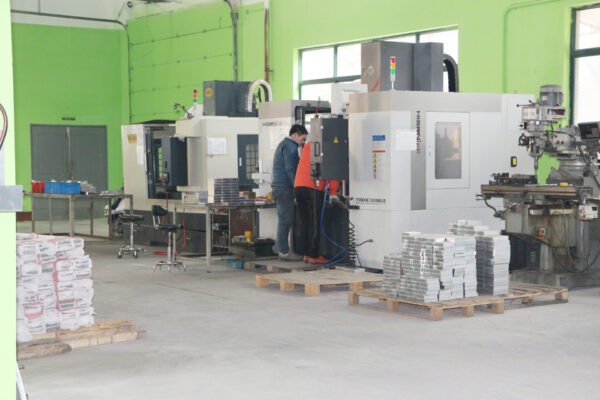
TPS Elektronik’s Power and Cable Integration Service built on an EMS foundation. This means every cable assembly treated as a controlled product with defined process steps, documented testing, and full traceability. The service spans the entire cable assembly workflow. From cut and strip to crimping, soldering, shielding, labeling, and final testing. All performed in a controlled manufacturing environment with IPC/WHMA-A-620 Class II/III compliance.
4.1 Pre-Terminated Assemblies for Faster Deployment
Pre-terminated cable assemblies are a cornerstone of TPS’s integration service. Rather than shipping bulk cable and connectors for field termination. A process that introduces variability, consumes skilled labor on-site, and creates opportunities for error—TPS delivers assemblies that are ready for immediate installation. Each assembly is cut to the specified length, terminated with the correct connectors, and tested before it leaves the facility.
For rack power integration, pre-terminated assemblies offer several advantages:
- Reduced installation time: Plug-and-play connectivity eliminates the need for on-site cutting, stripping, and crimping.
- Consistent quality: Factory terminations performed under controlled conditions with calibrated tooling, yielding repeatable results.
- Elimination of field errors: Pre-terminated assemblies cannot mis-wired or incorrectly terminated in the field.
- Traceability: Each assembly serialized and documented, supporting field service and compliance.
TPS’s cable assembly capabilities extend beyond power distribution to include signal, RF, and fiber optic assemblies. For data center racks that require a mix of power and data cabling, TPS can deliver the complete cable harness—power distribution, control signals, and fiber optic interconnects—as an integrated solution.
4.2 Testing and Documentation: The RFQ-Ready Difference
For procurement and engineering teams, the value of a cable assembly is not just in the physical product. It is in the documentation that confirms the product meets specification. TPS provides comprehensive test documentation with every assembly, including:
- 100% continuity and pin-map verification
- High-voltage and insulation resistance testing where specified
- VNA sweep and TDR verification for RF assemblies
- Insertion loss and return loss certificates for fiber optic assemblies
- Serialized traceability with lot control and QA reports
This documentation supports RFQ evaluation, compliance verification, and field service. For system integrators, it means confidence that the cable assemblies will perform as expected. For procurement teams, it means objective evidence that the delivered product meets the specified requirements.
Image Generation Prompt: “Cable assembly test station with continuity tester, high-voltage tester, and documentation workstation showing test reports and serialized labels, professional EMS manufacturing environment, photorealistic, wide shot” — Alt: Cable assembly testing and documentation workstation
For a deeper look at TPS’s cable assembly capabilities, see our EMS cable assembly guide and fiber optic cable assembly guide.
5. Common Integration Challenges and How TPS Solves Them
Even with a well-designed 48V busbar and ORv3-compliant power shelf, cable integration can introduce risks that affect project timelines, system reliability, and operational costs. Here are the most common challenges and how TPS addresses them.
Challenge 1: Cable length and routing errors. Field measurements are often imprecise, and cables cut on-site can be too long (creating management issues) or too short (requiring rework). TPS solves this by working from the integrator’s mechanical drawings to specify exact cable lengths, manufacturing assemblies to those specifications, and labeling each cable for its intended routing path.
Challenge 2: Connector compatibility and mating issues. Different power shelves, busbars, and IT gear may use different connector families or require specific keying and polarization. TPS addresses this through connector selection that matches the application requirements, with verification of mating compatibility before manufacturing.
Challenge 3: Thermal management. High-current cable assemblies generate heat, and in dense racks, managing that heat is critical. TPS selects conductor gauges and insulation materials rated for the application’s current and temperature requirements, and tests assemblies under load where specified to verify thermal performance.
Challenge 4: Shielding and EMI. Power cables can radiate electromagnetic interference that affects nearby signal and data cables. TPS provides foil and braid shielding options to contain emissions and maintain signal integrity in mixed cable bundles.
Challenge 5: Documentation and traceability. Without documentation, field service and compliance become difficult. TPS provides full documentation with every assembly, including test reports, BOM/revision control, and serialization.
For RF and signal cable assemblies within the rack, refer to our EMS fiber optic cable assembly resources.