

TPS Elektronik’s EMS sheet metal processing is built to prevent that risk: fast quoting, DFM feedback, documented inspections (FAI optional), and end-to-end fabrication steps—cutting, punching, forming, welding, finishing, and assembly.
1. Why EMS Sheet Metal Processing Affects RFQ Outcomes
In electronics manufacturing programs, sheet metal is rarely a simple commodity.
It often represents a mechanical interface layer connecting:
PCB assemblies
Thermal management components
Wiring and harness routing
Safety clearances
Field installation requirements
Small deviations can create integration problems.
For example:
Incorrect bend angles may affect harness routing or connector access
Surface finishes can influence grounding behavior
Tolerance mismatches can create stack-up issues during assembly
The advantage of EMS-integrated sheet metal processing is alignment between mechanical fabrication and electronics assembly.
This typically includes:
DFM feedback before fabrication begins
Tolerances aligned with real assembly stack-ups
Documented inspection paths shared between engineering and procurement
TPS positions sheet metal fabrication as part of a broader EMS manufacturing workflow, allowing mechanical and electronic elements to be quoted and managed together.
If welding considerations are relevant, these TPS references may support internal discussions:
Custom Sheet Metal Fabrication (Complete Guide)
2. Capabilities Under One Roof: From Cutting to Inspected Assembly
Evaluating a sheet metal partner often involves mapping requirements to the actual process chain.
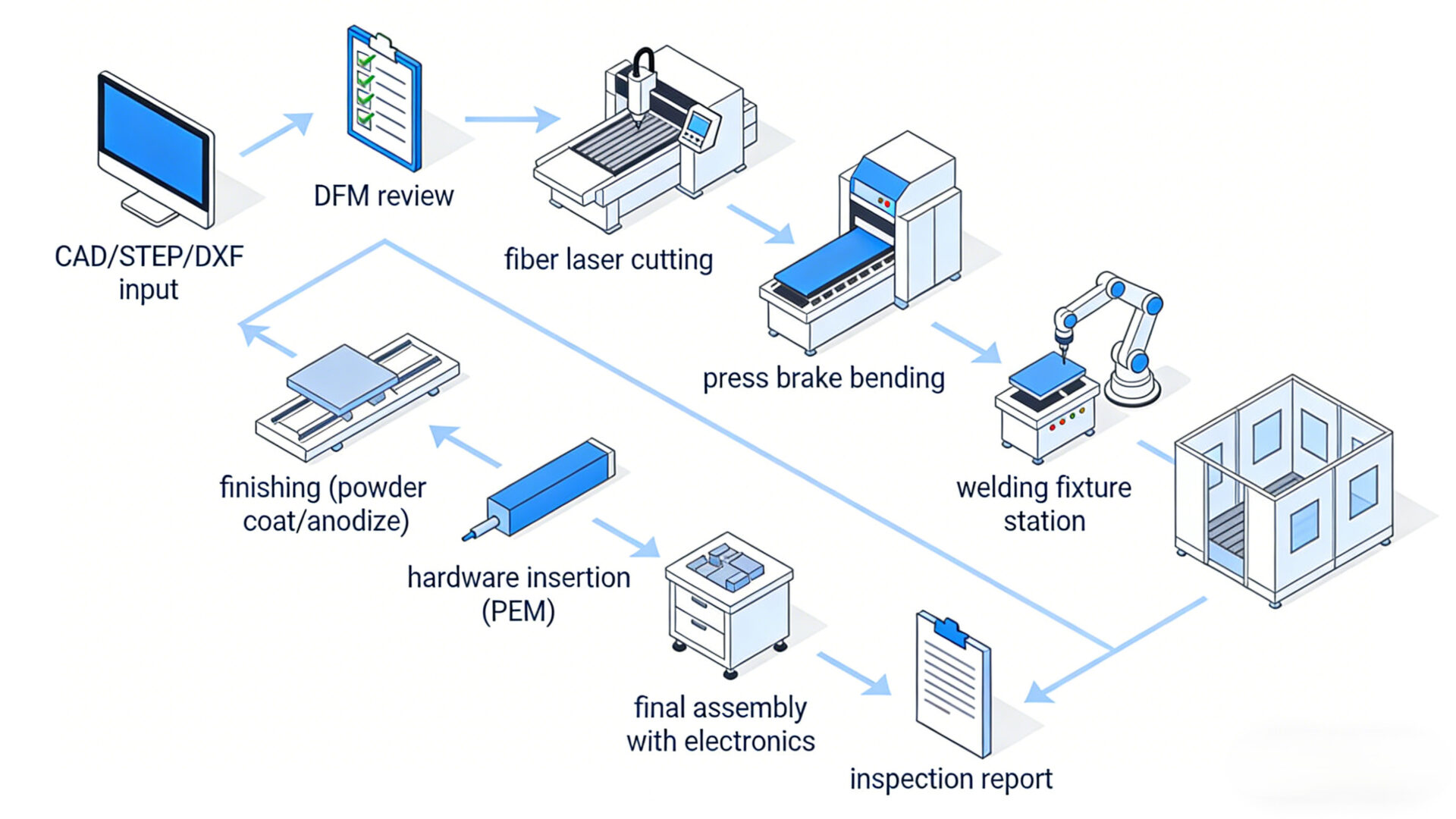
TPS highlights an integrated process path from engineering drawings to inspected production parts, including:
DFM feedback
Optional First Article Inspection (FAI)
PPAP support when required
This approach can be relevant for:
Regulated systems
High-mix production
Programs moving from prototype to series production
2.1 Cutting
Cutting determines the starting quality of a sheet metal component.
Important factors include:
Edge quality
Hole geometry consistency
Repeatability across production batches
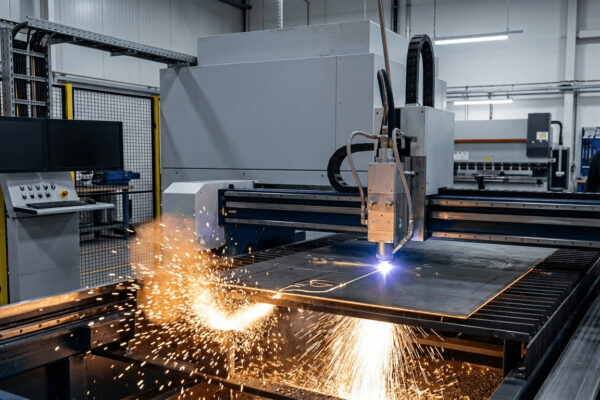
Laser cutting is commonly used for:
Complex profiles
Small features
Frequent engineering revisions
The objective is not the tightest possible tolerance, but tolerances that support stable assembly.
2.2 Punching
Punching can become cost-effective when designs contain repeating features, such as:
Ventilation louvers
Knockouts
Perforation patterns
For these features, punching may reduce per-part cycle time compared with cutting every detail using laser processes.
2.3 Forming
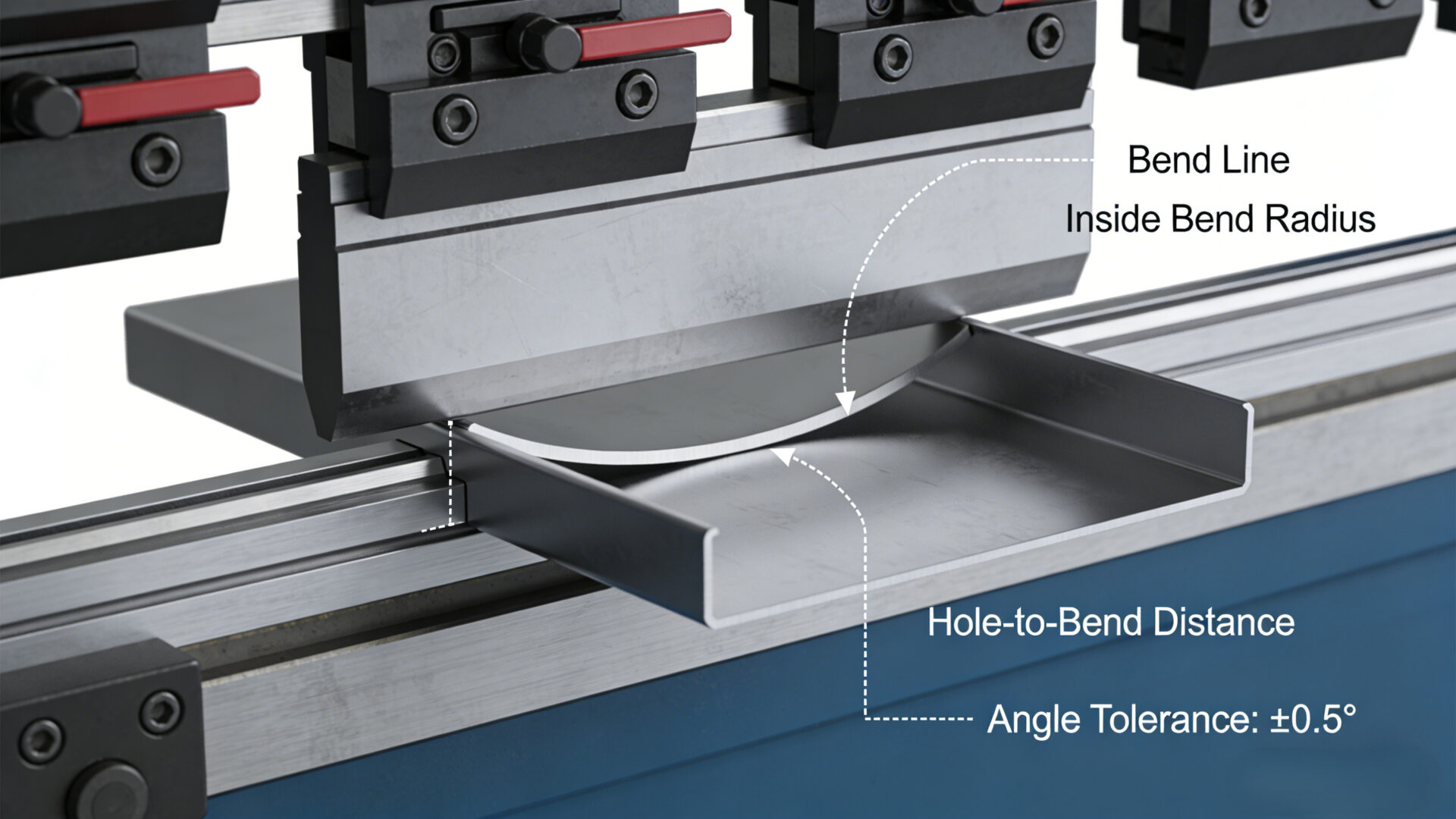
CNC press-brake forming defines the final geometry of enclosures and brackets.
Key design aspects include:
Bend radius selection
Hole-to-bend distances
Tolerance stack-ups
For control cabinets and industrial electronics assemblies, forming is often the most critical DFM stage.
2.4 Tube Processing
Tube bending and tube machining support designs that include:
Structural frames
Mechanical routing paths
Protective structures around electronics
These features appear frequently in ruggedized or industrial systems.
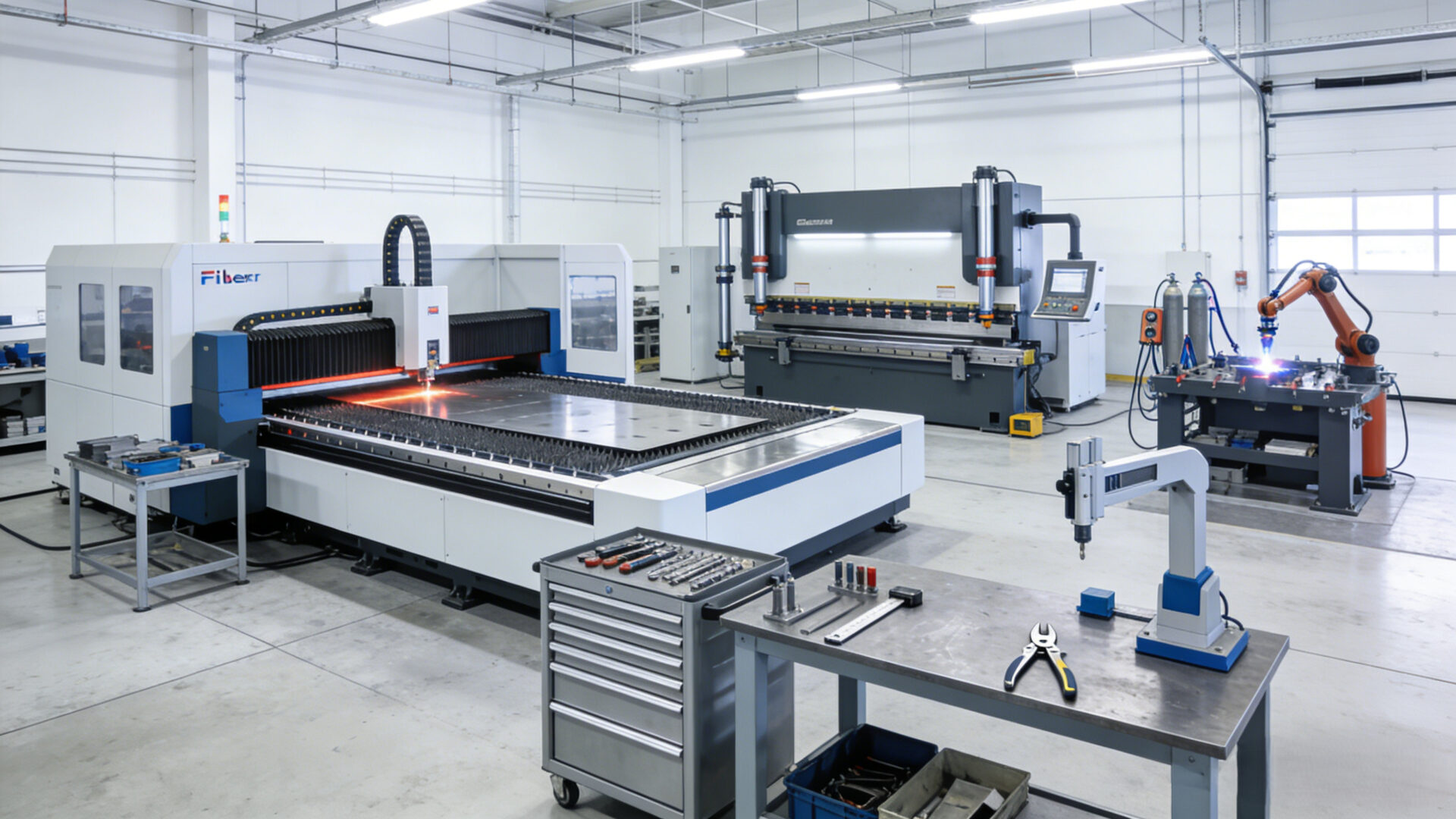
2.5 Welding and Joining
Welding introduces potential risks in enclosure assemblies, including:
Thermal distortion
Spatter cleanup
Cosmetic requirements
Grounding continuity
TPS lists several joining processes:
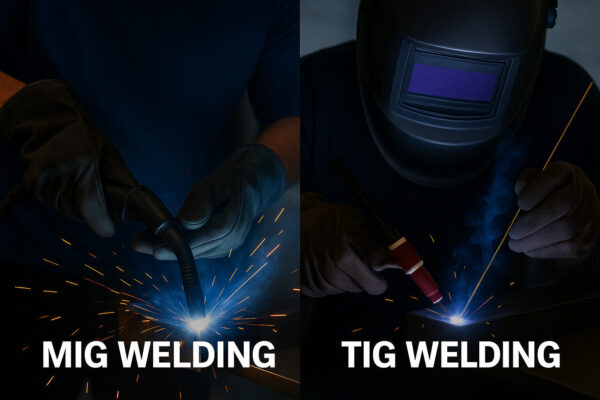
MIG/MAG welding
TIG welding
Spot welding
Stud welding
Fixtures and controlled sequences can improve repeatability in frame and bracket assemblies.
2.6 Finishing and Assembly
Finishing affects both appearance and functional performance.
Common finishing and assembly steps include:
Deburring
Blasting
Powder coating
Anodizing
Selective plating
Hardware insertion (PEM inserts)
Final assembly and inspection
Incorrect finishing choices may affect:
Grounding interfaces
Corrosion resistance
Fastener performance
3. Materials Used in Practice: Coils, Grades and Ferrous vs Non-Ferrous Metals
Material decisions influence cost, manufacturability and lead time.
In many RFQs, issues arise when:
Engineering assumes one material grade
Procurement selects another based on price
Finishing processes require specific alloys
A shared understanding between engineering and purchasing can reduce these risks.
3.1 Steel Coils and Sheet Supply
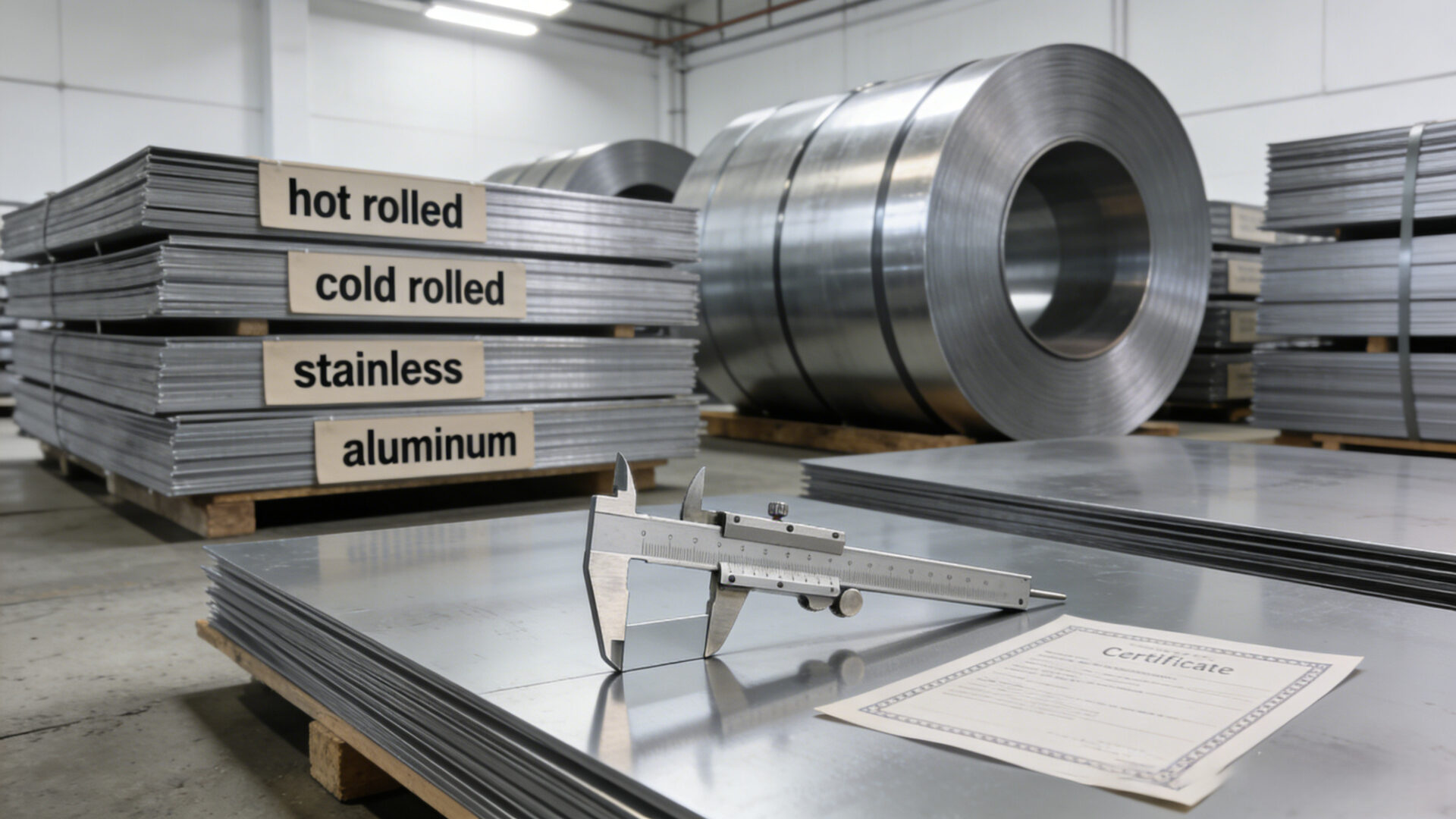
Steel coils refer to continuous rolled steel supplied in coil form and later slit, leveled and processed into fabrication workflows.
Two common forms include:
Hot rolled steel
Produced at high temperature
Typically used when surface finish is less critical
Cold rolled steel
Processed further for tighter thickness control
Provides improved surface finish
Cold rolled steel is often preferred for cosmetic enclosures or precision bends, while hot rolled steel can be suitable for structural parts with coatings.
3.2 Steel Grades and Spring Steel
When specifying steel grades, key considerations include:
Strength
Formability
Corrosion exposure
Material availability
Typical materials used in electronics housings include:
Mild steels
Structural steels
Stainless steels
Aluminum alloys
Spring steel is used for elastic features, such as clips or retainers.
However, forming spring steel may require additional design consideration due to its stiffness.
3.3 Ferrous vs Non-Ferrous Metals in Electronics Design
Ferrous metals contain iron (most steels), while non-ferrous metals include materials such as aluminum, copper and titanium.
The choice may influence:
Weight
Corrosion resistance
Cost
Grounding or shielding assumptions
If EMC performance or grounding continuity is critical, material and finishing choices should be coordinated with the electrical design.
For reference frameworks used in supplier qualification, see the ISO overview of ISO 9001 quality management systems.
3.4 Titanium vs Aluminum
Comparisons such as “titanium vs aluminum” usually arise when teams evaluate:
Weight reduction
Corrosion resistance
Strength-to-weight ratios
Titanium can perform well in demanding environments but typically involves higher processing cost and complexity.
Aluminum often offers a practical balance between:
Weight reduction
Corrosion resistance
Manufacturability
Titanium is generally selected when specific performance requirements justify its use.
4. Types of Sheet Metal Forming Processes
Selecting the correct process combination helps produce stable parts with fewer manufacturing risks.
Common processes include:
Laser cutting – complex profiles and engineering revisions
Punching – repeating features and ventilation patterns
Press brake bending – defining enclosure geometry
Rolling and hemming – improving edge stiffness and safety
Embossing – adding structural rigidity
Tube bending – frames and protective structures
Welding and joining – assembling multi-part structures
Hardware insertion – threaded inserts and studs
Finishing – powder coating, anodizing, plating
Two design habits can simplify manufacturing:
Design around standard material thicknesses
Define finishing and hardware early in the design phase
5. Metal Costing: What Drives Price and Lead Time
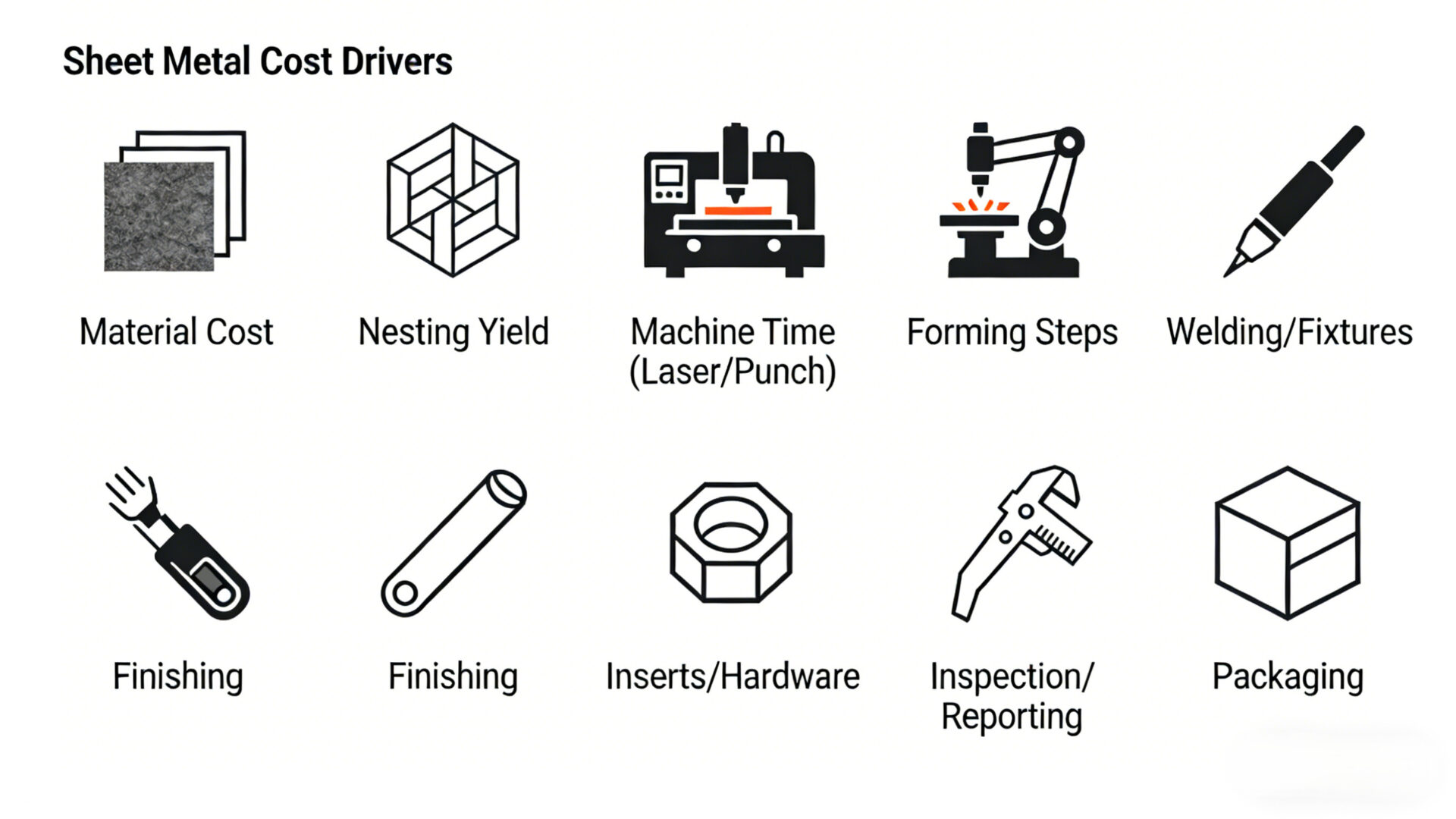
Metal costing depends on more than raw material price.
Important cost drivers include:
Material selection and availability
Sheet vs coil stock formats
Nesting efficiency of part geometry
Tooling and setup requirements
Forming complexity
Welding distortion control
Finishing processes
Documentation requirements (FAI, PPAP)
Cost reductions often result from small design adjustments, such as:
Reducing hardware variety
Using standard thicknesses
Combining parts where possible
Aligning tolerances with real assembly requirements
6. Sheet Metal vs Billet Aluminum Parts
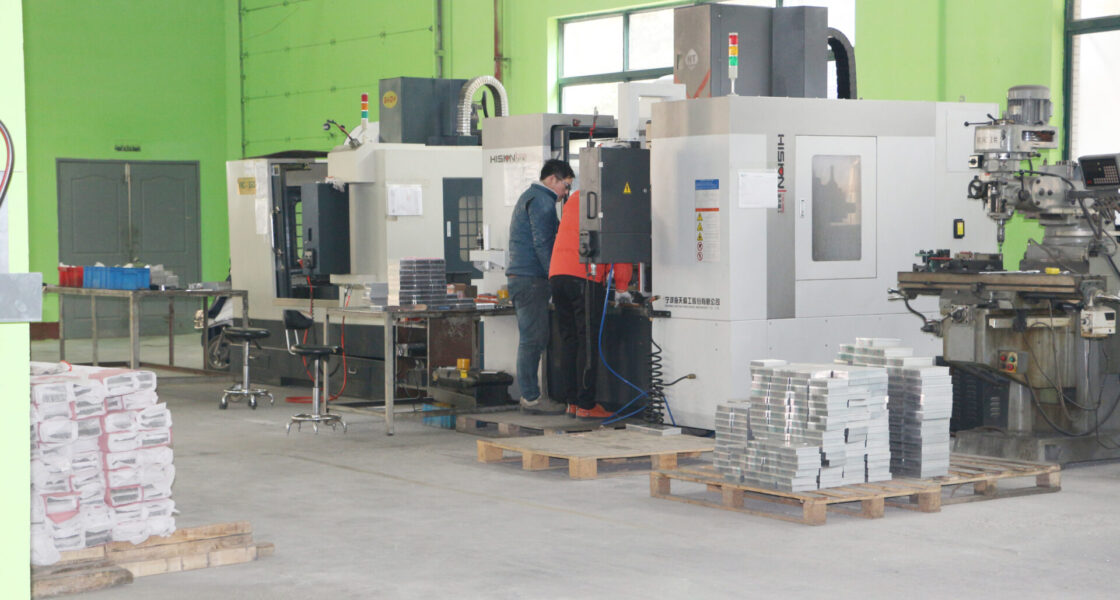
Some enclosure projects involve both sheet metal fabrication and CNC machining.
Sheet metal is generally suited for:
Lightweight structures
Enclosures
Mounting brackets
Scalable production volumes
Machined aluminum parts may be appropriate when designs require:
Precision interface surfaces
Deep pockets
Tight 3D features
Controlled thermal contact surfaces
Many products combine both approaches, using sheet metal for the main structure and machined inserts for precision interfaces.
7. Quality and Documentation
Quality documentation helps align expectations between engineering, procurement and manufacturing.
TPS references the following documentation elements:
Material certificates
Measurement reports
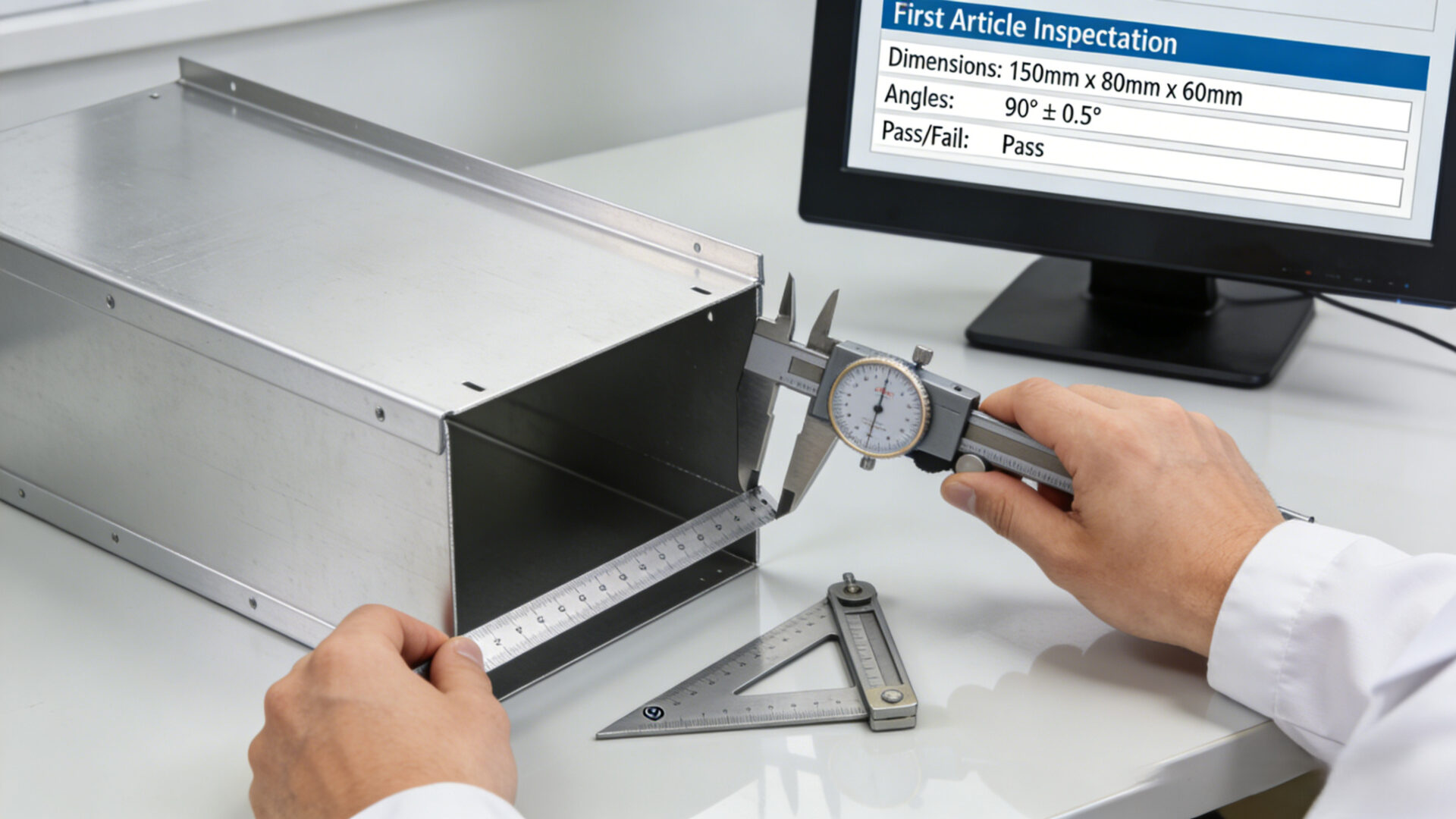
First Article Inspection (FAI)
PPAP support where required
For high-mix programs, typical documentation packages may include:
FAI for new or revised parts
Measurement reports for critical dimensions
Material certificates for corrosion-exposed components
Organizations working with ESD control frameworks may refer to IEC documentation such as the IEC 61340 family.
8. What to Include in Your RFQ
A clear RFQ reduces ambiguity and shortens approval cycles.
Recommended RFQ content includes:
Files
PDF drawings for quotation
STEP (.step / .stp) models
DXF/DWG files where available
Material specification
Grade and thickness
Acceptable alternatives
Sheet or coil preference
Finishing
Coating type
Masking requirements
Cosmetic class
Grounding contact zones
Quantities
Prototype quantity
Pilot run
Estimated annual volume
Tolerances
Critical features such as connector cutouts and mounting holes
Welding
Required processes (MIG, TIG, spot, stud)
Cosmetic requirements
Inspection
Material certificates
Measurement reports
FAI or PPAP if required
Packaging
Protection requirements
Labeling for assembly workflows
FAQ
What is the difference between hot rolled and cold rolled steel?
Hot rolled steel is often used for structural parts, while cold rolled steel provides tighter thickness control and a smoother surface, which can be useful for cosmetic enclosures or precision bends.
What does ferrous vs non-ferrous mean?
Ferrous metals contain iron (most steels).
Non-ferrous metals include aluminum, copper and titanium. The choice affects weight, corrosion resistance and sometimes electrical grounding assumptions.
Which sheet metal processes are most common for electronics?
Typical processes include laser cutting, punching, press brake bending, welding, hardware insertion and finishing processes such as powder coating or anodizing.
When should CNC machined aluminum parts be used instead of sheet metal?
Machining is often selected when parts require precise 3D geometry, flat thermal interfaces or tight mechanical tolerances.
How can metal costing be reduced without compromising quality?
Using standard material thicknesses, improving nesting efficiency, reducing hardware variety and applying early DFM reviews can help stabilize costs.