

For system integrators, panel builders, procurement teams, and electrical engineers, the real question is not whether a bidirectional module exists. The real question is whether the selected module will reduce RFQ risk, simplify cabinet integration, support battery formation and aging workflows, and give the project team a supplier that can discuss the full solution instead of shipping a box. The TPS-BM75053KTIF-S product page is relevant precisely because it is positioned for high-voltage, three-phase, bidirectional AC/DC conversion in demanding battery-related systems, while TPS can also support broader bidirectional power module solution discussions for global B2B projects.
This page is written for bottom-of-funnel evaluation. It focuses on what matters in supplier screening: selection logic, electrical fit, thermal and installation implications, communications, standards alignment, scalability, and the project questions you should clarify before releasing a purchase order or design freeze.
Why the TPS-BM75053KTIF-S matters at RFQ stage
In BoFu evaluation, the buyer already knows the application category. The open questions are narrower and more commercial: Is the DC side correct for the battery stack? Can the AC side live inside the real facility power envelope? What happens to harmonic performance, cabinet airflow, communication access, and expansion if the system grows after pilot phase? And just as important, will the supplier discuss these questions early enough to prevent redesign costs?
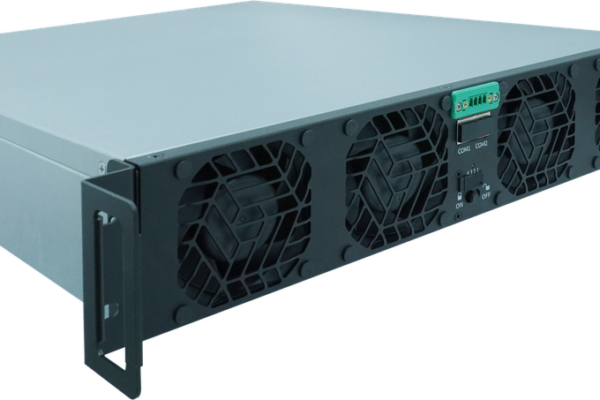
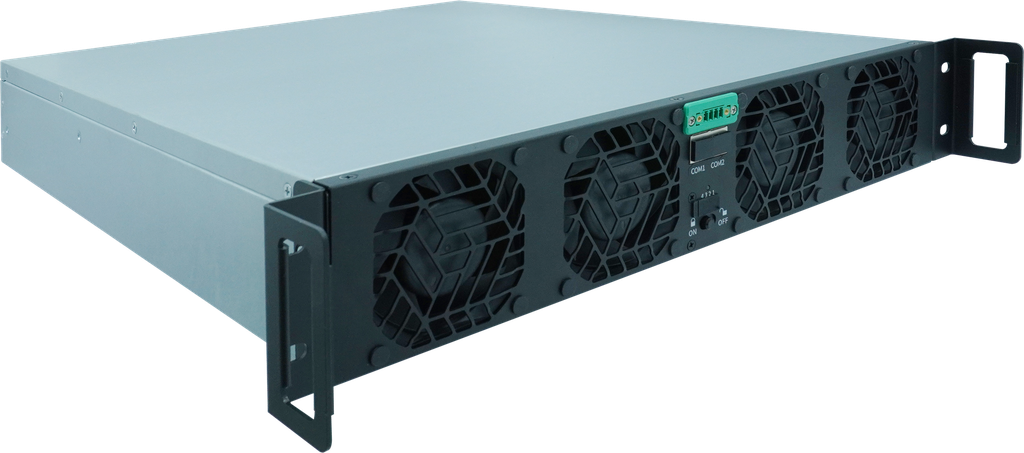
The TPS-BM75053KTIF-S is aimed at exactly that conversation. According to the uploaded specification, it is a three-phase bidirectional AC/DC module with 53 kW rated capacity, a 750 VDC DC side, high-frequency isolation, forced-air cooling, CAN/RS485 communication, expandable architecture, and application focus on battery pack aging, cells formed in series, and energy-recyclable power aging. The same specification also highlights AC to DC peak efficiency up to 96% and DC to AC peak efficiency up to 95%, PF 0.99, THDi below 5%, operation at full load up to 45°C, and derating above that range. Those are not generic brochure talking points; they are the parameters that shape electrical design, utility compliance discussions, thermal layout, and cost of ownership in real RFQs.
For system integrators and electrical engineers, the benefit is reduced uncertainty between the power stage and the rest of the test or formation architecture. For panel builders and procurement, the focus is on footprint, airflow, terminal access, scalability, documentation, and whether TPS can support the broader system instead of only quoting a part number.
This model should also be viewed as part of a wider power architecture. A high-power bidirectional stage often sits next to auxiliary control power, cabinet rails, bench validation equipment, and PLC-level coordination. TPS can support the power stage itself via the product listing for TPS-BM75053KTIF-S and broader selection work via its bidirectional power modules overview.
Selection logic before you ask for a quote
Start with the DC platform. If your system centers on 750 VDC, the model is immediately relevant. Then confirm the AC environment: rated input is three-phase 380/400/415 VAC with 3Ph+PE, while the operating range extends to 342–460 VAC at full load and derates below that range. This matters in international installations where nominal mains and real facility conditions do not match perfectly.
Next, decide whether bidirectional functionality is truly part of the project value proposition. In battery formation, regenerative aging, and energy-recycling test systems, it usually is. In simpler charging-only stations, it may not justify the system complexity. The right supplier conversation should therefore move quickly from “Can you supply this module?” to “How should we configure the whole power stage, cabinet space, and control interface for this duty cycle?” TPS should be evaluated on that broader capability, not only on part availability.
Key specifications that drive selection
If you are comparing suppliers during RFQ, this is where generic claims stop and engineering fit starts. The technical profile below is the part of the discussion that should appear directly in your vendor clarification sheet, internal design checklist, and quotation assumptions.
| Parameter | TPS-BM75053KTIF-S relevance for RFQ |
|---|---|
| Rated capacity | 53,000 W. Useful when you need high-power formation or aging stages rather than benchtop-level supply architecture. |
| AC side | 3Ph+PE, rated 380/400/415 VAC, with full-load voltage range 342–460 VAC and adaptive 50/60 ±5 Hz control. |
| DC side | 750 VDC rated, 70.7 A rated current. Suitable for 750 V battery-oriented system architecture. |
| Grid quality | PF 0.99 and THDi <5% at 400 VAC, full load, under stated THDu conditions. Important for facility-side acceptance and design confidence. |
| Efficiency | Peak efficiency 96% in AC→DC direction and 95% in DC→AC direction at 400 VAC, reducing wasted energy and thermal burden. |
| Isolation & control | High-frequency isolation plus CAN/RS485 communication support for system-level integration. |
| Expansion | Expandability up to 20 units and concatenation value of 2 shown in the specification, which should be reviewed against your final topology. |
These parameters are also a reminder not to reduce the buying decision to nameplate power alone. High PF and low THDi affect the grid interface conversation. High-frequency isolation affects system architecture and safety assumptions. Communication options affect commissioning and control effort. Expandability affects whether the module can stay with you from pilot rig to larger production-grade equipment. When you review the exact TPS-BM75053KTIF-S product page, treat it as the start of a technical discussion, not the end of one.
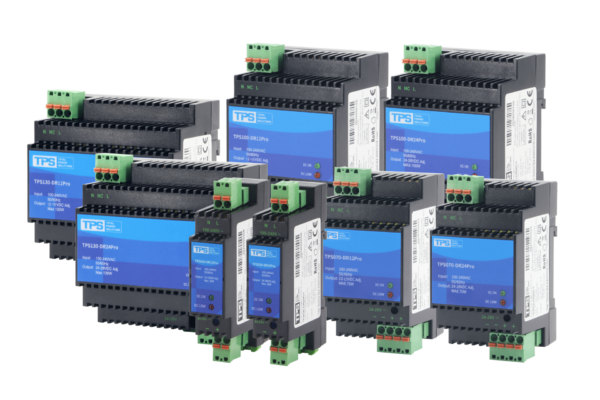
Separate this product class from lower-power cabinet or bench supplies in the same project. For auxiliary rail power, the TPS010-100W GP Series, TPS030-130W PRO Series, or TPS100-320W Peak DR+ Series may be more appropriate. For bench validation before full rack release, the EA-PS 3200-02 C or EA-PSI 9000 DT can support the workflow.
Integration and installation considerations
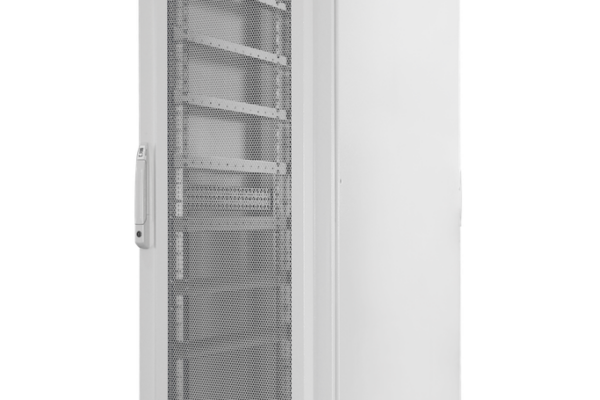
Many RFQs fail not because of electrical misunderstanding, but because of under-scoped installation details. The specification shows forced-air cooling with intelligent control and a defined air path: front fan side to rear terminal face. That immediately affects rack depth, service access, cable routing, filter strategy, and thermal zoning inside the enclosure. If a supplier cannot discuss airflow direction early, the module may fit electrically but become expensive mechanically.
Mechanically, the specification lists 435 × 86 × 600 mm without handle and 489 × 86 × 647.5 mm with handle, with weight below 23 kg. That means cabinet drawing review, structural mounting, service clearance, and rear terminal access should be checked before ordering. The installation page also shows reserved mounting holes and warns that screw length must not exceed hole depth.
Environmental limits matter just as much. Full-load operation is specified from -10°C to 45°C, with derating to 80% capacity from 45°C to 60°C. Full-load altitude is below 2000 m, and between 2000 m and 3000 m output power decreases by 1% for each 100 m increase in altitude. Relative humidity is 5% to 95% non-condensing. These points should be checked against the real site, not the nominal site. An indoor semi-conditioned test area near a process line is not the same as a clean lab. If your project is shipping globally, confirm the worst-case installation environment up front and take that information into the clarification call with TPS.
The communications side also deserves review. CAN/RS485 may suit many industrial controllers, but the real questions are how the module maps into your PLC or supervisory architecture, how faults are handled, and how operating data is logged during commissioning.
Standards, reliability, and safety conversation
The specification states that the design is intended to comply with IEC 62477-1 and EN 55032 and indicates UL, CE, and TÜV certification readiness. During RFQ, do not leave this at headline level. Ask which project documents, declarations, or compliance pathways are available for the exact commercial configuration you plan to buy. Ask how operating limits, torque requirements, maintenance instructions, and fault behavior are documented for the installation team. The specification also lists specific safety boundaries, including maximum mains RMS, maximum DC input voltage, insulation tool requirements, and prohibited environmental conditions such as corrosive gas, abnormal vibration, and salt spray. These details should feed directly into your installation checklist and acceptance procedure.
Application fit for battery formation and energy-recycling systems
The uploaded specification explicitly points to battery PACK aging, cells formed in series, and energy recyclable power aging. That makes the TPS-BM75053KTIF-S most relevant for projects where energy flow is part of the system logic, not an afterthought. In those systems, the commercial advantage is not only conversion accuracy or efficiency, but also the ability to build a cleaner architecture around the power stage.
In series cell formation, the DC platform and bidirectional nature matter because the power stage is tied to both process control and energy handling strategy. In regenerative aging or test systems, energy returned from the battery side can be managed more intelligently than in purely dissipative architectures. In grid-connected platforms, PF and THDi also affect facility acceptance, not just battery-side performance.
TPS should therefore be viewed as more than a reseller touchpoint. The company can support this type of product and related solution matching for industrial customers who need a conversation about module fit, supporting power architecture, and project coordination. If your application extends beyond this exact 750 V, 53 kW model, the broader TPS page on AC/DC bidirectional power modules for cell formation and the bidirectional module portfolio overview are the better entry points for solution discussion.
RFQ checklist for engineering and procurement
Before you send the final inquiry, align stakeholders around a shared checklist. System integrators should define grid-side assumptions, battery-side operating window, control architecture, and scaling expectations. Panel builders should confirm enclosure dimensions, airflow, cable entry, terminal accessibility, and service space. Procurement should ask for commercial scope, documentation, and adjacent product support. Electrical engineers should verify protection concept, communication mapping, environment, and commissioning assumptions.
A good RFQ to TPS should therefore include at least these points: intended battery application, target DC platform, utility voltage and site conditions, ambient temperature and altitude, required communication method, target cabinet arrangement, expected scaling path, and any compliance or customer-specific documentation needs. When that information is clear, the answer becomes more useful, the vendor comparison becomes fairer, and the risk of late-stage surprises drops significantly.
Ready to move from comparison to supplier clarification?
Review the TPS-BM75053KTIF-S model details, then use the TPS bidirectional power modules page as your next step for quote discussion, solution consultation, and project-level matching.
Why work with TPS on this product class
Bottom-of-funnel buyers do not need more generic traffic content. They need a supplier that can translate a product sheet into a project conversation. TPS can support customers looking for bidirectional power modules, equivalent solution paths, and supporting power products across the wider machine or test platform. That matters when your RFQ is not just about one line item, but about reducing design iteration and making the purchasing decision easier to defend internally.
For global B2B customers, that support often includes selection assistance, integration discussion, and coordination around application fit. The right next step is a focused technical-commercial exchange: share your battery voltage architecture, duty cycle, site conditions, interface preference, and scale plan, then ask TPS to confirm the fit of the TPS-BM75053KTIF-S or recommend a better route from the broader module range.
If that is your stage, open the product page for the TPS-BM75053KTIF-S and continue to the TPS bidirectional power module solution page to request a quote, discuss integration, or compare configuration routes with the TPS team.
FAQ
Is the TPS-BM75053KTIF-S mainly a charger?
It is more accurate to treat it as a bidirectional AC/DC power module for battery-related systems. That matters because RFQ evaluation should consider both charging direction and reverse energy flow, not only one-way power delivery.
What makes this model relevant for battery formation and aging systems?
The specification directly lists battery PACK aging, series cell formation, and energy-recyclable power aging as target applications. Combined with the 750 VDC platform and bidirectional operation, that makes it a practical candidate for those workflows.
What should panel builders confirm before ordering?
Check rack dimensions, airflow direction, terminal access, mounting hole constraints, ambient temperature, altitude, service clearance, and interface wiring. These points affect cabinet success as much as the electrical rating does.
Can TPS support the wider solution, not just this exact model?
Yes, that is the right commercial question to ask. TPS can support this product category, related bidirectional power module solutions, and supporting power products for broader industrial systems, which is especially useful in RFQ-stage architecture discussions.
When should procurement involve engineering in the inquiry?
Immediately. For this type of high-power bidirectional module, early engineering input on grid conditions, battery-side targets, interface requirements, and enclosure constraints improves quote quality and reduces change risk later.