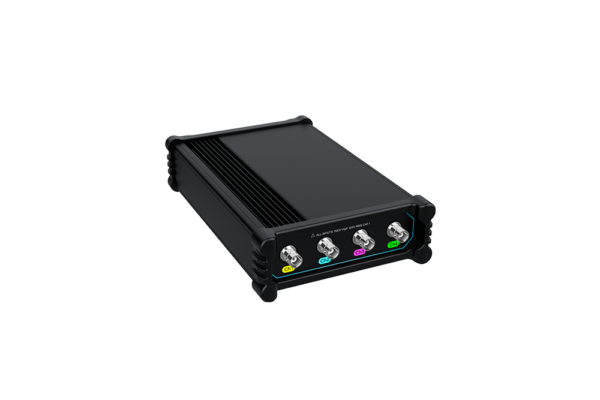


System integrators, panel builders, procurement teams, and electrical engineers rarely evaluate an oscilloscope only by bandwidth. In real projects, the purchasing question is broader: can the instrument capture the right signals, survive field use, support repeatable diagnostics, fit the workflow of service or commissioning teams, and be supplied with the documentation, accessories, and project support needed for a clean RFQ?
The Oscillograph ATO Series in the TPS portfolio is positioned for these practical buying decisions. It combines a portable tablet format with automotive diagnostic presets, deep memory, multi-channel signal capture, serial bus decoding, battery operation, Wi-Fi, USB, HDMI, and PC/mobile remote control. TPS can support customers not only with the target ATO products, but also with model selection, equivalent solution discussions, accessory planning, and project-level consultation for global B2B programs.
Why the ATO Series fits RFQ-driven oscilloscope projects
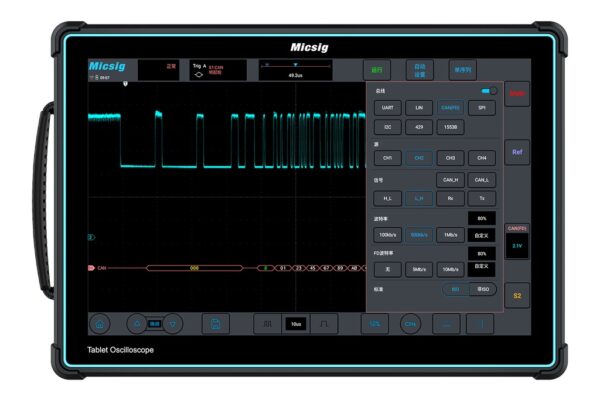
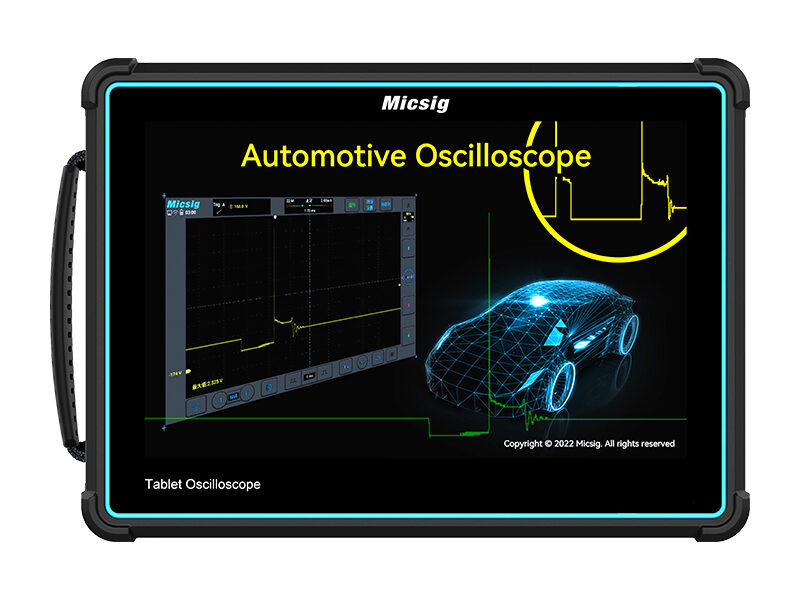
For engineering buyers, an automotive tablet oscilloscope is a decision tool, not just a lab instrument. It helps field teams capture transient behavior, confirm sensor and actuator timing, inspect CAN or LIN communication, validate power supply behavior, and document faults that may not appear during static multimeter checks. The ATO Series is designed around that practical workflow: a 10.1-inch touch display, portable housing, built-in lithium battery, pre-installed hand strap, and diagnostic presets that reduce setup time when technicians need a repeatable measurement method.
That matters for system integrators and panel builders because troubleshooting often happens outside a controlled bench environment. A cabinet builder may need to verify a 24V control system during commissioning. A system integrator may need to compare a sensor output against actuator response. An electrical engineer may need waveform evidence before approving a design change. Procurement may need a clear, stocked product path rather than a vague instrument category. TPS addresses these needs by offering the oscilloscope product category and RFQ consultation together with specific ATO shop items for project sourcing.
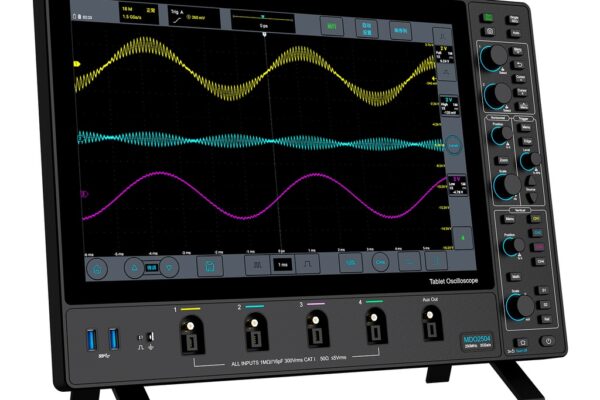
The ATO Series is especially relevant when a customer wants a portable oscillograph that can bridge automotive diagnostics and industrial field measurement. The product family supports 2 or 4 analog channels, up to 200 MHz bandwidth in the target TPS shop products, up to 2 GSa/s sampling rate depending on model, up to 220 Mpts memory depth, a 10.1-inch 1280 x 800 TFT-LCD touch display, and broad interface support including Wi-Fi, USB host, USB Type-C, HDMI, grounding, and trigger output. These specifications help project teams define a measurable scope during supplier comparison.
2/4 analog channels, deep memory, triggers
Presets for sensors, actuators, ignition, networks
Waveform storage, screenshots, USB export
TPS model selection, RFQ, accessories, support
How the ATO Series supports RFQ workflows from waveform capture to TPS consultation.
Model selection: ATO1004, ATO2002, and ATO2004
The best ATO model depends on channel count, bandwidth, memory depth, sampling performance, and whether 50 ohm input operation or segmented storage is needed. TPS can help customers clarify these factors before a purchase order is created. This reduces the risk of ordering a lower-cost instrument that later fails to capture the required event, or an over-specified unit that exceeds the project need.
ATO1004: four-channel entry point for common field diagnostics
The Oscillograph ATO1004 is a practical choice when the project requires four analog channels, 100 MHz bandwidth, 1 GSa/s maximum sampling, and 110 Mpts memory depth. It is suited for teams that need to compare multiple signals in a compact service instrument: for example, power rail behavior versus a sensor output, actuator drive versus feedback, or timing between low-voltage control points.
ATO2002: 200 MHz bandwidth for two-channel analysis
The Oscillograph ATO2002 is the fit when two analog channels are enough but higher bandwidth is required. It provides 200 MHz bandwidth, 1 GSa/s maximum sampling, 110 Mpts memory depth, and 1 Mohm input impedance. This model can be attractive for procurement teams that want a focused two-channel instrument for service, training, diagnostic comparison, or maintenance programs.
ATO2004: four channels, 200 MHz, and deeper acquisition capability
The Oscillograph ATO2004 is the strongest fit among the listed TPS target products when the customer needs four analog channels at 200 MHz bandwidth. It supports up to 2 GSa/s maximum real-time sampling and up to 220 Mpts memory depth. It also supports 1 Mohm / 50 ohm input impedance and segmented storage, making it relevant when the user needs to catch intermittent events or analyze repeated pulses without wasting memory on inactive time.
Key technical parameters for engineering evaluation
Engineering teams should evaluate the ATO Series by the signals they need to observe. Bandwidth should be selected based on waveform edge speed, not only on nominal signal frequency. Sampling rate and memory depth determine whether the instrument can capture detail over a useful time window. Trigger functions determine whether rare or intermittent events can be isolated. Input impedance, probe type, and safety limits determine whether the measurement setup is appropriate for the system under test.
| Model | Bandwidth / channels | Sampling / memory | Best-fit RFQ use case |
|---|---|---|---|
| ATO1004 | 100 MHz, 4 analog channels | 1 GSa/s max., 110 Mpts | Four-channel portable diagnostics where 100 MHz is sufficient |
| ATO2002 | 200 MHz, 2 analog channels | 1 GSa/s max., 110 Mpts | Higher-bandwidth two-channel service and validation tasks |
| ATO2004 | 200 MHz, 4 analog channels | 2 GSa/s max., 220 Mpts | Multi-signal commissioning, intermittent events, deeper waveform analysis |
Across the family, the 10.1-inch capacitive display, 1280 x 800 resolution, 8-bit vertical resolution, cursor measurements, 31 automated measurement types, FFT, math functions, quick screenshots, waveform storage, and 32GB internal storage make the instrument useful for documentation and repeatable service procedures. Trigger types include edge, pulse width, logic, N edge, runt pulse, slope, timeout, video, and serial trigger options. Bus decoding includes RS-232/422/485/UART, LIN, CAN, CAN FD, SPI, and I2C, with optional decoding expansions available for specialized projects.
Choose 4-channel ATO1004 or ATO2004.
Select ATO2002 or ATO2004.
ATO2004 supports up to 220 Mpts and segmented storage.
Product selection matrix for the ATO1004, ATO2002, and ATO2004 oscillographs.
Application fit for diagnostics, commissioning, and system support
The ATO Series is described as an automotive tablet oscilloscope, but its RFQ value extends beyond garage diagnostics. It is useful wherever a portable oscillograph helps engineering teams verify real electrical behavior. In vehicle-related work, the preset structure covers charging and start circuits, AC ripple, cranking current, sensors, actuators, ignition, network signals, combination tests, and pressure-related diagnostics. For industrial service teams, the same measurement concepts apply to control signals, switched loads, communication lines, and intermittent power events.
System integrators can use a portable oscilloscope to support commissioning when a PLC, HMI, sensor chain, actuator, or power module does not behave as expected. Panel builders can use waveform data to validate wiring, grounding, transient behavior, and control sequence timing. Procurement teams can standardize a portable diagnostic kit for regional service teams. Electrical engineers can use stored waveforms and screenshots to support root-cause analysis and design review.
TPS can also connect the ATO Series to adjacent system needs. For example, oscilloscope troubleshooting often goes together with control power validation. TPS content on compact DIN rail power supplies, 24V DIN rail supply selection, and power boost DIN rail supplies can help buyers frame a broader troubleshooting or system validation package. For test benches, TPS also supports programmable DC supply and load topics such as desktop programmable DC power supplies and regenerative DC load solutions.
Integration, installation, and field-work considerations
Because the ATO Series is portable, integration is less about panel mounting and more about workflow design. A buyer should define where the instrument will be used, which probes and adapters are required, how data will be exported, and whether remote display is needed for training or demonstration. The product family supports local and USB storage, industry-standard flash drives, screenshots, waveform files in csv, wav, and bin formats, 32GB internal storage, Wi-Fi, HDMI, Android/iOS app support, and PC remote control.
The physical specification is also important for field use: 265 x 192 x 50 mm, about 1.9 kg net weight with battery, and a 7.4V / 7500 mAh lithium battery. The power source range is 100-240VAC, 50/60Hz, with power consumption below 60W. Operating environment is specified at 0-45 degrees C, with non-operating storage from -40 to 60 degrees C. These details help procurement compare the instrument against workshop, service vehicle, production support, and training requirements.
Measurement safety must be addressed during RFQ. The published maximum input information includes CAT I limits for 1 Mohm operation and a separate low-voltage limit for 50 ohm operation. TPS recommends that customers define voltage class, probe type, grounding method, and isolation requirements before ordering. For high-voltage or high-current work, the standard instrument may need suitable accessories or an alternative measurement strategy. TPS can support this discussion and, where appropriate, help source probes, adapters, or related test equipment for a complete solution.
The ATO Series as part of a portable field diagnostics workflow.
Procurement, reliability, documentation, and RFQ support
For procurement teams, a successful oscilloscope RFQ should not end with a model number. It should specify channel count, bandwidth, input impedance, accessory kit, target measurement cases, data export expectations, warranty expectations, and delivery timing. The ATO Series specification lists standard accessories such as passive BNC probes, power adapter, local power plug, built-in battery, screen protector, alligator clips, BNC-to-banana cables, flexible needles, hard case in master kit configuration, multimeter probe in master kit configuration, and secondary ignition pickup in master kit configuration. It also states a three-year warranty for the base unit and 180 days for accessories.
TPS can help translate these details into a clean procurement specification. If the target is a single service kit, the ATO1004 may be enough. If bandwidth is the selection driver, the ATO2002 may be the more focused option. If the team needs four channels and a stronger capture envelope, the ATO2004 should be evaluated first. If the application calls for related measurement, power, or load equipment, TPS can also discuss equivalent or complementary solutions from its broader product and solution portfolio.
Global B2B projects often involve more than a one-time order. Buyers may need support for repeat purchases, standardized service kits, multilingual users, export documentation, and engineering clarification. The ATO Series supports multiple languages including English and German, and TPS can assist US, European, and global customers with model selection and commercial follow-up through the TPS oscilloscope solution page.
RFQ checklist before contacting TPS
To accelerate quotation and avoid unnecessary clarification loops, prepare a short RFQ package. Include the signals to be measured, expected frequency or edge speed, number of simultaneous channels, voltage range, probe requirements, communication protocols, documentation expectations, and delivery quantity. If the instrument will be used in a service network, define whether each kit needs identical accessories and whether training display through HDMI or remote control is relevant.
A practical RFQ note might say: “We need a portable automotive oscillograph for commissioning and field diagnostics, 4 channels preferred, CAN/CAN FD and LIN decoding required, USB export required, accessories for low-voltage control and ignition-related diagnostics to be reviewed, quantity 5 units for global service team.” With that information, TPS can recommend whether the ATO1004, ATO2002, ATO2004, or an equivalent solution is the most suitable path.
Contact TPS for an oscilloscope RFQ
RFQ checklist for selecting and sourcing an ATO Series oscillograph from TPS.
FAQ
When should I choose the ATO Series instead of a traditional bench oscilloscope?
Choose the ATO Series when portability, automotive diagnostic presets, battery operation, touch operation, field documentation, and serial bus troubleshooting are central to the workflow. A bench oscilloscope may still be preferred for fixed laboratory setups, but the ATO Series is stronger for mobile service and commissioning tasks.
Which TPS ATO model should be quoted first?
If you need four channels at an economical entry point, review ATO1004. If two channels and 200 MHz bandwidth are enough, review ATO2002. If four channels, 200 MHz bandwidth, deeper memory, and segmented acquisition are important, review ATO2004 first.
Can TPS help define probes and accessories?
Yes. Accessory planning should be part of the RFQ, especially for ignition, current, high-voltage, or differential measurements. TPS can help review the measurement task and discuss suitable accessories or equivalent solutions.
Can TPS support global B2B customers?
Yes. TPS serves global B2B customers and can support model selection, RFQ clarification, repeat sourcing, and project-level discussions for system integrators, panel builders, procurement teams, and electrical engineers.
What is the next step for a quotation?
Prepare the RFQ checklist above and contact TPS through the oscilloscope solution page. Include the preferred ATO model, required quantity, application, measurement signals, accessory expectations, and delivery location.