

Product Blog | BoFu Selection Guide
For system integrators, panel builders, procurement teams, and electrical engineers, the TPS-BM159000UHIT and TPS-BM159000UHIRT are designed for projects where low-voltage, high-current bidirectional power conversion must be integrated into cell formation equipment, bidirectional test systems, and regenerative power aging platforms. This article focuses on selection logic, integration checks, RFQ preparation, and how TPS can support project-level product and solution requirements.
Why this module matters in RFQ-stage projects
When a project has already reached the supplier comparison or RFQ stage, the purchasing question is rarely limited to nominal power. Engineering and procurement teams usually need to confirm whether the selected AC-DC bidirectional power module can support the required DC voltage window, current level, grid connection, thermal layout, communication method, and documentation expectations. The TPS-BM159000UHIT and TPS-BM159000UHIRT are positioned for these practical decisions: a compact three-phase bidirectional module for low-voltage, high-current energy conversion.
The module family supports AC-to-DC conversion for powering a DC process and DC-to-AC conversion for returning energy to the AC side. This is especially valuable in battery cell formation, battery grading, power component testing, and burn-in or aging systems where energy would otherwise be dissipated as heat. For B2B projects, the commercial value is not only energy saving; it is also lower heat load, simplified thermal design, and the possibility of building more scalable test capacity.
TPS can support B2B customers with related products, equivalent solutions, and project-level selection assistance. If your requirement is not limited to a single module but includes system integration, cabinet planning, power distribution, or a customized bidirectional test architecture, the TPS bidirectional power module solution page is the recommended RFQ entry point.
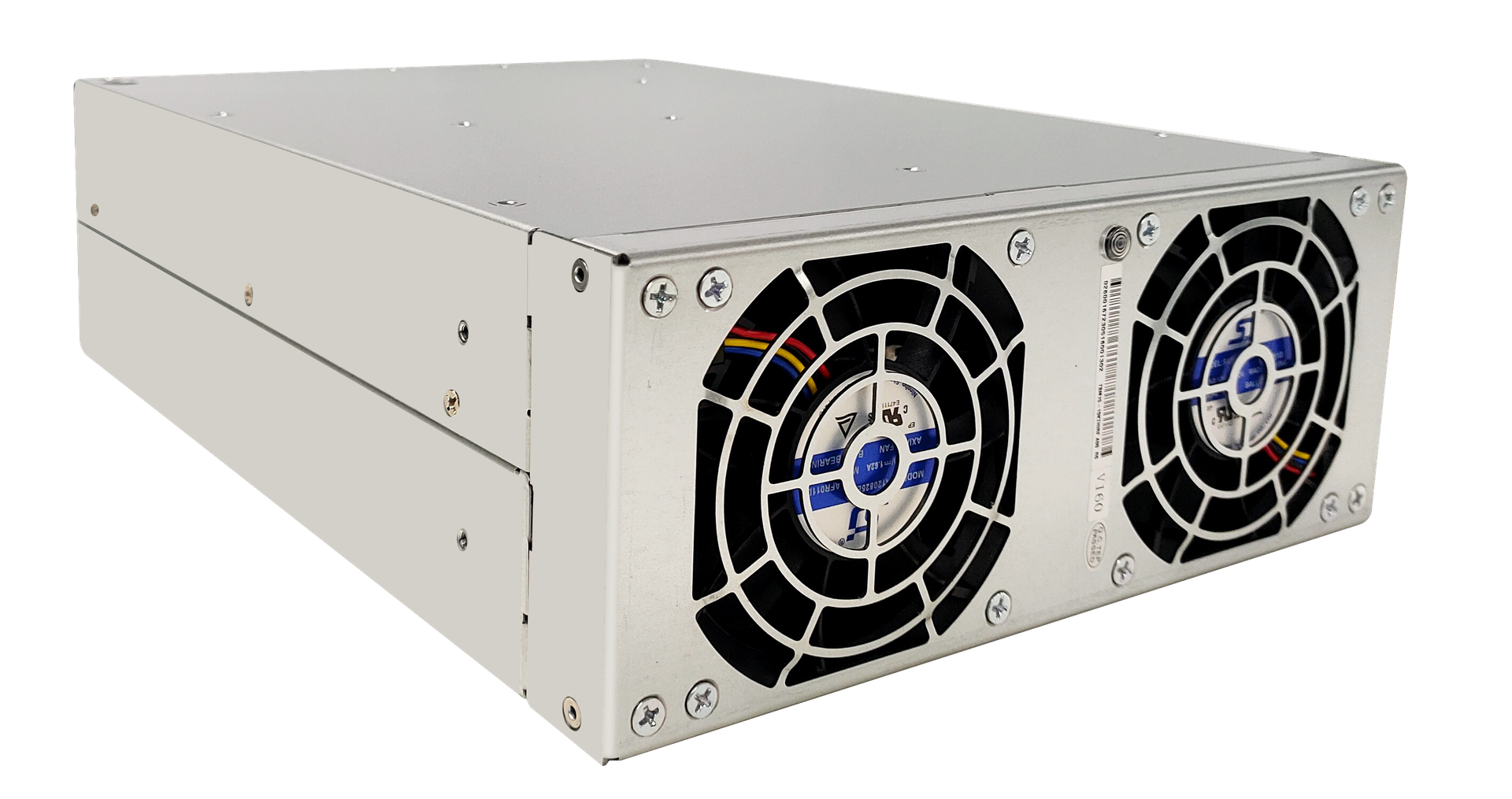
Compact bidirectional conversion for project integration
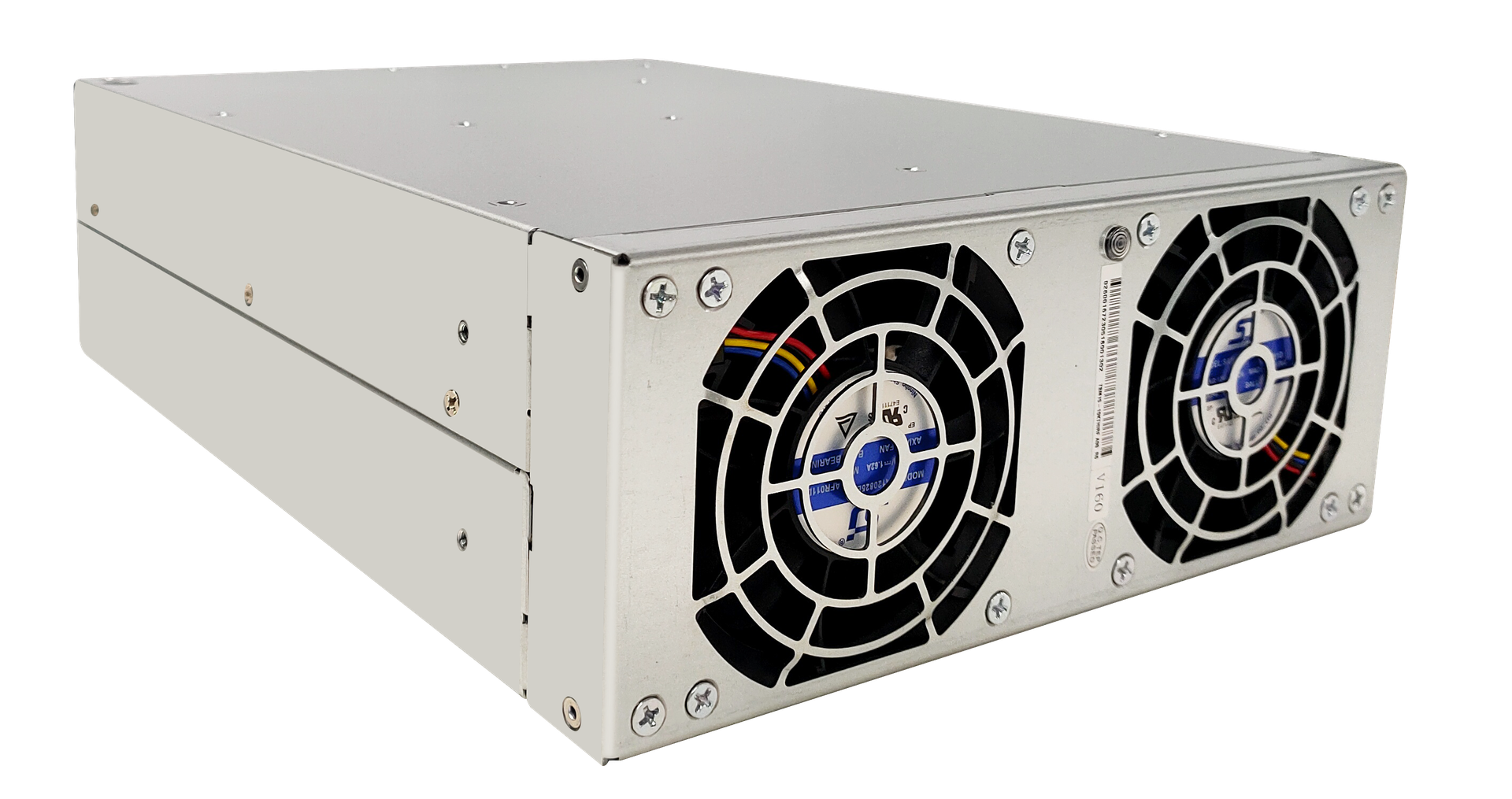
The 15V class module helps integrators build energy-recycling test channels where compact size, high current, forced-air cooling, and CAN communication are required.
Technical profile and key specifications
The TPS-BM159000UHIT / TPS-BM159000UHIRT is a three-phase low-voltage AC-DC bidirectional power module. The product uses a three-phase, no-neutral-line input concept and supports bidirectional energy flow between the AC grid side and a low-voltage DC side. In practical terms, this allows equipment manufacturers to build test systems that source power to the DUT during one step and recover energy during another step.
For engineers, the most important starting point is the direction-specific rating. In AC-to-DC operation, the module is specified for 9,000 W output capacity with 15.5 VDC rated output and 580 A rated current. In DC-to-AC operation, the module is specified for 7,200 W rated input capacity with 15 VDC rated input and 480 A rated current. The AC side is designed around 3Ph+PE, 480 VAC rated voltage, and a 384-528 VAC range with 50/60 Hz adaptive control.
| Parameter | TPS-BM159000UHIT / TPS-BM159000UHIRT | RFQ relevance |
|---|---|---|
| Rated AC-to-DC output capacity | 9,000 W | Defines channel power for formation or test equipment. |
| AC-to-DC DC output | 15.5 VDC, 580 A | Important for low-voltage, high-current battery and component tests. |
| Rated DC-to-AC input capacity | 7,200 W | Determines regenerative capacity during discharge or energy return cycles. |
| DC-to-AC DC input | 15 VDC, 480 A | Must match the DUT voltage range and discharge profile. |
| AC side | 3Ph+PE, 480 VAC rated, 384-528 VAC range | Confirms grid compatibility and panel design requirements. |
| Power quality | PF 0.99, THDi <5% under specified conditions | Supports grid-friendly regenerative test equipment design. |
| Cooling and control | Forced air cooling, intelligent control, CAN communication | Affects cabinet layout, PLC/system interface, and service access. |
| Parallel expansion | Up to 4 units in parallel, current sharing non-balance ≤5% | Useful when the system requires scalable current or modular redundancy. |
| Mechanical size and weight | 218 x 86 x 300 mm, ≤6.5 kg | Helps panel builders plan mounting, airflow, and service clearance. |
For applications that require other voltage classes or system architectures, TPS can also discuss related bidirectional module platforms such as the 750V bidirectional power module and the 700V bidirectional power module. This allows buyers to compare whether a 15V high-current design or a higher-voltage platform is the better fit for the test architecture.
Selection logic for engineers and buyers
1. Match the voltage and current window before comparing price
In RFQ evaluation, the first technical filter should be the DC-side operating window. A low-voltage module such as the TPS-BM159000UHIT / TPS-BM159000UHIRT is especially relevant when the process requires high current at around 15V. This is common in cell formation fixtures, low-voltage battery pack processes, component stress testing, and energy recovery channels. If the process is outside this voltage range, TPS can help review whether another bidirectional module family or a customized system concept is more suitable.
2. Confirm both power directions, not only the charging direction
Many systems look sufficient when only AC-to-DC power is checked. In regenerative equipment, however, the DC-to-AC direction is just as important. The module is rated differently in the two directions: 9,000 W for AC-to-DC output and 7,200 W for DC-to-AC input. Procurement and engineering teams should confirm the required discharge or recovery power profile before finalizing the RFQ. This avoids a mismatch between formation-channel power and regenerative return capacity.
3. Check grid quality, PF, THDi, and EMC expectations
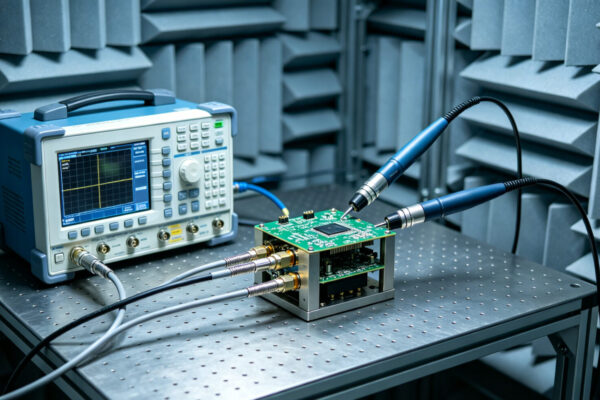
Energy-return equipment interacts with the power grid, so grid quality cannot be treated as a secondary topic. The module specifies high power factor and low input current distortion under defined grid conditions. For factories with unstable supply, mixed loads, or strict power quality expectations, engineers should include grid voltage, harmonic requirements, grounding concept, and EMC expectations in the RFQ. The module specification references excellent EMC performance and EN 55032-related expectations; final documentation requirements should be confirmed project by project.
Select the module as part of the whole power system
Voltage, current, grid quality, cooling path, communication, and documentation requirements should be reviewed together before a purchasing decision is made.
Integration, airflow, parallel operation, and cabinet planning
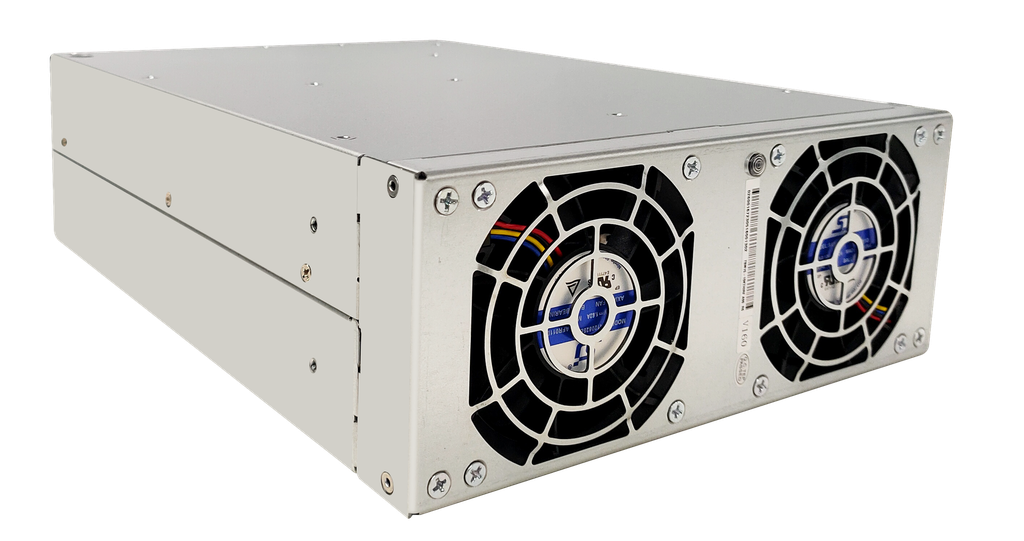
Panel builders and system integrators should evaluate the module not only as an electrical component but also as a mechanical and thermal building block. The housing size of 218 x 86 x 300 mm and weight of up to 6.5 kg are favorable for compact modular systems, but reliable operation still depends on correct mounting, unobstructed air path, terminal access, and service clearance.
The two product variants are useful when airflow direction must match the cabinet concept. The standard TPS-BM159000UHIT module uses the default front-inlet and rear-outlet airflow concept. The TPS-BM159000UHIRT variant supports an R-type airflow arrangement, described as rear inlet and front outlet. This distinction is important in dense cabinets, 19-inch power assemblies, and test racks where heat must be guided away from the operator side or service side.
For higher current or scalable test capacity, the module can be expanded with up to four units connected in parallel. The specified current sharing non-balance of ≤5% supports modular design, but the final system must still consider busbar sizing, cable length symmetry, protection coordination, ventilation, and control logic. If a complete rack or cabinet solution is required, TPS can support related power integration work, including solutions that connect module-level selection with mechanical packaging. Relevant examples include 6U 19-inch chassis power supply integration, 42U 19-inch power cabinet planning, and 24U cabinet power integration.
Thermal planning should include the specified full-load operating range of -10°C to 45°C and derating from 45°C to 60°C. For procurement teams, this means the RFQ should clearly state ambient temperature, installation altitude, cabinet airflow, expected duty cycle, and whether the system will run continuous formation, pulsed testing, or mixed operating modes.
Application fit: cell formation, testing, and power aging
The strongest fit for the TPS-BM159000UHIT / TPS-BM159000UHIRT is equipment that must frequently move energy in both directions. In cell formation and battery test equipment, the module can source current during charging steps and support energy return during discharge steps. For laboratories and production lines, this can reduce wasted energy and lower the thermal load compared with systems that dissipate energy in resistive loads.
For power bidirectional test equipment, the module supports fast direction changes and high-current low-voltage operation. This is useful when validating DC components, protection devices, power electronics stages, or low-voltage energy storage units. Where a complete load concept is needed, engineers may also compare regenerative DC load architectures such as the EA-PUL 10000 6U regenerative DC load with module-based system design. The right choice depends on whether the project requires a ready-to-use instrument, a module inside a machine, or a fully integrated test cabinet.
Built for energy-recycling production equipment
The module is well suited to systems where repeated charge and discharge cycles make regenerative operation commercially and thermally valuable.
Power aging systems are another relevant use case. In conventional aging setups, energy is often converted into heat, increasing cooling requirements and operating cost. A bidirectional AC-DC architecture can return a portion of the energy to the AC side, making it attractive for factories with high channel counts. For auxiliary control, PLC, sensor, and DIN-rail cabinet circuits, TPS can also support complementary power products such as compact TPS010-100W GP Series DIN rail power supplies, TPS030-130W PRO Series 24V DIN rail power supplies, and TPS100-320W PEAK DR PLUS units with power boost.
RFQ checklist for faster quotation
To receive a technically useful quotation, customers should provide more than a model name. TPS can support product selection, equivalent solution review, custom integration discussions, and global B2B project coordination, but the quotation will be faster and more accurate when the application data is clear.
Electrical data
- Required DC voltage and current range
- Charge, discharge, and regenerative power profile
- AC grid voltage, frequency, grounding, and harmonic limits
- Expected duty cycle and operating temperature
Mechanical and system data
- Preferred airflow direction: standard or R-type
- Cabinet dimensions, mounting position, and service access
- Parallel quantity, busbar concept, and cable routing
- Control interface and CAN communication requirements
Commercial and documentation data
- Target quantity, project timeline, and delivery location
- Required certificates, test reports, and compliance documents
- Need for equivalent solution, customization, or system integration
- After-sales, spare parts, and long-term supply expectations
Ready to confirm the right module variant?
For direct model evaluation, review the TPS-BM159000UHIT product page and the TPS-BM159000UHIRT product page. For solution-level support, contact TPS through the bidirectional module RFQ page.
For customers who are comparing module-based architectures with programmable DC power supplies, TPS can also support adjacent evaluation topics, for example compact desktop DC supplies such as the EA-PS 3200-02 C or higher-performance programmable DC platforms such as the EA-PSI 9000 DT. This helps procurement and engineering teams compare whether the best fit is a rack instrument, a power module, or a custom system.
Discuss your 15V bidirectional power module requirement with TPS
TPS can provide related products, equivalent solutions, engineering consultation, and project-level integration support for global B2B customers. Whether you need a single sample, a multi-channel cabinet, or a scalable regenerative testing platform, share your electrical, mechanical, and commercial requirements for review.
FAQ
What is the main difference between TPS-BM159000UHIT and TPS-BM159000UHIRT?
The key practical difference is the airflow arrangement. The standard version uses a front-inlet and rear-outlet concept, while the R-type version is intended for reverse airflow planning. This should be selected according to cabinet cooling, service access, and heat exhaust direction.
Is this module suitable for battery cell formation?
Yes, the module is positioned for cell formation and test equipment, especially where low-voltage high-current operation and energy recovery are required. The exact suitability depends on the cell voltage window, channel architecture, current profile, and required control interface.
Can several modules be connected in parallel?
The specification indicates expandability up to four units in parallel with current sharing non-balance of ≤5%. The final system design should still verify busbar layout, cable symmetry, protection coordination, cooling, and control logic.
What should be included in the RFQ?
Include DC voltage and current range, AC grid details, required power in both directions, ambient temperature, airflow preference, quantity, project timeline, required certificates, and whether you need module supply only or system integration support.
Can TPS support an equivalent or customized solution?
Yes. TPS can support product selection, equivalent solution discussion, customization review, and project-level power integration for global B2B customers. Use the bidirectional power module contact page to share your technical requirements.