

For system integrators, panel builders, procurement teams and electrical engineers, a 53 kW bidirectional AC/DC power module is not only a component purchase. It becomes part of the power architecture, cabinet layout, grid interface, test workflow and supplier risk profile. The TPS-BM70053KTIF-S 700V ACDC bidirectional power module is designed for project teams that need controlled AC/DC and DC/AC energy flow in battery PACK aging, series cell formation, regenerative power aging and industrial power test systems. TPS supports global B2B customers with product selection, equivalent solution review, integration discussion and RFQ preparation for bidirectional power module projects.
Why this module belongs in a serious RFQ discussion
BoFu buyers usually arrive at a bidirectional module page with a defined problem: the test bench, battery aging line or energy-recycling system already has a power range, a grid connection concept, a control architecture and a deadline. At that stage, generic traffic from broad keywords is not enough. The relevant question is whether a supplier can help the project team reduce technical and commercial uncertainty before the RFQ is released.
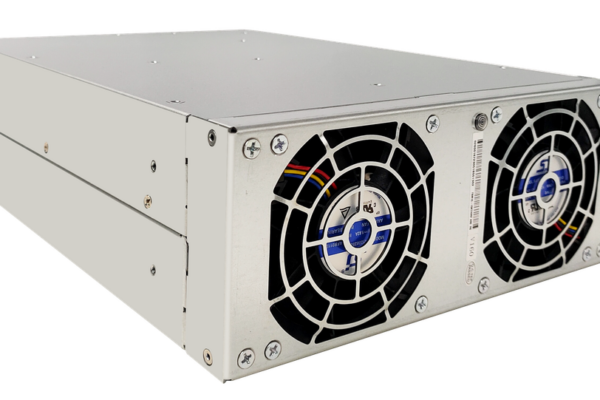
The TPS-BM70053KTIF-S is positioned for that type of decision. It is a three-phase high-voltage AC/DC bidirectional power module with a rated output capacity of 53,000 W, 700 VDC nominal DC side and 75.8 A rated current. It supports bidirectional energy conversion: AC to DC for source operation and DC to AC for recovery operation. For test systems that repeatedly charge and discharge batteries or battery-like devices, that bidirectional behavior can reduce wasted energy, simplify architecture and support recyclable power aging workflows.
For system integrators, the value is not only the rated power. The module uses a three-phase AC input without neutral line, supports high power factor and low current distortion, and is designed for fast bidirectional switching. For panel builders, the mechanical form factor, airflow direction, terminals and weight affect cabinet layout. For procurement, the important point is that TPS can provide the product, discuss equivalent or project-specific solutions and support the purchasing decision with technical details. For electrical engineers, the key questions are grid compatibility, DC voltage limits, thermal behavior, communication interface and protection concept.

Key specifications for first-pass selection
The first engineering filter is simple: does the power module match the electrical window of the project? The TPS-BM70053KTIF-S is built around a 3Ph+PE AC interface and a 700 VDC DC side. The AC rated voltage is 380/400/415 VAC, with a full-load voltage range of 342-460 VAC and derating to 80% in the 304-342 VAC range. The frequency range is 50/60 Hz +/-5 Hz with adaptive control. Input current is specified up to 94 A maximum. In AC to DC operation, the module provides 700 VDC, 75.8 A, less than 1% voltage accuracy, ripple voltage of 2% or lower and peak efficiency of 96.0% at 400 VAC. In DC to AC operation, peak efficiency is 95.0% at 400 VAC.
Power quality is also part of the selection logic. The module is specified with PF 0.99 at 400 VAC full load under a power grid THDu of 2% or lower, and THDi below 5% under the same grid condition. That matters for integrators working with facility teams, transformer capacity, harmonic expectations and grid-connected recovery operation. The specification also highlights bidirectional fast switching time below 2 ms, high-frequency isolation, forced-air cooling with intelligent control and non-balance of current sharing below 5%.
| Product type | ACDC bidirectional power module, three-phase high-voltage platform |
|---|---|
| Rated capacity | 53,000 W |
| AC side | 3Ph+PE, 380/400/415 VAC, 342-460 VAC full load, 50/60 Hz +/-5 Hz |
| DC side | 700 VDC rated voltage, 75.8 A rated current |
| Efficiency | Up to 96.0% AC to DC and 95.0% DC to AC at 400 VAC |
| Communication | CAN / RS485 |
| Mechanical data | Approx. 435 x 86 x 600 mm without handle, weight <=23 kg; confirm final drawing during cabinet design |
For teams comparing different module families, the key is to avoid a purely nominal-power comparison. A module that looks similar at 50 kW class may differ in DC platform, allowed AC range, communications, airflow, certification path and derating rules. TPS can help review the actual operating profile and compare whether this TPS-BM70053KTIF-S product configuration, a related 750 V bidirectional power module or another TPS solution is the better fit.
Application fit: battery PACK aging, formation and regenerative testing
The best application fit is where the system repeatedly moves energy in both directions. Battery PACK aging is a typical example: the process requires controlled charging, controlled discharging and a reliable way to manage returned energy. Series cell formation is another use case, especially when the test architecture benefits from a high-voltage AC/DC stage. Energy recyclable power aging is also a clear match because recovered power can be fed back instead of being dissipated as heat in a conventional load-only architecture.
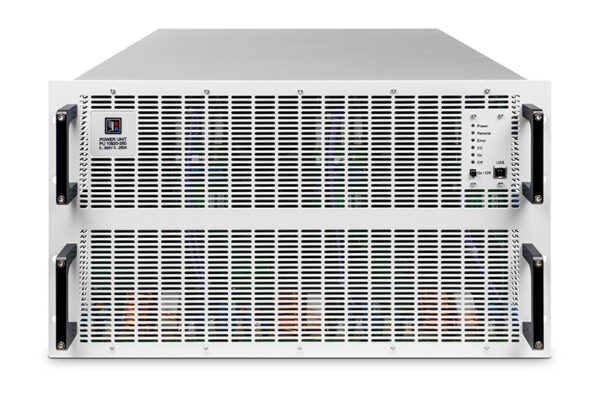
In a complete test environment, the module may be one part of a larger architecture. A regenerative DC load such as the EA-PUL 10000 6U regenerative DC load can support load-side testing in other voltage and power ranges. Programmable DC power sources such as the EA-PS 3200-02 C desktop programmable DC power supply or EA-PSI 9000 DT programmable DC supply can be relevant for bench validation, subsystem development or lower-power prequalification. TPS does not need to force every project into one product. The better RFQ conversation is to map the voltage, current, power direction, duty cycle, facility constraints and test-control concept first.
For electrical engineers, the practical discussion should include transient behavior, DC bus limits, switching between power directions, protection coordination and control response. For procurement, it should include whether a single supplier can support technical clarification before quotation. The TPS bidirectional power modules portfolio gives buyers a structured starting point for AC/DC and DC/DC platforms, while the TPS-BM70053KTIF-S product page provides the specific commercial product entry for this 700 V, 53 kW module.
Integration and cabinet design considerations
Panel builders should evaluate the module as a thermal and mechanical device, not only an electrical component. The specification lists forced-air cooling with intelligent control and airflow from the front fan side to the rear terminal face. This means cabinet design must reserve air intake and exhaust paths, prevent recirculation and consider heat from adjacent devices. The operation temperature range supports full load from -10 degrees C to 45 degrees C, with capacity derating to 80% from 45 degrees C to 60 degrees C. That is useful for industrial environments, but it still requires realistic cabinet thermal calculation.
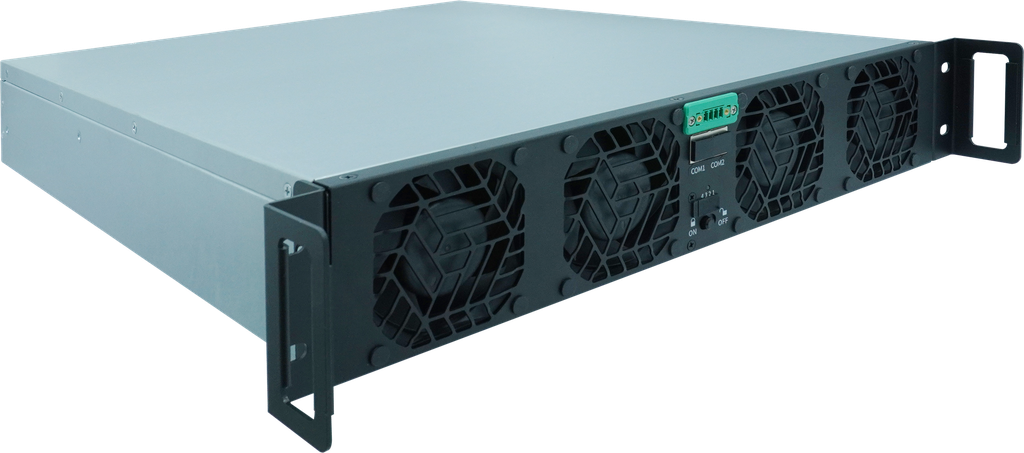
The mechanical drawing shows a slim rack-style format with AC butt terminals, DC butt terminals, indicator lamp, dry contact and DIP switch locations. Installation notes identify reserved mounting holes and warn that the screw length must not exceed the mounting-hole depth. For a production cabinet, that detail matters: wrong screw length, insufficient service clearance or blocked airflow can create avoidable installation risk. TPS can support the selection discussion so that module quantity, cabinet depth, terminal access, busbar routing and serviceability are reviewed before the purchase order is fixed.
Auxiliary power and control architecture also need attention. Many cabinets require separate DIN-rail supplies for PLCs, relays, fans, HMI, gateways or safety circuits. Depending on the load profile, TPS-related DIN-rail resources such as the TPS010-100W GP Series compact DIN rail power supply, the TPS030-130W Pro Series 24 V supply or the TPS100-320W Peak DR+ Series with power boost may be reviewed for cabinet auxiliary circuits. This is where TPS can be more useful than a component-only supplier: the discussion can connect the high-power module, cabinet support power and test-system architecture.
Standards, reliability and project qualification
The specification states that the TPS-BM70053KTIF-S is designed to comply with IEC 62477-1 and EN 55032 and can pass UL, CE and TUV certification. For BoFu buyers, this should not be treated as a marketing checkbox. It should become a documentation question inside the RFQ: which certificates, declarations, test reports or project documentation are required for the destination market, the end customer and the system integrator’s internal release process?
Reliability is also related to operating limits. The product safety notes warn against operation outside the defined input voltage, temperature, humidity and environmental provisions. They also warn that the power module may be damaged when mains RMS voltage exceeds 475 VAC or when DC input voltage exceeds 900 VDC. That makes protection coordination, overvoltage assessment, facility grid review and DC bus design important topics in the engineering conversation. In environments with flammable gas, corrosive gas, abnormal vibration, salt spray, uncontrolled humidity or heavy metal dust, the system concept should be reviewed carefully before selecting any standard module.
From a supplier-selection perspective, TPS can support this qualification work by discussing the product capability, equivalent solution options, project customization boundaries and integration requirements. The goal is not to replace the integrator’s risk assessment. The goal is to make the RFQ technically specific enough that quotation, lead time, documentation and acceptance criteria can be aligned early.
Procurement and supplier-screening logic
Procurement teams often compare multiple quotes by price, lead time and nominal power. For high-power bidirectional modules, that is too narrow. A better supplier-screening template should include AC voltage range, DC platform, derating behavior, efficiency in both directions, power quality figures, communication protocol, mechanical envelope, airflow requirement, documentation support and after-sales contact. It should also include whether the supplier can recommend adjacent products for the same cabinet or test architecture.
TPS is positioned for this type of B2B purchasing process. Buyers can start with the TPS-BM70053KTIF-S shop entry for a defined product and then move to a project conversation through the bidirectional power module solution page. If the RFQ requires a different DC voltage or a related power class, TPS can also help compare alternatives such as the 14 V AC/DC bidirectional module platform for cell formation or the 750 V bidirectional power module. This keeps the conversation centered on the technical requirement, not on a single model name.
RFQ checklist for the TPS-BM70053KTIF-S
To accelerate quotation and technical review, include the following information when contacting TPS: required AC grid voltage and allowed THDu conditions; required DC voltage window and maximum DC bus voltage; charge and discharge current profile; required power direction switching behavior; duty cycle and ambient temperature; installation altitude; cabinet cooling concept; communication preference between CAN and RS485; required certificates or compliance documentation; target market; annual quantity or project quantity; desired delivery schedule; and whether auxiliary power supplies, programmable power sources or regenerative loads should be quoted as part of the same system package.
For a fast first step, share the application description and the expected operating point. TPS can then discuss whether the TPS-BM70053KTIF-S 53 kW module is the right choice, whether a related TPS bidirectional product is more suitable, or whether the RFQ should include customization or integration support. For project teams already defining a cabinet or test line, use the TPS bidirectional power modules contact path to align technical scope and commercial quotation requirements.
Contact TPS for bidirectional power module selection Open TPS-BM70053KTIF-S product page
FAQ
Is the TPS-BM70053KTIF-S only a battery test module?
No. Battery PACK aging, series cell formation and energy-recyclable power aging are key application areas, but the selection logic is broader: any suitable industrial system requiring three-phase AC/DC and DC/AC bidirectional energy flow around a 700 VDC platform can be discussed with TPS.
What information should engineering provide before requesting a quote?
Provide AC grid details, DC bus requirements, current profile, duty cycle, ambient temperature, cabinet airflow concept, control interface and required documentation. This helps TPS check whether the 53 kW 700 V module is the right fit or whether another TPS solution should be reviewed.
Can TPS support equivalent or project-specific solutions?
Yes. TPS can discuss the target product, related bidirectional power modules, auxiliary cabinet power and integration needs. The aim is to support a technically clear RFQ rather than simply quote a model number.
Which standards or certifications should be confirmed?
The specification states design alignment with IEC 62477-1 and EN 55032 and the ability to pass UL, CE and TUV certification. Confirm the exact documentation package required for your market and end customer during the RFQ stage.
Where should procurement start?
Start with the TPS-BM70053KTIF-S product page for model-level details, then use the TPS bidirectional power modules page to contact sales and discuss the complete RFQ.