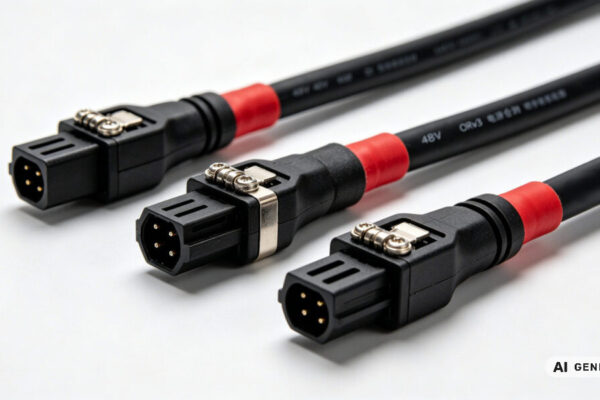


System integrators, panel builders, and procurement teams rarely fail because they lack a product design. They lose time—and budget. When the individual power supplies, PDUs, cabling, and enclosures for a complex 19‑inch rack arrive from different vendors, and nobody has taken responsibility for the electrical integration. Incompatible connectors, mismatched grounding strategies. And unclear test documentation turn a standard rack build into a last‑minute debugging crisis that delays factory acceptance testing and eats into profit margins.
TPS Elektronik’s custom rack power supply integration service designed to eliminate this fragmentation. By delivering a complete, turnkey 19‑inch power system. From power supply selection and PDU configuration to wiring, labeling, and functional test — TPS provides a single accountable partner for the most critical subsystem in your industrial automation or test equipment rack.
1. Why rack power integration determines project success
When a system integrator receives a purchase order for a complete 19‑inch rack, the bill of materials typically includes a dozen or more active components: PLCs, drives, measurement cards, switches, and embedded computers. Each device needs a specific voltage rail, a defined current capacity. And appropriate protection against overcurrent and short circuits. Sourcing these power components from multiple catalog distributors creates a fragmented bill of lading that the integrator must untangle on site. A missing DIN‑rail clip, an incompatible AC input connector. Or a PDU with the wrong outlet spacing can halt the entire rack build.
A rack power supply integration service addresses this risk at the sourcing stage. Instead of delivering a box of loose power supplies, TPS assembles, wires, and tests the complete power subsystem on a sub‑panel or directly in the rack frame. The integrator receives a power system that is ready to connect to the load devices, with a single electrical diagram and a single set of test reports. This approach eliminates the hidden engineering hours that procurement teams often forget to budget for in‑house integration. For a deeper dive into how mechatronics and robotics concepts apply to system integration, refer to the TPS mechatronics and robotics guide.
2. TPS turnkey rack power integration scope
The TPS custom rack power integration service spans the entire electrical portion of a 19‑inch rack build. TPS engineers work from the integrator’s schematic or block diagram. Or they design the power architecture from scratch based on a load list. The result is a fully documented, fully tested power assembly that fits into any standard 19‑inch enclosure — whether it is a TPS‑supplied cabinet or a customer‑specified frame.
2.1 Power supply selection and mounting
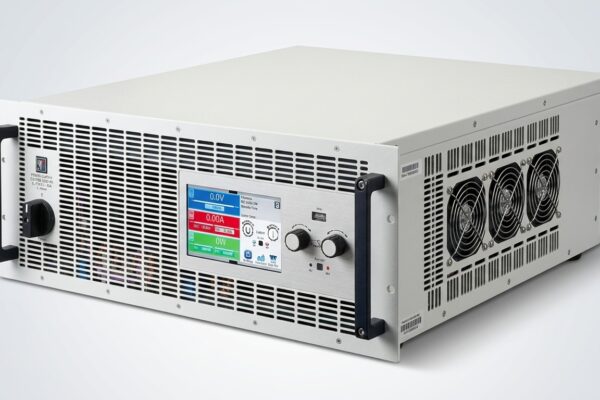
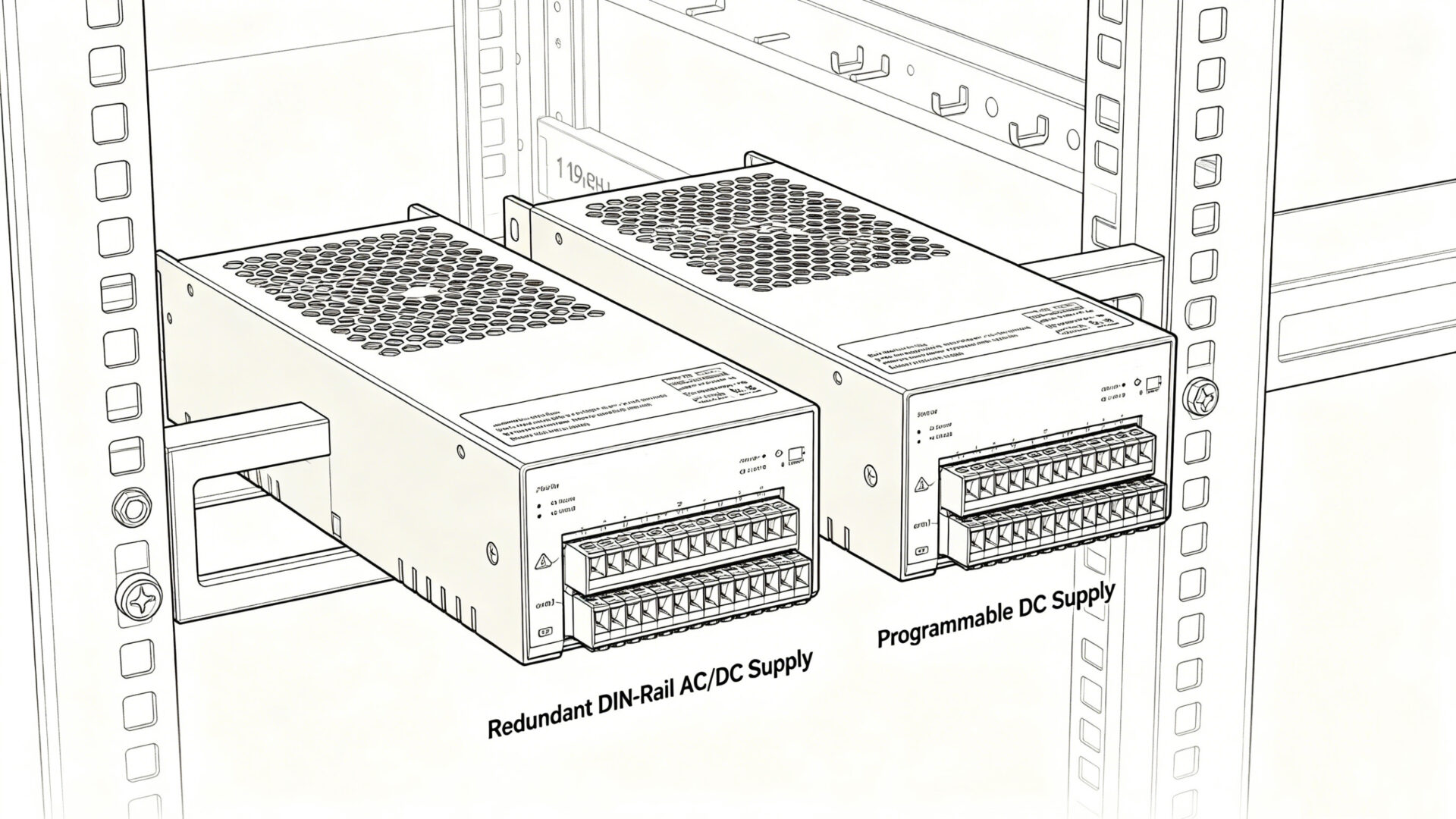
Selecting the right rack power supply involves more than matching wattage. For industrial automation racks that run 24 V DC logic and field devices, TPS typically integrates DIN‑rail switching power supplies from its own product portfolio. Such as the TPS030‑130W Pro series — mounted on a dedicated power sub‑panel at the bottom or side of the rack. For test equipment racks requiring programmable DC voltages, TPS integrates TPS‑GPC series programmable supplies, often with remote sense and RS‑485 communication interfaces wired back to a central controller.
Redundancy is a common requirement in critical automation systems. TPS designs and builds N+1 or 1+1 redundant PSU configurations with active OR‑ing circuits and alarm contacts, ensuring that a single power supply failure does not bring down the entire rack. All PSUs are securely mounted on DIN rails or mounting plates, with torque‑controlled terminal connections that eliminate the risk of loose contacts during transport. TPS’s expertise in integrated system solutions further detailed in the article on EMS mechatronics: integrated systems and precision machining.
2.2 PDU configuration and load management
A rack power distribution unit (PDU) consolidates the AC or DC input feed and distributes it to multiple protected output circuits. TPS configures custom PDUs for each rack, selecting the appropriate input connector (IEC 60309, NEMA, or terminal block), output outlet types (IEC C13, C19, Schuko, or terminal strips), and circuit protection (MCBs or fuses) according to the load schedule. This custom approach eliminates the all‑too‑common sight of multiple plug‑in power strips daisy‑chained inside a rack. An arrangement that violates wiring regulations and creates ground‑loop noise that can disrupt sensitive measurements.
For DC‑oriented racks, TPS builds DC distribution modules with fused outputs and LED status indication. These modules distribute 24 V DC from the main PSU to individual field device circuits, with proper sizing of conductors and protection devices per IEC 62368‑1 requirements. The DC distribution integrated onto the same sub‑panel as the PSUs. Which creating a compact, pre‑wired power core that can be installed in the rack as a single unit.
2.3 System wiring, labeling, and cable management
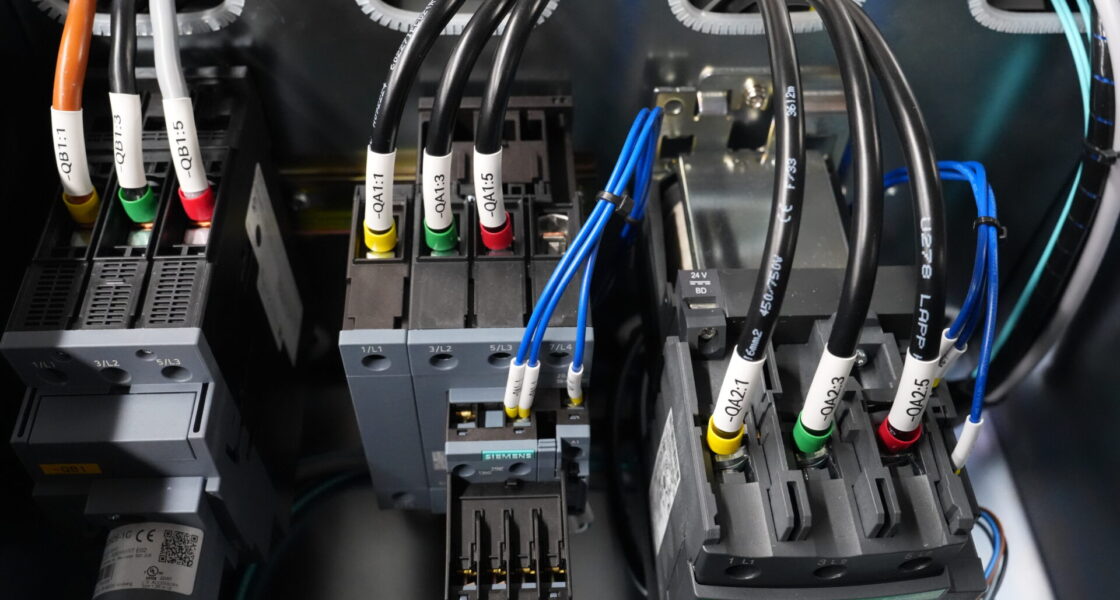
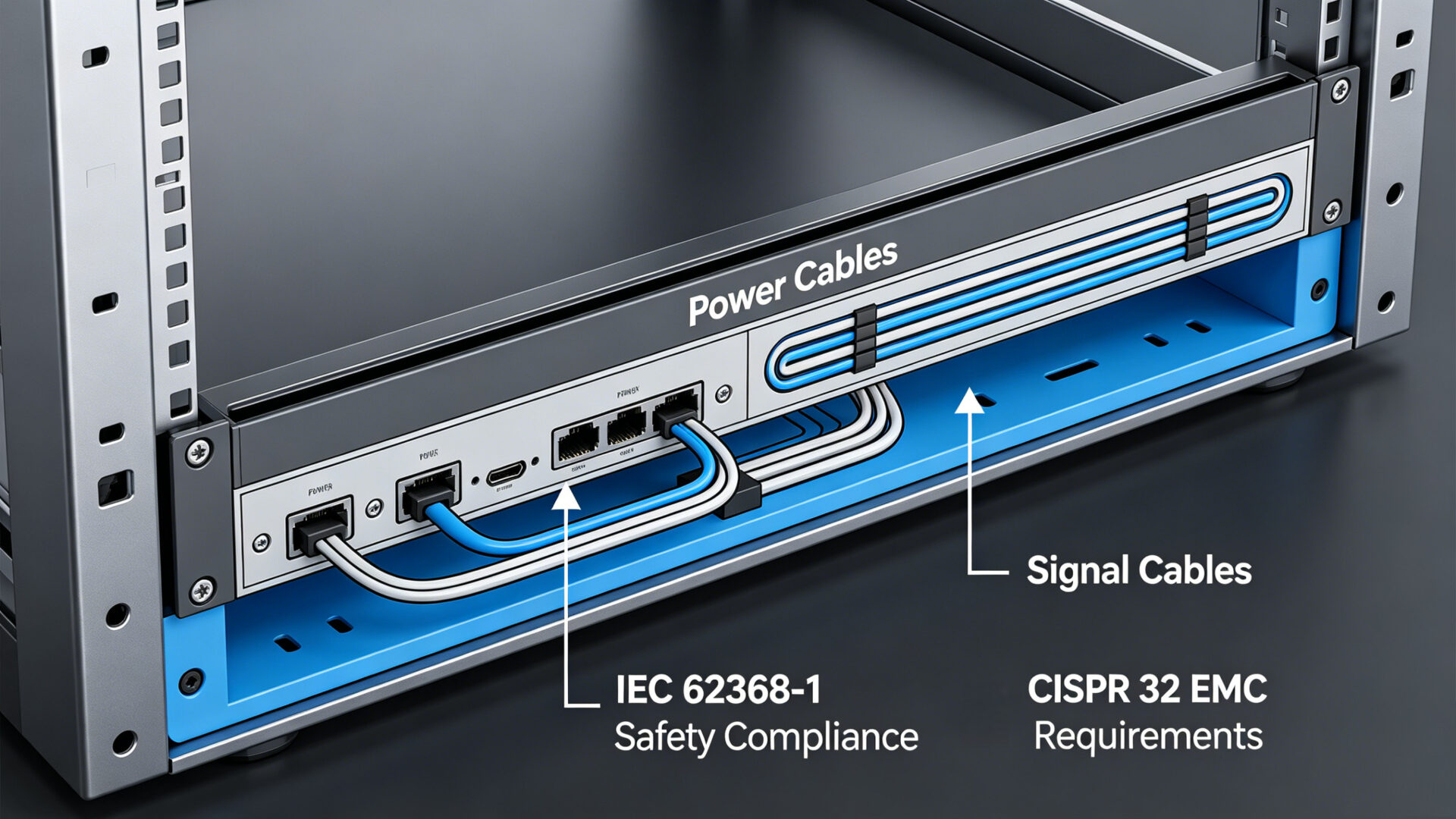
Turnkey rack power integration includes complete wiring between the power core and the load devices. TPS uses color‑coded wiring (blue for 24 V DC, black for AC line, green‑yellow for protective earth) and applies machine‑printed heat‑shrink labels to every conductor at both ends. Cable routing follows defined paths through the rack frame, with power cables separated from signal cables to minimize electromagnetic coupling. This level of wiring discipline is documented in the rack’s electrical schematic, which TPS provides as part of the project deliverables. TPS’s approach to system wiring and documentation aligns with the principles outlined in the guide on EMS mechatronics: PLC control systems.
3. Compliance and safety: IEC 62368‑1 and EMC
Any 19‑inch rack that incorporates power electronics and is destined for the European market must comply with the Low Voltage Directive (2014/35/EU) and the EMC Directive (2014/30/EU). TPS integrates compliance into the design phase, not as an afterthought. The power core built and tested to IEC 62368‑1, the hazard‑based safety standard for audio/video, information. And communication technology equipment that has replaced the legacy IEC 60950‑1 and IEC 60065 standards. This standard covers protection against electric shock, fire, mechanical hazards, and thermal hazards. All relevant to a densely wired power enclosure.
Electromagnetic compatibility (EMC) is another critical factor. A rack containing switching power supplies, variable‑frequency drives, and sensitive measurement equipment can easily exceed the conducted emissions limits of CISPR 32 / EN 55032 if cabling and grounding are not properly designed. TPS addresses this through proper cable segregation, shielded cable termination. And the use of ferrite clamps where necessary. For a more detailed discussion on mechatronic system integration for Industry 4.0 environments, see the TPS article on mechatronics, intelligent systems, and the future of Industry 4.0.
4. Application examples: industrial automation and automated test equipment
The custom rack power supply integration service designed for two primary application domains. Although the principles apply to any 19‑inch rack containing active electronics.
In industrial automation, a typical project involves a control cabinet rack housing a PLC, I/O modules, safety relays, networking switches, and field device power supplies. TPS builds the power sub‑panel with redundant 24 V DC supplies, a DC distribution module, and a maintenance bypass switch. The wiring routed to terminal blocks that the integrator can easily connect to field devices. The entire assembly is documented with a wiring schedule and a functional test report, supporting the end customer’s CE declaration.

In automated test equipment (ATE), a rack may contain multiple PXI chassis, programmable power supplies, a PC controller, and a signal switching matrix. TPS integrates all power components — AC/DC supplies, DC/DC converters, and programmable units — into a single power core that fits within the rack footprint. The integration includes the communication wiring (RS‑485 or Ethernet) for programmable supplies. Which allowing the test executive software to control output voltages programmatically. This approach is consistent with the end‑to‑end mechatronic design philosophy described in the article on EMS mechatronics from design integration to precision parts production.
5. RFQ checklist for rack power integration
To expedite a quotation for a turnkey rack power integration project, please provide the following information:
- Rack type and dimensions: 19‑inch cabinet or open frame, height (U), depth (mm), and any constraints on the power sub‑panel location.
- Load list: A spreadsheet listing each active device, its supply voltage, maximum current draw, and connector type.
- Redundancy requirements: N+1 or 1+1 redundant PSU configuration, if needed, and whether hot‑swap capability is required.
- Input power: Single‑phase or three‑phase, voltage and frequency, input connector or terminal type.
- Output distribution: Number and type of protected output circuits (MCB ratings, outlet types), DC distribution requirements.
- Communication interfaces: For programmable supplies, specify the preferred bus (RS‑485, Ethernet, or analog control).
- Applicable standards: Target safety standard (IEC 62368‑1, UL 508, etc.) and EMC standard (EN 55032 Class A or B).
- Documentation: Required test reports, wiring diagrams, and CE declaration.
6. FAQ
What does a turnkey rack power integration service include?
TPS provides the complete power subsystem for a 19‑inch rack: power supply selection and mounting, PDU configuration, system wiring with labeling, electrical testing, and full documentation. The integrator receives a pre‑tested, ready‑to‑connect power core.
Can TPS integrate power supplies that are not from its own product line?
Yes. While TPS has a portfolio of DIN‑rail and programmable DC supplies, the service is equipment‑agnostic. TPS can integrate customer‑specified power supplies, provided they meet the relevant safety standards and interface requirements.
Does TPS handle both AC and DC power distribution in the same rack?
Yes. Many industrial and test racks require both AC (for instruments, PC, cooling) and DC (for PLC, sensors, actuators). TPS designs and builds the complete power core with the necessary galvanic isolation and protection for each voltage rail.
What documentation is delivered with the integrated rack power system?
The standard documentation package includes an electrical schematic, a wiring schedule, a functional test report, a CE declaration (if applicable), and a material declaration per RoHS Directive. Custom documentation packages are available upon request.
Where can I learn more about TPS’s mechatronics and integration capabilities?
Visit the TPS mechatronics service page, or read the detailed overviews on integrated system solutions and intelligent systems for Industry 4.0.