


System integrators and deployment teams rarely fail because they lack a server specification. They lose time—and budget. When the final step of a data center build, the physical cabling, descends into a chaotic, multi‑week process of on‑site termination, testing, and rework. A major system integrator tasked with deploying hundreds of cabinets for a new colocation facility faced exactly this bottleneck. The initial plan to field‑terminate thousands of copper and fiber connections quickly revealed itself as a critical path risk, with a single bad fiber splice having the potential to delay an entire cabinet’s commissioning.
TPS Elektronik’s data center rack cabling solution, based on factory‑pre‑terminated copper and fiber trunk assemblies, was brought in to eliminate this field labor bottleneck. By moving the complex termination, testing, and certification processes to TPS’s controlled factory environment, the integrator transformed a critical risk into a predictable, plug‑and‑play installation.
1. The field‑termination bottleneck
The integrator’s initial project plan called for installing 200 cabinets with over 4,000 copper Category 6A connections and 800 multi‑mode fiber links. Field termination selected for its perceived material cost advantage. However, the reality on site quickly eroded that advantage. The clean environment needed for reliable fusion splicing was difficult to maintain amidst ongoing construction. Skilled technicians were in short supply, and their productivity was low. Most critically, each terminated link required individual testing and certification. A single failed test meant time‑consuming troubleshooting, often involving re‑terminating both ends of a cable. The result was a creeping installation timeline that threatened to delay the facility’s handover and trigger significant contractual penalties.
2. The TPS pre‑terminated trunk solution
TPS proposed a fundamental shift in approach: moving the critical termination work off‑site. The integrator provided precise measurements of each cabinet’s cable pathways. TPS then manufactured custom‑length, pre‑terminated copper trunk assemblies and fiber trunk assemblies, terminated in our factory with the required connectors (RJ45 for copper, LC or MPO for fiber) and pulling grips. Our approach ensures these complex assemblies are ready for immediate, secure installation upon delivery. For more context on our cable assembly capabilities and documentation, see our detailed guide on tested and documented cable assembly.

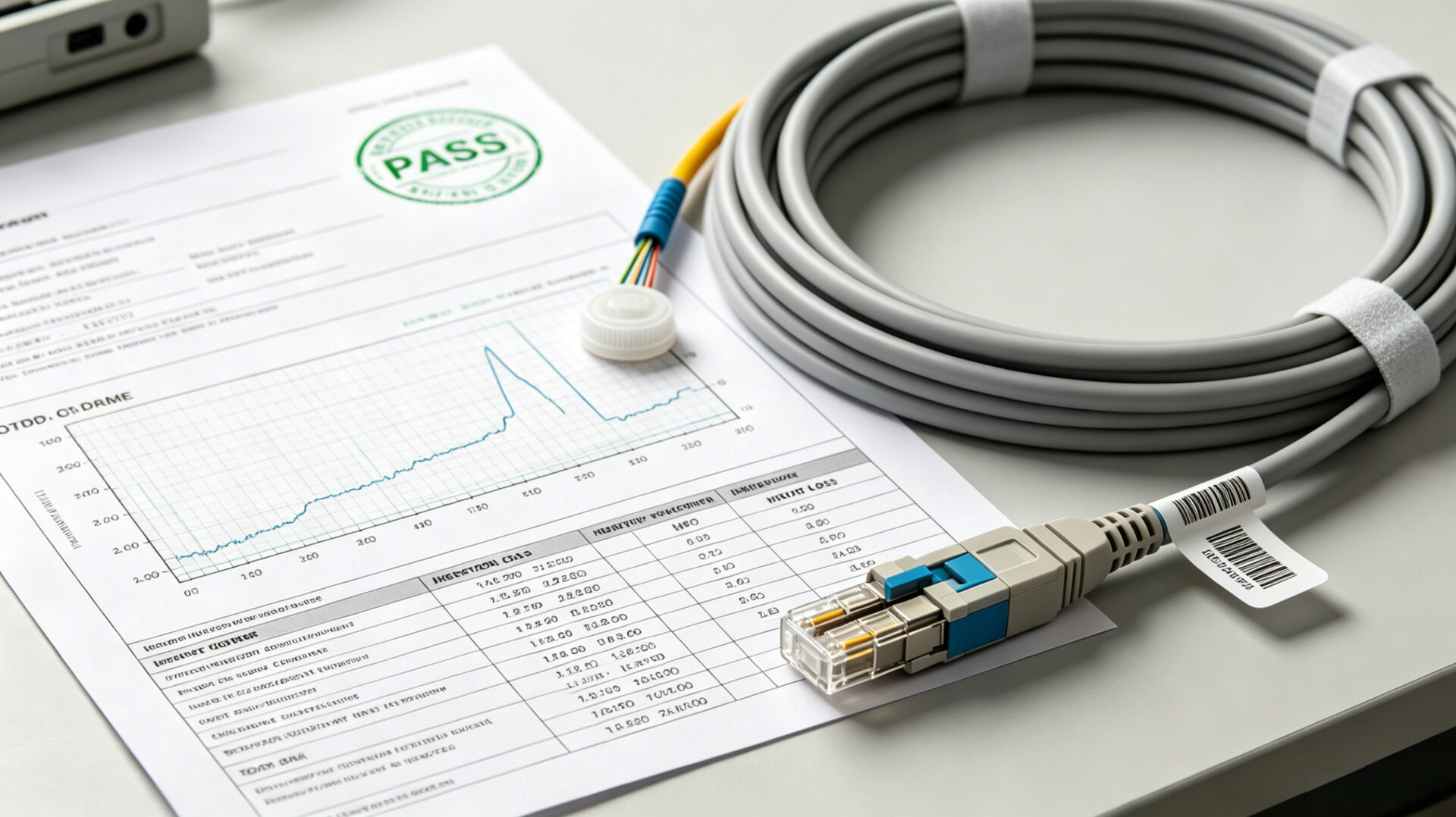
This approach had two key advantages. First, every cable and fiber was 100 % tested in our factory, with an individual test report provided for each assembly. This documentation, including OTDR traces and insertion loss data for fiber and wiremap and NEXT results for copper, guaranteed performance and eliminated the need for on‑site certification testing after installation, saving the integrator hours of work per cabinet and ensuring that every trunk assembly was fully documented and traceable. Second, the on‑site process was reduced to a simple pull‑and‑click operation. The cables arrived on spools labeled with their destination cabinet and port, and junior technicians could install them quickly without specialized splicing skills. This eliminated the bottleneck of waiting for a limited number of skilled splicers. For specialized connector types, our expertise extends to a wide range of options, as detailed in our guides for BNC connectors and SMA connectors.
3. Measurable results: deployment speed and reliability
The switch to TPS’s pre‑terminated solution had a dramatic impact on the project’s trajectory. The time to cable and commission a fully populated cabinet decreased significantly. The team went from cabling a handful of cabinets per week to deploying them at a much faster rate. The near‑elimination of on‑site testing rework, thanks to factory‑provided test reports, further accelerated the schedule. Perhaps most importantly, the project achieved its revised go‑live date without a single field‑related cabling failure. For a broader discussion on how TPS handles fiber optic assemblies with similar rigor, visit our resource on EMS fiber optic cable assemblies. This shift also enabled the use of plug‑and‑play fiber trunk cable data center architecture, where components are rapidly connected without field splicing, further accelerating the deployment timeline and reducing the need for specialized on‑site labor.
4. RFQ checklist for pre‑terminated rack cabling
- Cable types and counts: Number of copper (Cat6, Cat6A) and fiber (OM3, OM4, OS2) trunks required per cabinet.
- Connector specifications: Copper connector type (RJ45, GG45) and fiber connector type (LC Duplex, MPO‑12/24).
- Lengths and routing: Exact measured lengths for each trunk run, including service loops.
- Labeling requirements: Unique IDs for each cable, matching a provided port map or naming scheme.
- Documentation: Required test reports (OTDR, insertion loss, wiremap) per assembly.
- Packaging: Pulling eyes, spooling for pay‑out, and boxing labeled per cabinet.
5. FAQ
What is the main advantage of factory pre‑terminated trunks over field termination?
The primary advantage is risk reduction. Factory termination moves the complex, error‑prone process of connector attachment and testing into a controlled environment, replacing it with a simple, fast mechanical installation on site and providing guaranteed, documented performance.
How are custom lengths managed for pre‑terminated copper and fiber trunks?
The installer provides precise measurements for each cable pathway. TPS then manufactures the trunk assemblies to the exact specified length, eliminating slack, reducing congestion, and ensuring a clean installation.
Does TPS provide test documentation for every cable assembly?
Yes. A core part of the service is providing individual, serialized test reports for every copper and fiber trunk, including OTDR traces and insertion loss data, as detailed in our guide to fiber optic cable assemblies.
Where can I learn more about TPS’s broader cable assembly services?
Visit the TPS cable assembly service page or our technical overview on EMS fiber optic cable assemblies.