


System integrators and panel builders rarely face delays because electronics cannot be built.
In practice, delays occur when material approvals are unclear, variants are managed inconsistently, or finished units are not aligned with shipment schedules.
This anonymized customer case outlines how TPS Elektronik structured its Additional Services to improve operational control across:
- Incoming goods inspection
- Inventory management
- Variant handling
- International shipping
The objective was not to change the product itself, but to stabilise the processes surrounding it.

2. Starting point: limited operational transparency
Before implementation, the customer faced recurring inefficiencies:
- No standardized incoming goods inspection reports
- Limited visibility of material status vs. production demand
- Unclear distinction between finished, configurable, and shipment-ready units
- Late and manual handling of product variants
- Shipment preparation based on fragmented communication
These issues did not cause critical failures, but they led to:
- Delayed release decisions
- Repeated handling steps
- Increased coordination effort
3. Implemented workflow improvements
3.1 Incoming goods inspection as a release gate
Incoming goods inspection was structured as a formal release step, not just documentation.
Typical report elements included:
- Supplier and lot identification
- Received quantity and packaging condition
- Inspection results and deviations
- Defined status (e.g., accepted, quarantined, returned)
Where applicable:
- Sampling approaches may align with ISO 2859-1
- ESD handling can follow principles from IEC 61340-5-1
The goal was to ensure that material status is transparent and traceable, rather than dependent on individual communication.
3.2 Inventory management of raw materials and finished goods
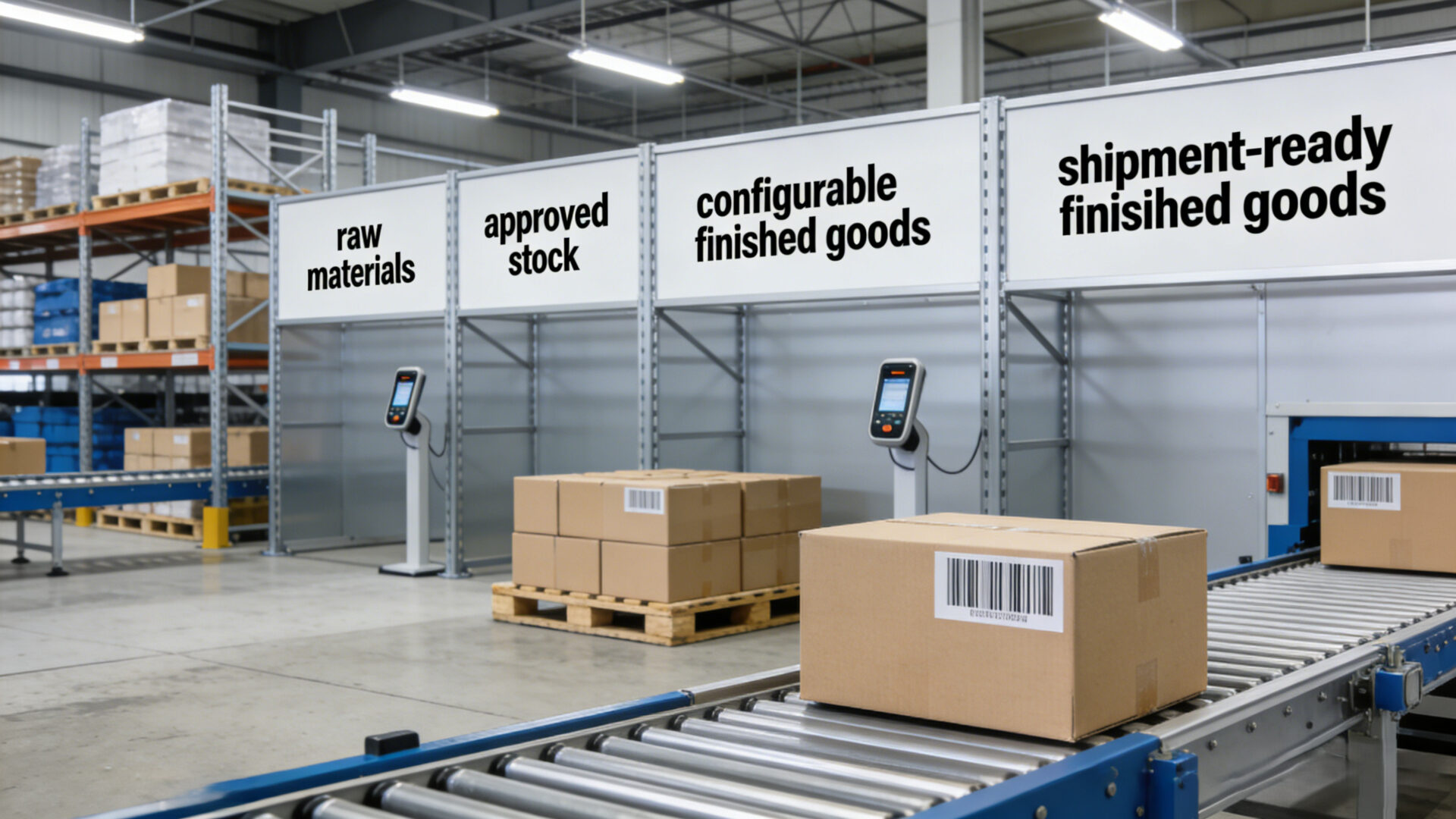
Inventory was structured according to three distinct states:
- Physically available
- Approved for use
- Allocated to a project or shipment
This distinction is essential in electronics projects, where:
- Materials may be in stock but not yet approved
- Finished units may exist but still require configuration or documentation
Improved visibility helped align procurement, production, and logistics planning.
3.3 Finished goods inventory for staged deliveries
Finished goods were managed based on release readiness, not only physical availability.
Typical categories included:
- Configurable stock
- Shipment-ready units
- Buffered units for scheduled delivery phases
This approach enabled clearer communication with customers regarding:
- Build status
- Delivery readiness
- Project progress
3.5 International shipping for electronics
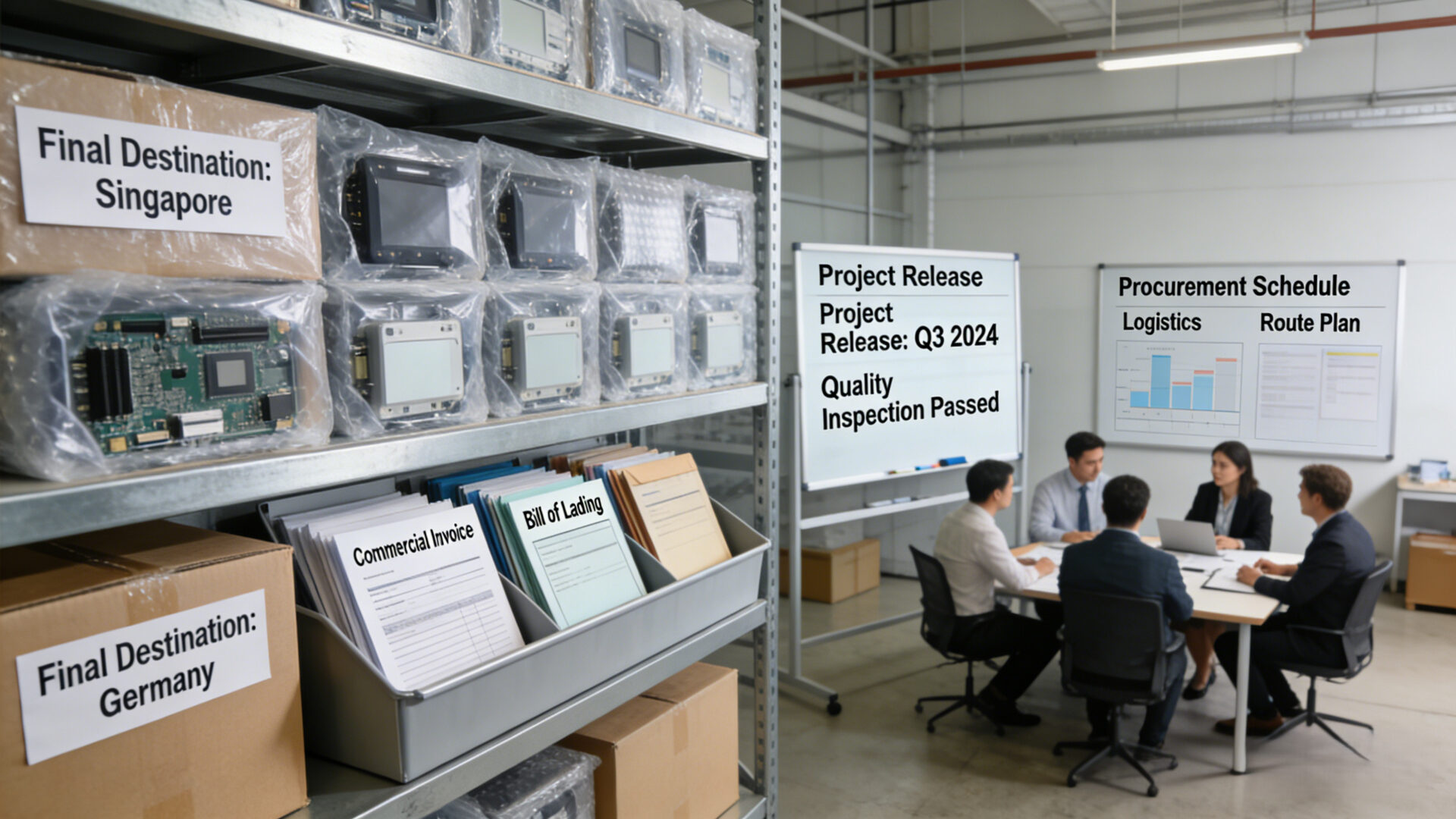
Shipping processes were aligned with product and documentation status.
Key aspects included:
- Correct packaging for transport protection
- Accurate picking and labeling
- Consistent export and customs documentation
- Defined release responsibility before dispatch
For battery-related products, shipment preparation may consider applicable guidelines such as those from the International Air Transport Association.
4. Cross-functional alignment
The structured workflow improved coordination across departments:
- Procurement: clearer material status, fewer exceptions
- Engineering: more stable change and variant control
- Logistics: clearer transition from configuration to shipment
This alignment reduced internal clarification effort and improved planning reliability.
5. Operational impact after implementation
While specific KPIs are not disclosed, the operational improvements included:
- More transparent material approval processes
- Reduced coordination loops in procurement
- Less ambiguity in warehouse handling
- Clearer distinction between stock states
- Improved preparation of international shipments
Overall, the workflow provided a more predictable path from receipt to delivery.
6. What to include in your RFQ
To reflect real operational requirements, RFQs should go beyond BOM and delivery dates.
Scope and product status
- Type of deliverables (materials, assemblies, systems)
- Expected volumes and delivery phases
- Definition of stock states
Inspection requirements
- Required content of inspection reports
- Sampling or documentation expectations
- Handling requirements (e.g., ESD)
Inventory and variant requirements
- Scope of inventory management
- Differentiation of finished goods
- Variant logic (labels, firmware, accessories)
Shipping and delivery
- Destination countries and frequency
- Packaging and documentation requirements
- Special considerations (e.g., batteries, customs)
FAQ
What should an incoming goods inspection report include?
It should cover supplier identification, part details, quantity, inspection method, findings, and a clear status decision.
Why distinguish between raw material and finished goods inventory?
Because availability does not always mean readiness for production or shipment.
Why is variant management important?
It helps control differences between similar products while maintaining efficiency and reducing errors.
What does international shipping involve?
It includes packaging, labeling, documentation, and coordination of shipment readiness.
Conclusion
This case illustrates that operational structure around electronics manufacturing can significantly influence project execution.
Rather than focusing only on production capability, structured workflows in:
- Inspection
- Inventory
- Variant handling
- Shipping
can contribute to more predictable and efficient project delivery.