

The TPS 3U 19-inch chassis is a practical mechanical platform for power supply integration, rack-mounted electronics, test systems, and project-specific cabinet builds. For system integrators, panel builders, procurement teams, and electrical engineers, the main question is not only whether a chassis fits a 19-inch rack. The more important question is whether the chassis can support the electrical architecture, airflow concept, installation method, documentation needs, and sourcing timeline of a real B2B project.
The TPS 3U-Chassis product page provides a defined base item for buyers who need a 3U mechanical enclosure with 482.6 mm 19-inch rack compatibility. For project evaluation, TPS also supports broader 19-inch cabinets and chassis solutions, helping customers move from product selection to RFQ clarification, integration review, and final procurement.
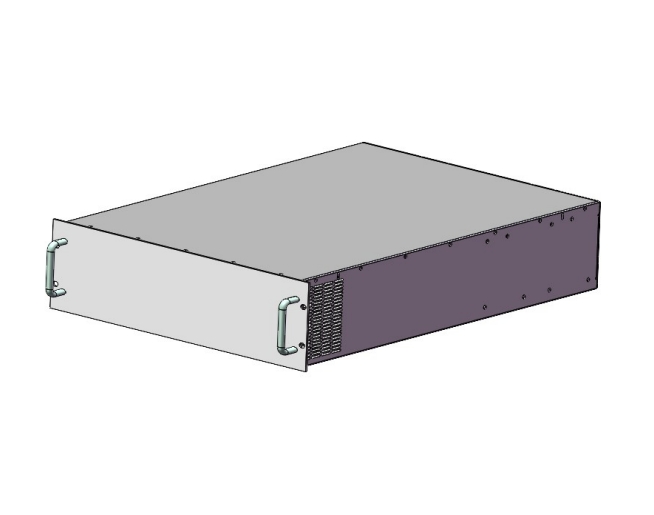
A 3U chassis is often selected when the project requires more internal height than a 1U or 2U platform, while still keeping the system compact inside a standard 19-inch rack or cabinet.
Why a 3U 19-inch chassis matters in RFQ-driven projects
A 3U 19-inch chassis is frequently used when a product or subsystem needs a defined rack format, sufficient mechanical space, and a clean front-panel installation concept. In power electronics, automation cabinets, laboratory test racks, industrial control systems, and customized supply modules, the enclosure is not a cosmetic component. It influences cooling, cabling, service access, EMC planning, installation safety, and long-term maintenance.
For a system integrator, the chassis must fit the cabinet and leave enough space for connectors, cable bending radius, handles, ventilation paths, mounting hardware, and service clearance. For a panel builder, the question is whether the enclosure can be assembled, mounted, grounded, labeled, and wired efficiently. For procurement, the decisive points are item definition, article number, availability, repeatability, customization options, and quotation clarity. For electrical engineers, the mechanical dimensions must support the actual electrical design rather than forcing last-minute compromises.
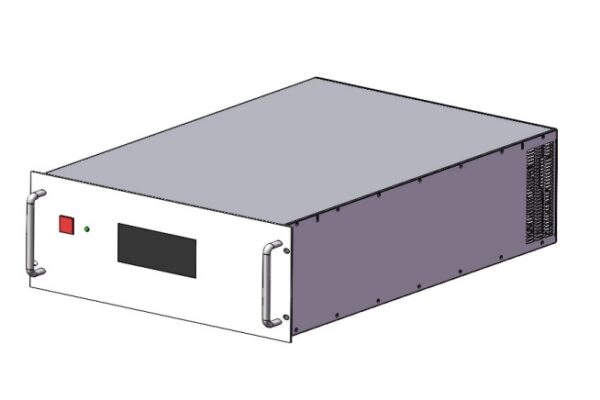
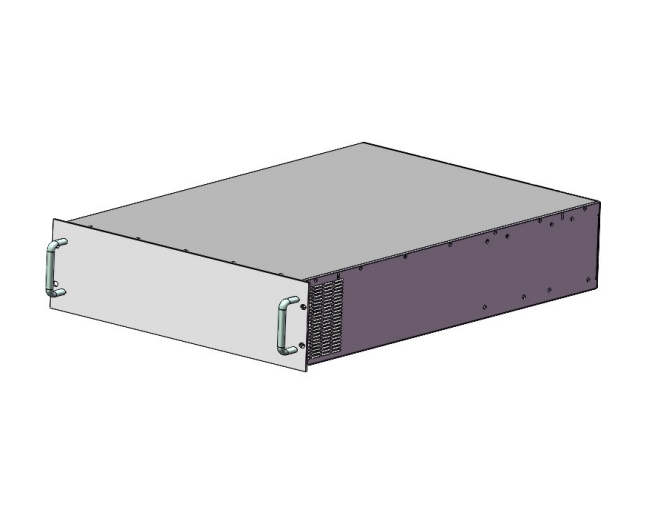
The TPS 3U-Chassis is designed around the 482.6 mm 19-inch standard format and provides a defined 3U mechanical basis for rack-mounted systems. It is suitable as a base enclosure for power supply modules, control electronics, measurement interfaces, or customized integration projects. Customers can review the base item in the TPS Shop listing for the 3U-Chassis and use the broader TPS 19-inch cabinets and chassis page when the requirement includes a complete solution, cabinet pairing, mechanical adaptation, or project consultation.
Typical use cases for 3U chassis projects
Typical applications include rack-mounted power supply assemblies, industrial control modules, automated test equipment, embedded measurement units, battery test subsystems, power distribution interfaces, and mechanical subassemblies for OEM equipment. In many projects, a 3U chassis can offer an effective balance between component height, airflow area, handling convenience, and rack density.
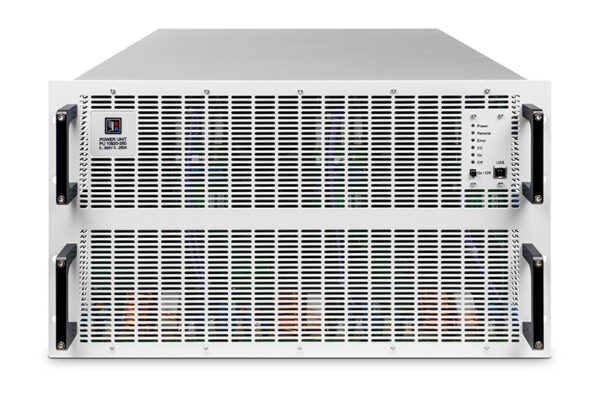
In a larger power system, a 3U enclosure may also be used alongside other TPS-related power platforms. For example, an integrator comparing different rack formats may also review TPS content on 6U 19-inch chassis power supply integration when the required power level, internal component height, or cooling concept exceeds a 3U footprint. If the application requires a complete rack or cabinet environment, the Sentinel-Y 42U 19-inch power cabinet article can help evaluate system-level cabinet planning.
Key specifications for the TPS 3U-Chassis
For RFQ preparation, dimensions and material structure should be stated clearly. The TPS 3U-Chassis belongs to the 19-inch chassis family and uses the 482.6 mm standard width. The overall depth is specified at approximately 671 mm, and the 3U height dimension is 132.5 mm. These values help engineering and procurement teams confirm rack compatibility before moving into quotation details.
| Item | TPS 3U-Chassis information for RFQ review |
|---|---|
| Product type | 3U 19-inch power supply chassis / rack-mount chassis |
| Rack standard width | 482.6 mm, commonly used for 19-inch rack systems |
| Overall dimensions | W 482.6 mm x D approx. 671 mm x H 132.5 mm |
| Article number | BJ990003 for the 3U version |
| Material structure | Sheet steel, aluminum, and galvanized plate according to chassis section |
| Surface treatment | Powder-coated front, side, top, and bottom plates; rear plate powder-coated or nickel-coated; handles with colorless oxidation |
| Color | RAL 7035 as standard reference, with customization possible by project clarification |
| Supply scope | Front plate, side plates, top and bottom plates, and handles |
These parameters should be used as the first RFQ filter. If the system requires a different depth, front-panel machining, special connector cut-outs, modified ventilation, project color, or system-level cabinet integration, the buyer should move from item selection to solution consultation. TPS can support this transition through its 19-inch cabinets and chassis solution capability.
Dimensional confirmation is one of the fastest ways to avoid RFQ delays. Width, height, depth, handle clearance, and rear-panel access should be reviewed before the quotation is finalized.
Selection logic for engineers and integrators
The correct 3U chassis decision starts with the system architecture. A mechanical enclosure should be chosen after the main internal components, airflow concept, wiring direction, expected service access, and rack position are known. Selecting a chassis only by rack unit can create unnecessary risk: a system may fit in height but fail in thermal margin, cable clearance, connector access, or installation sequence.
1. Confirm form factor and rack fit
The 3U format is suitable when 132.5 mm chassis height provides enough internal volume for the electrical and mechanical build. Engineers should confirm whether the front panel, mounting holes, handles, and rear-panel layout align with the cabinet structure. In 19-inch power systems, even small differences in handle depth or rear connector projection can affect cabinet door clearance and cable routing.
2. Match cooling concept to internal heat sources
Thermal design is one of the most important selection topics. A chassis used for power electronics, programmable supply modules, or load modules may require front-to-rear airflow, side ventilation, filtered cabinet air, or forced-air assistance. Ventilation openings must not be blocked by cabinet rails, cable ducts, neighboring equipment, or front-panel accessories. If the chassis will be installed near high-power devices, integrators should also evaluate cabinet-level heat removal.
For projects where the chassis is part of a wider power supply architecture, TPS content on 6U programmable DC power supply integration and regenerative DC load systems can provide useful context for rack-level airflow, depth planning, and service access. The goal is not to force every project into a standard chassis, but to match the enclosure to the electrical function and operating environment.
3. Review material, finish, and project appearance
The TPS 3U-Chassis uses a material mix of sheet steel, aluminum, and galvanized plate. Powder coating on the front, side, top, and bottom plates provides a consistent industrial finish, while the rear plate may be powder-coated or nickel-coated depending on project needs. For customers building repeatable systems, color consistency, marking, label position, and front-panel finish may be important for product identity and service operations.
Integration and installation considerations
A 3U 19-inch chassis should be evaluated as part of the complete rack ecosystem. The mechanical decision affects power distribution, signal wiring, grounding, ventilation, service access, and safety documentation. Before placing the RFQ, the engineering team should define the installation environment in enough detail for TPS to recommend the right configuration or equivalent solution.
Front-panel layout and operator access
The front panel may need indicators, displays, switches, air inlet areas, labeling, emergency access, or protective covers. The TPS base chassis includes the front plate and handles, giving integrators a defined starting point. If a customer requires additional cut-outs, different handle positions, special color, or integration with existing rack hardware, this should be clearly specified in the RFQ package.
Rear-panel cabling and service clearance
Rear-panel access is often underestimated. Power connectors, signal interfaces, fuses, grounding points, communication ports, and cable clamps may require more depth than expected. Procurement teams should ask engineering for connector projection, cable bending radius, and rear door clearance before approving the chassis selection. This is especially important in dense cabinets or transportable test systems.
A successful chassis RFQ should include rack layout, expected internal components, airflow direction, connector position, and any required panel modifications.
Grounding, EMC planning, and reliability
Mechanical structure and electrical reliability are linked. The chassis should support proper grounding, predictable bonding, safe routing of power and signal cables, and a practical service concept. When the enclosure is used in a system with power conversion, switching devices, or measurement electronics, the RFQ should include information on EMC sensitivity, insulation distances, safety labeling, protective earth points, and environmental requirements.
TPS can support customers who need more than an empty enclosure. Depending on the project scope, the chassis may be combined with power supply modules, DIN rail components, control electronics, or a higher-level cabinet concept. For example, compact auxiliary power may be addressed with resources such as the TPS010-100W GP Series DIN rail power supply, while higher power cabinet concepts can be evaluated through TPS chassis and cabinet consultation.
What procurement should clarify before requesting a quotation
For BoFu-stage buyers, the most valuable content is often not a general product description but a quotation-ready checklist. A clear RFQ reduces back-and-forth communication, prevents incorrect comparisons between suppliers, and helps the technical and purchasing teams evaluate total project fit.
Recommended RFQ checklist
- Required chassis size: 3U 19-inch, or comparison with 1U, 2U, 4U, 5U, or 6U formats.
- Base product reference: TPS 3U-Chassis, article BJ990003, or link to the 3U-Chassis product page.
- Quantity: prototype, pilot run, project batch, or recurring series demand.
- Mechanical modifications: cut-outs, front-panel machining, rear-panel layout, mounting holes, handle options, labeling, or color.
- Internal components: power modules, control boards, terminals, fans, filters, wiring harnesses, and mounting brackets.
- Thermal concept: expected losses, airflow direction, cabinet temperature, fan requirements, and maintenance access.
- Documentation needs: drawings, inspection requirements, certificates, packing list, and project-specific quality documents.
- Commercial information: target delivery schedule, shipping destination, Incoterms preference, and required quotation validity.
Procurement should avoid evaluating only the unit price of the enclosure. In real industrial projects, the lower-risk supplier is often the one who can clarify dimensions, review integration constraints, support repeatable supply, and provide project-level communication. TPS positions the 3U-Chassis not only as a mechanical item, but also as part of a broader capability for B2B customers who need practical integration support.
How TPS supports project-level chassis and cabinet solutions
TPS ELEKTRONIK supports global B2B customers with products and solution capabilities for 19-inch chassis, cabinets, power supply integration, and related electronic systems. This is important for buyers who want to reduce supplier fragmentation. Instead of sourcing an enclosure, power supply, cabinet, and integration support from unrelated vendors, customers can discuss the complete project context with TPS and confirm which level of support is needed.
For a straightforward purchase, the 3U-Chassis shop item gives buyers a defined starting point. For engineered systems, the TPS 19-inch cabinets and chassis solution page is the better next step because it supports discussion about alternatives, customization, cabinet matching, and project-specific requirements.
In cabinet-level applications, the 3U chassis may be part of a larger TPS power solution. For example, customers designing a power electronics rack may also evaluate 750 V bidirectional power module solutions, AC-DC bidirectional power modules for cell formation, or compact control power with the TPS030-130W PRO Series DIN rail power supply. The chassis selection can then be aligned with electrical architecture rather than treated as a late-stage mechanical purchase.
For RFQ preparation, send TPS the chassis size, quantity, integration scope, cabinet environment, modification requirements, and target delivery schedule.
When to contact TPS sales or engineering
Contact TPS when the project includes special dimensions, modified panels, airflow questions, cabinet pairing, internal assembly, repeat supply, or multiple product categories. A sales inquiry is also recommended if your team is comparing 3U, 4U, and 6U chassis options or if the chassis must support power supply integration with specific thermal and electrical constraints.
RFQ CTA: Review the TPS 3U-Chassis product page for the base item, then contact TPS through the 19-inch cabinets and chassis solution page to request quotation support, technical consultation, or a project-level chassis and cabinet proposal.
FAQ
Is the TPS 3U-Chassis suitable for standard 19-inch racks?
Yes. The chassis uses the 482.6 mm 19-inch standard width. Engineers should still verify cabinet depth, handle clearance, rear connector projection, and rail position before final approval.
What information should be included in an RFQ?
Include the product link or article number, required quantity, target delivery date, installation environment, internal components, airflow concept, mechanical modifications, documentation needs, and shipping destination.
Can TPS support customized chassis requirements?
TPS can discuss project-specific requirements such as modified panels, color, cabinet pairing, integration support, and equivalent 19-inch chassis solutions. The final feasibility depends on technical scope, quantity, documentation needs, and schedule.
How should procurement compare chassis suppliers?
Procurement should compare dimensional fit, repeatability, modification support, communication quality, delivery capability, and integration experience. Unit price alone does not show whether the supplier can support a complete industrial project.
Where can I request a quotation?
You can start with the TPS 3U-Chassis product listing and then use the TPS 19-inch cabinets and chassis page to contact sales for RFQ support or solution consultation.