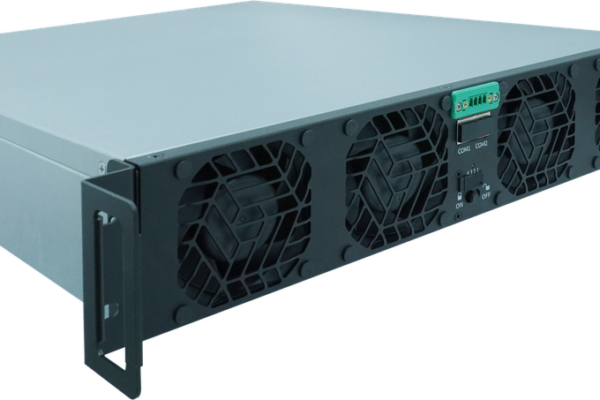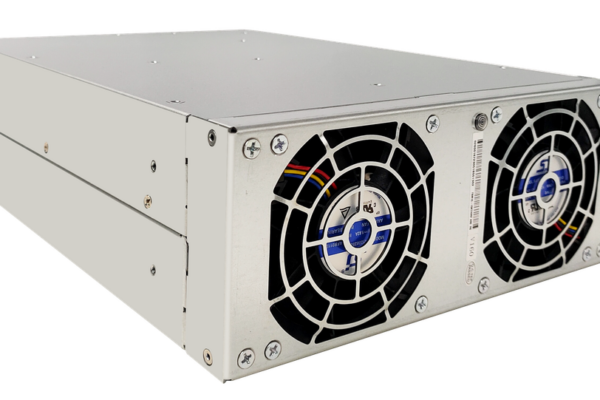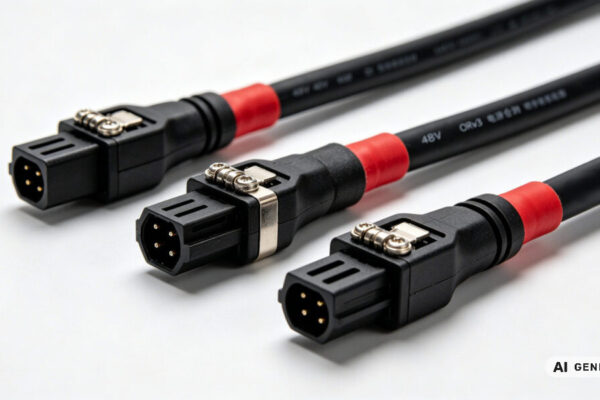


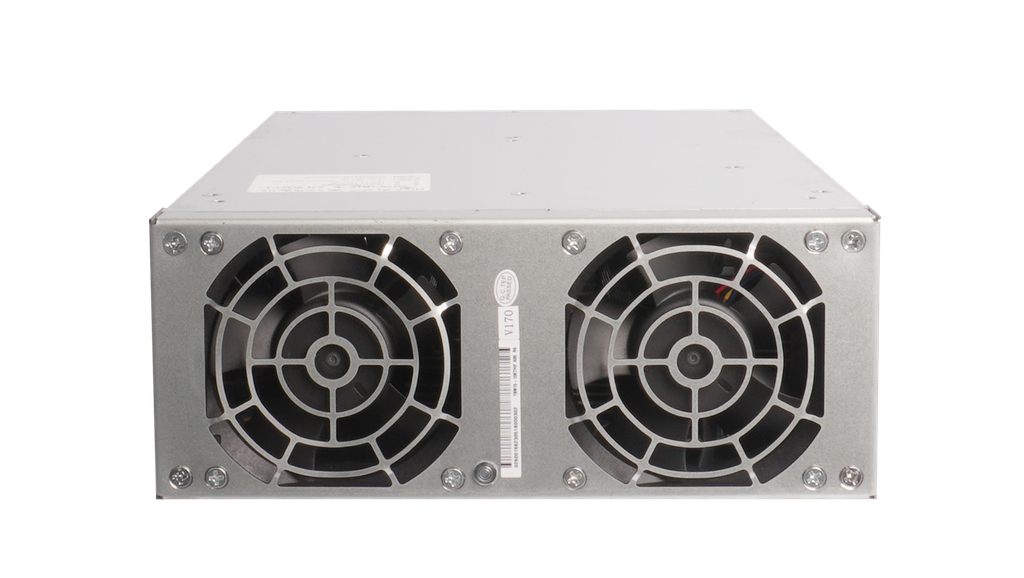
For system integrators, panel builders, procurement teams, and electrical engineers: TPS-BM1510KTHIF and TPS-BM1510KTHIRF are compact, isolated three-phase AC/DC bidirectional power modules for low-voltage, high-current energy conversion. The platform combines 10 kW AC-to-DC operation with 8 kW DC-to-AC energy return, a 15 VDC bus, CAN communication, and parallel expansion for cell formation, regenerative aging, and bidirectional test systems.
This buyer-focused guide turns the datasheet into an RFQ framework: which values are fixed, which system conditions must be confirmed, and what evidence should be requested before supplier approval.
Decision summary: when this 15V bidirectional module is a strong fit
The decisive characteristic is not only “10 kW.” It is the combination of a very low 15 VDC operating level and hundreds of amperes. In the AC-to-DC direction, the module is rated at 10,000 W and 666.7 A at 15 VDC. In the regenerative DC-to-AC direction, rated input capacity is 8,000 W and rated DC current is 533.3 A. This asymmetry matters: an engineer must size charge and discharge profiles against the appropriate directional rating, not assume 10 kW in both directions.
The AC connection is 3Ph+PE without a neutral conductor, with rated voltages of 380/400/415 VAC. The datasheet gives full-load operation from 343 to 456 VAC; operation from 304 to 343 VAC is stated with derating to 80%. Frequency control is adaptive at 50/60 Hz ±5 Hz. These limits make the module relevant to globally deployed industrial systems, but the project team must still confirm the actual site grid, upstream protection, earthing concept, harmonics requirement, and local connection rules.
TPS positions this product class as more than a loose component. TPS can support model selection, equivalent power-conversion solutions, system architecture, enclosure integration, and project-level engineering consultation for global B2B programs. Start with the TPS-BM1510KTHIF product page or the TPS-BM1510KTHIRF product page, then send the operating profile for a technical fit check.
AC → DC
15 VDC, 666.7 A rated
DC → AC
15 VDC, 533.3 A rated
380/400/415 VAC
No neutral connection
Key specifications for technical evaluation
| Evaluation item | Datasheet value | RFQ implication |
|---|---|---|
| Power direction | Bidirectional, high-frequency isolation | Define charge, discharge, transition, and fault behavior. |
| AC → DC | 10 kW; 15 VDC; 666.7 A; 250 mV ripple; 1% voltage accuracy | Validate busbar drop, sense location, and DUT ripple limit. |
| DC → AC | 8 kW; 15 VDC; 533.3 A | Size regenerative cycles to the 8 kW return rating. |
| Grid quality | PF 0.99 at 380 VAC full load; THDi <5%; datasheet condition includes grid THDu ≤2% | State the site voltage distortion and acceptance method. |
| Peak efficiency | 92% in each direction | Use measured operating points, not peak efficiency alone, for cooling and energy models. |
| Environment | -10°C to 45°C full load; 45°C to 60°C derated to 90%; 5–95% RH non-condensing | Declare cabinet inlet temperature and duty cycle. |
| Expansion | Up to 4 units in parallel; current-sharing imbalance ≤5% | Request approved bus, protection, addressing, and sequencing design. |
| Mechanical | 218 × 86 × 300 mm; ≤6.5 kg | Reserve service clearance, airflow, cable bend radius, and structural support. |
TPS-BM1510KTHIF or TPS-BM1510KTHIRF: selection logic
The specification covers both orderable variants and lists the same main electrical performance. The documented distinction is airflow orientation. The default version uses front inlet and rear outlet airflow. The R type reverses the path: rear inlet and front outlet, with the document identifying the front as the fan side and the rear as the terminal side. This is a system-level choice, not a cosmetic suffix.
Choose airflow from the cabinet thermal architecture
Select the standard TPS-BM1510KTHIF when the enclosure supplies clean cooling air at the module front and provides an unrestricted rear exhaust path. Select the reverse-airflow TPS-BM1510KTHIRF when the cabinet requires air to enter from the terminal-side rear and exhaust through the front fan side. Before ordering, TPS should confirm the final airflow suffix, mounting orientation, neighboring heat sources, filter pressure drop, and maintenance access.
Front inlet → Module → Rear outlet
Rear inlet → Module → Front outlet
Application fit: where energy recovery creates project value
Cell formation and low-voltage battery testing
The 15 VDC architecture and very high current rating align with formation, grading, and controlled cycling of low-voltage cells or groups within the validated operating envelope. During charging, AC power is converted to controlled DC. During discharge, energy can be returned to the three-phase network instead of being dissipated entirely as heat. The business case is strongest where test channels operate for long hours and repeatable energy return reduces facility cooling and wasted energy.
A buyer should nevertheless avoid selecting only from nominal cell voltage. State the minimum and maximum DUT voltage, current trajectory, cable and contact resistance, transition timing, permissible ripple, emergency stop behavior, and whether channel isolation is required. For a related lower-voltage platform comparison, review TPS guidance on AC/DC bidirectional modules for 14 V cell formation.
Regenerative aging and power-cycle equipment
Regenerative aging systems can replace large dissipative loads when the grid and facility permit energy feedback. This can reduce the thermal burden of continuous burn-in, but the integrator must coordinate anti-islanding behavior, upstream switching, discharge paths, fault containment, and site acceptance. If the test program also needs a higher-voltage regenerative load, TPS can help compare this module architecture with an EA-PUL 10000 6U regenerative DC load solution.
Bidirectional component and subsystem test
Converters, low-voltage power electronics, and energy-storage subsystems may require controlled sourcing and sinking from the same test port. The module’s bidirectional isolation, CAN interface, and potential parallel operation provide building blocks for automated test equipment. TPS can support the power stage alongside programmable DC sources, measurement, cabinet design, and power distribution. For example, an EA-PSI 9000 DT programmable DC source may suit development benches that do not require this module’s 15 V/666.7 A operating point.
3Ph+PE
Isolated conversion
Formation / test / aging
Electrical integration: design around hundreds of amperes
At 15 VDC, small resistances create material voltage drop and heat. The RFQ should therefore define the maximum interconnect length, conductor or busbar material, joint construction, contact resistance target, temperature-rise limit, torque control, and sensing point. The datasheet lists twelve M6×12 output-terminal fastening screws at 2 N·m and four M4×8.5 input-terminal screws at 1.5 N·m; confirm the current revision of the assembly drawing and terminal assignment before production.
Protection coordination must cover the three-phase input, the low-voltage high-current DC side, pre-charge or controlled connection, reverse polarity risk, contactor interruption capability, emergency shutdown, and stored energy. The datasheet notes that DC-side voltage exceeding 20 VDC can cause power failure. Treat that as a hard design constraint and request an approved overvoltage and fault-response concept. Do not infer that the internal fault protection replaces project-specific fusing, disconnects, touch protection, or a safety PLC.
The grid-side values also need context. At 380 VAC and full load, the datasheet specifies input current ≤19 A, PF 0.99, and THDi <5%, with the stated harmonic figures conditioned on a grid THDu ≤2%. A site with a generator, weak grid, substantial nonlinear loads, or different voltage distortion should be disclosed during quotation. TPS can then help determine whether line conditioning, grid study, additional protection, or a different architecture is appropriate.
Thermal, mechanical, and enclosure integration
Peak efficiency of 92% does not mean heat is negligible. At 10 kW, even an illustrative 8% conversion loss is approximately 800 W at the peak-efficiency point; actual dissipation depends on direction, voltage, current, switching behavior, and ambient conditions. Size cabinet cooling from a verified loss map and duty profile. The module uses forced-air cooling with intelligent control and is specified for full load from -10°C to 45°C. From 45°C to 60°C, the document states power derating to 90%.
Air recirculation can invalidate an otherwise adequate fan calculation. Keep the selected inlet away from exhaust air, filters within the allowed pressure drop, and terminal zones accessible without blocking the flow. At altitude, the specification lists operation below 2,000 m and derating above 2,000 m, with temperature derating of 1% per additional 100 m. Relative humidity is 5–95% without condensation; storage range is -40°C to 70°C.
The compact 218 × 86 × 300 mm package helps channel density, yet space must be reserved for airflow, service removal, terminals, busbar or cable bend radius, finger-safe guarding, and structural support for a unit up to 6.5 kg. The drawing warns that mounting screw length must not exceed the reserved-hole depth. Panel builders should obtain the controlled mechanical drawing before releasing sheet metal. For a larger integrated platform, TPS can combine modules, power distribution, protection, and cooling in a Sentinel-Y 42U power cabinet or a project-specific enclosure.
CAN control and parallel expansion
The module provides CAN communication and status indication: blue for operation and red for fault. The datasheet states automatic parallel operation with up to four units and current-sharing imbalance ≤5%. Four modules could create a high-current system, but do not multiply headline ratings without engineering review. Confirm whether the required directional power, DC current, common bus, grid current, protection devices, controller addresses, start sequence, fault isolation, and current-sharing performance are approved for the exact configuration.
For automation, request the current CAN protocol, object dictionary or frame list, command scaling, update rates, state machine, alarm definitions, watchdog behavior, firmware version policy, and recovery after communication loss. The factory acceptance test should exercise setpoint limits, direction changes, emergency stop, grid loss, overtemperature, one-unit fault in a parallel bank, and safe restart. TPS can support this interface definition and the integration boundary between power module, PLC/IPC, test software, and safety chain.
Grid, busbar, fusing, contactors
Airflow, loss map, filters, altitude
CAN, sequencing, alarms, interlocks
Certificates, drawings, FAT, traceability
Compliance, standards, and reliability evidence
The datasheet states excellent EMC and references EN 55032, and it says the product “can pass” UL, CE, and TÜV certification. That wording is not equivalent to confirming that every offered configuration currently carries every mark. Procurement should request the declaration, certificate, test report, scope, revision, and product-name match required for the destination market. The EU EMC framework can be checked against the official EMC Directive 2014/30/EU, while the actual conformity package must come from the supplier for the quoted unit.
Reliability assessment should include operating profile, thermal margin, fan service strategy, firmware control, fault history capture, serial-number traceability, change notification, warranty terms, and spare-unit planning. For global projects, also clarify packaging, logistics, language of documentation, commissioning support, and response time for engineering questions. TPS can coordinate these commercial and technical inputs so supplier approval is based on evidence rather than a headline specification.
What to include in an RFQ for a quote that can be engineered
- Operating profile: minimum/nominal/maximum DC voltage, source and sink currents, duty cycle, direction-change frequency, ripple and accuracy limits.
- Grid: country, 380/400/415 VAC level, tolerance, frequency, THDu, earthing, regenerative permission, and connection standard.
- Architecture: number of channels, parallel quantity, isolation boundaries, common DC bus, channel protection, and energy destination.
- Enclosure: ambient and inlet temperature, altitude, contamination, humidity, airflow direction, filter, acoustic constraint, and service clearance.
- Controls: CAN master, cycle time, required commands, alarms, data logging, PLC/test software boundary, and safety interlocks.
- Compliance: destination markets, required marks and reports, EMC acceptance, factory test, documentation, and traceability.
- Commercial: prototype and series quantities, target schedule, delivery country, warranty, spares, commissioning, and customization needs.
Send these inputs through the TPS bidirectional power module solution page. TPS can assess the two airflow variants, recommend a suitable or equivalent solution, and support module, cabinet, protection, cooling, control, and project documentation decisions.
Request technical selection and an RFQ review
FAQ
Is TPS-BM1510KTHI(R)F a 10 kW bidirectional module in both directions?
No. The datasheet rates AC-to-DC output at 10,000 W and DC-to-AC input at 8,000 W. Use the directional rating that corresponds to each charge or regenerative test step.
What does the R variant change?
The documented change is airflow: the default model uses front inlet/rear outlet; the R type uses rear inlet/front outlet. Confirm the selected suffix against the cabinet airflow before ordering.
Can four modules simply be paralleled for four times the current?
The datasheet allows up to four units in parallel and specifies current-sharing imbalance ≤5%, but the complete busbar, protection, grid, cooling, sequencing, and fault-isolation design must be approved for the exact bank.
Is the module certified to UL, CE, and TÜV?
The source specification says it “can pass” those certifications. Request current, model-matched certificates and declarations for the quoted configuration and destination market before approval.
What information enables TPS to issue a project-relevant quote?
Provide the DC voltage/current profile, grid data, duty cycle, channel count, airflow, ambient and altitude, control requirements, destination-market compliance, quantities, and schedule. TPS can then confirm the product or propose an equivalent integrated solution.