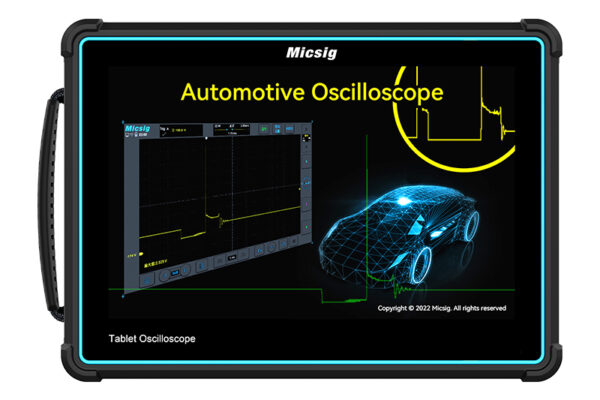


Specify the measurement task before selecting the bandwidth. The MDO Series digital storage oscilloscope gives industrial engineering teams four analog channels, a 14-inch touchscreen, and three bandwidth choices: 250, 350, and 500 MHz. TPS Elektronik GmbH offers these instruments alongside power supplies, measurement accessories, and project support, helping global B2B customers define a workable test configuration.
For company owners and procurement teams, the decision concerns usable capability and project cost. For electrical engineers, product managers, system integrators, and panel builders, it concerns signal fidelity, channel allocation, probe safety, and repeatable results. This guide connects the datasheet to those purchasing decisions, with practical criteria for a technically complete request for quotation.
Review the MDO2504 250 MHz configuration, MDO3504 350 MHz option, and MDO5004 500 MHz model, or ask TPS to assess your measurement requirements before specifying accessories.
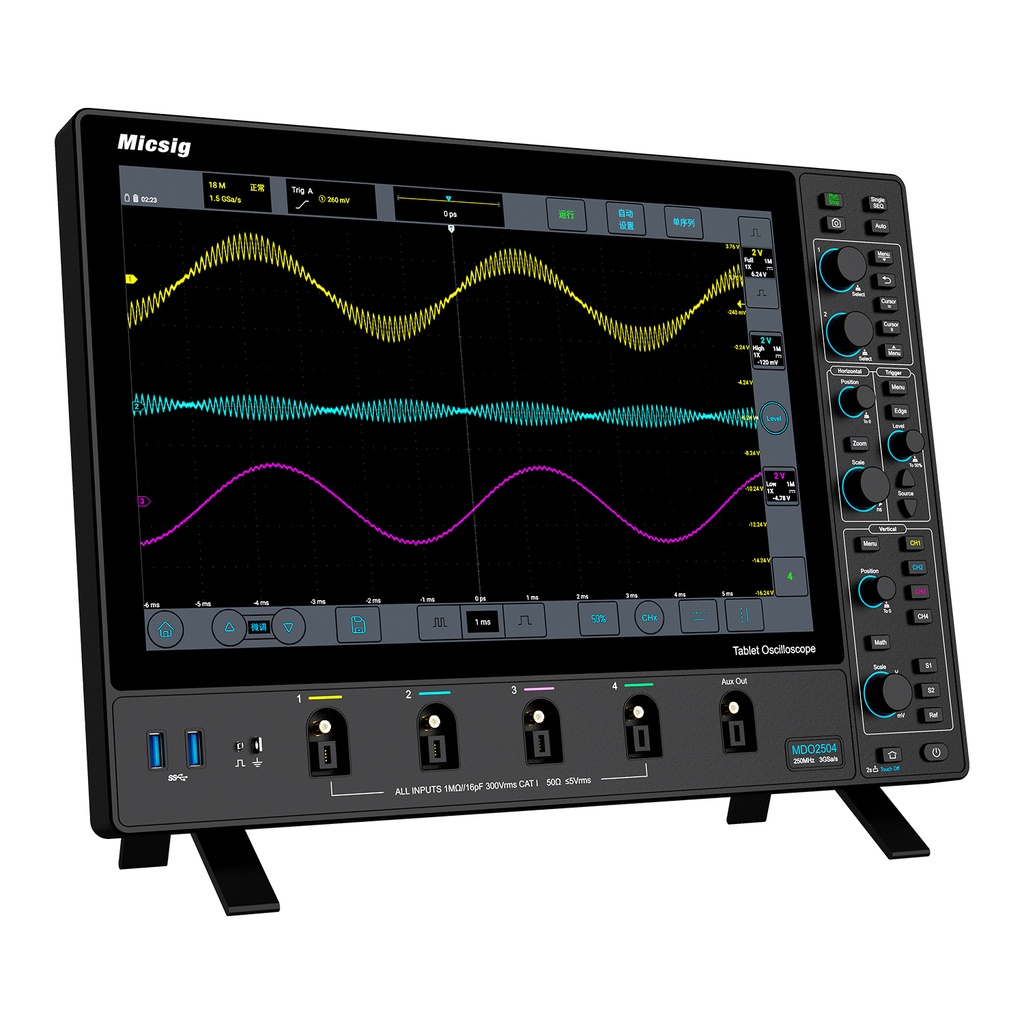
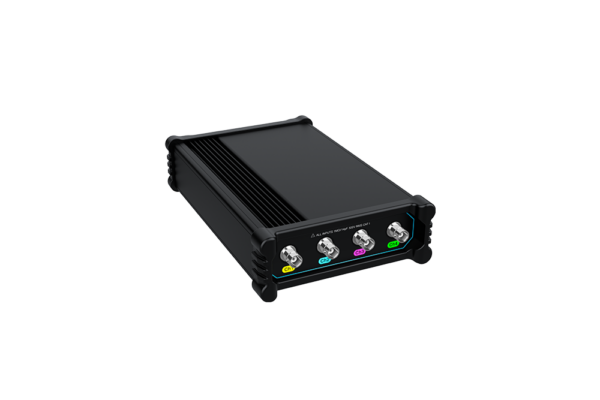
Series product view: MDO2504 shown. The ordered model determines bandwidth.
One series, three bandwidth decisions
The same instrument concept supports bench debugging and integrated test environments. Match the ordered model to signal edges, measurement uncertainty, and the probes used in your application.
1. Select the model around signal edges and uncertainty
Choose bandwidth from the fastest relevant signal transition, rather than the switching frequency or bus bitrate alone. A slow repetition rate can still contain fast edges and ringing. Conversely, paying for 500 MHz adds little value when the probe, test fixture, or required measurement has a much lower usable bandwidth.
| Model | Analog bandwidth | Specified rise time | Selection focus |
|---|---|---|---|
| MDO2504 | 250 MHz | ≤1.4 ns | Tasks whose required edge fidelity fits this bandwidth |
| MDO3504 | 350 MHz | ≤1 ns | Additional margin for faster transitions |
| MDO5004 | 500 MHz | ≤0.7 ns | The highest analog bandwidth within this series |
All three models have four analog channels, 8-bit vertical resolution, up to 3 GSa/s real-time sampling, and up to 360 Mpts acquisition memory. These maximum values do not describe every channel configuration. The channel-pair rules below belong in the technical comparison, especially when four simultaneous signals are mandatory.
Build a bandwidth budget for the complete measurement chain
A useful first check is the approximate relationship between bandwidth and rise time: rise time ≈ 0.35/bandwidth for a conventional single-pole response. This is an engineering estimate, not an acceptance specification. Probe response, loading, interconnects, and instrument response all contribute to the measured edge. Request confirmation against your actual signal and allowable error.
For repeat procurement, specify the exact model and approved accessory list. A quotation stating only “four-channel oscilloscope” leaves room for a configuration that meets the channel count but misses the edge requirement.
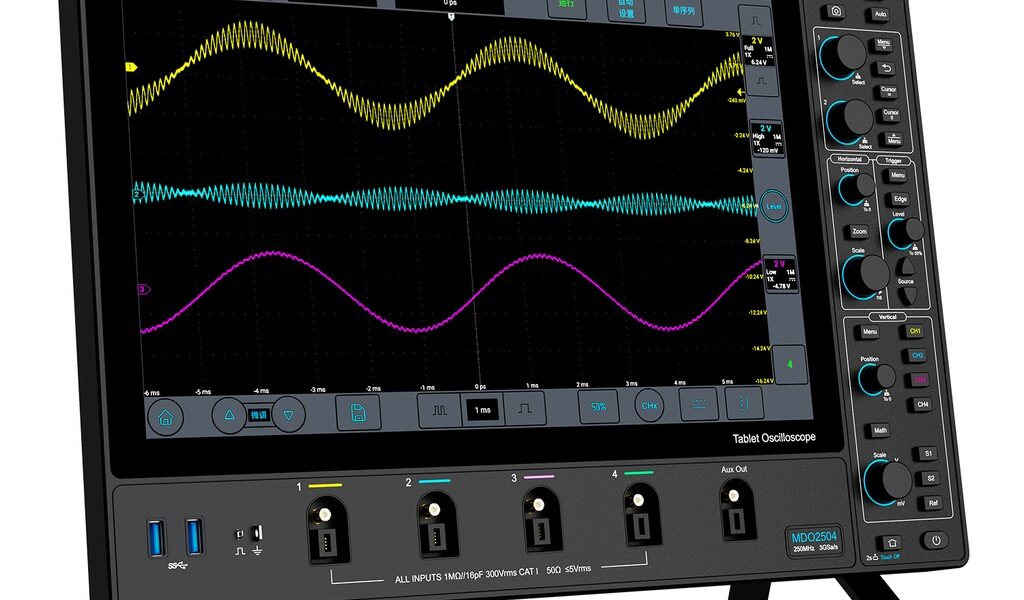
Series product view: MDO2504 shown. The ordered model determines bandwidth.
Purchase against a defined measurement chain
Use the model table to shortlist a bandwidth, then verify probe performance, channel sharing, and the signals that must be captured together. The front-panel photograph illustrates the series platform.
2. Check sampling, memory, and vertical performance
Account for the CH1/CH2 and CH3/CH4 pairing
The datasheet specifies 3 GSa/s when only one channel in each pair is active: CH1 or CH2, and CH3 or CH4. When both channels in a pair are active, it lists 1.5 GSa/s. Maximum memory similarly changes from 360 Mpts to 180 Mpts under the paired-channel conditions. Confirm the selected acquisition mode, active channels, and resulting settings during technical review.
Dividing 360 million points by 3 billion samples per second gives a nominal 0.12-second record. The combination of 180 Mpts and 1.5 GSa/s gives the same nominal duration. These calculations illustrate the relationship between memory and sampling; they do not guarantee the recording duration of every mode. Longer time spans require checking the effective sample rate and retained edge detail.
Separate noise performance from ADC resolution
The MDO Series has an 8-bit vertical system, not a 12-bit acquisition system. Its datasheet specifies a noise floor of no more than 90 µVrms at 1 mV/div and 1 MΩ. That condition matters: the value should not be treated as a universal limit across all ranges, probes, bandwidth settings, and environments.
For small ripple measurements, select an appropriate vertical range, probe connection, coupling, and bandwidth limit. High-pass and low-pass filtering and a 20 MHz bandwidth filter are available, but filtering can remove the disturbance you are trying to investigate. Preserve both the original capture and the filtered view. If higher vertical resolution is a firm requirement, compare the 12-bit oscilloscope selection considerations with TPS.
3. Match acquisition tools to industrial applications
Four analog channels can correlate a supply rail, enable signal, output response, and current-probe output. System integrators can use this relationship to investigate startup sequencing; panel builders can examine voltage dips and controller resets. TPS can support the instrument and related power-electronics selection so the test bench reflects the intended system.
For controlled source conditions, the programmable desktop DC supply guide provides complementary selection context. For cabinet power behavior, use the 24 V DIN rail power supply application guide to define the operating scenario. Neither replaces a task-specific measurement plan.
Capture faults and correlate serial communication
Segmented acquisition stores triggered events rather than filling the record with idle intervals. Edge, pulse-width, logic, Nth-edge, runt, slope, timeout, video, and serial triggering support targeted fault capture. The specified waveform capture rate is up to 230,000 wfms/s; deep memory, decoding, and other processing settings can affect practical throughput.
Standard decoding covers RS-232/422/485/UART, CAN, CAN FD, LIN, SPI, I²C, ARINC-429, and MIL-STD-1553B. These functions use the analog-channel signals; the datasheet does not establish a separate digital-channel logic-analyzer bank. Confirm the required bus rates, trigger conditions, and electrical interface before ordering. FFT, waveform math, and statistics support troubleshooting, while a screenshot or decoded frame alone does not constitute compliance evidence.
Series product view: MDO2504 shown. The ordered model determines bandwidth.
Correlate electrical events with system behavior
Plan which voltage, current, and communication signals need simultaneous acquisition. Segmented storage and targeted triggering help investigate intermittent behavior without assuming continuous capture of every event.
4. Specify probes and input protection before integration
The inputs support 1 MΩ and 50 Ω impedance, each specified at ±1%. The datasheet lists CAT I 300 Vrms and 400 V peak for the 1 MΩ input, and 5 Vrms for 50 Ω. These are instrument input limits, not permission to connect a passive probe to any industrial power node. Frequency derating, transients, probe ratings, and measurement category must all be assessed.
Do not assume channel isolation or float the instrument ground to make a high-side measurement. For floating converter nodes, use an appropriately rated differential or isolated probe and verify common-mode voltage, differential range, bandwidth, and common-mode rejection. For current measurements, define AC/DC capability, peak current, sensitivity, conductor access, and zeroing requirements.
The supplied accessory list includes four passive probes, four probe-interface-to-BNC adapters, a power adapter, power cord, calibration certificate, and documentation. Automatic probe functions depend on compatible probes and interfaces; a BNC adapter does not make an ordinary probe automatically identifiable. Confirm the supplied passive probes’ bandwidth and attenuation for the ordered model. The optional probe categories in the datasheet are selection possibilities, not a claim that every variant meets every stated maximum.
TPS can assess a suitable accessory package or equivalent measurement solution. For a bandwidth-critical task, reference the 500 MHz model configuration and include probe requirements in the same RFQ instead of purchasing the instrument and probes independently.
5. Plan installation, automation, and evidence export
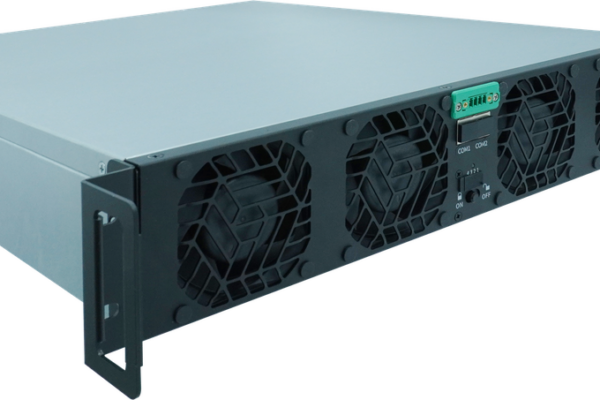
The main unit measures 400 × 280 × 35.8 mm and weighs approximately 4.3 kg. A 130 × 300 mm wall/arm mounting interface supports space-saving placement. It is not presented as a standard VESA or 19-inch rack attachment. Confirm the mounting drawing, bracket load capacity, cable clearance, ventilation, and service access before fixing the unit into a workstation.
The external adapter accepts 100–240 V AC at 50/60 Hz and outputs 24 V DC, 5 A; specified consumption is below 120 W. Use the approved power arrangement. A cabinet’s nominal 24 V supply should not be substituted without confirming connector, protection, grounding, and supply requirements.
Operating conditions are 0–45°C, 5–85% relative humidity at 25°C, and altitude below 3,000 m. These limits favor a controlled test environment. They do not establish an enclosure protection rating for dusty, wet, or outdoor installation.
Validate the automation sequence before series deployment
LAN, USB 3.0, USB Type-C, HDMI, and trigger output provide integration options. PC and mobile remote control and SCPI commands are supported. Define the host platform, remote-control method, trigger synchronization, and required command sequence. Support for SCPI does not guarantee a particular driver, communication transport, or test-cycle latency.
The instrument provides 32 GB internal storage and waveform formats including WAV, CSV, and BIN, plus screenshot and video recording. Acquisition memory in Mpts is separate from file storage in GB. Check full-record export, scaling, timestamps, file size, and transfer time with representative captures. Store settings, probe factors, instrument identification, and test conditions alongside results so another engineer can reproduce the measurement.
Series product view: MDO2504 shown. The ordered model determines bandwidth.
Fit the instrument into the complete workstation
The slim series platform can help release bench space. Mechanical mounting, approved power, probe routing, and remote-control validation still need explicit project review.
6. Evaluate documentation and TPS project support
Treat conformity, calibration, and application suitability as separate purchasing checks. The supplied datasheet includes a calibration certificate in the standard package but does not define its traceability chain, accredited scope, or detailed uncertainty. Request the certificate type your quality system needs. Likewise, obtain applicable conformity documentation for the exact instrument, power adapter, and delivery market rather than assuming a generic company certificate covers the product.
The datasheet states a three-year warranty for the mainframe, with probes and accessories subject to their own terms. Confirm the applicable sales conditions, service route, and regional handling in the quotation. Procurement should also request the exact delivery configuration, documentation language, packing scope, and firmware identification where configuration control matters.
TPS Elektronik combines this product category with engineering consultation, power-electronics products, and integration support for global B2B projects. Discuss standard instrument supply, equivalent alternatives, or a customized surrounding test arrangement. Custom support can concern fixtures, cabling, mounting, and system design; it should not be interpreted as an automatic commitment to modify the oscilloscope’s internal hardware or firmware.
For multi-station deployment, agree the pilot configuration before ordering the remaining units. Availability, lead time, pricing, calibration options, and accessory scope require quotation confirmation. Contact TPS sales with the destination country and required delivery date to establish a realistic supply plan.
7. Turn your test requirement into an actionable RFQ
A clear RFQ allows TPS to compare configurations against the actual task. Include the following information; if one point remains undecided, describe the engineering requirement rather than guessing a specification.
- Signals: fastest rise time, signal frequency, voltage range, common-mode voltage, and relevant transients.
- Acquisition: simultaneous channels, record duration, minimum sample rate, rare-event trigger, and required serial buses.
- Accessories: passive, differential, isolated, or current probes; required ratings and fixture connections.
- Integration: bench or arm installation, host environment, SCPI tasks, export format, and acceptance test.
- Commercial scope: quantity, destination address and postal code, required delivery date, and calibration or conformity documentation.
Request separate lines for the instrument, probes, mounting items, and optional services. This makes quotations comparable and identifies which items govern delivery. Agree an acceptance demonstration using representative waveforms, channel settings, probe factors, and exports before committing to a production test arrangement.
Series product view: MDO2504 shown. The ordered model determines bandwidth.
Define the acceptance result before placing the order
A useful RFQ describes the waveforms, accessories, automation steps, and documentation that must be delivered together. TPS can use this information to evaluate a project configuration and quotation scope.
Ready to confirm a configuration? Start with the 250 MHz MDO2504, compare the 350 MHz MDO3504, or specify the 500 MHz MDO5004 when the bandwidth budget requires it.
Send your MDO Series RFQ to TPS Elektronik for instrument selection, probe matching, integration consultation, and confirmed commercial terms. If the bandwidth remains open, send the signal requirements and let TPS assess the options.
8. FAQ: MDO Series procurement and integration
Which MDO model should our team request?
Select from 250, 350, and 500 MHz using the fastest signal edge, acceptable distortion, and probe bandwidth. The MDO2504 product details, MDO3504 configuration, and MDO5004 specification page identify the available models. Submit your signals if the measurement-chain bandwidth is uncertain.
Does every channel configuration provide 3 GSa/s and 360 Mpts?
No. The datasheet’s maximum values depend on channel pairing. Activating both channels within CH1/CH2 or CH3/CH4 introduces the listed 1.5 GSa/s and 180 Mpts conditions. Confirm the effective settings for the planned measurement.
Can the instrument directly measure a floating power converter node?
Do not assume isolated inputs. Select a differential or isolated probe with suitable voltage, category, bandwidth, and common-mode ratings. The instrument’s input limit alone does not validate the complete power-electronics measurement arrangement.
Can TPS support an automated test workstation?
TPS can discuss instrument selection and surrounding integration needs. The series supports SCPI and remote control, but the command sequence, data transfer, timing, and host compatibility should be validated against your proposed workstation before deployment.
What is needed to confirm price, delivery, and documentation?
Send the model or signal requirement, quantity, probe package, delivery destination, required date, and certificate requirements. Request a project quotation to confirm availability, supply scope, and support terms.