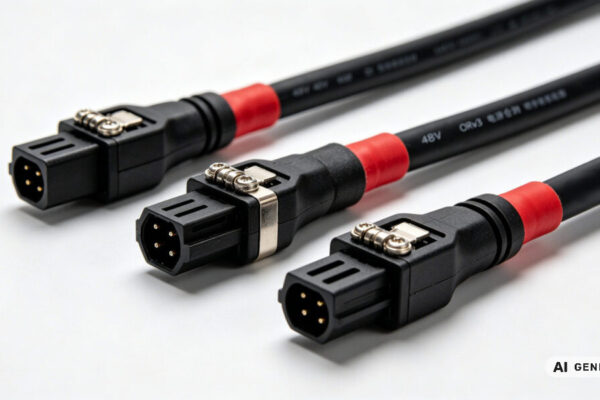


For system integrators and electrical engineers, the reliability of a system is only as strong as its weakest link. Often, that weak link is the cabling. Off-the-shelf cables frequently fail to meet the rigorous demands of high-frequency signal transmission, harsh industrial environments, or tight spatial constraints. When a leading manufacturer of precision industrial measurement equipment faced recurring signal integrity issues, they realized standard cables were compromising their entire product line.
This case study details how TPS Elektronik’s custom cable assembly solutions addressed these critical failures. By re-engineering their RF and fiber optic connections—specifically focusing on optimal connector selection and termination techniques. Which we eliminated signal loss and improved overall system reliability.
Request a consultation for your custom cable assembly needs →
1. The challenge: Signal degradation in high-frequency environments
Our client, an anonymous leader in industrial diagnostics, was experiencing unacceptable levels of signal attenuation and return loss in their flagship measurement device. The system required both high-frequency analog signal routing and high-speed digital data transfer. Their existing procurement strategy relied on standard, commercially available cables.
The primary issues identified during our initial audit were twofold: First, the coaxial cables used for analog signals suffered from poor shielding and low-quality terminations, leading to EMI susceptibility. Second, the optical data links were experiencing high insertion loss due to mismatched optical fiber termination types and inadequate strain relief.
2. RF cable solutions: Optimizing BNC and SMA connections
To resolve the analog signal degradation, our engineering team focused on the RF cable assemblies. The client’s design required robust connections that could withstand frequent mating cycles without degrading electrical performance.
2.1 The transition to high-grade BNC to BNC assemblies
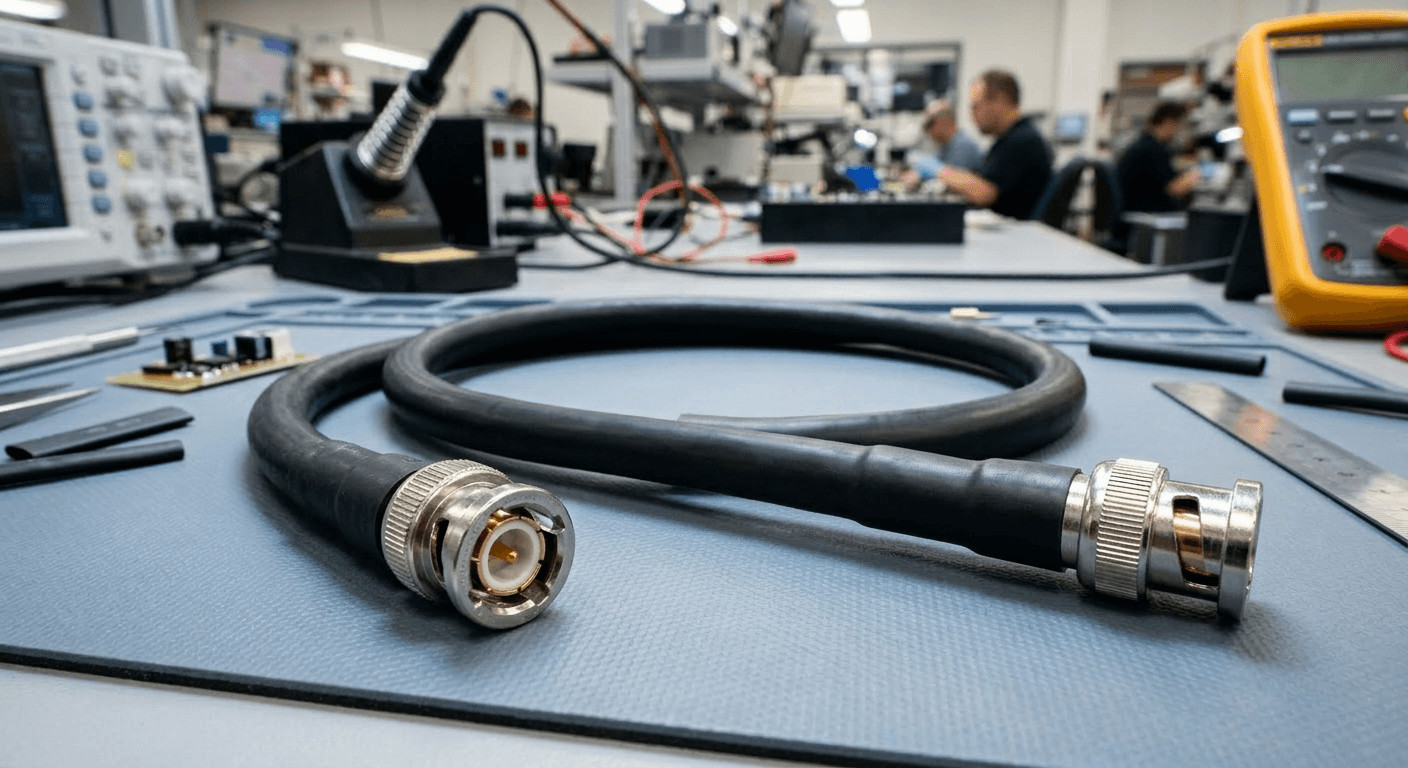
The original design utilized generic bayonet connectors that lacked proper impedance matching. We upgraded the primary analog routing to a custom BNC a BNC (BNC to BNC) assembly using low-loss RG-58 coaxial cable. We ensured that every cable to BNC connector termination was performed using precision crimping tools and verified with network analyzers to guarantee a strict 50-ohm impedance match, drastically reducing signal reflection. For more details on BNC specifications, refer to our BNC connector complete guide.
2.2 Precision matters: SMA plug to SMA plug configurations
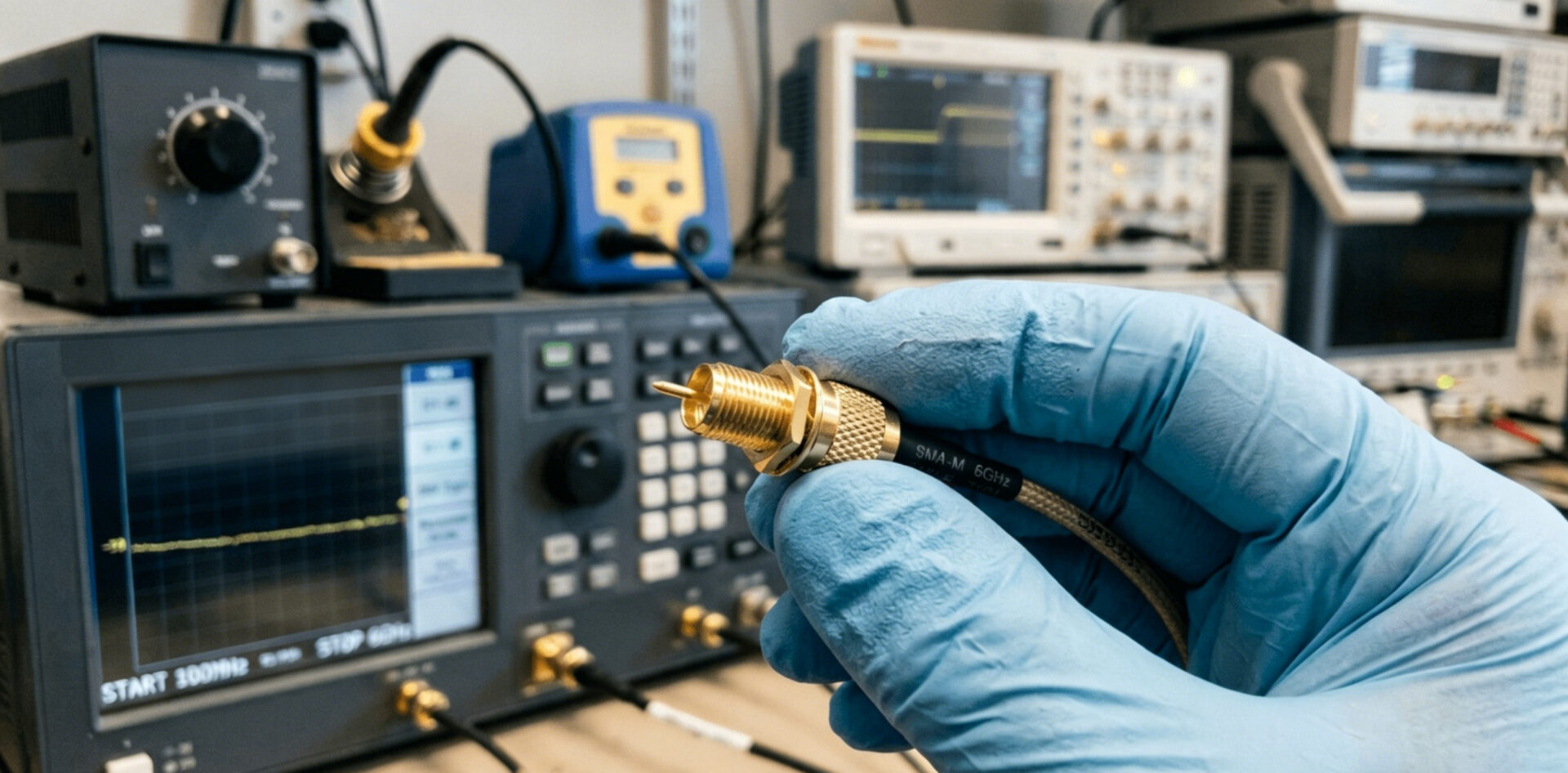
For the internal, higher-frequency modules where space was at a premium, the standard BNC connector was too bulky. We implemented a custom SMA plug to SMA plug assembly using semi-rigid coaxial cable. The threaded interface of the SMA connector provided superior mechanical stability and excellent electrical performance up to 18 GHz, completely eliminating the intermittent connection issues the client had previously faced. Learn more about SMA connector types and applications.
3. Fiber optic integration: Choosing the right termination types
The digital data transfer aspect of the client’s system required immunity to electromagnetic interference, making fiber optics the only viable choice. However, their previous assemblies suffered from micro-bends and poor end-face geometry.
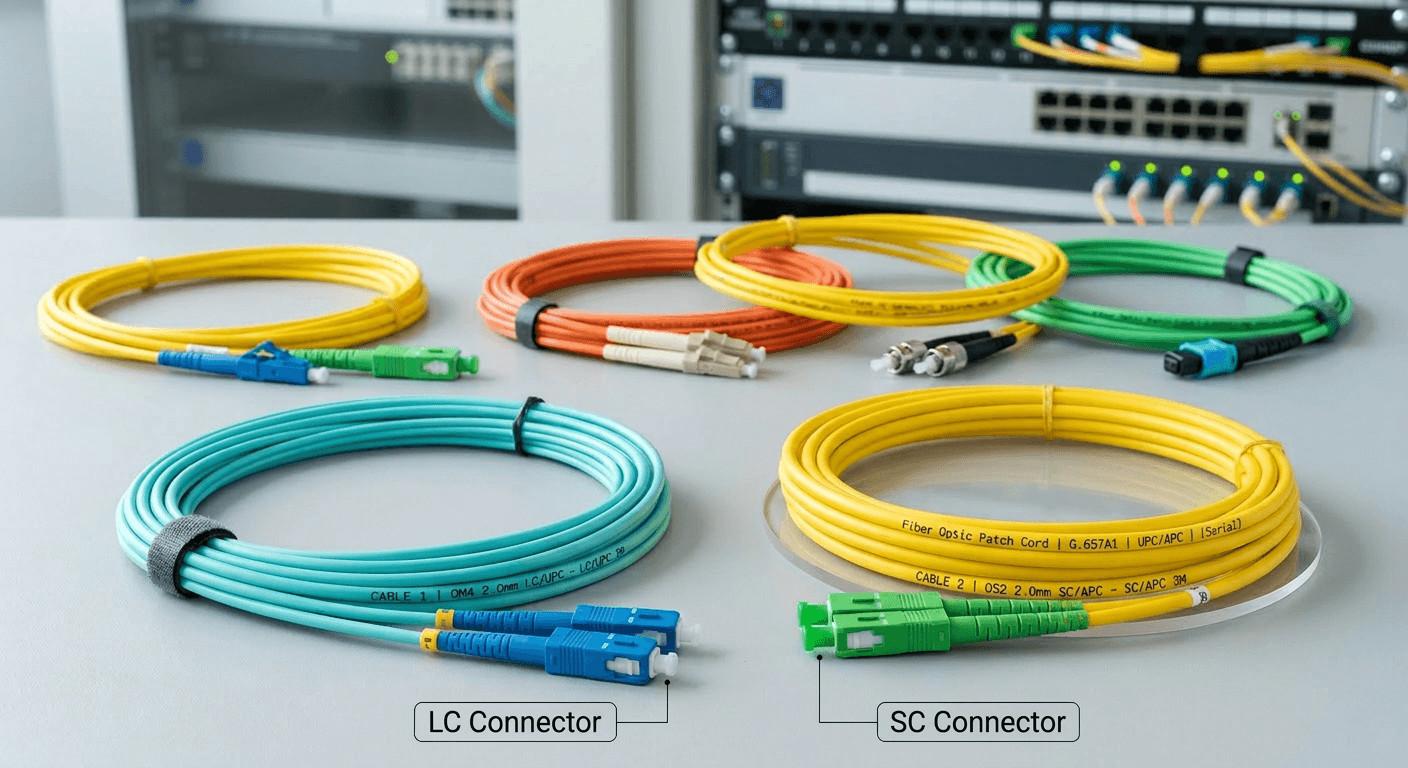
3.1 Navigating fiber connector types: LC connector vs. SC connector
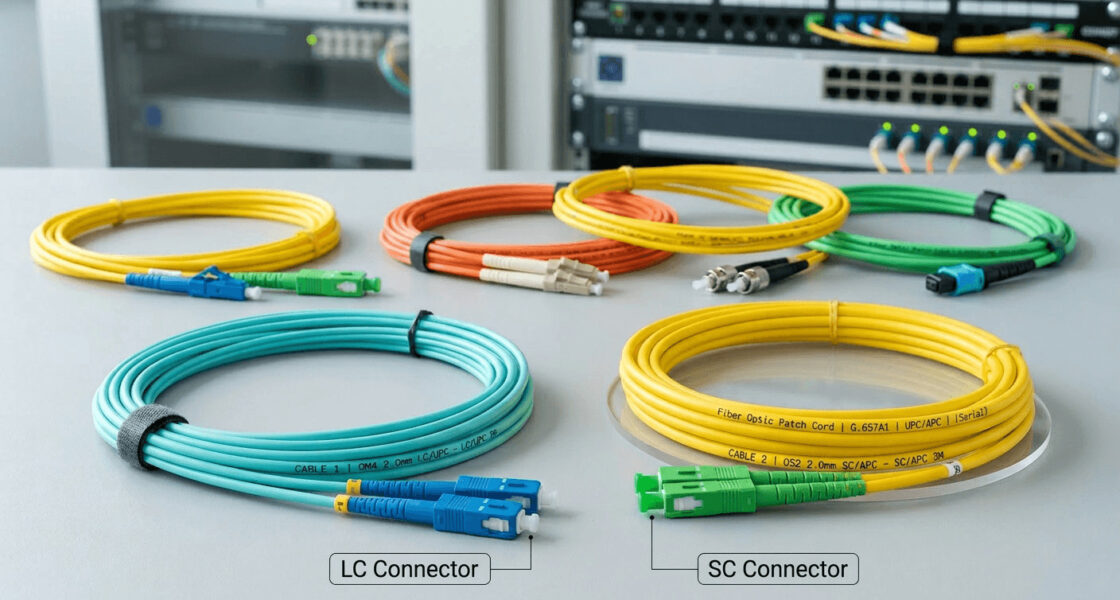
We conducted a thorough review of the required fiber connector types. The client was initially using older ST connectors, which were prone to misalignment in high-vibration environments. We redesigned the optical harness to utilize a combination of the LC connector for high-density internal patching and the SC connector for robust external interfaces.
By selecting the appropriate optical fiber termination types (specifically UPC – Ultra Physical Contact polishes) and implementing rigorous interferometry testing during our assembly process, we reduced insertion loss to less than 0.2 dB per connection. This ensured flawless high-speed data transmission. Explore our capabilities in fiber optic cable assembly.
4. The result: Enhanced reliability and streamlined procurement
By partnering with TPS Elektronik for custom cable assembly solutions, the client achieved a 40% improvement in overall signal integrity and completely eliminated field failures related to cabling. Furthermore, by consolidating their RF and fiber optic cable procurement through our EMS fiber optic cable assemblies division, they simplified their supply chain and reduced total cost of ownership.
Whether you need a specialized SMPW thermocouple connector, a ruggedized BNC connector, or complex fiber optic harnesses, precision engineering is the key to reliability.
Discuss your custom cable assembly project with our engineers →
5. FAQ
Why should I choose a custom cable assembly over off-the-shelf cables?
Custom cable assembly solutions ensure exact length, optimal shielding, specific connector types (like a precise SMA plug to SMA plug), and rigorous testing tailored to your application’s unique environmental and electrical requirements, preventing costly system failures.
What is the difference between an LC connector and an SC connector?
Both are common fiber connector types. The SC connector uses a push-pull mechanism and a 2.5mm ferrule, making it robust for general use. The LC connector uses a smaller 1.25mm ferrule and a latch mechanism, making it ideal for high-density applications where space is limited.
When should I use a BNC connector versus an SMA connector?
A BNC connector features a quick connect/disconnect bayonet mount, ideal for test equipment and applications below 4 GHz. An SMA connector uses a threaded interface, providing better mechanical stability and performance at much higher frequencies (up to 18 GHz or more), suitable for internal RF routing.
How do you ensure the quality of optical fiber termination types?
We ensure quality by using automated polishing machines to achieve precise end-face geometry (UPC or APC), followed by rigorous visual inspection using microscopes and testing for insertion loss and return loss to meet strict industry standards.