

System integrators, panel builders, and electrical engineers know that the reliability of an industrial power supply hinges on its magnetic components. When a leading European manufacturer of industrial motor drives experienced unpredictable field failures, the root cause was traced back to thermal breakdown and insulation failure within their power modules. The culprit? A poorly optimized high frequency transformer.
This customer case study explores how TPS Elektronik’s EMS winding goods division partnered with the client to troubleshoot these failures. By re-engineering the coil design, upgrading the insulation, and implementing advanced overmoulding techniques, we delivered a robust solution that eliminated downtime and accelerated their time-to-market.
1. The challenge: Unpredictable power supply failures in motor drives
Our client, a prominent manufacturer of industrial automation equipment, was facing a critical issue. Their latest generation of motor drives (motor asm) was failing during high-load operations. Field returns indicated that the switch-mode power supplies (SMPS) were shutting down prematurely. For procurement and engineering teams, these failures meant delayed project timelines, increased warranty claims, and a damaged reputation.
Initial diagnostics revealed that the standard off-the-shelf high frequency transformer used in the design could not withstand the harsh dv/dt transients and thermal cycling typical of industrial environments. The client needed a partner capable of not just manufacturing, but deeply analyzing and redesigning the magnetic components.
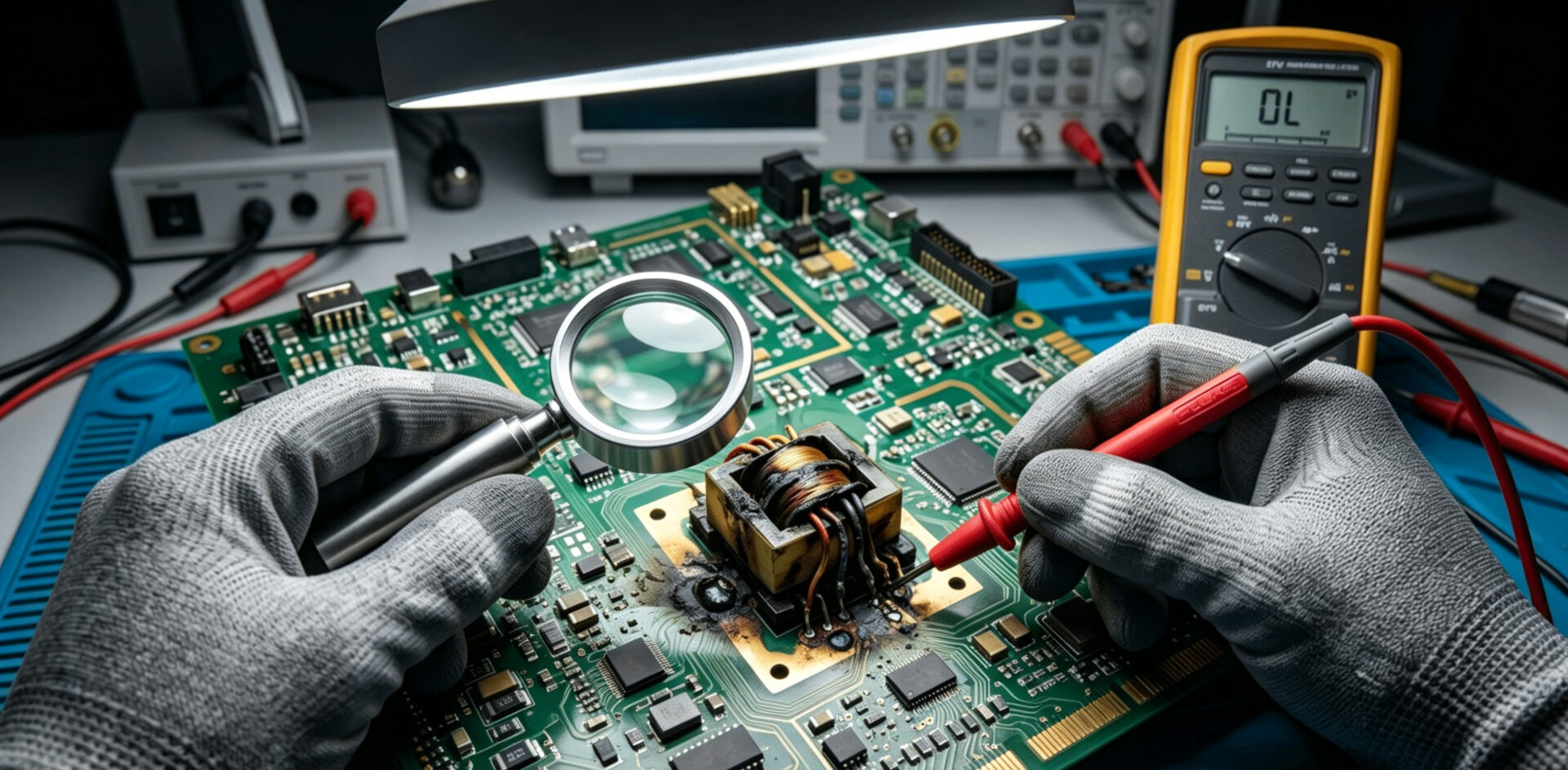
2. Root cause analysis of high-frequency transformer issues
Upon receiving the failed units at our facility, TPS Elektronik’s engineering team conducted a thorough teardown and failure analysis of the coils and transformers.
2.1 Insulation breakdown and thermal stress
The primary failure mode was insulation breakdown. High-frequency switching generates significant heat due to core losses and skin effect in the windings. The original transformer utilized standard enameled wire that degraded under continuous thermal stress. Once the insulation weakened, inter-turn short circuits occurred, leading to catastrophic failure. Understanding the right materials is crucial; you can learn more in our guide on wire insulation materials, types, and applications.
2.2 Parasitic capacitance in coils and transformers
Furthermore, the winding geometry of the original transformer resulted in high parasitic capacitance. In high-frequency applications, this causes ringing and voltage spikes that exceed the breakdown voltage of the components. Whether dealing with a standard bobbin or a complex toroid coil, managing these parasitic elements is essential for EMC compliance and system stability.
3. The TPS solution: Advanced winding goods engineering
To resolve these issues, TPS Elektronik proposed a complete redesign of the magnetic components, leveraging our expertise in custom winding goods.
3.1 Optimizing toroidal coils and air coils
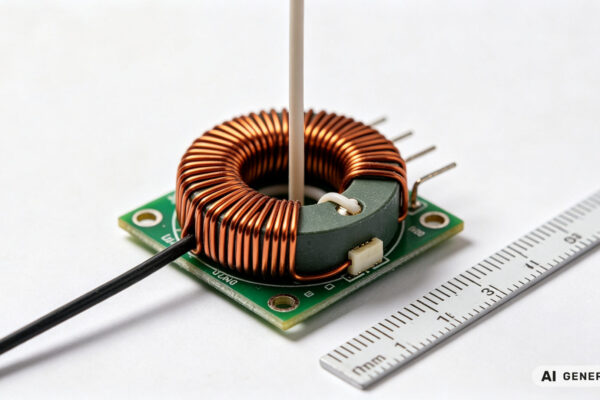
We replaced the traditional E-core design with optimized toroidal coils. A toroid coil offers superior magnetic flux containment, significantly reducing electromagnetic interference (EMI) which is vital for sensitive motor control circuits. For specific high-frequency filtering stages, we also integrated custom-wound air coil inductors to prevent core saturation during peak current surges. For insights into how magnetic fields are managed, see our Helmholtz coil uniform magnetic field guide.
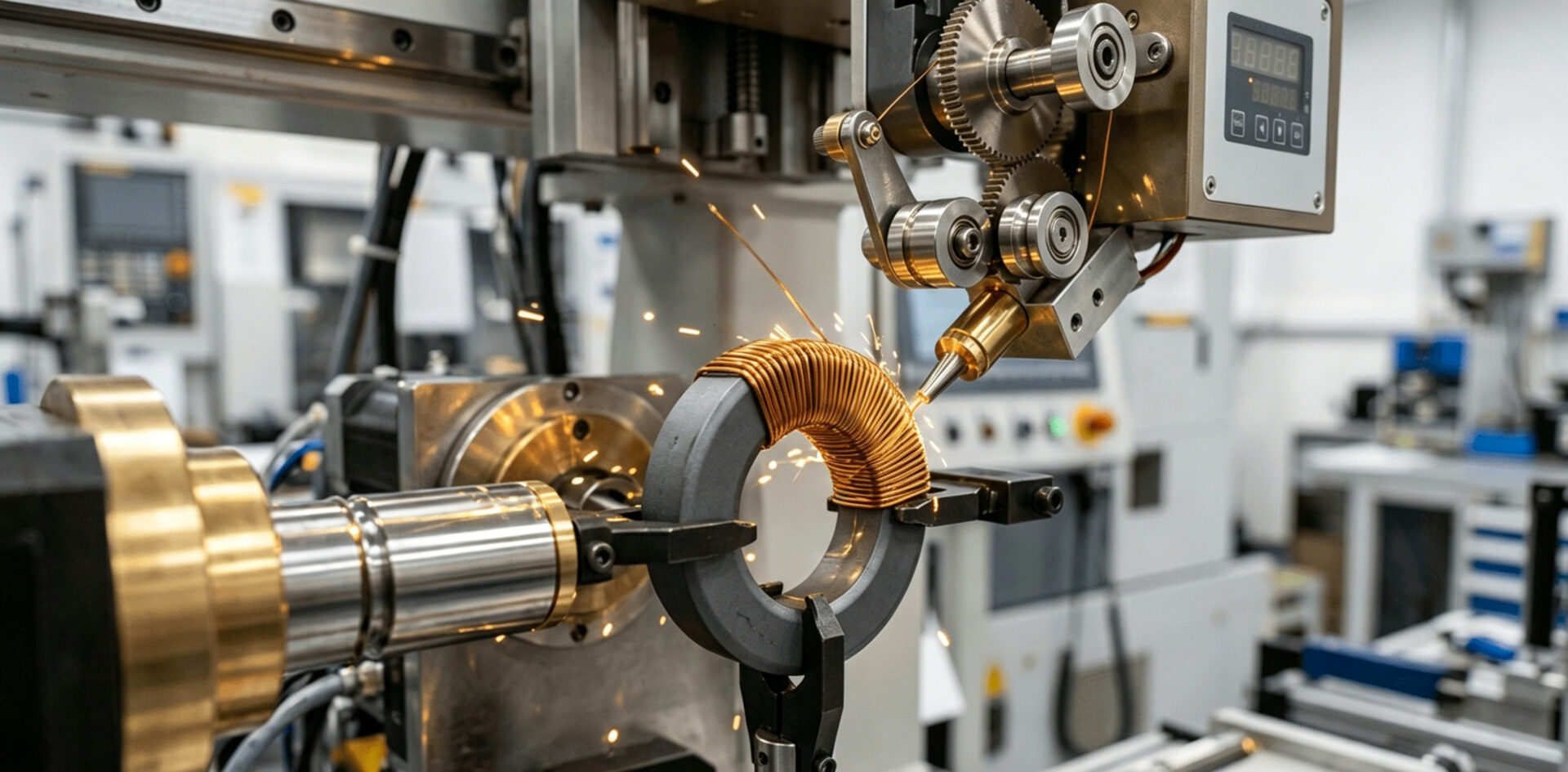
3.2 Superior insulating wire and overmoulding techniques
To combat thermal stress and mechanical vibration, we upgraded the winding material to triple-insulated wire (TIW), which meets stringent safety standards without requiring interleaved margin tape. More importantly, we implemented a vacuum potting and overmoulding process. Overmoulding encapsulates the entire high frequency transformer in a thermally conductive, flame-retardant resin. This not only improves heat dissipation but also provides ultimate protection against moisture, dust, and vibration.
4. Integration into the electric assembly and motor ASM
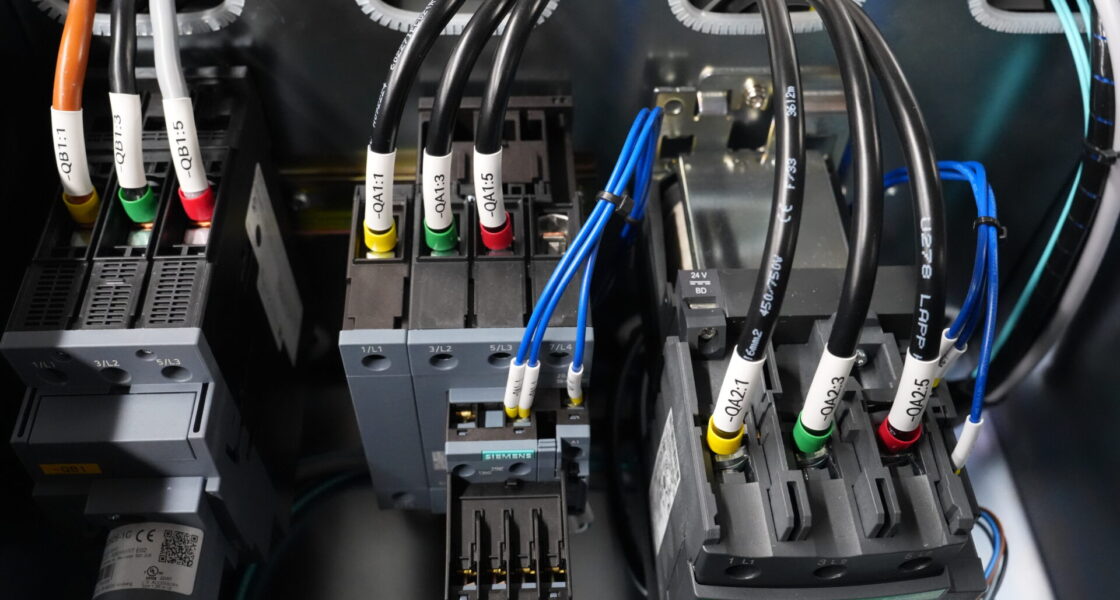
A transformer does not operate in isolation. The final step was ensuring seamless integration into the client’s broader electric assembly. We redesigned the lead-outs, utilizing protective and decorate wire sheathing for clear color-coding and abrasion resistance. This ensured that during the final motor asm process at the client’s facility, the connections were foolproof and mechanically secure.
Our approach ensures that components are not just wound, but are production-ready. Read more about our capabilities in delivering production-ready transformers and dv/dt chokes.
5. Results: Enhanced reliability and compliance
The redesigned high frequency transformer underwent rigorous testing, complying with international standards such as IEC 61558 for safety of transformers. The results were immediate: thermal performance improved by 30%, parasitic ringing was virtually eliminated, and field failure rates dropped to zero.
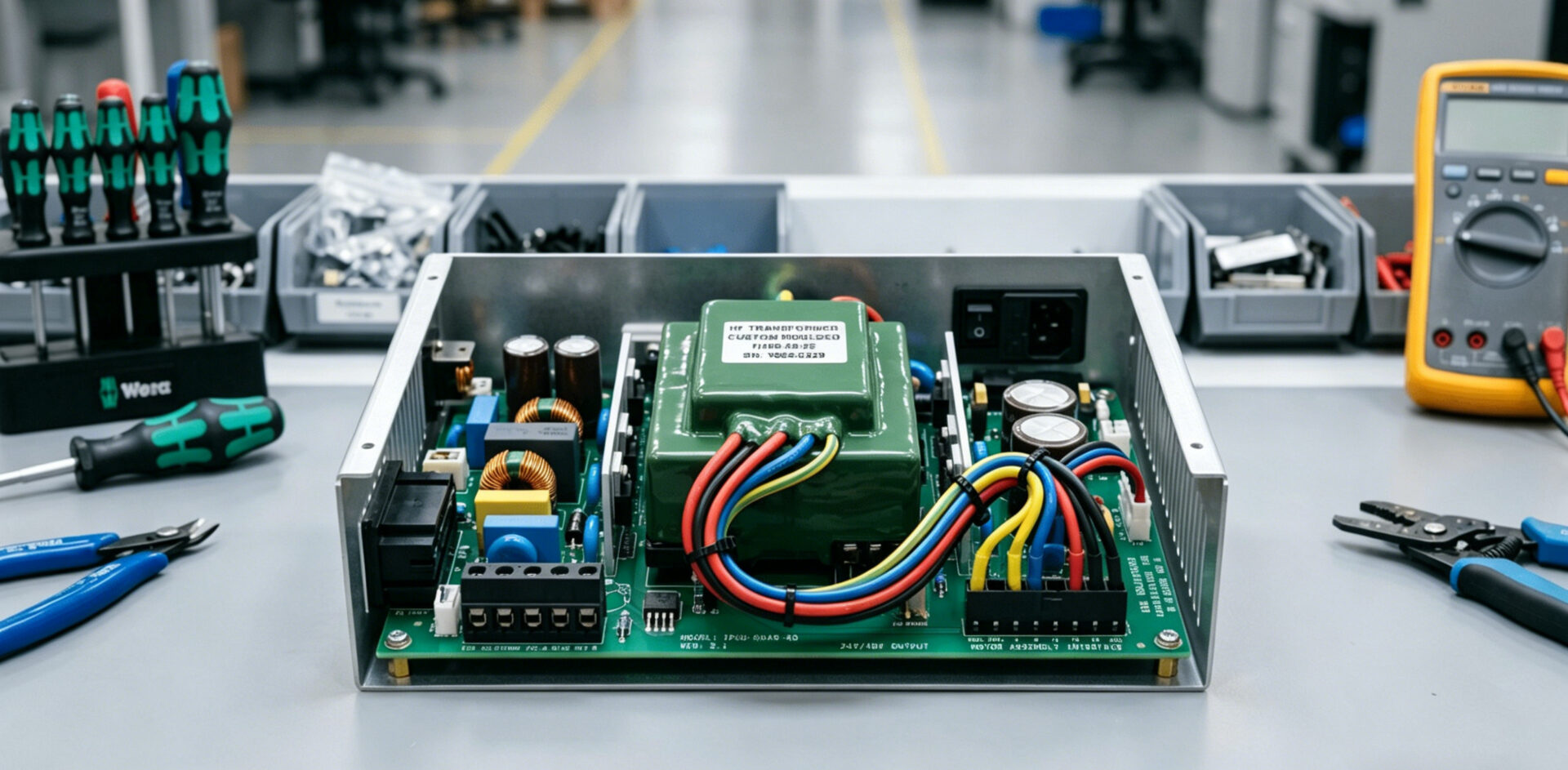
By partnering with TPS Elektronik, the client transformed a critical point of failure into a competitive advantage. Whether you need components for industrial drives or highly regulated sectors, our expertise scales to your needs. See how we apply similar rigor in our medical high-frequency transformer coil winding services.