

For system integrators, panel builders, and engineering‑driven procurement teams, selecting a power supply for precision analog testing is not only about voltage and current. It also involves spectral purity, ground‑loop management, remote sensing accuracy. And whether the PSU introduces artifacts that obscure the very signals the engineer is trying to measure. When a 24‑bit ADC evaluation board powered by a noisy switching supply, the last three bits of the measurement are lost in power‑supply‑induced noise. Which rendering the precision of the converter meaningless.
The TPS low noise programmable DC power supply series addresses these challenges at their root. By combining advanced linear regulation, high‑resolution digital control. And meticulous attention to conducted and radiated EMI, TPS delivers clean, stable DC power that preserves the integrity of sensitive analog measurements. This article examines the architecture and key characteristics of these supplies and explains why they are the preferred choice for precision analog circuit testing.
Why power supply noise limits measurement accuracy?
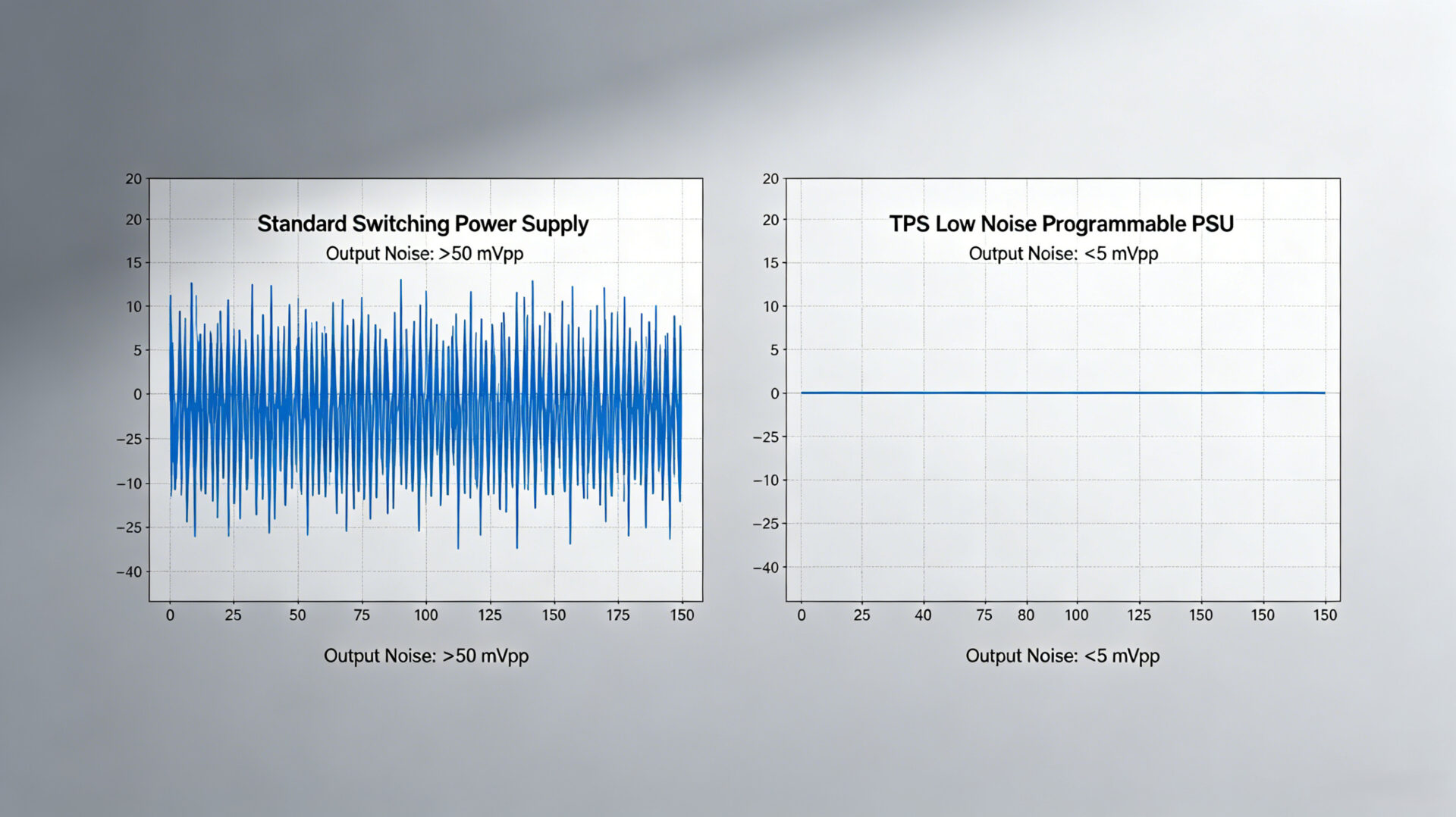
In precision analog testing, every millivolt of noise on the power rail couples into the device under test (DUT) through its power supply rejection ratio (PSRR). Which is finite and degrades at higher frequencies. A switching power supply with a typical output ripple of 50 mV peak‑to‑peak can inject broadband noise into a high‑gain amplifier chain. Which appearing as an elevated noise floor or discrete spurs in an FFT spectrum. For a 16‑bit ADC operating at a 2.5 V reference, one least significant bit (LSB) represents 38 µV. A ripple of just 1 mV effectively buries 26 LSBs.
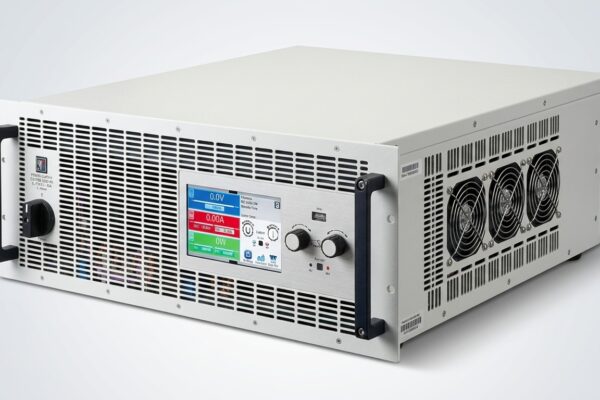
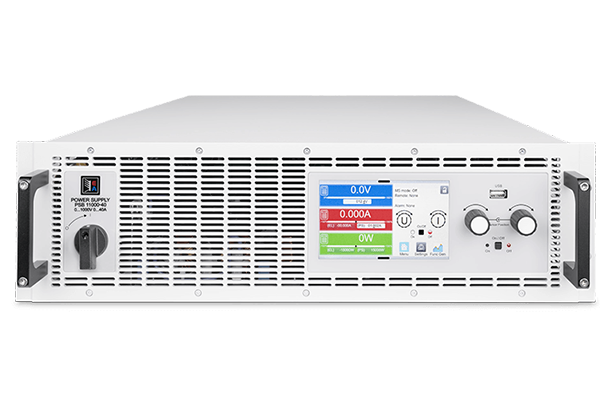
A low noise programmable DC supply addresses this by minimizing both the low‑frequency ripple (typically at the mains harmonic frequencies) and the high‑frequency switching noise (from the internal DC‑DC converter). The TPS approach, exemplified by the EA‑PSI 9000 DT desktop series and the high‑power rack‑mount series. Which uses a combination of active filtering, linear post‑regulation. And careful PCB layout to achieve output noise levels that are orders of magnitude below standard switching supplies. For a broader overview of the technology options, refer to the guide on top programmable power supply options.

TPS low noise programmable power supply architecture
The TPS programmable power supply platform built on a high‑efficiency front‑end AC‑DC converter with active power factor correction, followed by a precision linear or actively filtered output stage. This hybrid architecture achieves an overall efficiency of up to 95.8 % while maintaining output noise comparable to a pure linear supply. The key to this performance is the digital control loop, which uses high‑resolution ADCs and DACs to regulate the output with precision. And an autoranging output stage that maintains low output impedance across a wide voltage and current range.
The platform supports multiple regulation modes—constant voltage (CV), constant current (CC), constant power (CP), and constant resistance (CR). Which allowing the supply to emulate a variety of source characteristics. Fast crossover between modes ensures that the supply does not overshoot or undershoot when the DUT transitions from one operating region to another. TPS supplies are available in a full range of form factors. Which detailed in the programmable power supply category.
Ripple, noise, and spectral purity
Output ripple specified as a combination of low‑frequency ripple (related to the mains frequency and its harmonics) and high‑frequency noise (generated by the switching action of the internal converter). TPS supplies achieve typical ripple figures in the low millivolt range. The noise further characterized by its spectral content: unlike a simple linear supply. Which may have dominant 50/60 Hz hum, a high‑quality programmable supply must also suppress noise at frequencies well into the MHz range. Where switching artifacts could interfere with sensitive RF or high‑speed digital circuits on the DUT.
The TPS low‑noise design incorporates output filtering and shielding that effectively contains this high‑frequency energy, ensuring that the supply does not become a source of radiated EMI in the test setup. This is particularly important when multiple instruments are operating in close proximity within a test rack.
Remote sensing and load regulation
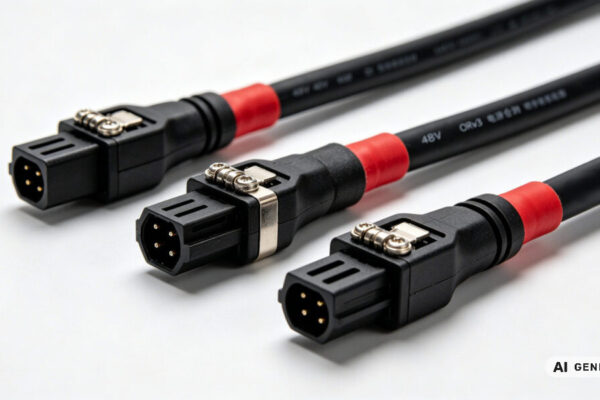
Even a perfectly quiet power supply can deliver an incorrect voltage to the DUT if the voltage drop in the load leads is not compensated. At a load current of 10 A, a total lead resistance of just 10 mΩ (easily reached with a meter of thin test leads) introduces a 100 mV voltage error—catastrophic for a circuit expecting 3.300 V. TPS programmable supplies feature remote sense (Kelvin) connections that measure the voltage directly at the DUT terminals and adjust the output to compensate for lead losses in real time. This 4‑wire connection scheme is standard practice in precision measurement and is supported across the TPS range.
Digital control, resolution, and programming
Precision testing is rarely a static affair. An engineer may need to sweep the supply voltage from 1.8 V to 5.0 V in 10 mV steps while logging the DUT’s current consumption. TPS supplies provide high‑resolution programming (typically 16‑bit or better on the setpoint DACs) and measurement readback (with accuracy ≤0.05 % FS for voltage and ≤0.1 % FS for current). Built‑in USB and Ethernet interfaces as standard allow direct SCPI command control, while optional fieldbus modules (CAN, Profibus, EtherCAT, Modbus) enable integration into larger industrial ATE systems. This makes them suitable not only for bench‑top R&D but also for automated production test systems.
EMC, safety, and system integration
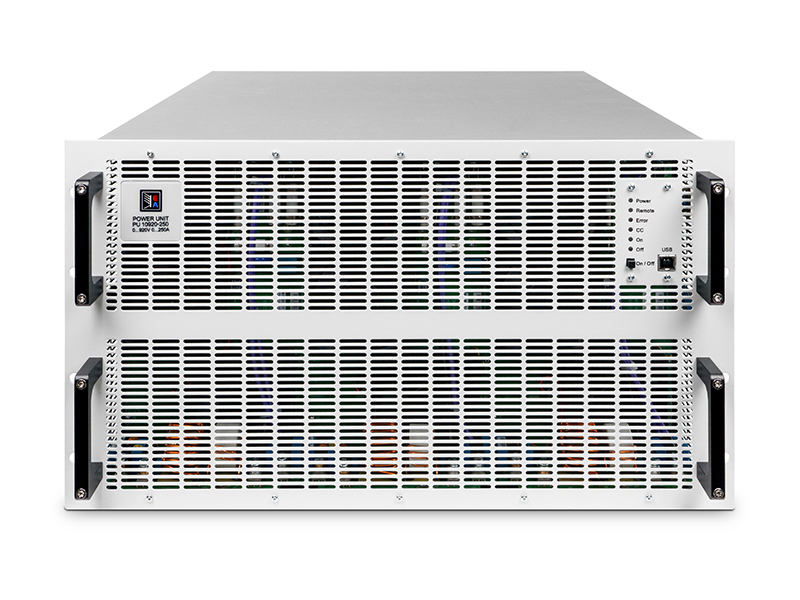
A low‑noise supply must not only be quiet on its output but also electromagnetically compatible with its environment. TPS programmable supplies meet the conducted and radiated emission limits of EN 55032 Class A (CISPR 32), ensuring that they do not interfere with nearby sensitive equipment. For the immunity side, the supplies are designed to withstand the test levels of the IEC 61000‑4‑x series. Safety is assured through compliance with EN/IEC/UL 61010‑1, the harmonized standard for measurement, control, and laboratory equipment. TPS supplies are housed in IP20 enclosures, with rack‑mount options available from 1U to 6U form factors.
Application scenarios: analog circuit test, sensor evaluation, and metrology
- Precision analog and mixed‑signal IC evaluation: Providing clean power to op‑amps, ADCs, DACs, and voltage references during characterization.
- Sensitive sensor testing: Powering strain gauges, photodiodes, and MEMS sensors where power supply noise directly limits resolution.
- Metrology and calibration laboratories: Serving as a stable, programmable voltage source for calibrating multimeters and data acquisition systems.
- Low‑noise RF and microwave circuit testing: Supplying bias voltages to LNAs, mixers, and VCOs without introducing unwanted modulation.

RFQ checklist for precision programmable DC supplies
- Voltage and current range: Maximum voltage and current required, and whether autoranging is beneficial.
- Noise and ripple specification: Maximum acceptable output ripple and noise (mVpp or mVrms).
- Programming resolution: Required setpoint resolution (e.g., 1 mV, 0.1 mA).
- Remote sense: Is 4‑wire Kelvin connection required?
- Interfaces: USB, Ethernet, or specific fieldbus (CAN, Profibus, etc.).
- Form factor: Desktop, 1U, 2U, or other rack‑mount format.
- Quantities and schedule: Prototype, pilot, and series volumes.
Frequently Asked Questions
What is the typical output ripple of a TPS low‑noise programmable power supply?
The TPS low‑noise supply achieves ripple and noise in the low single‑digit millivolt range, making it suitable for powering sensitive analog circuits.
Does TPS offer a pure linear power supply?
TPS supplies utilize advanced filtering and regulation techniques to deliver noise performance approaching that of a pure linear supply, while offering the efficiency and programmability of a modern digital platform. For the most sensitive applications, TPS can recommend the optimal model from its comprehensive portfolio.
How does remote sense improve measurement accuracy?
Remote sense compensates for the voltage drop in the load leads, ensuring that the voltage at the DUT terminals is exactly the programmed value, independent of load current.
Where can I find the complete technical specifications?
Datasheets and application notes are available on the TPS programmable power supply category page or through the desktop supply page.