

System integrators, panel builders, and procurement teams rarely fail because they lack a switching power supply design. They lose time—and budget—when the single custom magnetic component at the heart of that supply cannot be sourced from any catalog distributor in the exact form factor, inductance, and isolation voltage required. A standard off‑the‑shelf EFD15 flyback transformer might have the right turns ratio, but its physical height exceeds the 12 mm enclosure limit. An alternative part might fit mechanically but introduces excessive leakage inductance that fails conducted emissions testing. Which forcing a costly and time‑consuming redesign cycle just weeks before the scheduled compliance submission.
TPS Elektronik’s small transformer coil winding service built to eliminate that risk. By manufacturing custom miniature transformers, inductors, and chokes to exact electrical, mechanical, and thermal specifications. TPS bridges the gap between a proven reference design and a production‑ready power supply. This service specifically tailored for low‑power switch‑mode power supplies (SMPS) and compact DC‑DC converters up to approximately 100 W. Where every millimeter of component height and every milliwatt of core loss must be accounted for.
1. Why miniature custom winding matters for low‑power SMPS
In a typical 20 W isolated flyback converter, the power transformer is simultaneously the bulkiest, heaviest, and most electromagnetically critical component on the PCB. It determines the converter‘s efficiency, its electromagnetic interference (EMI) signature, its maximum ambient operating temperature. And most critically for compact designs — its total height above the board. A catalog transformer selected from a distributor’s limited range almost always compromises at least one of these parameters.
A miniature transformer winding service avoids these compromises by starting from the electrical specification and designing the magnetic assembly outward: selecting the smallest core that can handle the required power throughput without saturation. Which specifying the magnet wire gauge that minimizes DC resistance while fitting within the bobbin window, and arranging the winding layers to minimize leakage inductance and interwinding capacitance. The resulting component is a fully functional power transformer that fits the available PCB footprint and height budget exactly. While meeting the efficiency and EMI targets defined in the product specification. TPS‘s wider expertise in this area detailed in our comprehensive overview of electronic design services for complete solutions. Which covers how custom magnetics integrate into broader development programs.
2. TPS small transformer winding capability
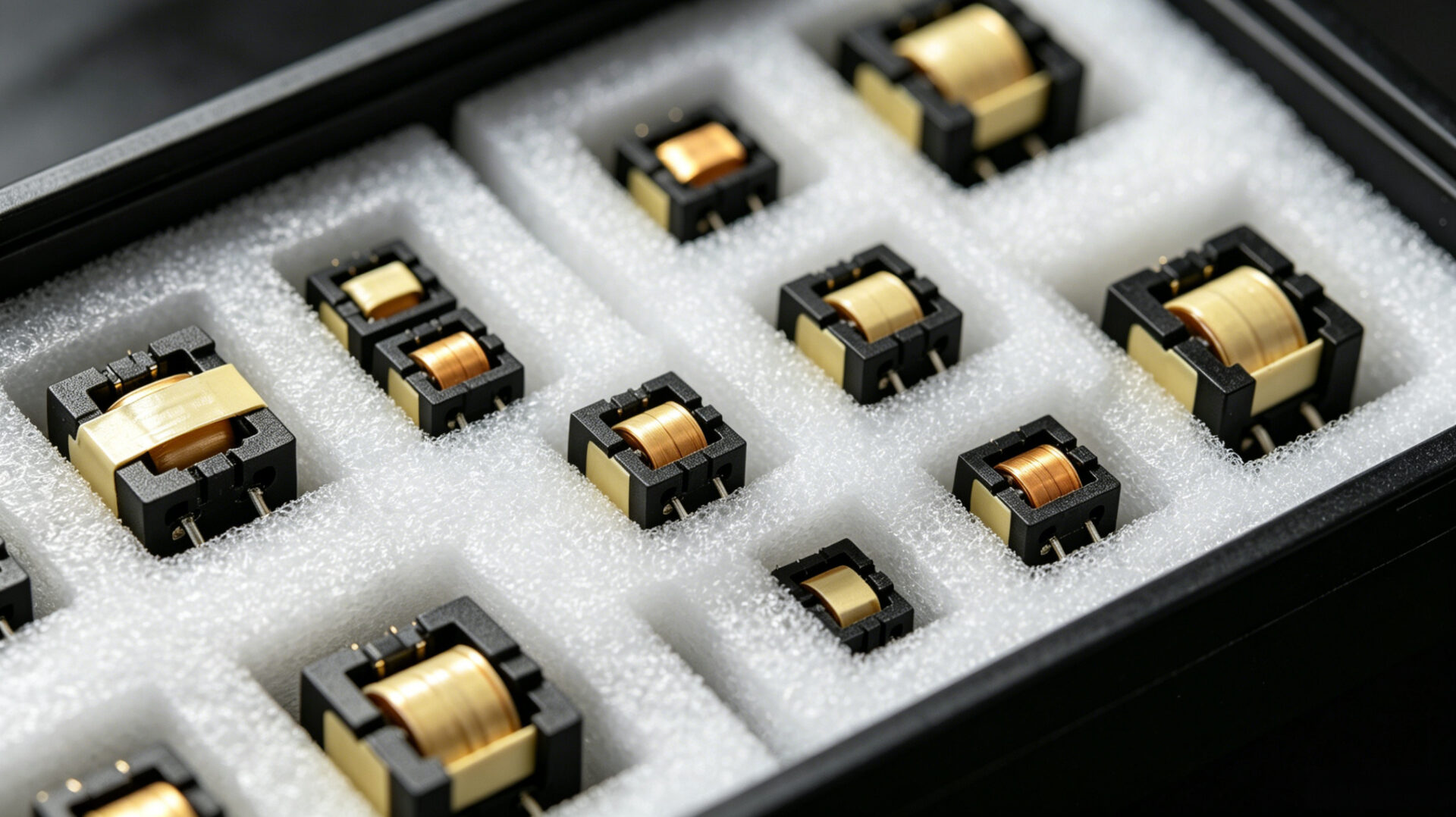
TPS Elektronik operates precision coil winding equipment capable of producing miniature transformers with core dimensions as small as approximately 8 mm (e.g., EE8.3, EP7, or small toroidal cores). The service covers the full range of low‑power SMPS topologies: flyback, forward, push‑pull, half‑bridge, and resonant LLC converters. Every winding project begins with a DFM (Design for Manufacturability) review that verifies the electrical specification against the mechanical constraints of the selected core and bobbin.
2.1 Supported geometries and core types
TPS winds on a wide variety of miniature ferrite core geometries. Each offering a different balance of power handling, shielding, and height profile. The table below summarizes the typical applications:
- EE, EF, and EFD cores: These are the workhorse geometries for flyback and forward converters. Which offering moderate power handling (5–50 W) with a low‑profile design.
- EP and EPC cores: With their round center leg, these cores are ideal for applications where a compact footprint and good magnetic shielding are required.
- RM and P cores (Pot Cores): Offering the best self‑shielding, these commonly selected for low‑noise applications like precision analog supplies and sensitive sensor circuits.
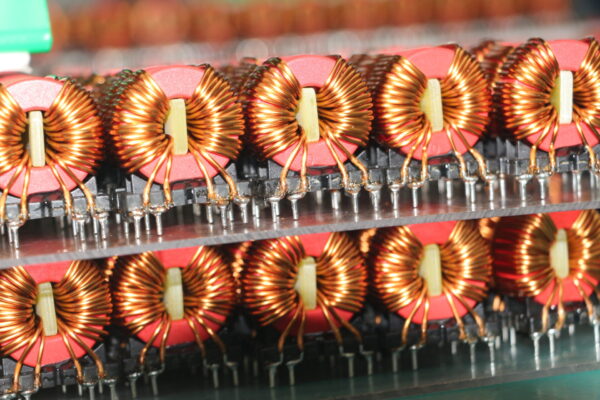
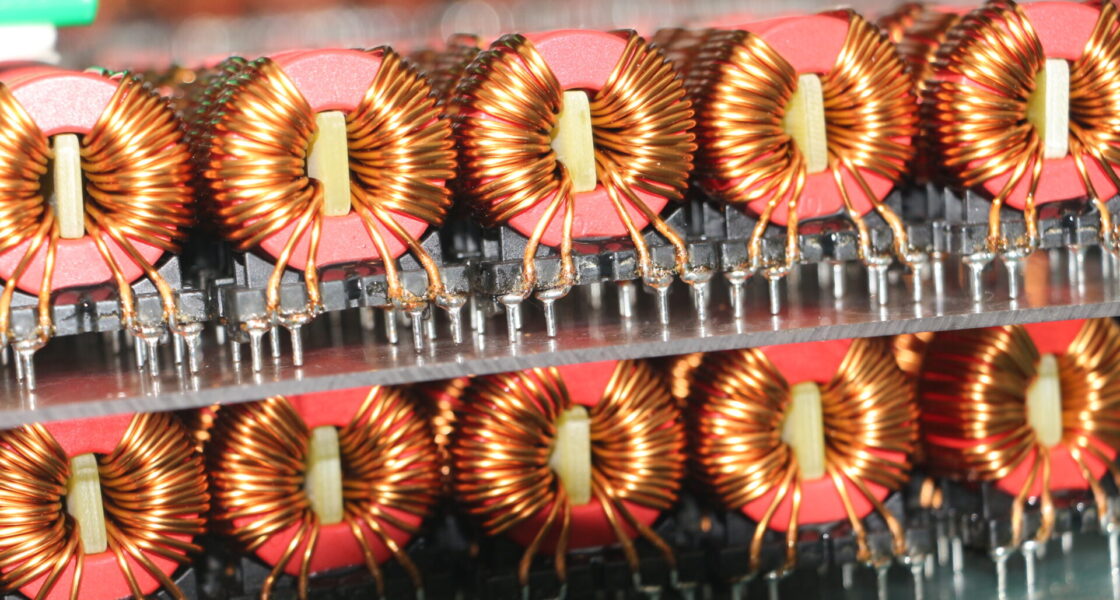
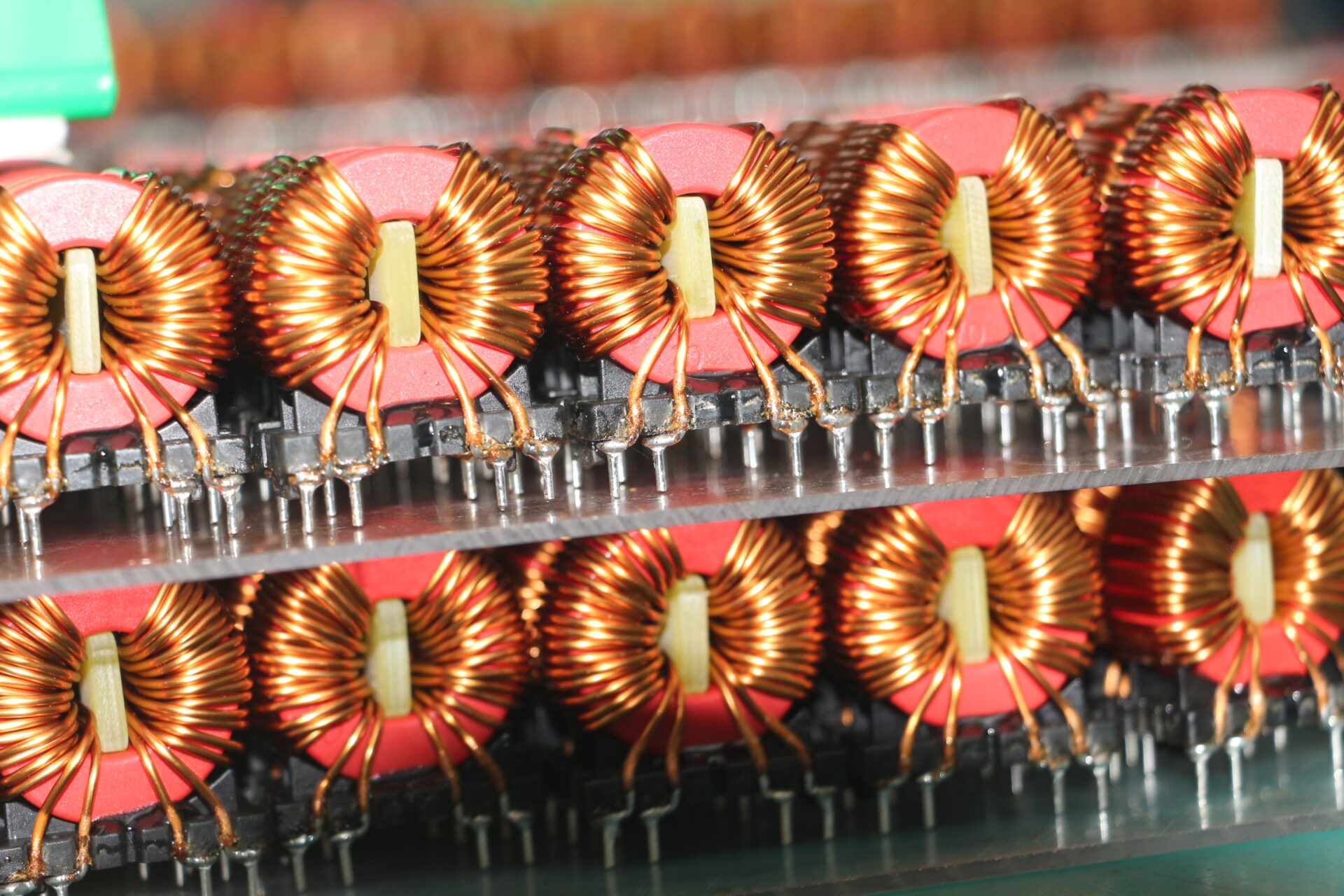
- Toroidal cores: Used for common‑mode chokes, current transformers, and where the absolute minimum height and lowest radiated field needed.
- Planar cores (e.g., E‑I, E‑E planar): Integrated with PCB windings for ultra‑low‑profile designs.
For each geometry, TPS selects the appropriate ferrite material. Typically MnZn power ferrites such as 3C90, 3C94, N87, or N97 — based on the operating frequency (20 kHz to several MHz), peak flux density, and required core loss characteristics. For higher‑frequency GaN‑based converters operating above 1 MHz, low‑loss materials such as 3F4 or N49 are selected. TPS’s capabilities in designing and manufacturing these components also supported by its broader experience in supply chain solutions for electronic design. Which ensuring material availability for both prototype and production volumes.
2.2 Ultra‑fine wire handling and insulation
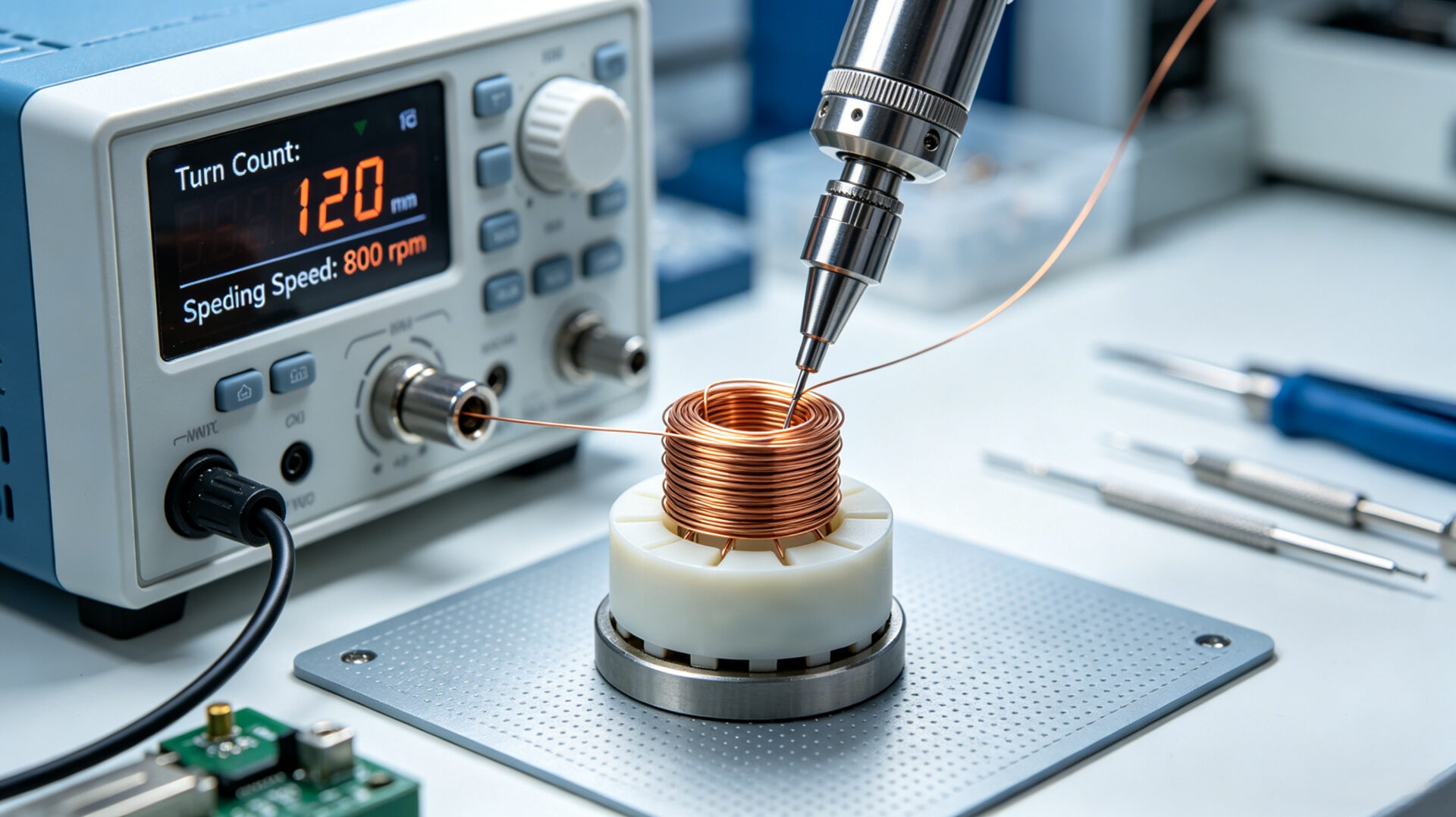
Miniature transformers for sub‑20 W converters typically use magnet wire in the range of 0.05 mm to 0.3 mm diameter (AWG 44 to AWG 29). Handling wire below 0.1 mm demands precise tension control to avoid wire stretch or breakage during winding. TPS‘s CNC winding equipment maintains calibrated tension across all spindles. And the wire insulation type — polyurethane (solderable, 130 °C), polyester (155 °C). Or polyimide (220 °C) — selected based on the thermal class required by the application.
For transformers requiring reinforced isolation — such as those used in medical power supplies or isolated gate drivers. TPS applies inter‑layer insulation tape (typically polyimide or polyester film) and margin tape to meet the creepage and clearance distances specified by IEC 62368‑1 or IEC 60601‑1. The insulation system designed with a triple‑insulated wire strategy (supplementary or reinforced insulation) if the bobbin geometry does not provide sufficient creepage with standard magnet wire. Which ensuring compliance with safety standards. These design practices are a core part of TPS’s approach to quality and efficiency in production.
3. Design considerations: leakage, coupling, and EMI
In a compact flyback converter, leakage inductance is the silent enemy. It stores energy that is not transferred to the secondary, dissipating it in a snubber circuit or, worse, causing voltage overshoot on the primary switch. A miniature transformer with poor coupling (low primary‑to‑secondary coupling coefficient) may generate enough common‑mode noise through interwinding capacitance to fail conducted EMI limits on the first test.
TPS engineers address these issues at the winding design stage. Leakage inductance is minimized through interleaved winding techniques — splitting the primary into two layers that sandwich the secondary — or through the use of a foil winding for the secondary in very low‑profile designs. Interwinding capacitance is controlled by selecting the insulation thickness and the winding arrangement (e.g., a Z‑winding pattern instead of a simple layer‑by‑layer approach). These design optimizations, along with the broader manufacturing capabilities, are part of the integrated approach described in our procurement solutions case study.
4. Electrical testing and quality assurance
Every miniature transformer wound by TPS undergoes 100 % electrical testing before it leaves the production floor. The standard test protocol includes inductance and turns ratio measurement, leakage inductance, DC winding resistance on all windings, and hipot (high‑potential) testing from winding‑to‑winding and winding‑to‑core at the specified isolation voltage. A documented test report with measured values accompanies every production lot.
For applications where partial discharge (PD) testing is required — such as medical devices or high‑reliability industrial equipment — TPS can perform PD testing to verify the absence of void defects in the insulation system, typically at test voltages 1.25 to 1.5 times the rated working voltage. The lot traceability system, connected to the practices detailed in our guide on inventory management for electronics, ensures full material and process traceability for each batch of magnetic components.
5. Compliance and safety: IEC 62368‑1, reinforced isolation, and EMC
Any transformer that bridges a safety isolation barrier must comply with the relevant product safety standard. For industrial and IT equipment, IEC 62368‑1 is the governing standard, defining requirements for electrical shock, fire, mechanical, and thermal hazards. For medical applications, IEC 60601‑1 applies, with stricter limits on leakage current and insulation thickness.
TPS designs miniature transformers to meet these standards by specifying the correct insulation materials, verifying creepage and clearance distances against the working voltage, and performing the required dielectric strength and partial discharge testing. A Declaration of Conformity referencing the applicable standards is provided with each production lot. TPS also considers the role of the transformer in the overall EMC performance of the end product; while the transformer is a passive component in the EMI path, its parasitic capacitances and core properties significantly influence conducted emissions, a topic explored further in our resources on improving production efficiency through inspection.
6. Application examples: isolated DC‑DC, gate drive, and auxiliary supplies
Miniature wound transformers and inductors from TPS are found in a variety of compact power conversion applications:
- Isolated DC‑DC converters: Brick and SIP‑format isolated converters (1–30 W) for industrial, medical, and railway power supplies, where reinforced isolation and compact size are paramount. These designs often use EFD, EP, or planar cores.
- Isolated gate drivers: Pulse transformers for IGBT, MOSFET, and SiC gate drive circuits, where low interwinding capacitance, high dv/dt immunity, and consistent turns ratio are critical for safe switching. Toroidal or small RM cores are typical choices.
- Auxiliary power supplies: Standby flyback converters delivering a few watts from a high‑voltage DC bus, where a custom EE8 or EF12 transformer delivers the required bias voltage in a minimal footprint.
- Isolated sensors and signal conditioning: Miniature current transformers and isolation transformers for analog signal chains, where accuracy and linearity are essential.
7. RFQ checklist for miniature transformer winding
- Electrical specification: Nominal input and output voltage, switching frequency, output power, target efficiency.
- Inductance and turns ratio: Primary inductance, leakage inductance limit, turns ratio (NP:NS:NAux).
- Core preference: Preferred core type/size or a maximum mechanical envelope (L × W × H in mm).
- Isolation requirements: Functional, basic, or reinforced insulation; working voltage and required test voltage.
- Termination: Through‑hole pins (lead spacing), SMD pads, or flying leads with specified length.
- Applicable standards: Safety standard (IEC 62368‑1, IEC 60601‑1) and any required certifications.
- Quantities and schedule: Prototype, pilot, and series volumes with target delivery dates.
- Documentation: Required test reports and certificates.
8. FAQ
What is the smallest transformer core TPS can wind?
TPS winds cores down to approximately 8 mm in size (e.g., EE8.3, EP7), using ultra‑fine wire with precise tension control. The practical minimum depends on the number of windings, turns ratio, and isolation requirements.
Can TPS wind triple‑insulated wire for reinforced isolation?
Yes. TPS regularly winds transformers using triple‑insulated wire (TEX‑E, TIW‑B, etc.) to achieve reinforced isolation in compact bobbin sizes where standard margin tape does not provide enough creepage distance.
Does TPS provide prototype quantities for design validation?
Yes. TPS supports prototype builds with short lead times. Prototypes are wound on the same equipment used for series production, ensuring that the validated performance is reproducible in volume.
How does TPS ensure consistent transformer performance across production batches?
TPS uses calibrated CNC winding equipment, documented setup procedures, and 100 % electrical testing. Lot traceability and First Article Inspection (FAI) are standard, ensuring consistency between prototype and production.
Where can I learn more about TPS’s broader electronic design and manufacturing capabilities?
Visit the TPS additional services page, or read about our comprehensive electronic design services and inventory management solutions.