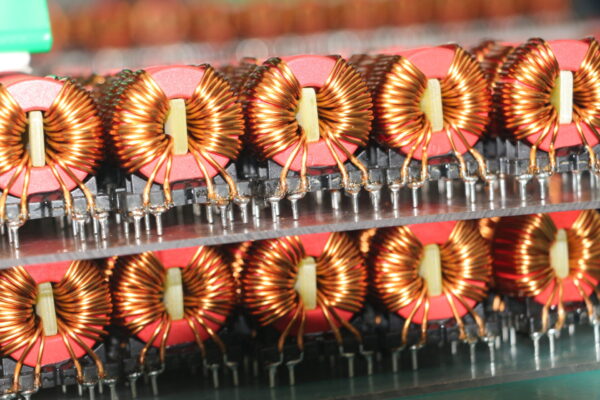


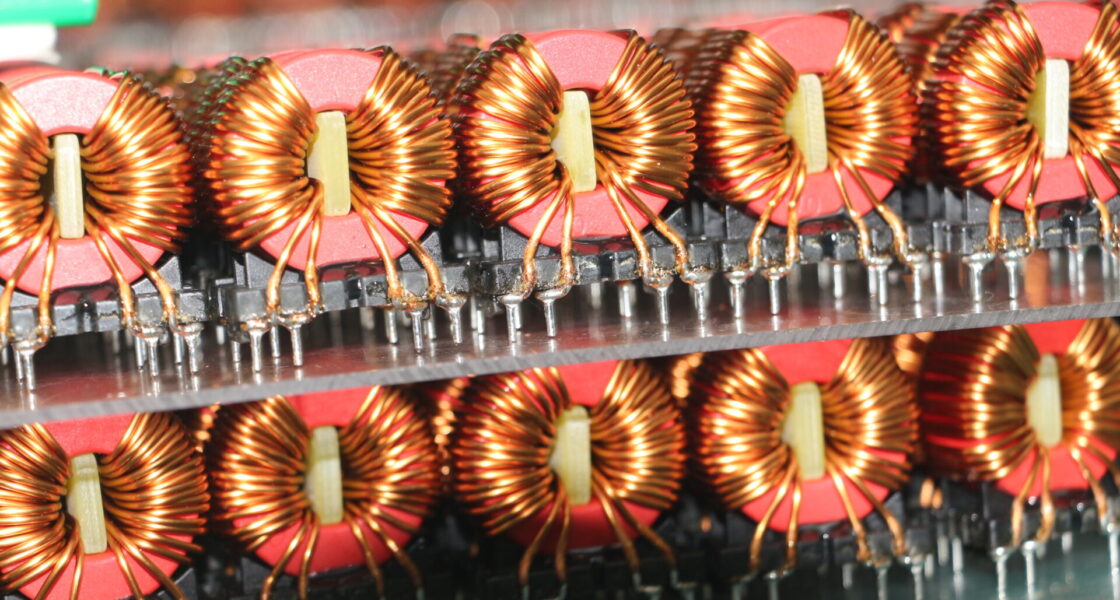
System integrators and panel builders working on high-frequency power converters face a persistent challenge. Magnetic components — transformers, inductors, and chokes — are rarely available off-the-shelf in the exact specification their design demands. A standard catalog part might meet the inductance value. But it almost certainly fails on core loss at the operating frequency. Or exceeds the available footprint, or lacks the required isolation voltage. When procurement attempts to solve this by distributing the magnetic BOM across multiple winding houses. The result is fragmented documentation, inconsistent insulation practices. And test reports that do not reference the same standards.
TPS Elektronik’s custom coil winding service addresses this fragmentation with an integrated manufacturing approach. Rather than treating magnetics as a commodity, TPS winds coils to the exact electrical, mechanical, and thermal specifications that the design requires. And provides full test documentation that supports the end product’s regulatory submission. This service covers high-frequency power transformers, toroidal inductors, dv/dt filter chokes, and solenoid coils across industrial, medical, and automotive applications.
1. Why custom coil winding matters for system integrators and procurement
When procurement teams source magnetic components, the temptation is to search for a standard part number that approximates the required specification. This shortcut often fails in high-frequency power applications above 100 kHz. A catalog inductor rated for a specific current at 50 kHz may exhibit excessive core loss at 200 kHz, derating the power converter by 30 % or more. A transformer with adequate isolation at DC may fail partial discharge testing at the elevated switching frequencies used in GaN-based designs.
A custom coil winding service eliminates these compromises. The winding geometry — number of turns, wire gauge, layer arrangement, and interlayer insulation. Which is engineered specifically for the target frequency, voltage, and current waveform. This optimization is not a luxury. It directly determines whether the power converter meets its efficiency target during acceptance testing and whether it passes the conducted emissions limits defined in CISPR 32 or EN 55032.
For detailed technical background on winding insulation materials, refer to TPS’s guide on wire insulation materials, types, and applications. For a broader overview of the coil winding service scope, see the dedicated resource on EMS winding goods and coil winding service.
2. TPS coil winding capability overview: multi-axis winding, toroidal, and bobbin technologies
The winding geometry determines the magnetic, electrical, and thermal performance of the finished component. TPS Elektronik operates precision coil winding equipment capable of producing coils in multiple geometries. The service covers the full range from simple solenoid coils to complex multi-winding high-frequency transformers with interleaved primary and secondary sections.
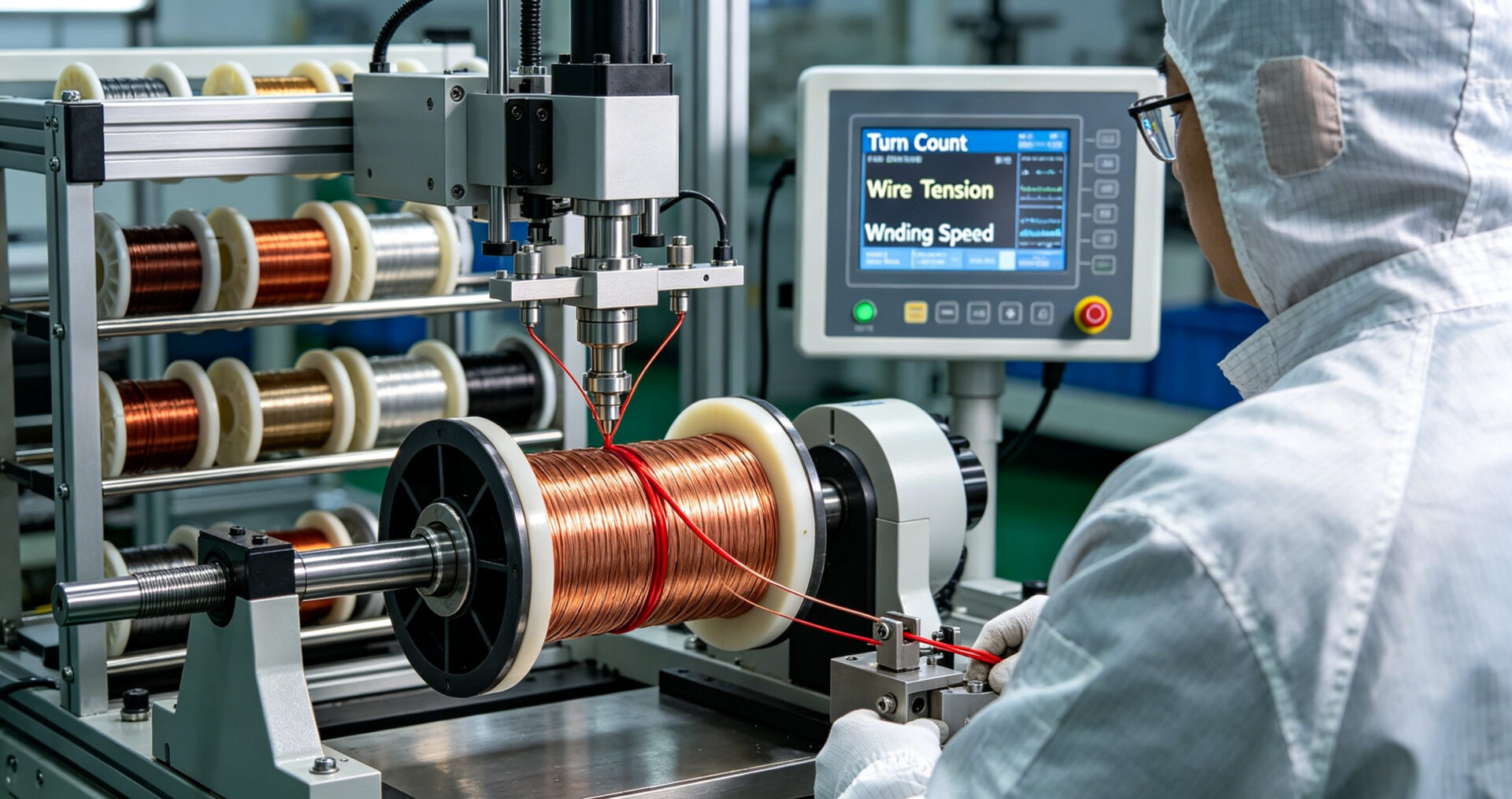
2.1 Multi-axis winding and wire tension control
Multi-axis CNC winding machines control the wire feed position in multiple degrees of freedom simultaneously. Which allowing the wire to be placed precisely on the bobbin or core. Wire tension control is a critical parameter — too little tension creates loose windings that vibrate under load, causing audible noise and mechanical abrasion of the insulation. Too much tension stretches the wire, reducing its cross-sectional area and increasing resistance. TPS maintains calibrated tension control across all winding spindles, with tension values selected according to wire gauge (typically 0.1 mm to 3.0 mm diameter) and insulation type.
2.2 Toroidal coil winding for power applications
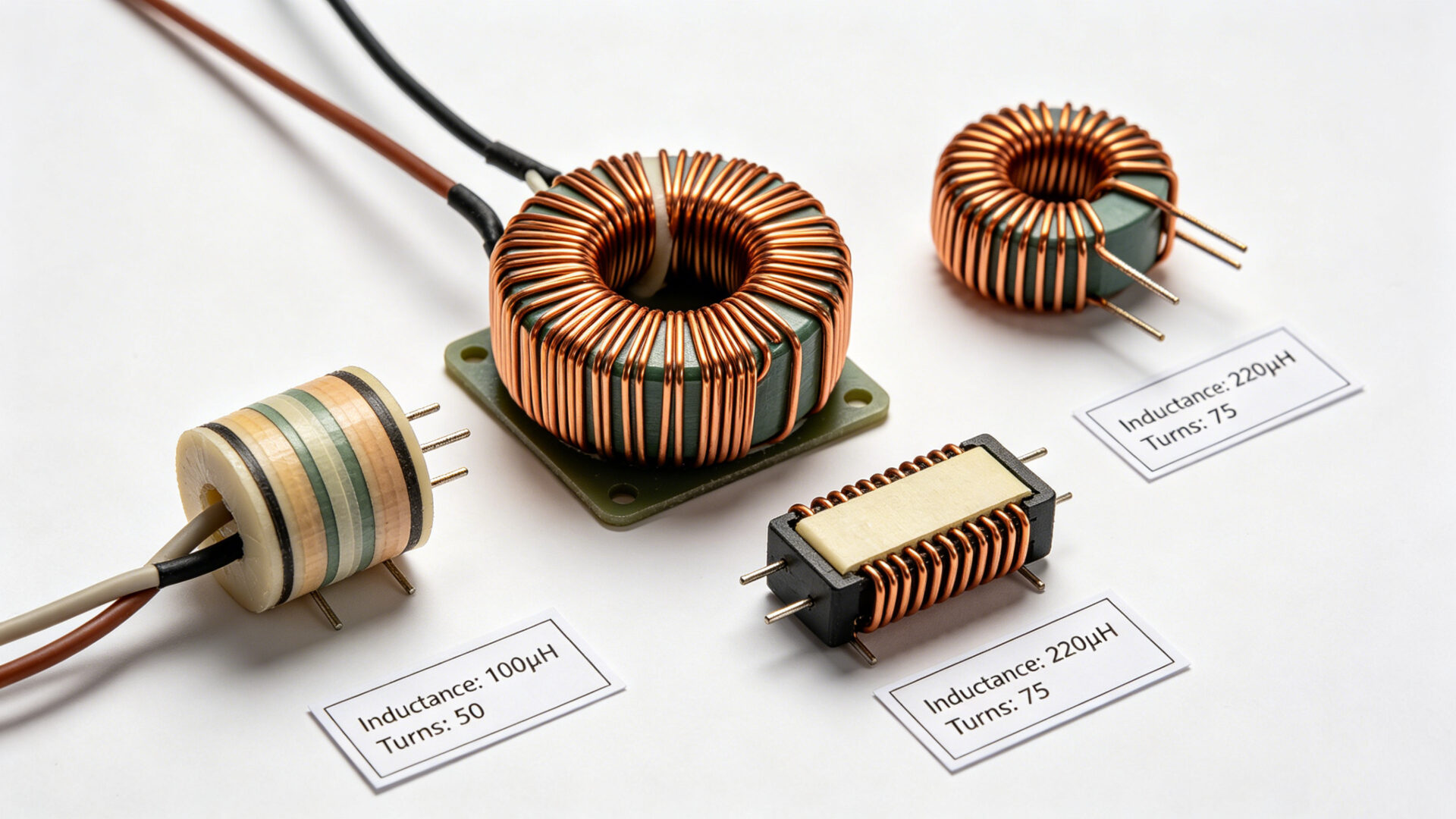
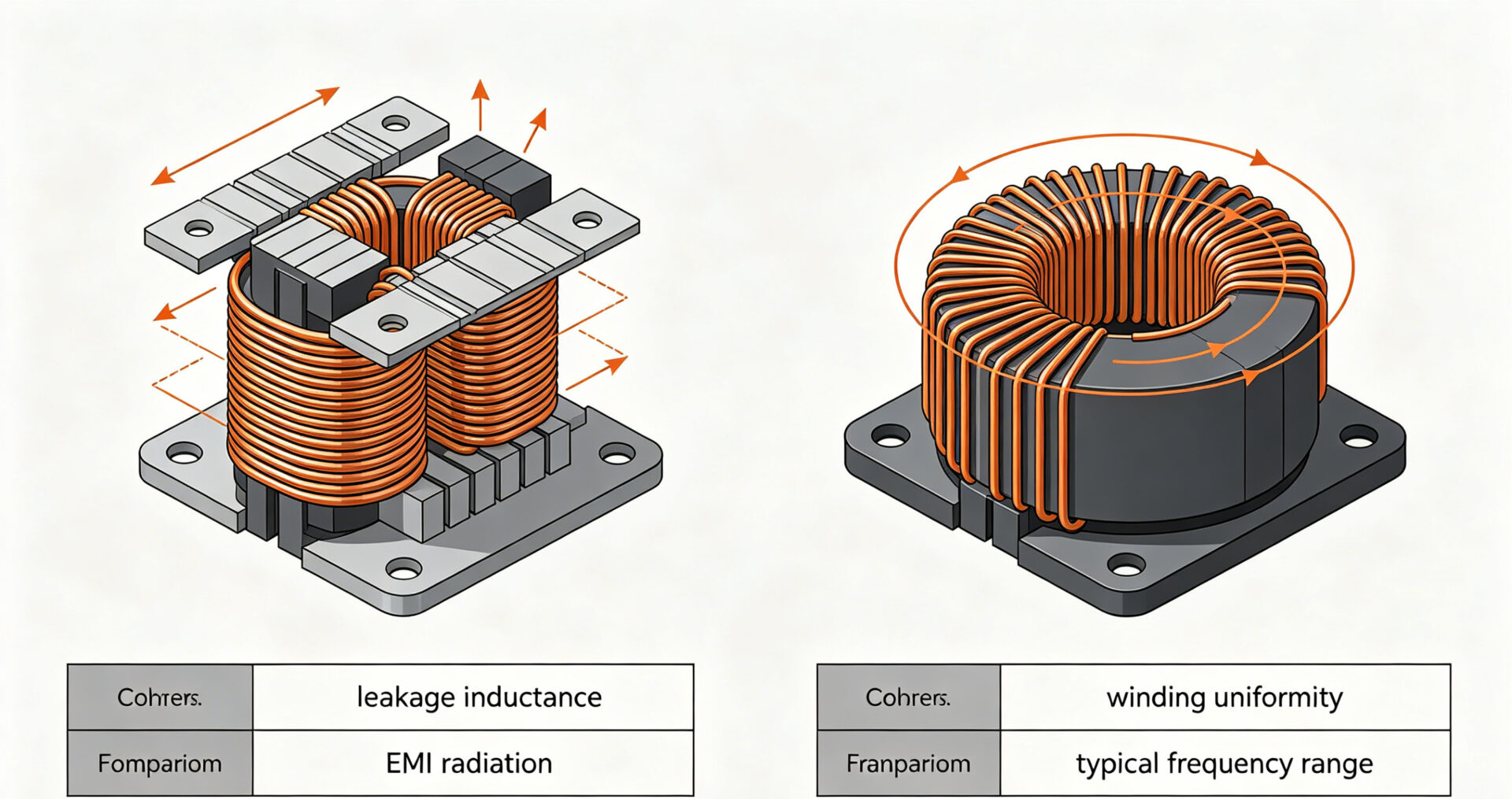
Toroidal cores offer the highest inductance per unit volume and the lowest external magnetic field radiation of any core geometry. These properties make toroidal inductors and transformers the preferred choice for compact power converters where electromagnetic interference must be minimized. However, toroidal winding is mechanically complex: the wire must be passed repeatedly through the center hole of the core. Which limits winding speed and requires specialized toroidal winding machines with shuttle mechanisms or hook-type winding heads.
TPS manufactures custom toroidal coil windings on ferrite, iron powder, and amorphous metal cores, with winding ratios optimized for the target application. Typical products include common-mode chokes for EMI filtering, current transformers for power metering. And gate drive transformers for IGBT and MOSFET switching circuits. For detailed application examples, see TPS’s resource on EMS winding goods: toroidal coils, dv/dt chokes, and production-ready transformers.
2.3 Bobbin winding and layered insulation
Bobbin winding uses a pre-formed coil former onto which wire is wound in precise layers. This technique is the standard for high-frequency power transformers because it allows controlled interleaving of primary and secondary windings to minimize leakage inductance. And it enables the insertion of insulating tape or margin tape between winding layers to meet high-voltage isolation requirements. TPS performs bobbin winding on single and multi-section formers, producing transformers with isolation ratings up to 4 kV and beyond for medical and industrial applications. For further information on transformer production, see the TPS winding goods service page.
3. Insulated magnet wire selection: polyurethane, polyester, and polyimide
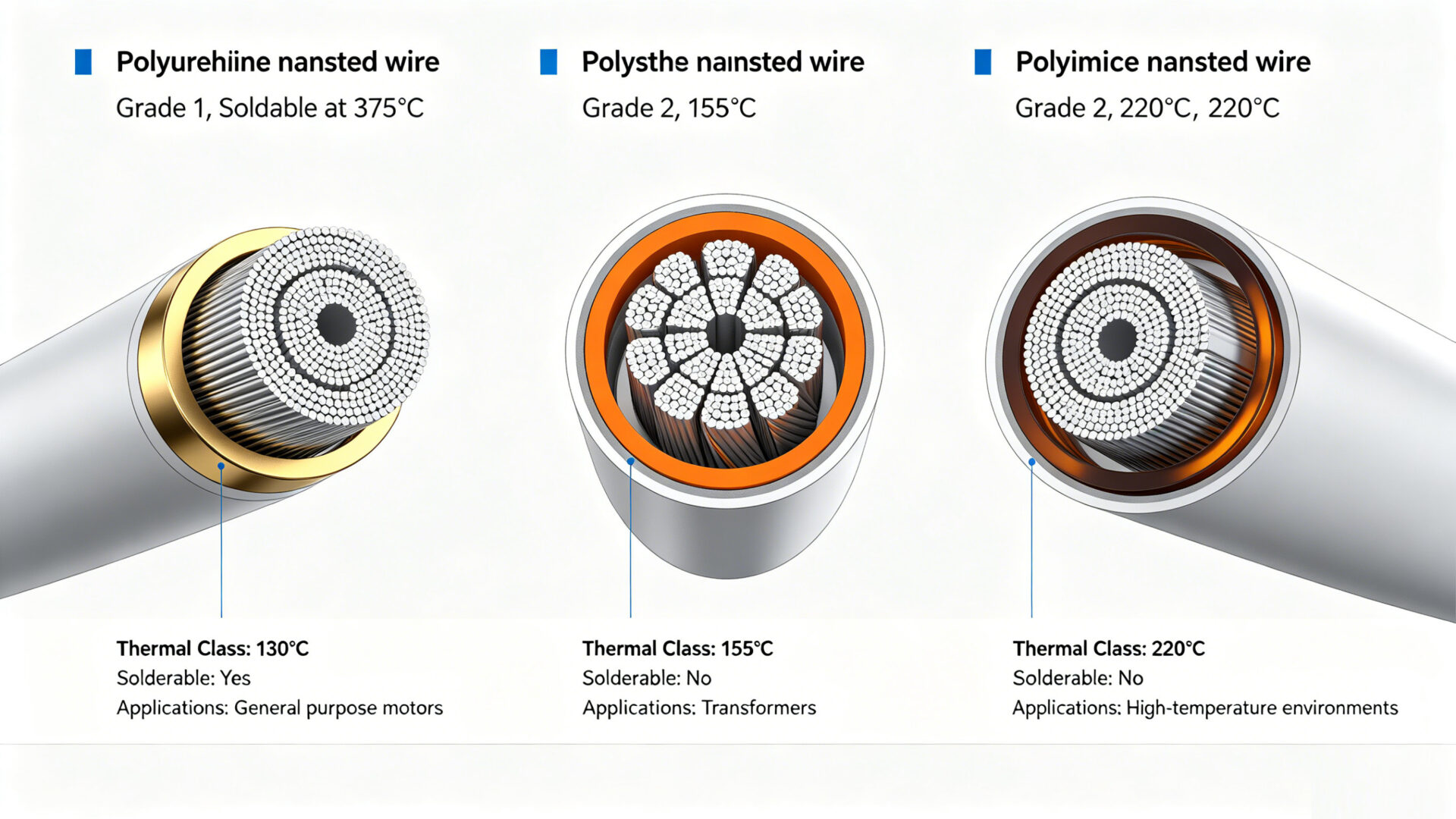
Magnet wire insulation is the single layer of material that separates energized turns from each other and from the core. Selecting the wrong insulation type for the operating temperature or voltage stress leads to premature failure. A shorted turn that transforms the coil into a resistive heater within milliseconds of commissioning. TPS selects magnet wire insulation based on the electrical and thermal requirements of each winding project, drawing from the three most common insulation types:
Polyurethane-insulated wire (Grade 1, thermal class 130 °C) offers the advantage of direct solderability — the insulation vaporizes at soldering temperature (approximately 375 °C), eliminating the need for mechanical stripping. This wire is the first choice for compact solenoid coils, relay coils, and low-voltage signal transformers where production efficiency and connection reliability are priorities.
Polyester-insulated wire (Grade 2, thermal class 155 °C) provides a thicker insulation layer with higher dielectric strength. It is widely used in industrial transformers, chokes, and inductors operating at moderate temperatures.
Polyimide-insulated wire (Grade 2, thermal class 220 °C) offers the highest temperature rating and excellent chemical resistance. This wire is specified for high-frequency power transformers in compact enclosures where ambient temperatures exceed 100 °C, for traction motor inductors in railway applications, and for aerospace magnetic components that must survive extreme thermal cycling. A detailed comparison of these insulation types and their application guidance is available in the TPS article on wire insulation materials and applications.
4. High-frequency transformer winding: core selection, proximity effect, and interwinding capacitance
High-frequency transformer design — typically for switching frequencies above 100 kHz — requires simultaneous management of multiple electromagnetic phenomena that are negligible at line frequency. The power dissipation mechanism shifts from purely ohmic losses to a combination of skin effect, proximity effect, and core loss. Interwinding capacitance becomes a critical parameter because it determines common-mode noise coupling between the primary and secondary circuits, directly affecting the conducted emissions signature of the power supply.
The skin effect forces current to flow in a thin layer at the conductor surface at high frequencies. Above 100 kHz, solid copper wire thicker than approximately 0.5 mm exhibits significant skin depth constriction, increasing effective AC resistance. Litz wire — composed of multiple individually insulated strands twisted in a specific pattern — mitigates this effect by increasing the effective conductor surface area. TPS winds high-frequency transformers using Litz wire where the operating frequency and current demand it.
Core material selection is equally critical. Ferrite cores (MnZn for frequencies up to approximately 2 MHz, NiZn for higher frequencies) provide low eddy current losses but saturate at lower flux densities than silicon steel. TPS engineers specify the core material and geometry based on the target operating frequency, power level, and thermal constraints. For an example of high-frequency magnetic design applied to a specific application, see the TPS article on Helmholtz coils and uniform magnetic field applications.
5. Medical and high-voltage isolation requirements
Medical electrical equipment subject to IEC 60601‑1 imposes stringent isolation requirements on power transformers. These include reinforced insulation between primary and secondary windings, minimum creepage and clearance distances that exceed industrial requirements, and partial discharge testing to verify the absence of void defects in the insulation system. TPS Elektronik manufactures medical-grade custom-wound transformers with documented compliance to these requirements. For a detailed exploration of this topic, including winding techniques and testing protocols, see the TPS resource on EMS winding goods: medical high-frequency transformer coil winding.
Even in non-medical applications where reinforced isolation is not mandatory, TPS performs high-potential (hipot) testing on every custom-wound coil to verify that the insulation withstands the specified test voltage — typically 1.5 kV to 4 kV AC depending on the application — without breakdown. Test parameters are documented in the lot inspection report provided with every shipment.
6. Electrical testing and documentation: inductance, Q factor, and hipot verification
A custom-wound coil that looks correct may still be electrically defective. A partially shorted turn, a reversed winding direction, or a nicked insulation layer that passes visual inspection can cause field failures that are expensive to diagnose and repair. TPS performs 100 % electrical testing on every custom-wound coil, verifying the parameters that matter for the end application.
Core electrical tests include inductance measurement at the specified test frequency and amplitude using precision LCR meters, Q factor or dissipation factor measurement to verify core and copper losses, DC winding resistance verification for each winding segment, turns ratio verification on multi-winding transformers, and hipot testing for winding-to-winding and winding-to-core isolation integrity. A documented test report accompanies every production lot, with measurement values traceable to calibrated instruments.
For procurement teams, this documentation serves multiple purposes. It provides objective evidence of conformance for incoming inspection, reducing the need for repeat testing at the customer‘s facility. It supports regulatory submissions by demonstrating that each magnetic component meets its specified parameters. And it creates a traceable record that simplifies root-cause analysis in the unlikely event of a field issue.
7. RFQ checklist for custom coil winding
To provide an accurate quotation, TPS requires the following information for each custom-wound coil:
- Coil type: Transformer, inductor, choke, solenoid, or toroidal coil.
- Electrical specification: Inductance, turns ratio (for transformers), rated current (DC and/or RMS), operating frequency range, maximum DC resistance.
- Core specification: Core material (ferrite, iron powder, amorphous, silicon steel), core geometry (E-core, toroid, PQ, RM), core dimensions if a specific core is required.
- Wire specification: Wire gauge (AWG or mm diameter), insulation type (polyurethane, polyester, polyimide), Litz wire construction if applicable.
- Isolation requirements: Winding-to-winding isolation voltage, winding-to-core isolation voltage, reinforced or basic insulation per IEC 60601‑1 if applicable.
- Mechanical constraints: Maximum component footprint (L × W × H in mm), termination type (leads, pins, SMD pads), mounting orientation.
- Production quantity: Prototype, pilot, and series production volumes with target delivery dates.
- Documentation requirements: Standard test report, specific test standard compliance (IEC, UL), material certification.
8. FAQ
What types of coils can TPS wind?
TPS winds high-frequency power transformers, toroidal inductors and transformers, bobbin-wound chokes and inductors, dv/dt filter chokes, solenoid coils, and common-mode chokes. Core materials include ferrite, iron powder, amorphous metal, and silicon steel.
What wire gauges and insulation types does TPS work with?
TPS processes wire from approximately 0.1 mm to 3.0 mm diameter (AWG 38 to AWG 9). The three primary insulation types are polyurethane (direct-solderable, 130 °C), polyester (155 °C), and polyimide (220 °C). Litz wire is available for high-frequency applications.
Does TPS provide electrical testing with every coil?
Yes. Every custom-wound coil receives 100 % electrical testing including inductance, DC resistance, turns ratio (transformers), and hipot verification. A documented test report accompanies each production lot.
Can TPS wind coils for medical device applications?
Yes. TPS manufactures medical-grade custom-wound transformers with reinforced insulation per IEC 60601‑1 requirements, including compliance with creepage, clearance, and partial discharge testing. See the dedicated medical coil winding resource for details.
What information does TPS need to quote a custom coil winding?
Provide coil type, inductance and current ratings, operating frequency range, core material preference, wire specifications, isolation voltage requirements, mechanical constraints, target quantity, and required documentation. A complete RFQ checklist is available above.
Where can I learn more about TPS winding goods capabilities?
Visit the TPS winding goods service page, the overview on EMS coil winding service, and the technical resource on toroidal coils and dv/dt chokes.