

System integrators, panel builders, and procurement teams rarely fail because they lack a circuit design. They lose time—and budget. When the mechanical enclosure that houses that circuit does not fit, does not shield, or does not arrive on time. A custom aluminum enclosure ordered from a general fabrication shop may arrive with the mounting holes for the PCB drilled in the wrong location. Which simply because the shop had no visibility of the board’s mechanical dimensions. Or a steel industrial housing may fail electromagnetic compatibility (EMC) testing because the seams were not designed for electrical continuity.
TPS Elektronik’s custom sheet metal enclosure service eliminates these integration risks. By offering precision‑fabricated aluminum and steel housings that specifically engineered for electronic and industrial equipment. And by integrating mechanical manufacturing with its core electronics expertise, TPS delivers enclosures that fit the first time, shield effectively, and meet the required regulatory standards. This service designed for OEMs who need more than a simple metal box. They need a reliable, repeatable housing solution from prototype to volume.
1. Why custom metal enclosures are a strategic component
An electronic system’s enclosure is its physical interface with the outside world, performing critical structural, thermal, and EMC shielding functions in demanding environments. When a procurement team sources a custom metal enclosure from a general metal fabricator, they often face a hidden integration burden: the fabricator not responsible for ensuring the PCB fits correctly, the connectors align with cutouts, or the grounding is adequate for EMC compliance. These responsibilities fall back on the system integrator, who then discovers gaps during final assembly, leading to costly rework and potential shipment delays.
A custom sheet metal enclosure from TPS Elektronik resolves this by acting as a strategic partner that understands the complete mechatronic system. By leveraging integrated manufacturing workflows and a deep understanding of electronic packaging, TPS ensures the enclosure fits the first time, every time. For a comprehensive overview of the core fabrication capabilities, see the dedicated service page on custom sheet metal fabrication and precision manufacturing.
2. TPS precision enclosure fabrication capability
TPS operates an integrated sheet metal processing line that transforms flat metal sheets into finished, ready‑to‑assemble enclosures under one roof. This vertical integration is crucial for maintaining dimensional consistency and a streamlined production schedule.
2.1 Laser cutting and CNC punching
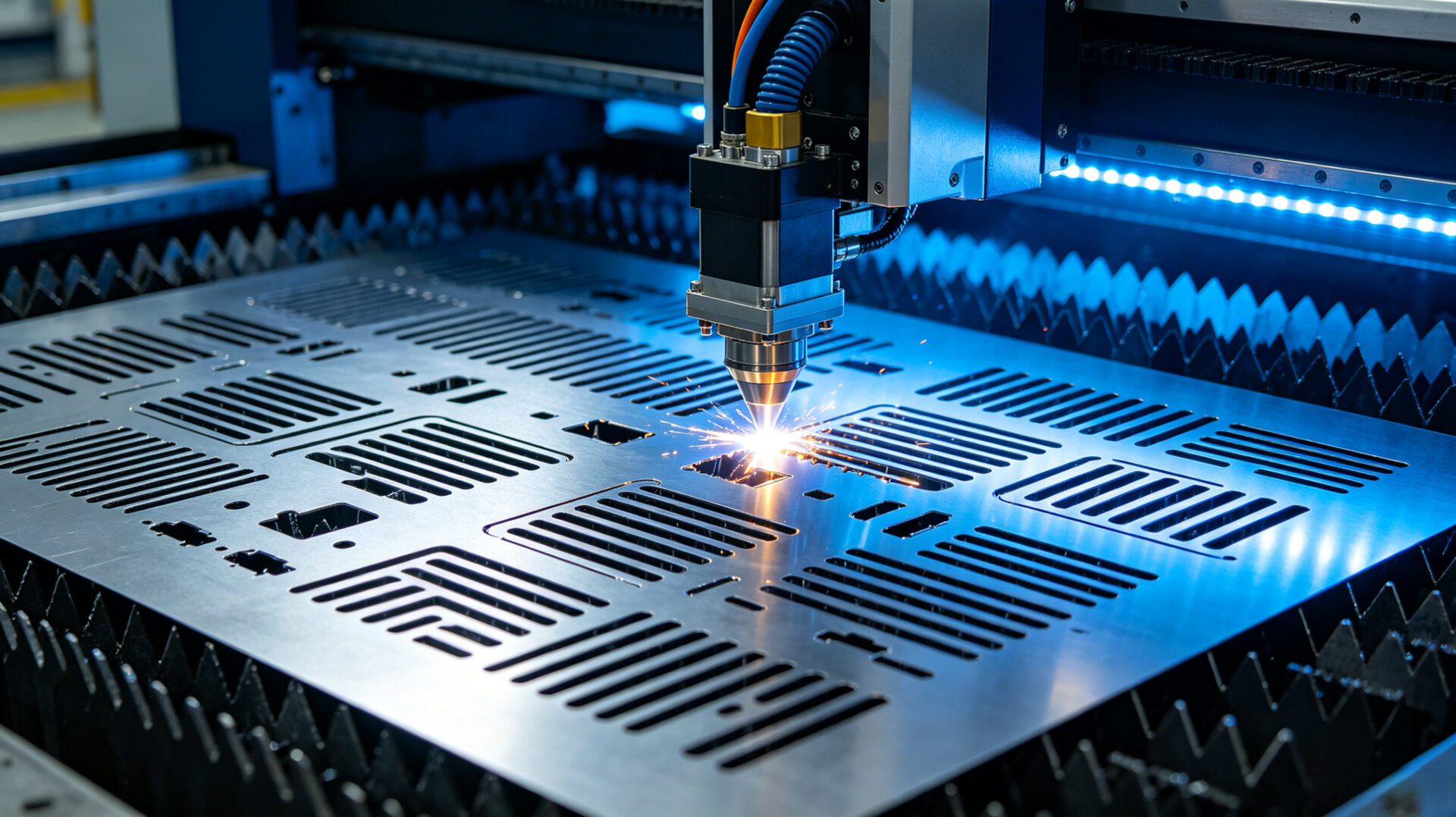
The first step in enclosure fabrication is cutting the flat pattern, which includes the outer profile, ventilation slots, and connector cutouts. TPS uses fiber laser cutting for high‑precision work on materials ranging from 0.8 mm to 8 mm thick. This process achieves a dimensional tolerance of ±0.1–0.2 mm. Which ensuring that complex features like D‑sub connector openings and snap‑fit features are cut cleanly and accurately on sheet steel and aluminum. The fiber laser cutting process is fast and creates a clean edge that requires minimal post‑processing.
2.2 CNC bending and forming
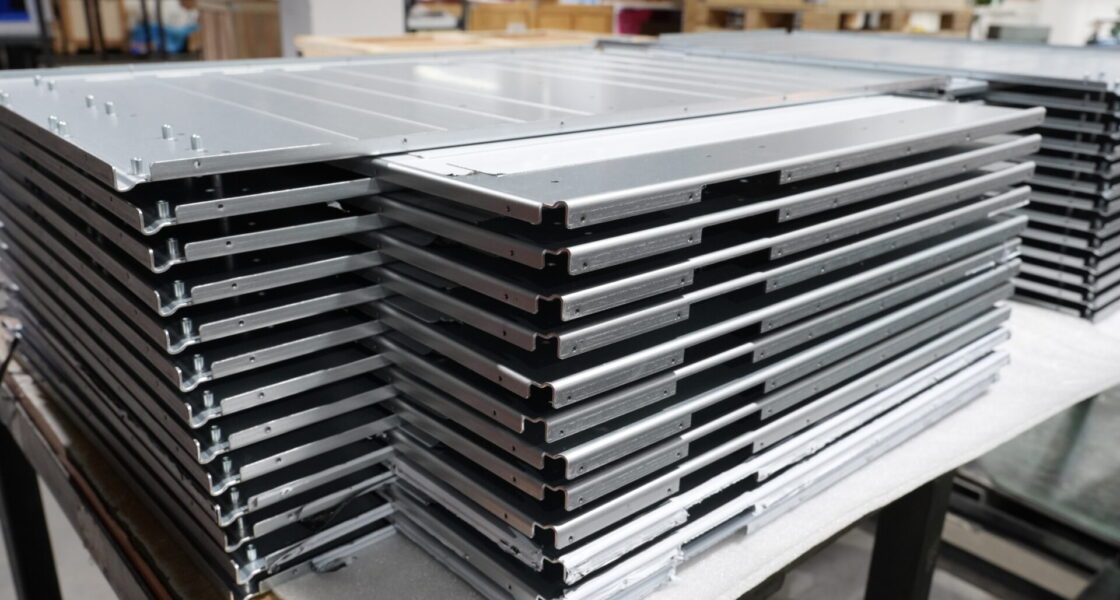
After cutting, the panels moved to a CNC press brake. TPS uses offline programming and bend simulation to guarantee that the first physical part matches the 3D CAD model, a critical step for minimizing material waste and lead time. A bend angle consistency of within ±0.5° maintained across production runs, which is essential for ensuring the enclosure’s chassis and covers assemble into a square, rigid structure. The bending capabilities, central to achieving a precise fit, detailed in our overview of RFQ‑ready CNC bending services.
2.3 Welding and assembly
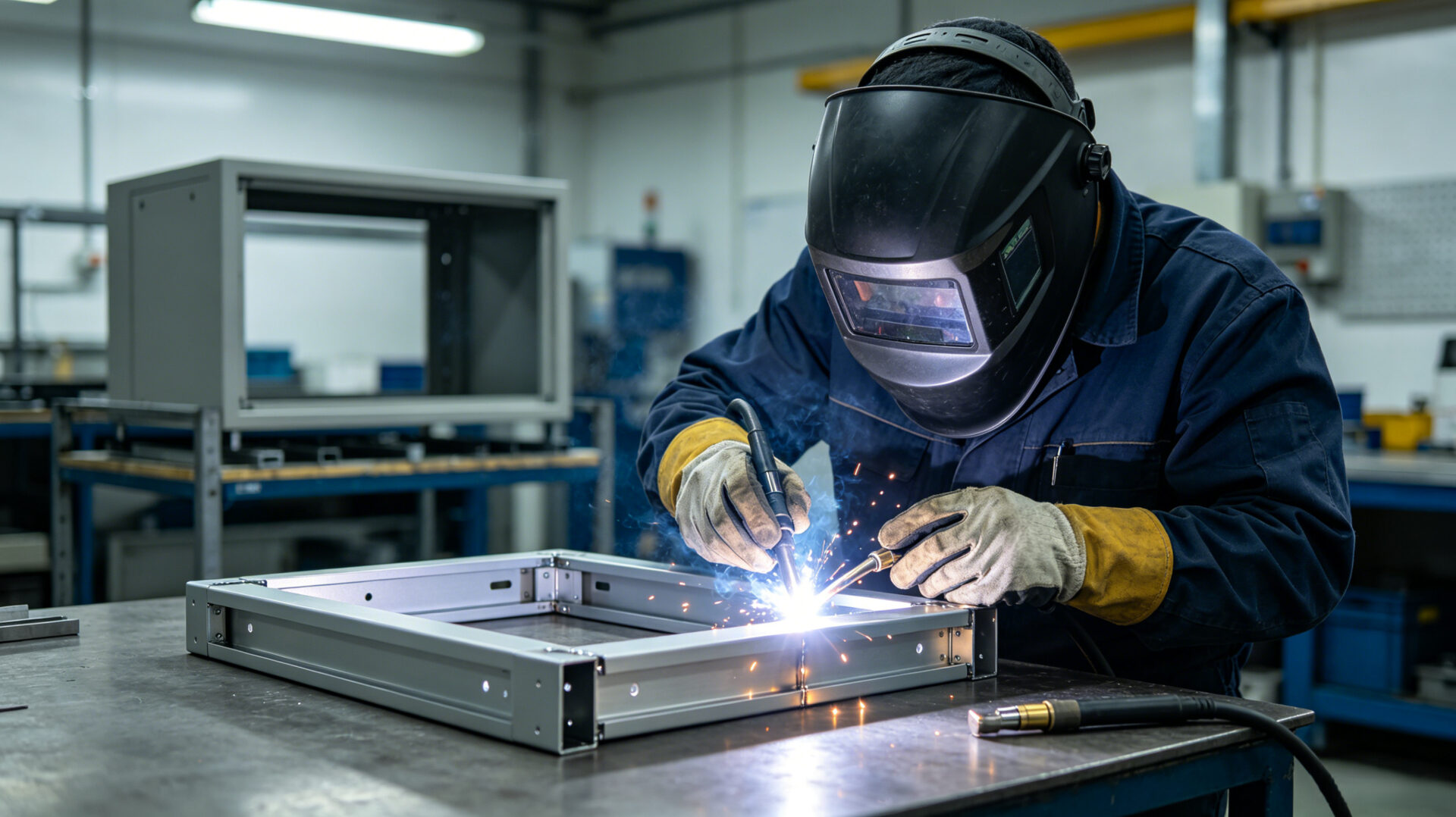
For enclosures requiring structural seams, TPS employs MIG welding for robust steel frames and TIG welding for cosmetic or precision joints on aluminum. Welding parameters are controlled through documented procedures to minimize heat distortion. For a detailed comparison of these welding techniques, refer to our resources on MIG welding and MIG vs TIG welding. After welding, corners can be ground smooth for a seamless look.
2.4 Surface finishing and coating
The final step in the fabrication process is surface treatment. TPS offers powder coating (in standard RAL 7035 light gray or custom colors), liquid painting, and anodizing. These finishes provide corrosion resistance and electrical grounding continuity. A quality check with a thickness gauge ensures a consistent, durable coat. This complete integration of cutting, bending, joining, and finishing under a single quality management system is what differentiates a turnkey sheet metal processing service for electronics enclosures.
3. Material selection: aluminum vs. steel for enclosures
Choosing the right metal for an enclosure is a critical decision that impacts weight, durability, EMC performance, and cost. TPS works with the most common grades for electronic and industrial housings.
3.1 Aluminum enclosures
Aluminum (typically 5052‑H32 or 6061‑T6) widely chosen for electronic enclosures due to its excellent strength‑to‑weight ratio, natural corrosion resistance, and good thermal conductivity. It is ideal for portable instruments, aerospace components, and applications where weight is a primary concern. TPS can provide aluminum enclosures with a natural brushed finish, a clear anodized coating for enhanced durability, or a custom powder‑coated color.
3.2 Steel enclosures
Cold‑rolled steel (such as DC01) and stainless steel (304) are the preferred choices for industrial equipment housings that require high mechanical strength and durability. Steel provides inherent magnetic shielding, which is a significant advantage for reducing low‑frequency electromagnetic interference. TPS steel enclosures are typically powder‑coated for corrosion protection, with options for a textured finish to hide fingerprints and scratches.
4. Design for manufacturability and EMC considerations
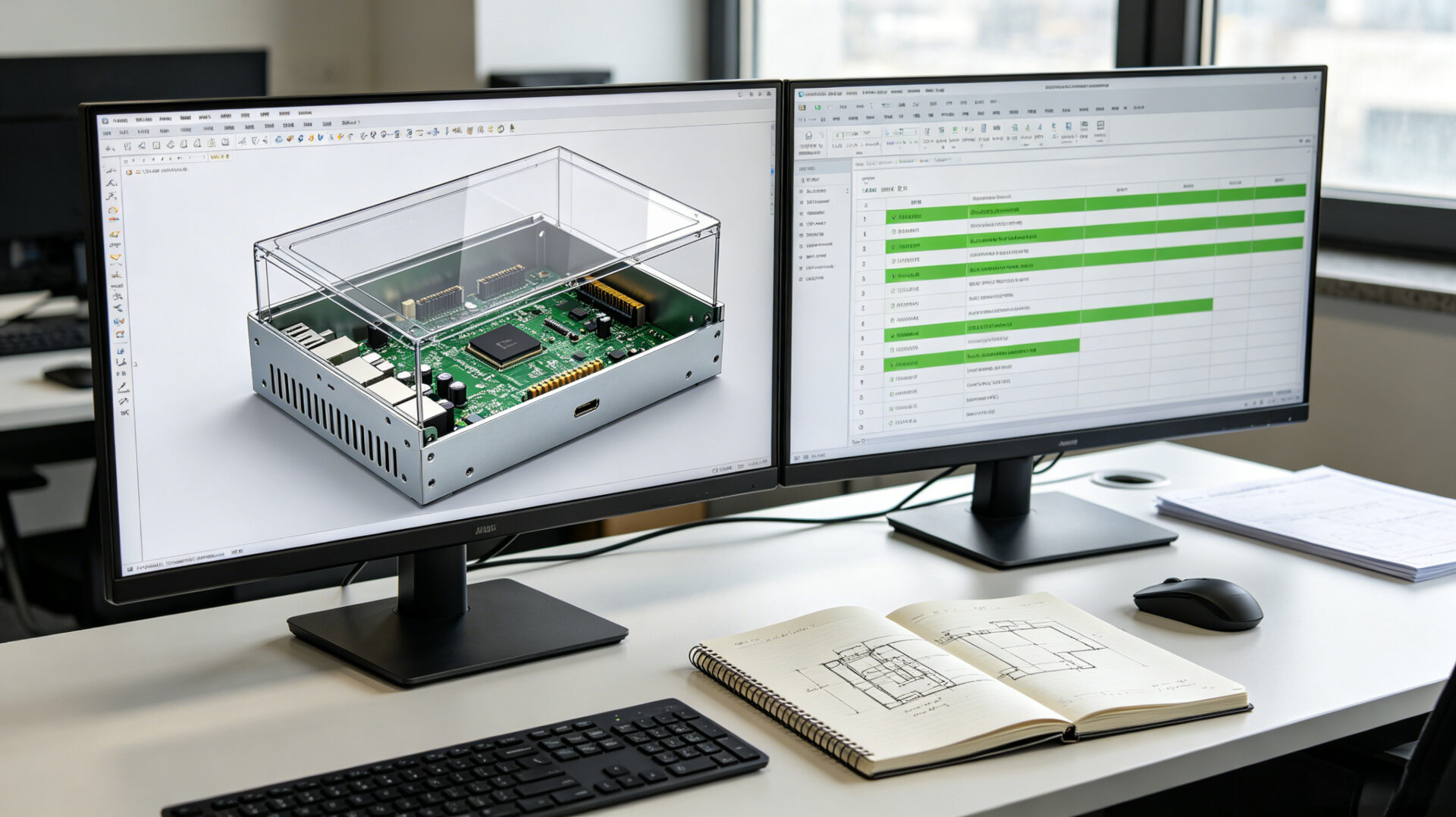
A common cause of enclosure rework is a design that is perfectly functional on screen but difficult to manufacture. TPS’s integrated approach begins with a Design for Manufacturability (DFM) review, identifying potential issues like insufficient material for a tapped hole or a bend radius that is too tight for the specified metal, before any steel is cut. A well‑designed enclosure is also a key element in an EMC strategy. TPS designs enclosures with overlapping seams and provides for conductive gaskets, ensuring a continuous conductive path around the electronics. This structural shielding is a prerequisite for passing radiated emissions and immunity tests like CISPR 32 and IEC 61000‑4‑3, reducing the system’s reliance on costly on‑board filtering.
5. Application examples: electronics, industrial control, and telecom
TPS custom metal enclosures serve as the foundational housing for a wide range of technical equipment across multiple industries. The service’s adaptability makes it suitable for everything from simple project boxes to complex integrated systems.
- Industrial Control Panels: Rugged steel enclosures for factory floor PLCs, motor drives, and human‑machine interfaces (HMIs) that must withstand dust, vibration, and temperature extremes.
- Test and Measurement Instruments: Precision‑fabricated aluminum chassis and front panels for laboratory‑grade electronics. These often require fine surface finishes, silk‑screened legends, and tight tolerances for connector alignment.
- Telecom and Networking Equipment: 19‑inch rack‑mount enclosures and outdoor cabinets fabricated from aluminum or steel, designed for easy integration of PCBs, power supplies, and cabling.
- Medical Device Housings: Clean, easy‑to‑disinfect steel enclosures for diagnostic equipment, designed to meet safety and electromagnetic compatibility standards like IEC 60601‑1.
6. RFQ checklist for custom sheet metal enclosures
- CAD data: 3D STEP files and 2D DXF drawings with GD&T annotations for critical features.
- Material specification: Metal type and grade (e.g., AL 5052, Steel DC01), sheet thickness.
- Surface finish: Powder coating (RAL code), anodizing (clear or colored), or passivation for stainless steel.
- Quantities and schedule: Prototype quantity, pilot run volume, and projected series production volume.
- PCB and component interfaces: Board outline, mounting hole positions, and connector data for fit‑check.
- Inspection requirements: FAI (First Article Inspection), dimensional reports, material certificates.
- Applicable standards: Relevant EMC or safety standards for the target industry.
7. FAQ
What is the typical lead time for a custom aluminum or steel enclosure prototype?
Lead times vary by complexity and material, typically ranging from a few days to a few weeks. TPS focuses on providing fast, high‑quality prototypes using the same production‑grade equipment, ensuring a seamless transition to series volume.
Can TPS handle both the mechanical enclosure and the electronic assembly inside?
Yes. This is a core advantage of TPS as an Electronic Manufacturing Services (EMS) provider. We can fabricate the enclosure, manufacture the PCB, integrate the electronics, and test the complete system, all under one roof.
What is the smallest and largest enclosure TPS can fabricate?
We can fabricate small enclosures measuring just a few centimeters on a side, up to large industrial cabinets over two meters tall. Our integrated process is adaptable to a wide range of project sizes.
Can TPS work with special materials like stainless steel?
Yes. In addition to common aluminum and cold‑rolled steel, TPS has the capability to process stainless steel for applications requiring high corrosion resistance.
Does TPS provide assistance with EMC design for enclosures?
Yes. TPS’s design team can advise on seam construction, gasket selection, and grounding strategies to help your enclosure become an effective part of your EMC shielding solution.
Where can I learn more about the complete process?
Visit the TPS sheet metal processing service page, or explore our detailed guide on processing electronics enclosures.