

System integrators, panel builders, and procurement teams rarely fail because they lack a good product. They lose time—and market opportunities—when documentation, certification, sampling, and supply chain alignment are not coordinated across regions. TPS global sales partner electronics approach is built to reduce that risk: structured support from production readiness through CE marking, RoHS compliance, cost optimization, and regional rollout in Europe, the US, and China.
1. Why a global sales partner affects RFQ outcomes and market entry
In electronics manufacturing, the journey from production readiness to successful market entry involves far more than just building a good product. It requires coordinated documentation, certification, quality assurance, supply chain management, and regional go-to-market strategy. When these elements are handled in isolation—development here, certification there, sales somewhere else—the result is often fragmented timelines, unexpected costs, and delayed revenue.
A global sales partner electronics like TPS integrates these elements into a structured workflow. We support clients from the point where production is ready—through ce certification and rohs compliance validation, sampling and quality control, cost optimization, and finally regional rollout. This approach reduces the coordination burden on internal teams and accelerates time-to-market.
This is why experienced buyers do not just look for EMS services. They look for a partner who understands the full lifecycle—from component-level quality to market-level compliance. TPS’s resources on element material technology and element testing laboratories reflect this integrated perspective.
2. Certification and compliance: CE, RoHS, and regional standards
Market access in Europe, the United States, and China requires navigating different regulatory frameworks. TPS supports clients through these requirements with documented processes and partner laboratory coordination.
2.1 What is CE certification and why it matters
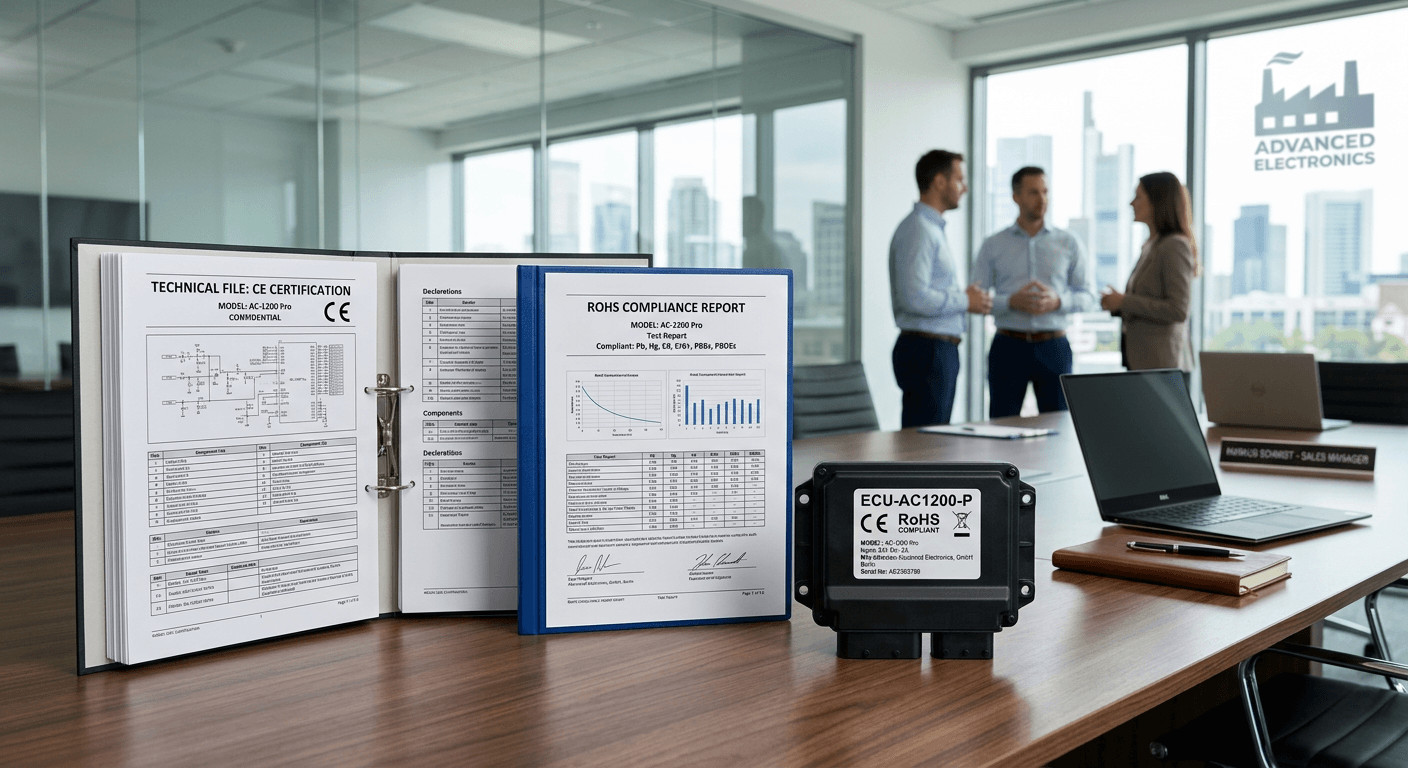
What is ce certification? The CE mark (Conformité Européenne) indicates that a product meets the essential requirements of relevant European directives—such as the EMC Directive, Low Voltage Directive, and Machinery Directive. For electronics entering the EU market, CE marking is mandatory. TPS helps clients prepare the technical documentation, coordinate testing, and ensure that the product file is ready for market surveillance.
2.2 RoHS compliance and material restrictions
RoHS (Restriction of Hazardous Substances) restricts the use of lead, mercury, cadmium, and other hazardous materials in electrical and electronic equipment. RoHS compliance is a prerequisite for selling in the EU and increasingly in other regions. TPS manages material declarations, coordinates with suppliers, and can facilitate verification testing when required. For a deeper dive, see our metal testing and compliance guide.
3. Quality assurance and sampling: AQL, work sampling, and impurity control
Quality assurance in global electronics manufacturing requires systematic sampling and process control methods. TPS integrates these into production workflows to ensure consistency across batches and regions.
3.1 AQL sampling in production quality
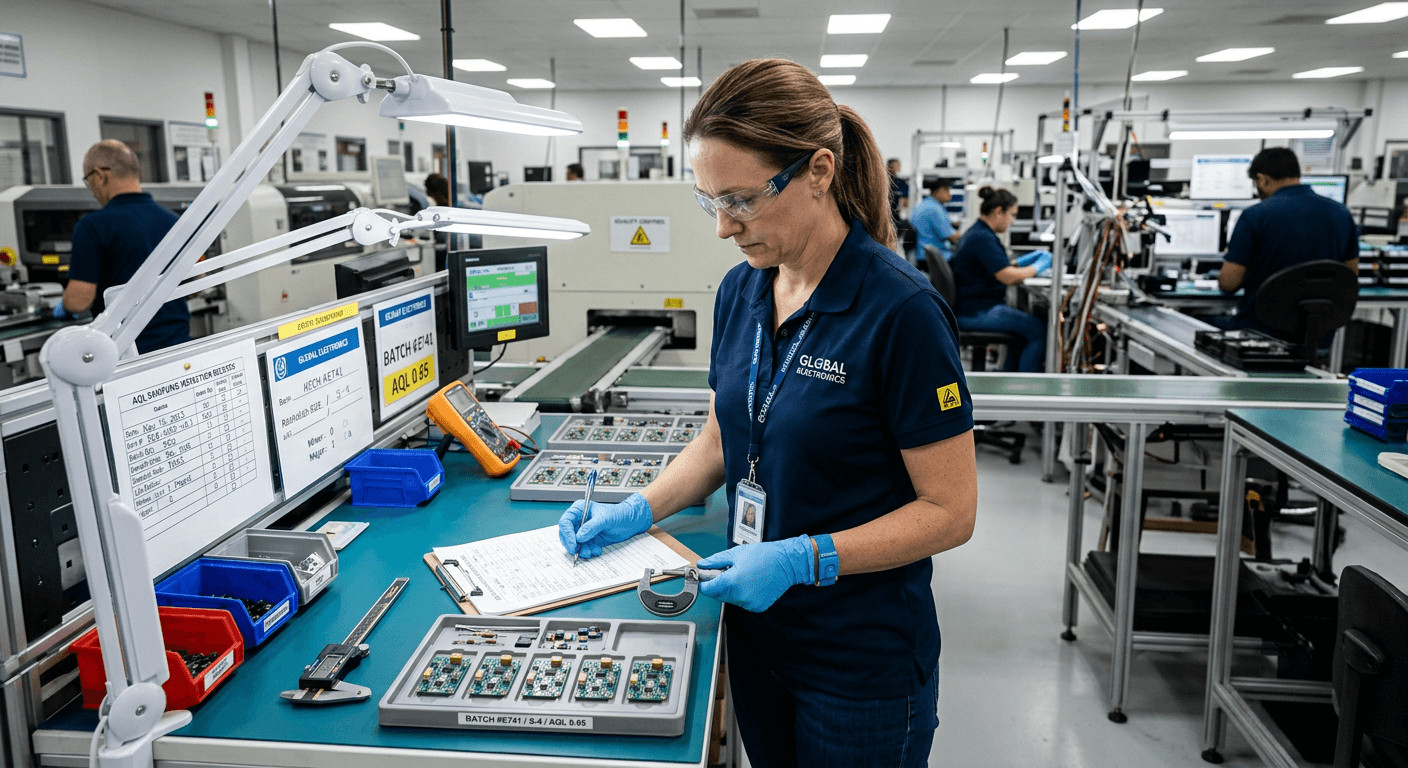
AQL (Acceptable Quality Limit) is a statistical sampling method defined by ISO 2859 or ANSI/ASQ Z1.4. It defines the maximum number of defective units that can be considered acceptable during random sampling. TPS applies AQL-based sampling during production and incoming inspection, providing clear pass/fail criteria that procurement teams can rely on.
3.2 Work sampling online for process efficiency
Work sampling online refers to structured observation of manufacturing activities to identify inefficiencies, bottlenecks, and quality risks. TPS uses work sampling methods to optimize assembly processes, reduce cycle times, and ensure that quality checks are placed where they add most value.
3.3 Impurity and contamination control in electronics
Impurity control—whether in solder materials, cleaning processes, or incoming components—is critical for reliability, especially in power electronics and medical devices. TPS monitors impurity levels through material testing and process validation, supported by our quality assurance case studies.
For practical examples, see our material testing and compliance case study and quality control sample generator case.
4. Cost reductions in manufacturing without compromising quality
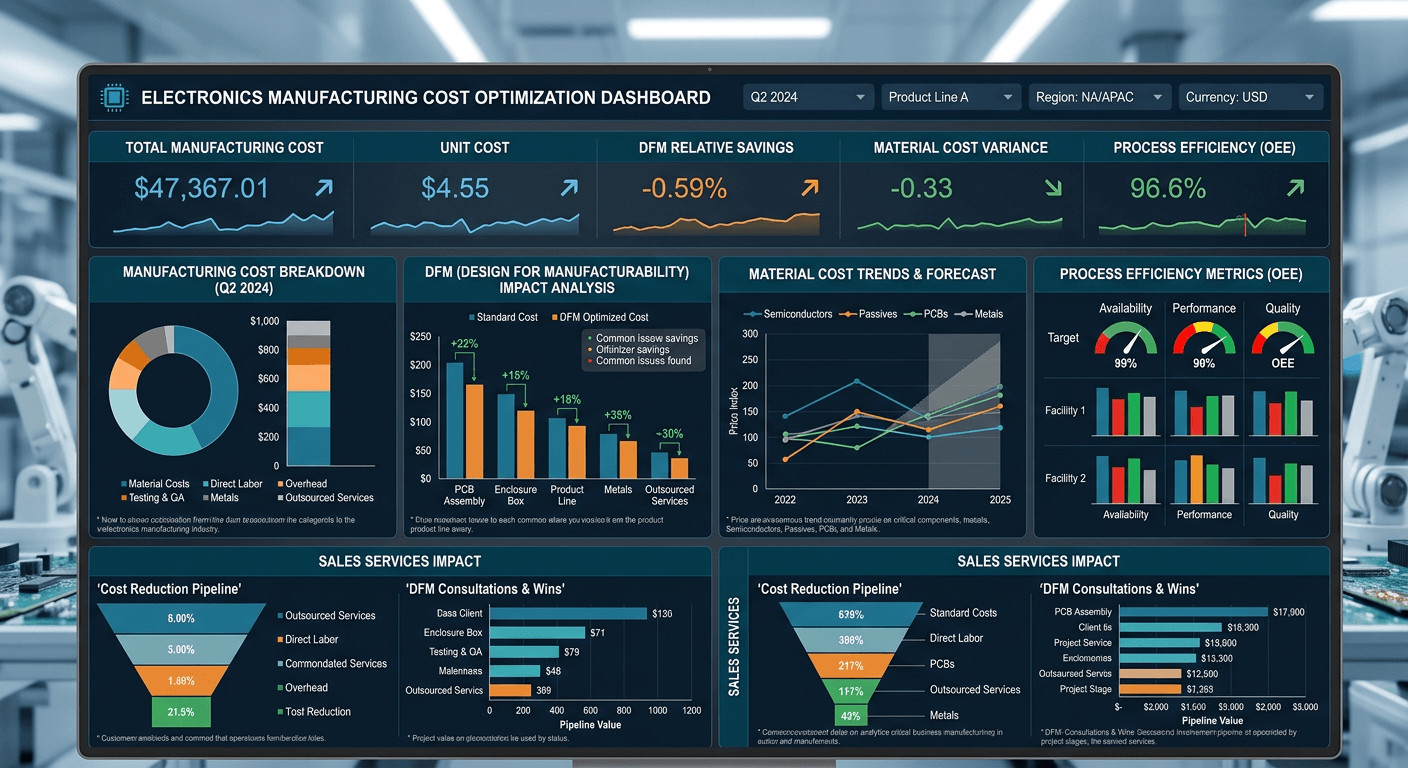
One of the most frequent procurement objectives is cost reductions in manufacturing. However, cost reduction efforts that focus solely on component price often lead to hidden quality issues, supply chain instability, or compliance failures. TPS takes a structured approach to cost optimization:
- Design for manufacturing (DFM): Identifying opportunities to simplify assembly, reduce component variety, and optimize PCB layout.
- Supplier consolidation: Reducing the number of component vendors while maintaining approved manufacturer lists (AML).
- Process optimization: Using work sampling and lean methods to reduce cycle times and waste.
- Material substitution: Where performance and compliance allow, selecting alternative materials with stable supply chains.
Our AI-driven cost reduction and manufacturing simulation resource explores advanced methods for sustainable cost management.
5. Documentation and user manuals: from technical guides to market-ready materials
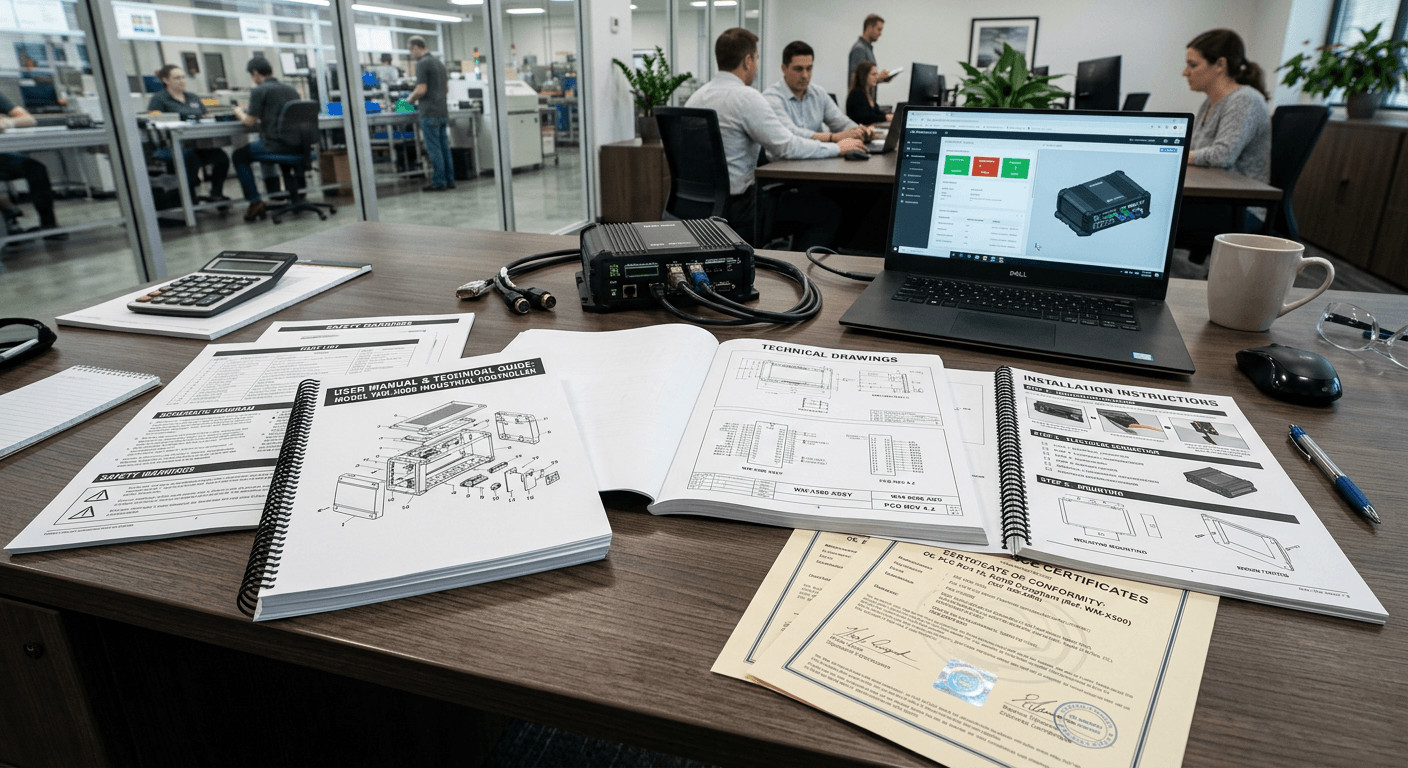
A well-designed product is incomplete without the documentation that enables installation, operation, and maintenance. TPS supports clients in preparing user manual guide documentation, technical files for certification, and market-ready materials.
Documentation services include:
- Technical user manuals and installation guides
- CE technical files and risk assessments
- RoHS and REACH material declarations
- Quality documentation (FAI, PPAP, test reports)
- Translated materials for regional markets
Having documentation aligned with the product from the start reduces delays during certification and improves the customer experience after market entry.
6. China entry strategy: bridging production and market access
For many electronics companies, China represents both a production hub and a significant market. However, successful market entry requires more than just finding a contract manufacturer. A coherent china entry strategy must address:
- Regulatory requirements (CCC certification, local standards)
- Supply chain localization and logistics
- Intellectual property considerations
- Sales channel development and partner selection
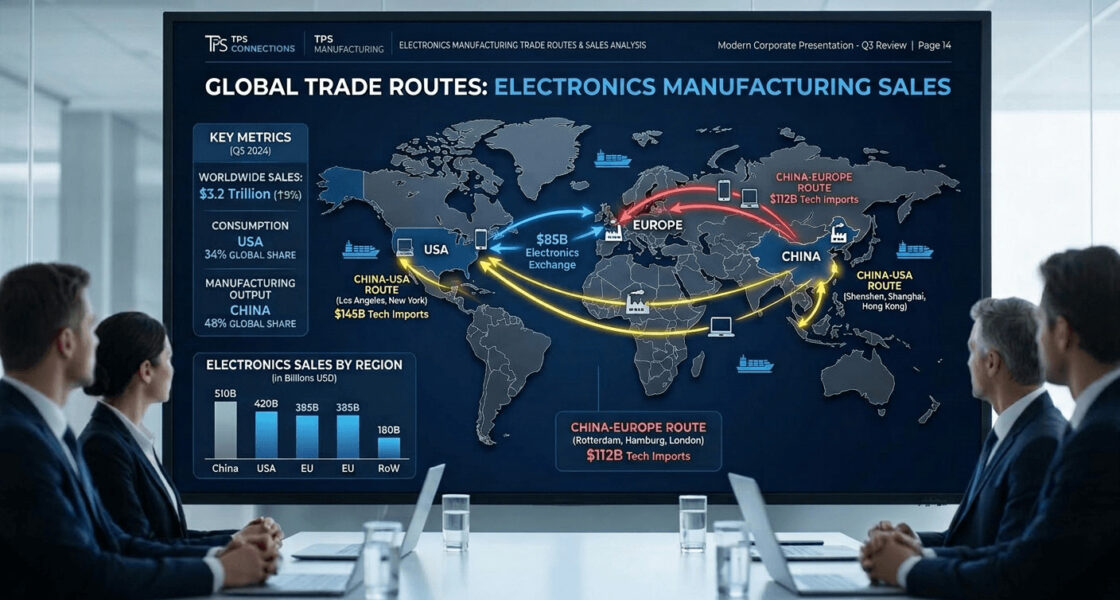
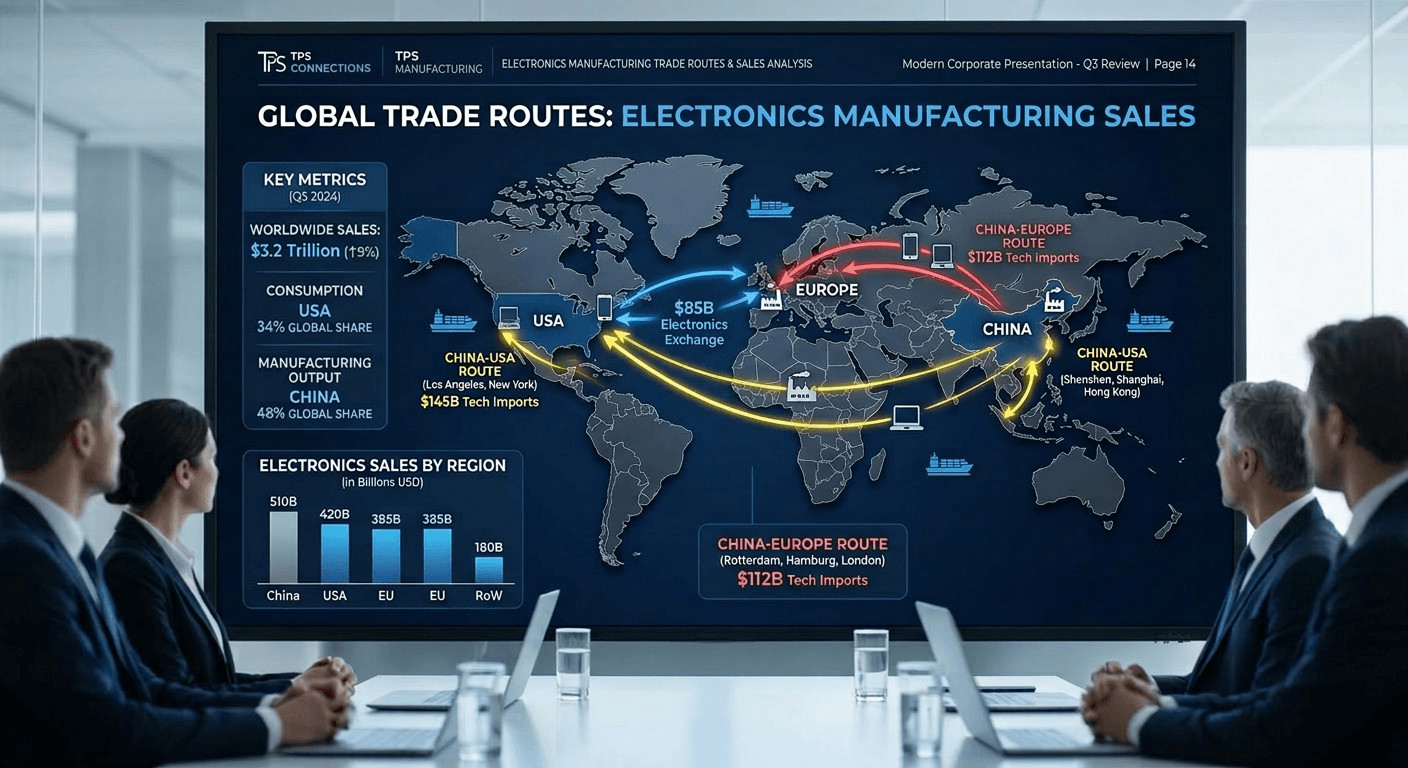
TPS’s German-Chinese engineering background and presence in China enable us to support clients in both directions: helping European and US companies enter the Chinese market, and assisting Chinese manufacturers with European and US market access. Our global sales partner electronics case study illustrates this approach.
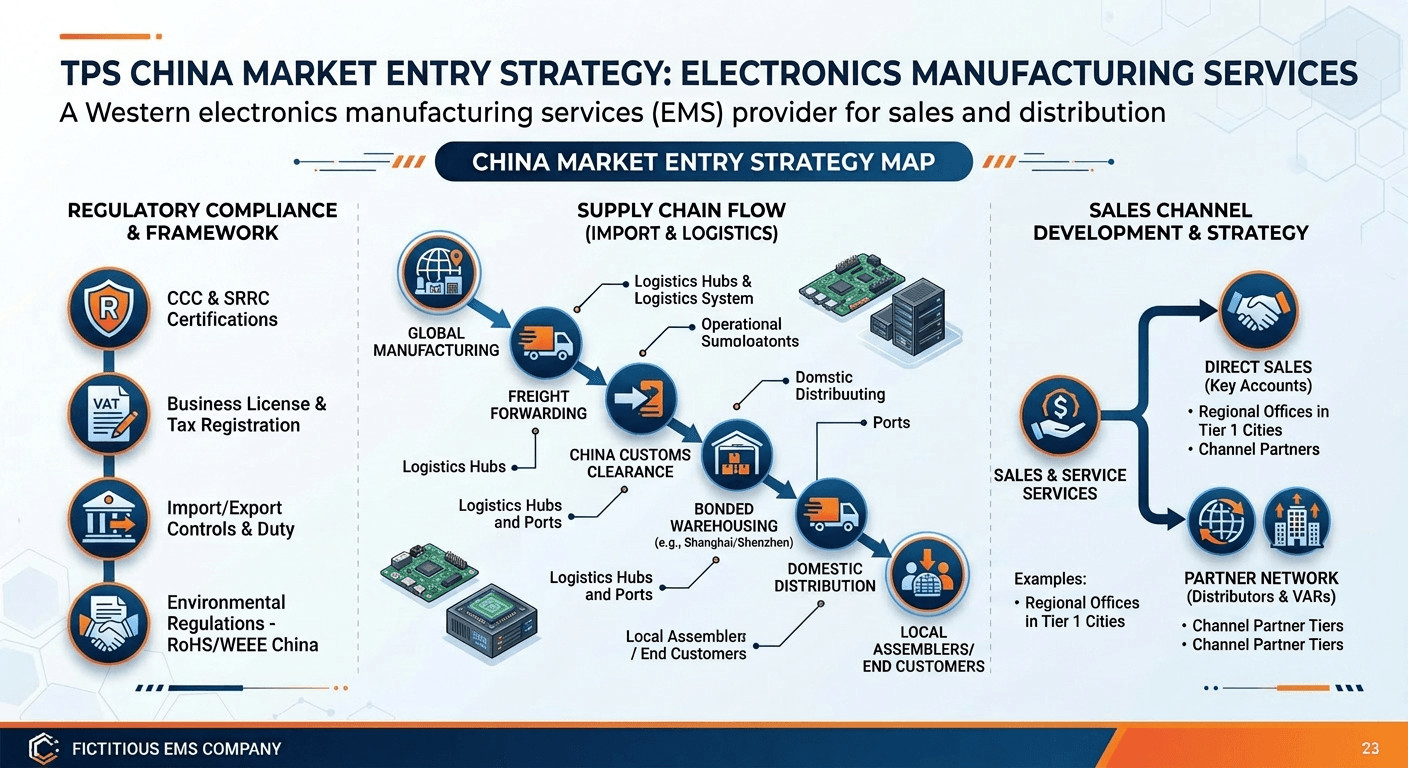
For a broader perspective on international expansion, see our sales playbook for CE mark readiness and Asia expansion.
7. Why TPS is a practical fit for global sales and market expansion
TPS Elektronik is particularly relevant when your project requires more than just EMS production. We are a partner who bridges manufacturing, certification, and go-to-market execution across regions.
Key reasons why system integrators, procurement teams, and electrical engineers choose TPS for global sales support:
- Integrated service scope: From production readiness to market entry—documentation, certification, sampling, cost optimization, and regional rollout.
- Multi-region presence: Teams and partners in Europe, the United States, and China, enabling coordinated market access.
- Compliance expertise: CE, RoHS, CCC, and other regional requirements integrated into product development.
- Quality systems: ISO 9001, ISO 13485 (medical), IATF 16949 (automotive) supporting documentation and traceability.
- Structured processes: AQL sampling, work sampling, and cost reduction methods applied systematically.
For procurement, this translates to fewer coordination gaps, shorter time-to-market, and a single point of accountability for production readiness and regional rollout. For engineers, it means working with a team that understands both technical requirements and market realities.