

For system integrators and panel builders, finding the right industrial power supply is rarely just about scrolling through an online catalog. A midwestern automation system integrator found itself in exactly this situation. They were finalizing a large control panel project that called for various DIN rail and programmable DC power supplies all at once. Their internal procurement team spent days comparing spec sheets from multiple semiconductor distributors and broadline catalog houses, only to encounter conflicting lead-time promises and inconsistent compliance documentation. Different power supply brands were shipping from different warehouses, and no single supplier could provide the application-specific technical support the integrator needed when unexpected compatibility questions surfaced during final assembly.
TPS Elektronik’s global power supply sale service solves the fragmentation that plagues many industrial procurement efforts. Our curated portfolio of DIN rail units and programmable DC supplies is backed by in-house engineering support that is substantially deeper than what a distributor can offer. This case describes how TPS helped the integrator consolidate their sourcing and accelerate their build schedule.
1. The procurement situation
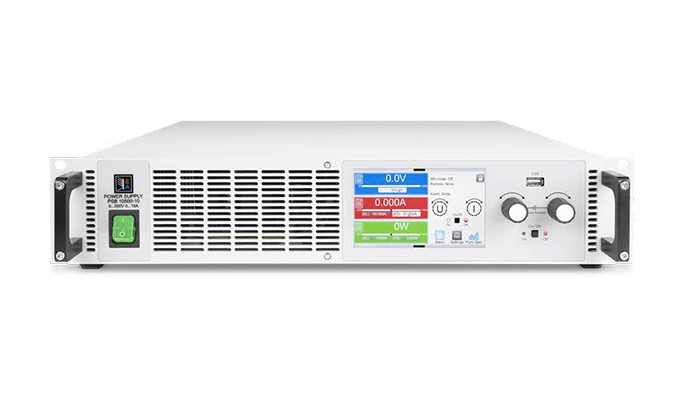
The integrator’s BOM for this project included four distinct power supply categories. It covered compact 24V DIN rail units for PLC and I/O power, higher‑wattage convection‑cooled DIN rail modules for field‑device circuits. And programmable DC bench supplies for a dedicated test station within the enclosure, and industrial ATX units for embedded computing. The project schedule was tight, and substitute parts were not acceptable.
The procurement lead initially tried to satisfy the full BOM through a single broadline electronics distributor. The parts were listed, but lead‑times for different brands varied from two to fourteen weeks. DIN rail units from one brand shipped from a warehouse in the Midwest. While programmable supplies from another were back‑ordered with only a tentative restock date, creating serious build‑schedule risk on day one. This forced the integrator to consider splitting the order among several vendors and absorbing the freight and administrative overhead of managing multiple purchase orders. The real bottleneck, however, emerged when the integrator’s engineering team needed application advice during panel integration. The distributor’s technical support was limited to basic spec‑sheet lookup, and no one on the support line could answer specific questions about the peak‑power behavior of a 100W DIN rail module when driving inductive contactor loads.
For a detailed analysis of how procurement fragmentation impacts production timelines, refer to TPS’s guide on supply chain optimization for electronics.
2. The TPS solution and curated portfolio
TPS Elektronik was brought into the project through an existing relationship with the integrator’s panel‑building partner. Rather than simply quoting part numbers, the TPS sales engineering team reviewed the complete BOM and proposed a consolidated power supply sale package. This approach replaced five fragmented purchase orders with a single coordinated delivery. The curated portfolio that TPS assembled for this project included DIN‑rail models from the TPS030‑130W Pro and TPS010‑100W GP series. TPS‑GPC series programmable DC supplies with RS‑485 interface and front‑panel control. And industrial ATX units for embedded system integration. By consolidating the entire BOM under one roof, TPS offered a single point of contact for all technical questions and delivery coordination. The integrator no longer needed to track multiple vendor schedules or reconcile conflicting compliance documentation.
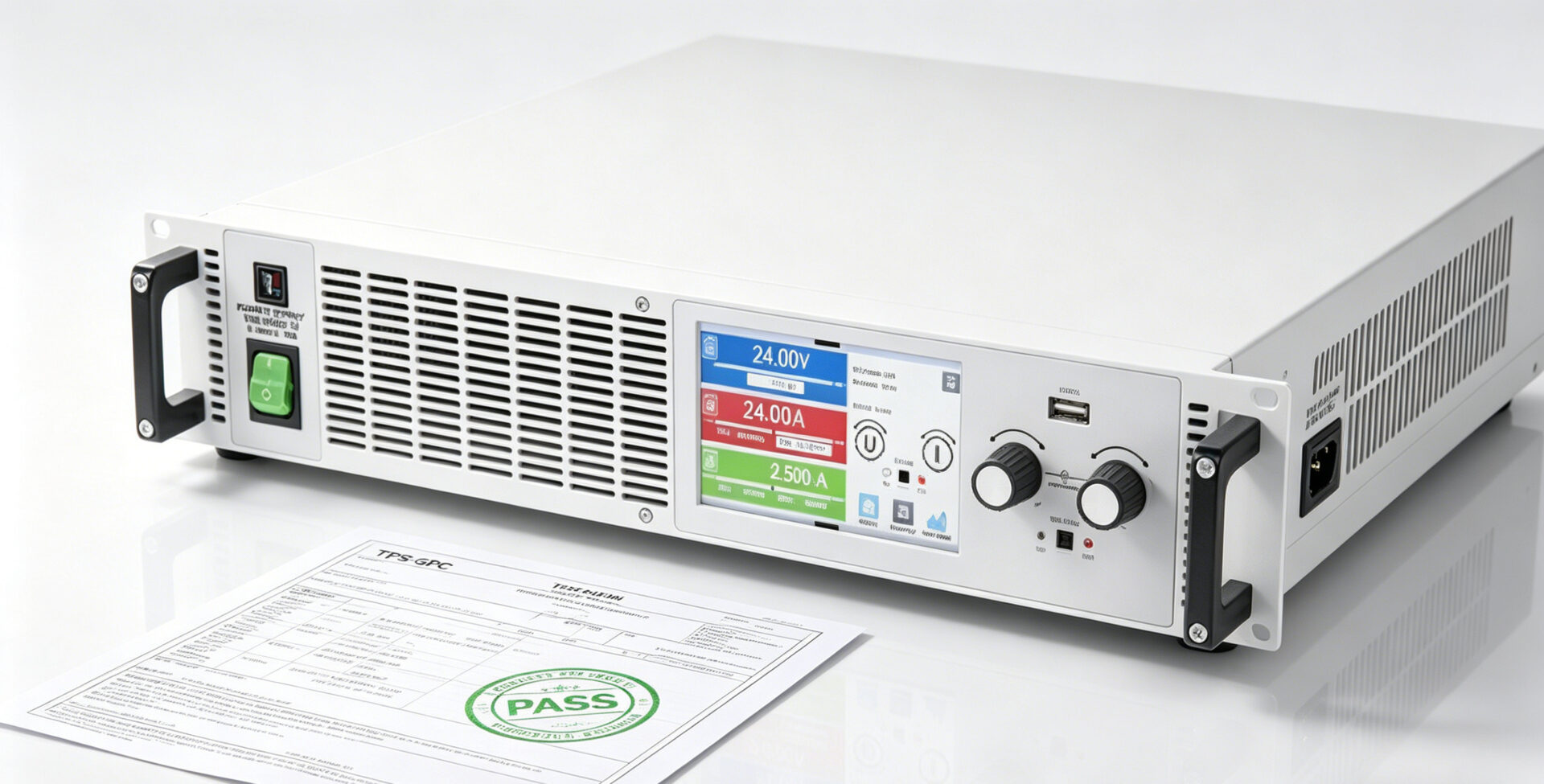
For a broader perspective on how global sales support works across different product categories, see TPS’s overview of global sales partnership for electronics.
3. Technical support as a procurement lever
Midway through the integration, the engineering team encountered a transient voltage dip whenever a large contactor coil de‑energized on the 24V rail. The problem threatened to cause nuisance resets on a sensitive PLC. A conventional distributor would simply have suggested a higher‑wattage power supply or pointed to the datasheet’s overload ratings. This approach often results in over‑specification and unnecessary cost. TPS Elektronik took a different approach. A senior applications engineer from TPS joined a remote call with the integrator’s panel builder and analyzed the load profile, inrush current, and hold‑up time requirements. The recommendation was not just a different wattage rating but a specific DIN rail module with a higher peak‑power capability and an optimized output capacitor bank to handle the dynamic load. The TPS engineer also provided thermal‑imaging data from the TPS test laboratory that validated the selection under worst‑case conditions.
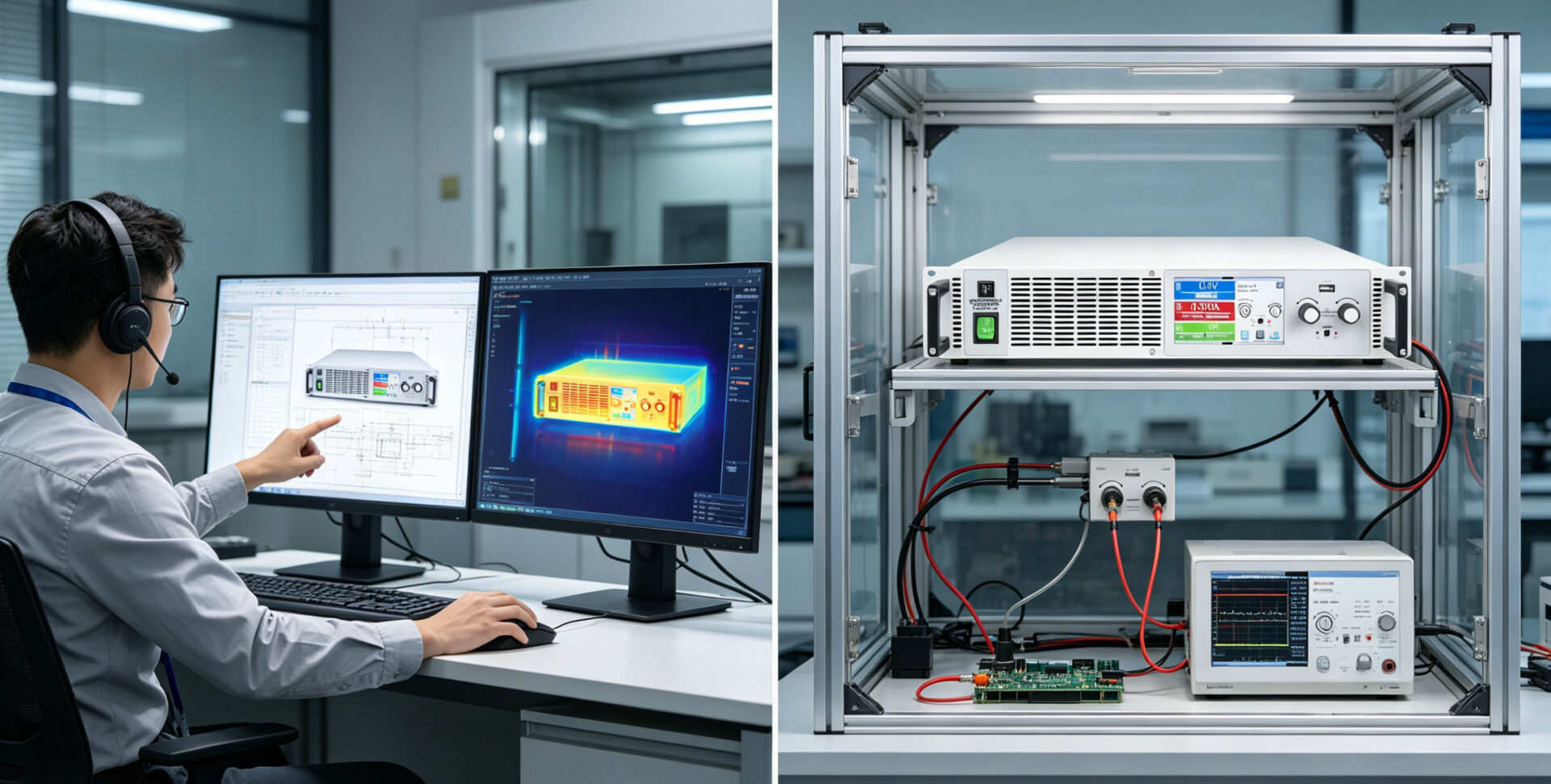
This level of support is the difference between a power supply distributor USA Germany and a partner who actually manufactures the units. TPS owns the product design, the test data, and the engineering knowledge that a distributor simply does not possess. Consequently, the integrator avoided an expensive over‑specification and kept the project within budget. For further insight into how technical support integrates with broader service offerings, see TPS’s resource on element material technology and advanced applications.
4. Compliance, certification, and market access
Even when a power supply fits mechanically and electrically, it must satisfy the regulatory requirements of the destination market. The integrator’s control panel destined for a facility that required CE marking under the EMC Directive 2014/30/EU. Which supported by harmonized standards including EN 55032 for emissions and EN 61000‑6‑2 for industrial immunity. The programmable DC supplies also needed to meet the harmonic current limits defined in IEC 61000‑3‑2 (equipment input current up to and including 16 A per phase).
TPS provided a complete compliance package with each shipment unit: the CE Declaration of Conformity referencing applicable directives and harmonized standards, RoHS compliance documentation per Directive 2011/65/EU, and safety compliance evidence aligned with IEC 62368‑1, the hazard‑based safety standard for AV/ICT equipment that UL has confirmed as the active transition path from legacy IEC 60950‑1 and IEC 60065 certifications. This documentation eliminated the need for the integrator to chase certificates from multiple third‑party websites. TPS’s experience with compliance documentation is documented further in our resources on international standard computer security certification and metal testing and quality control for global electronics.
5. Measurable results
The integrator realized three concrete benefits from working with TPS Elektronik’s power supply sale service. First, procurement lead‑time decreased by consolidating five purchase orders into one single delivery with coordinated scheduling, eliminating the logistical complexity of managing multiple inbound shipments. Second, the engineering‑hours spent on component selection and failure analysis were dramatically reduced, because a TPS applications engineer resolved a transient voltage‑dip problem in a single remote session. Finally, reporting and audit readiness improved as a result of several key quality management indicators: the rejection rate for incoming components fell significantly, a precise defect definition provided clear pass/fail criteria during inspection, and laboratory‑validated stress tests confirmed material durability under worst‑case thermal loading. These quality improvements are consistent with the systematic approach described in TPS’s quality assurance customer case and the structured global sales methodology outlined in our global sales partner compliance case.
6. FAQ
What types of power supplies can TPS supply?
TPS Elektronik offers a curated portfolio that includes DIN rail power supplies from 10 W to 130 W and beyond, programmable DC bench and system supplies, industrial ATX supplies for embedded computing, and custom‑designed power solutions. Every unit is manufactured or qualified by TPS, not drop‑shipped from a third‑party catalog.
Does TPS provide technical support for power supply integration?
Yes. Unlike broadline distributors, TPS employs senior applications engineers who analyze load profiles, inrush current, thermal behavior, and electromagnetic compatibility. They provide data‑backed recommendations grounded in laboratory measurements, not just spec‑sheet summaries.
What compliance documentation does TPS provide with each shipment?
A complete document package including the CE Declaration of Conformity, RoHS compliance declaration, and safety certification aligned with IEC 62368‑1. These documents are provided per shipment, eliminating the administrative burden of post‑delivery certificate collection.
Can TPS consolidate a multi‑brand BOM into a single delivery?
Yes. TPS reviews the complete BOM and proposes a consolidated solution. The integrator receives a single commercial invoice, a single coordinated delivery, and one point of contact for all technical questions and documentation requests.
Where can I learn more about TPS’s global sales and support services?
Visit the TPS global sales partner service page or read our detailed resource on global sales partnership for electronics in 2026.