


For medical device manufacturers, failing formal electromagnetic compatibility (EMC) testing is a costly nightmare. When a new healthcare device fails at an accredited test lab, it triggers a cascade of delays: weeks of redesign, expensive re-testing fees, and postponed FDA or CE market entry. System integrators and electrical engineers know that passing the stringent IEC 60601-1-2 standard requires more than just good luck—it requires proactive risk mitigation.
This customer case study explores how a leading healthcare technology provider partnered with TPS Elektronik’s emc test laboratory. By utilizing our pre-compliance testing and early design review services, they successfully resolved critical radiated emissions and immunity issues, ensuring a seamless pass at the formal accredited facility.
1. The Challenge: Failing FDA EMC Compliance Testing
Our client, an innovative developer of high-precision patient monitoring systems, was on a tight deadline to launch their new product in the US and European markets. They bypassed pre-compliance checks and went directly to an IEC 60601 accredited test lab for formal certification. The result was a hard failure.
The device exceeded the strict limits for medical device radiated emissions in the 200MHz to 500MHz range, caused by unshielded high-speed data buses. Furthermore, during electrostatic discharge (ESD) testing, the device experienced unrecoverable system resets—a critical violation of patient safety EMC testing protocols under IEC 60601-1-2. Facing a potential six-month delay and tens of thousands of dollars in re-testing fees, the procurement and engineering teams urgently needed a medical device EMC lab that could diagnose and fix the root causes before their next formal test slot.
2. The Solution: Early EMC Design Review and Intervention
The client engaged TPS Elektronik’s pre-certification EMC lab to regain control of their project timeline. Unlike formal certification bodies that only provide a “pass/fail” report, our approach is deeply collaborative and engineering-focused. We immediately initiated an early EMC design review.
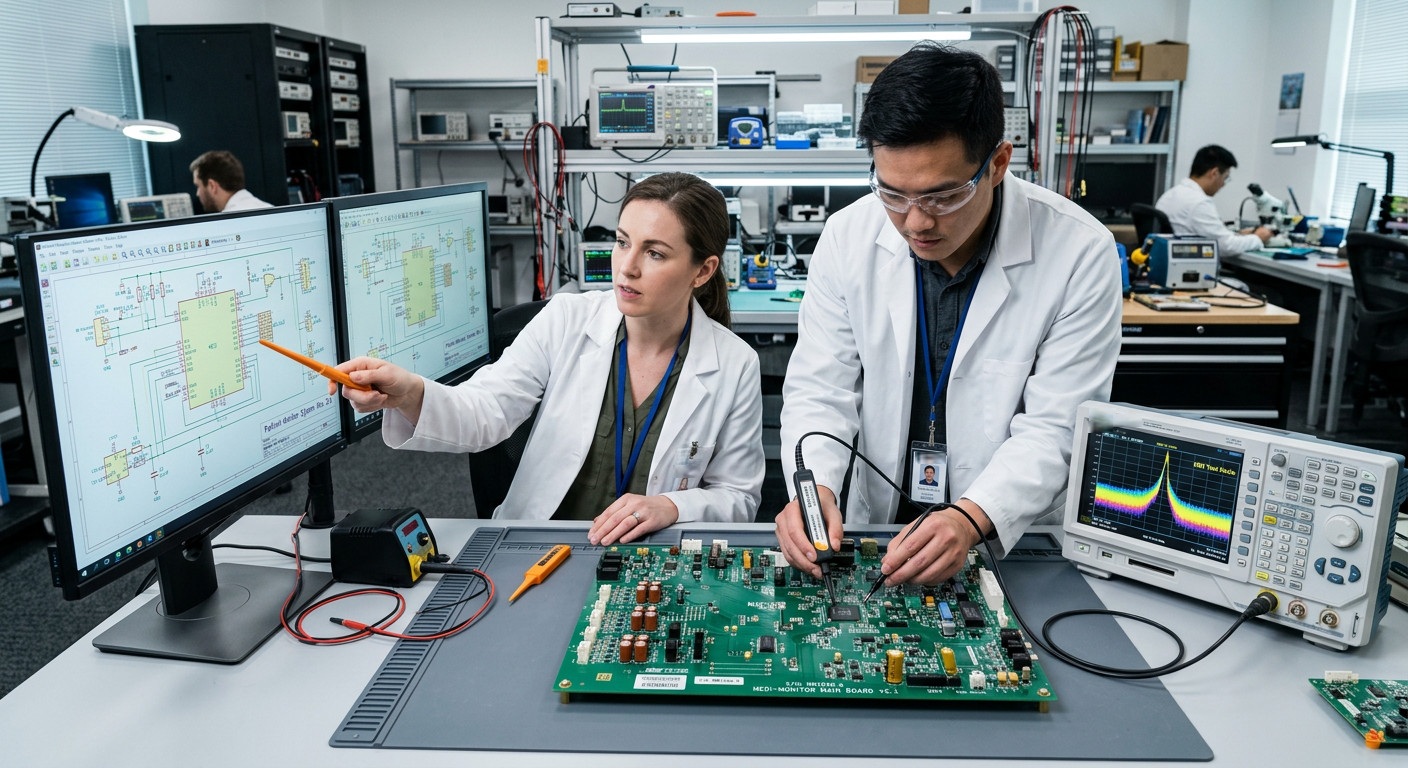
Our engineers analyzed the PCB layout, grounding architecture, and enclosure design. We identified that the grounding strategy for the display interface was creating a dipole antenna effect, radiating high-frequency noise. By leveraging our expertise in EMC lab and electrical safety testing for medical devices, we proposed immediate, actionable layout modifications and filtering strategies without requiring a complete mechanical overhaul.
3. Executing EMC Pre-Scan Testing in Our Facility
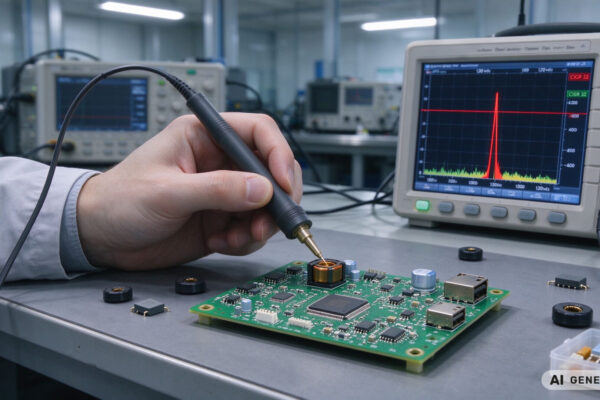
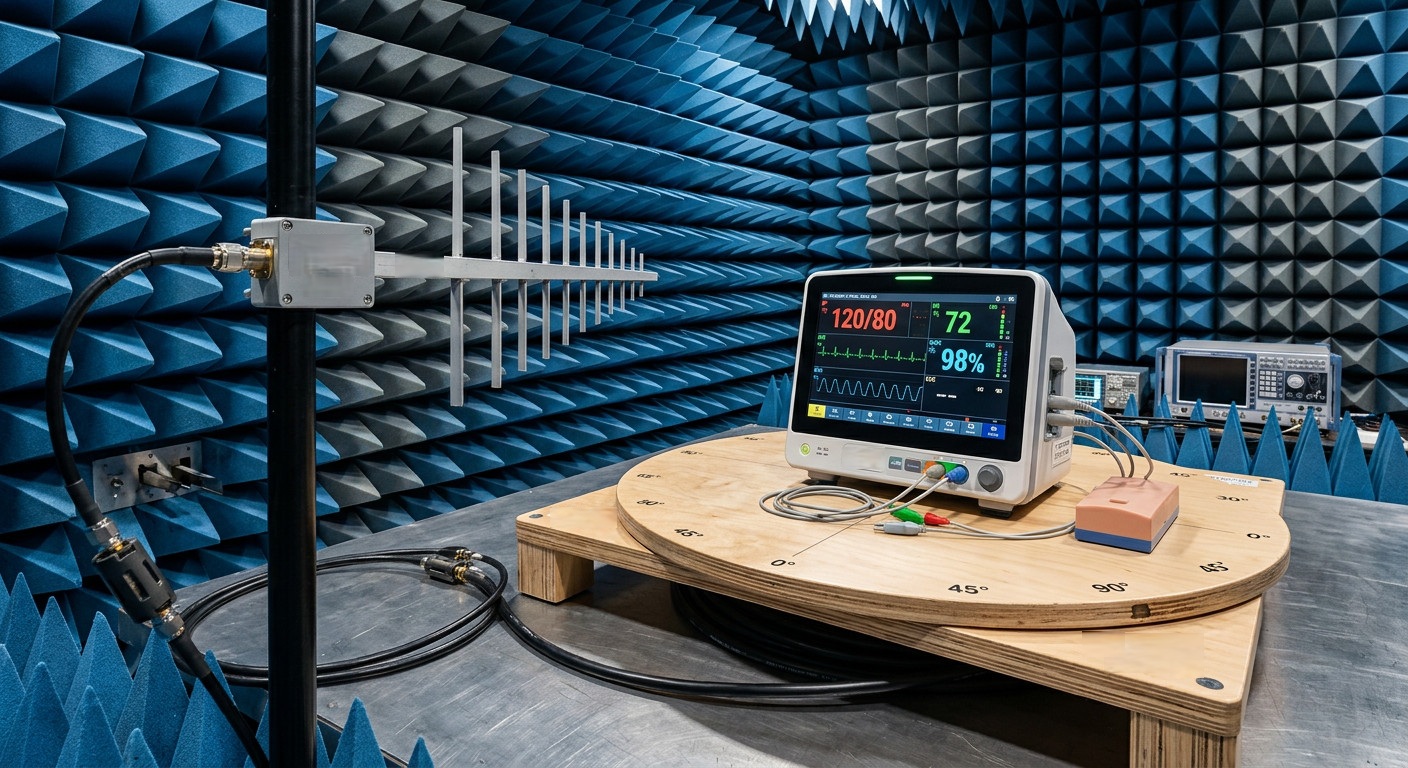
With the initial design modifications implemented, we moved the prototype into our emc test laboratory for rigorous EMC pre-scan testing. Our goal was to simulate the exact conditions of the formal CE medical EMC test and FDA requirements, allowing us to iterate quickly.
3.1 Mitigating Medical Device Radiated Emissions
Using our semi-anechoic chamber and near-field probes, we pinpointed the exact sources of the medical device radiated emissions. We applied targeted ferrite beads to the internal cabling and optimized the conductive gasketing around the display bezel. Because we operate as a pre-compliance EN 60601-1-2 EMC lab, we could test, modify, and re-test within hours—a process that would take weeks at a formal certification facility.
3.2 Ensuring Patient Safety EMC Testing (Immunity)
Medical electrical equipment EMC standards demand exceptional immunity to external disturbances. A patient monitor cannot reboot if a nurse touches it after walking across a carpeted floor. We subjected the device to severe ESD strikes and radiated RF immunity sweeps. By improving the transient voltage suppression (TVS) diode placement on the I/O ports, we eliminated the system resets, ensuring robust healthcare device EMC compliance.
4. Bridging the Gap to the IEC 60601 Accredited Test Lab
It is crucial to understand that TPS Elektronik provides pre-compliance testing, not the final accredited certification. However, our medical EMC test facility acts as the vital bridge to success. By the time the client’s patient monitor left our facility, we had documented proof that it performed well within the margins required by the FDA and the European Medical Device Regulation (MDR).
We provided the client with a comprehensive pre-compliance report, detailing the exact filtering components and shielding materials used. This allowed their procurement team to update the Bill of Materials (BOM) confidently, knowing the design was locked and ready for formal IEC 60601-1-2 EMC testing.
5. Results: Efficient Medical Device EMC Certification
Armed with a robust, pre-tested design, the client returned to the formal accredited test lab. The result? A first-pass success. By partnering with TPS Elektronik’s emc test laboratory for pre-compliance, the client avoided a second costly failure, saved an estimated six weeks of development time, and successfully launched their product on schedule.
This case study proves that EMC testing for medical devices should never be an afterthought. Integrating pre-compliance testing into your development cycle is the most cost-effective strategy for achieving global market access. Learn more about our approach in our guide on how to test electromagnetic compatibility.
Secure your certification timeline with our EMC pre-compliance services →
6. FAQ
What is the difference between an EMC pre-compliance lab and an accredited test lab?
An accredited test lab provides the formal, legally binding certification required by regulatory bodies (like the FDA or CE). A pre-compliance emc test laboratory like TPS Elektronik focuses on the engineering phase—identifying and fixing EMC issues during development so that the device passes the formal accredited test on the first try, saving time and money.
Why is IEC 60601-1-2 EMC testing so difficult to pass?
Medical devices operate in environments with high electromagnetic noise (hospitals) and are directly connected to patients. Therefore, the IEC 60601-1-2 EMC testing standard imposes much stricter limits on both emissions (not interfering with other life-saving equipment) and immunity (not failing when subjected to interference) compared to standard industrial electronics.
When should we engage a medical device EMC lab for pre-scan testing?
You should engage a pre-certification EMC lab as early as the first functional prototype stage. Conducting an early EMC design review before finalizing the PCB layout or mechanical enclosure prevents costly tooling changes and accelerates the overall time-to-market.
Can TPS Elektronik help with both EMC and electrical safety for medical devices?
Yes. While this case focuses on EMC, TPS Elektronik also provides comprehensive pre-compliance support for electrical safety. You can read more about our integrated approach in our electrical safety testing and EMC compliance guide.