

For system integrators, security installers, and engineering‑driven procurement teams, deploying an IP surveillance network is not only about camera resolution. It also involves power delivery, cable management, reliability in harsh environments, and the ability to remotely monitor and control every device. When a single camera goes offline in a critical surveillance installation, the root cause often a failed power adapter, not a network failure.
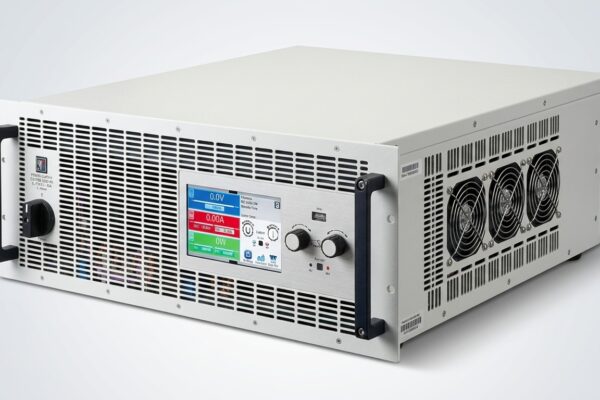
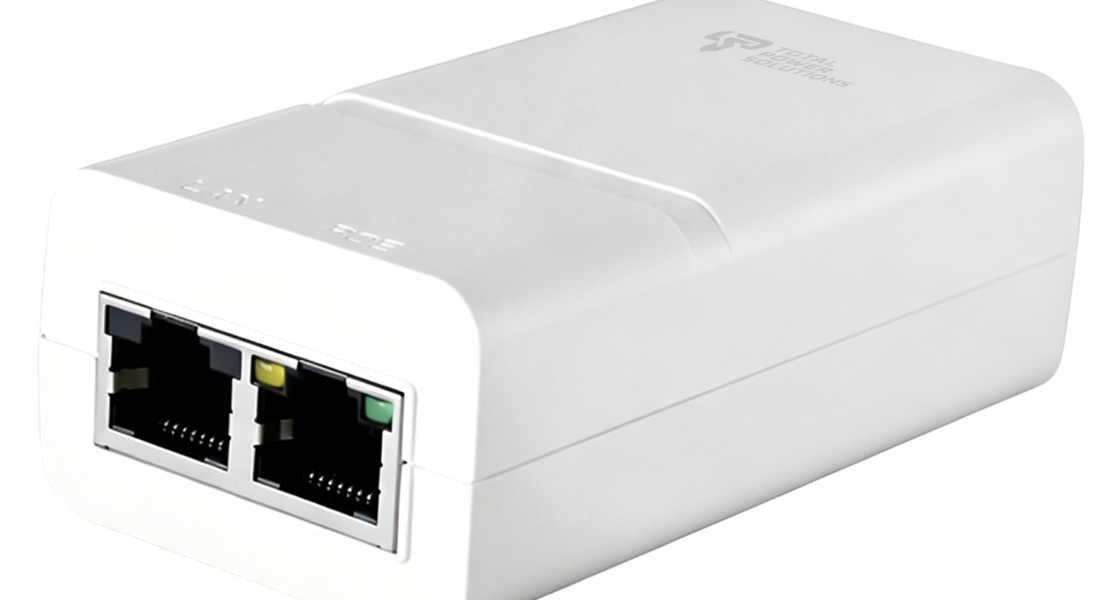
The TPS PoE injector switch is a centralized power and data distribution platform that combines Gigabit Ethernet switching with IEEE 802.3af/at/bt Power over Ethernet on every port. It eliminates the need for individual power supplies. Which reduces cabling complexity, and enables remote power management. All from a single, rack‑mountable device. This article explains how the TPS PoE injector switch transforms surveillance network deployment and why it is critical for reliable centralized power management.
Why PoE injector switches are essential for IP surveillance networks
Traditional surveillance camera deployments require two cables per camera: one for data and one for power. In a 32‑camera installation, this means 64 cables running through conduits, junction boxes, and patch panels. The power cables must connected to individual AC adapters located near each camera or inside a weather‑proof enclosure. Which increases the number of potential failure points. When a camera malfunctions, a technician must physically travel to the location to check both the network connectivity and the power adapter.
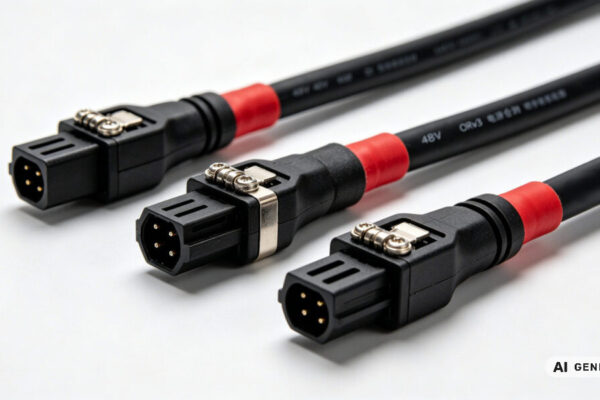
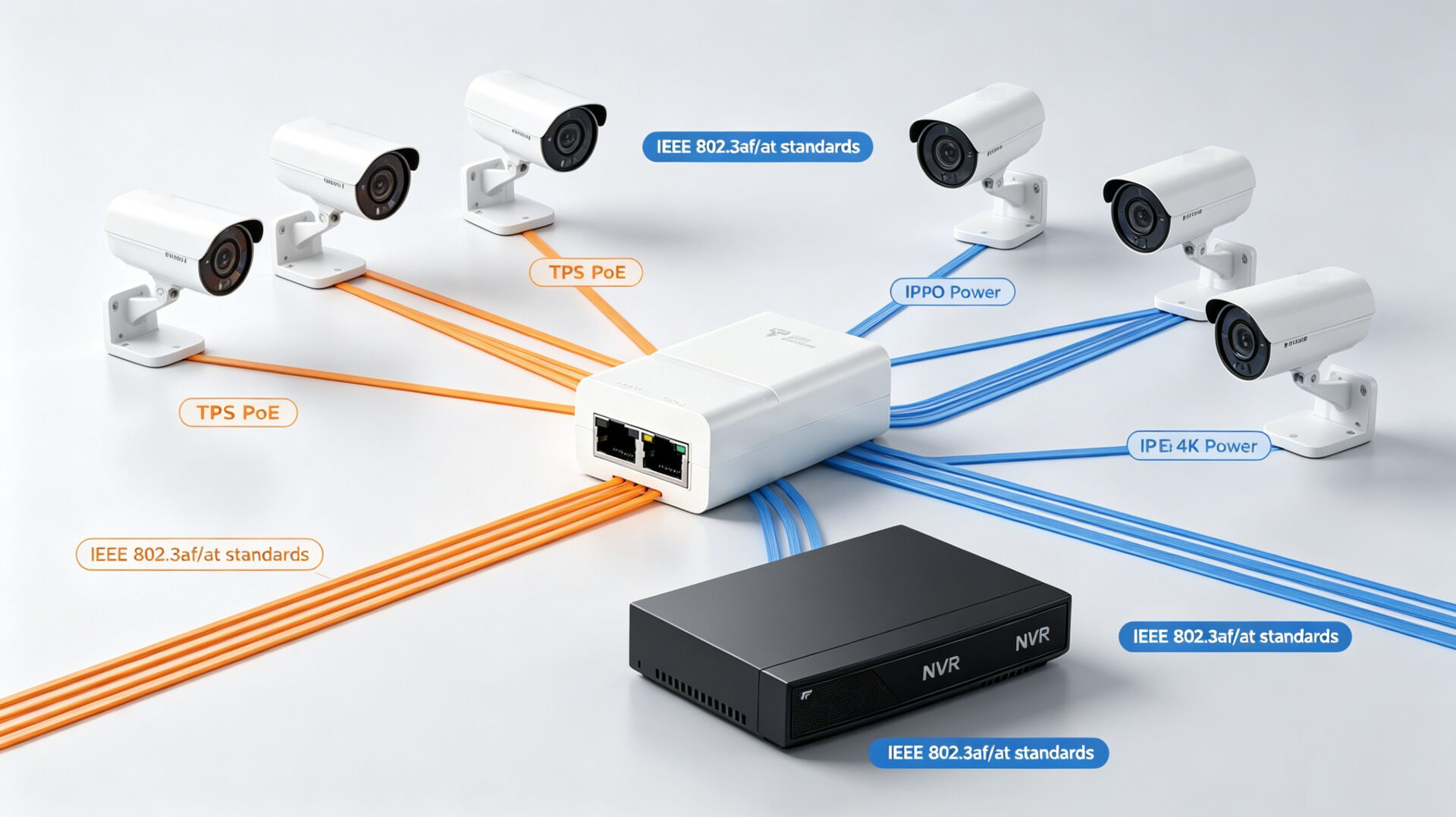
A PoE injector switch collapses these two cables into a single Ethernet cable that carries both data and power. The switch installed in a central equipment room or network cabinet, where it receives AC mains and injects a regulated 48 V DC voltage onto each Ethernet port. This topology drastically simplifies installation, reduces the amount of copper cabling required, and enables centralized remote power management. The ability to reboot a camera, schedule power on/off, or monitor real‑time power consumption from a single web interface. For a broader discussion on how centralized power solutions improve system reliability, see the TPS services overview.
TPS PoE injector switch platform overview
TPS Elektronik offers a range of PoE injector switches designed for IP surveillance and security camera networks. The portfolio includes 8‑port, 16‑port, and 24‑port models with Gigabit Ethernet and optional SFP uplink ports for fiber connectivity. All models comply with IEEE 802.3af (15.4 W per port) and IEEE 802.3at (30 W per port), with selected models supporting IEEE 802.3bt (60 W or 90 W per port) for high‑power devices such as PTZ cameras with heaters and blowers.
The total power budget ranges from 120 W for compact 8‑port models to 370 W for full‑featured 24‑port models. Which ensuring that every connected camera receives its required power even when all ports are active. The switch automatically detects whether a connected device is PoE‑capable and applies the correct voltage, protecting non‑PoE devices from damage. The complete product line is available on the TPS PoE injector category page.
PoE standards and power delivery: IEEE 802.3af, at, and bt
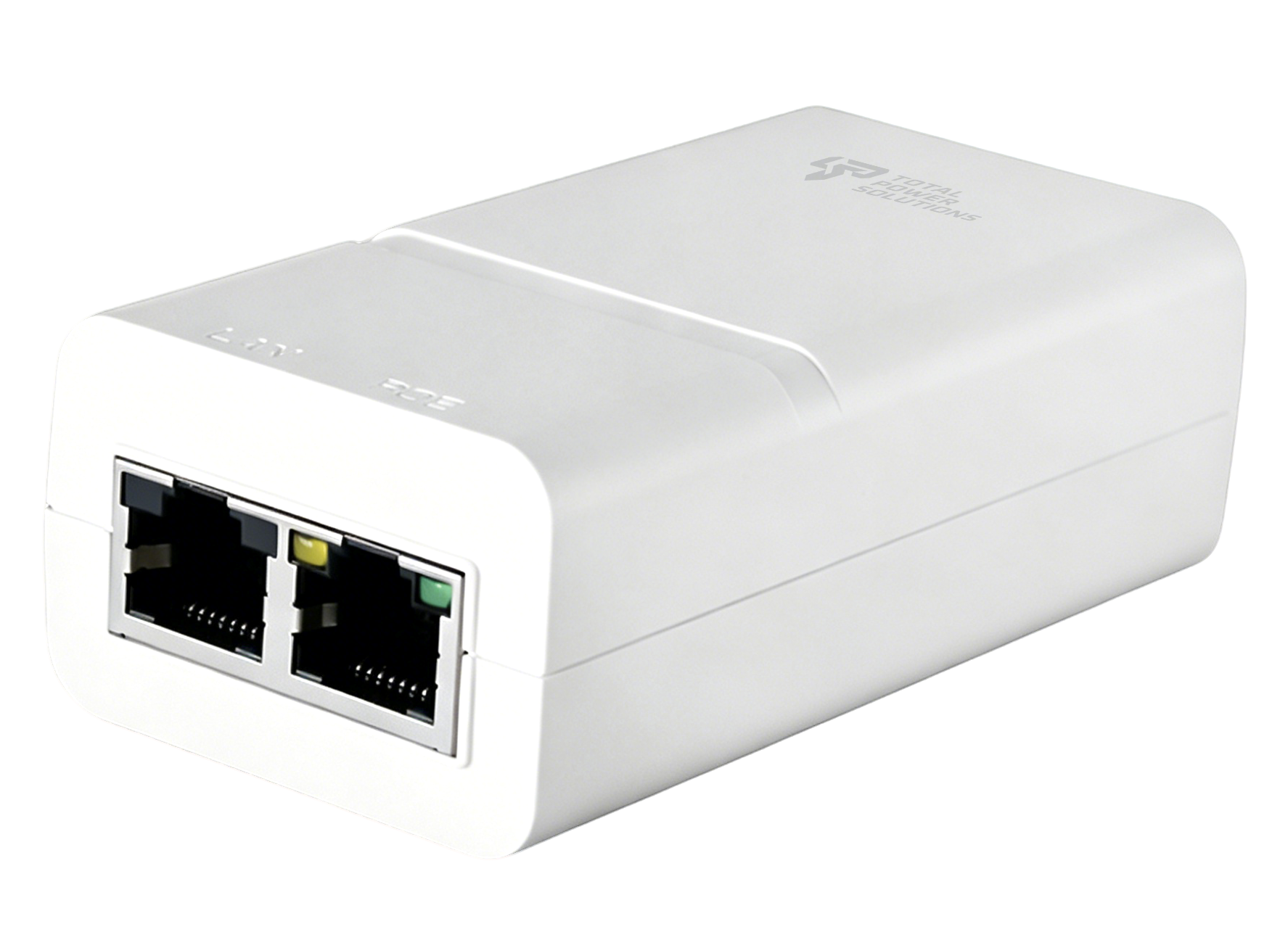
Power over Ethernet governed by a family of IEEE standards that define the voltage, current, and negotiation protocol between the power sourcing equipment (PSE) — the PoE switch — and the powered device (PD) — the camera. The TPS PoE injector switch acts as a PSE and supports the following standards:
- IEEE 802.3af (Type 1): Delivers up to 15.4 W at the port, with 12.95 W guaranteed at the device. Suitable for fixed‑lens IP cameras, basic wireless access points, and door access controllers.
- IEEE 802.3at (Type 2, PoE+): Delivers up to 30 W at the port, with 25.5 W guaranteed. This is the most common standard for modern surveillance cameras with pan/tilt/zoom motors, infrared illuminators, and built‑in analytics processors.
- IEEE 802.3bt (Type 3 and Type 4, PoE++): Delivers up to 60 W (Type 3) or 90 W (Type 4) at the port. This standard required for high‑performance PTZ cameras with defrost heaters, multi‑sensor panoramic cameras, and edge computing devices.
The TPS switch performs automatic detection and classification of the connected PD. Which ensuring that the correct power level negotiated before full power applied. This prevents damage to legacy devices and optimizes the power budget allocation across all ports.
Centralized power management: monitoring, control, and redundancy
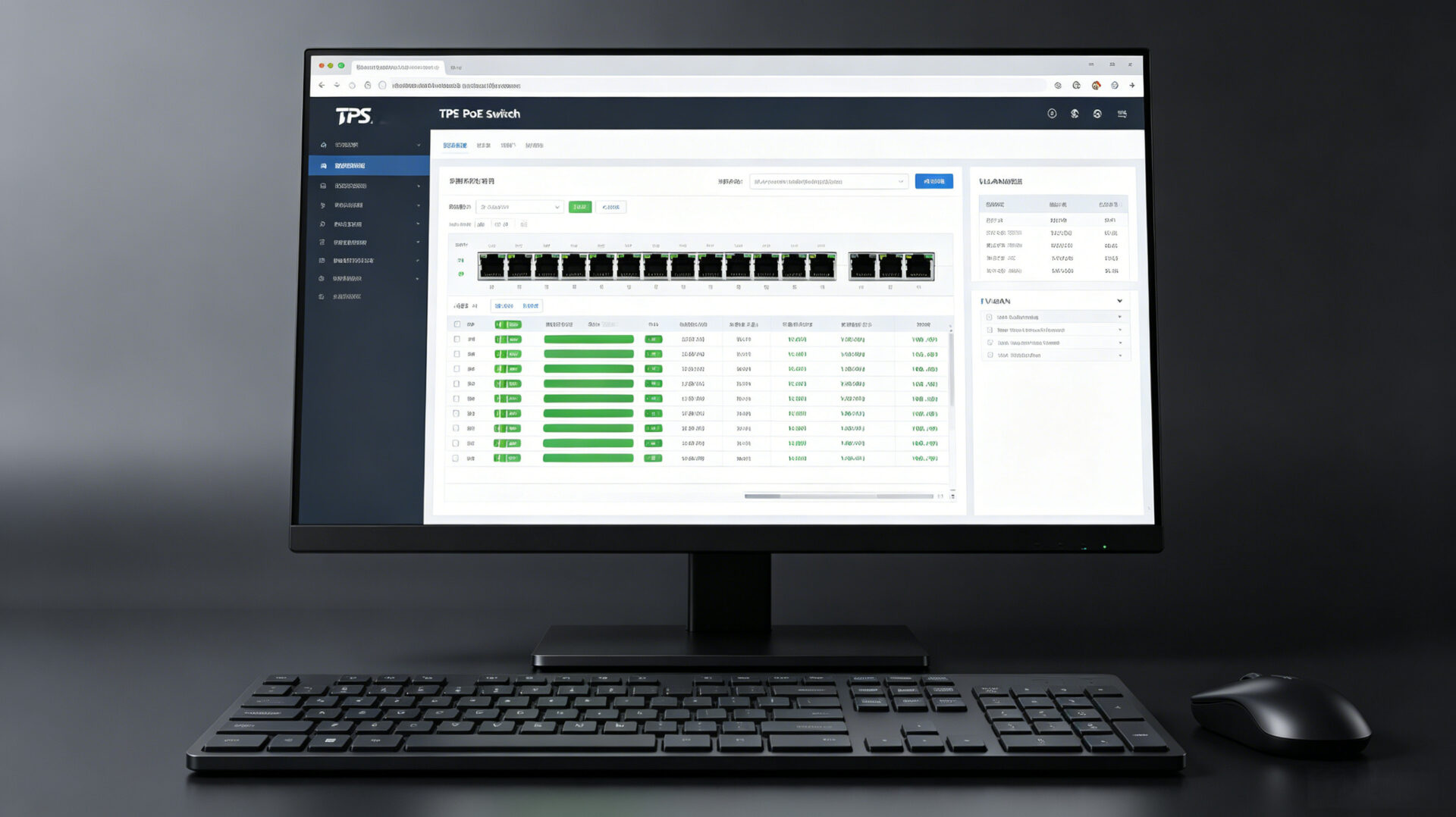
The defining advantage of a managed PoE injector switch over a simple mid‑span injector is the ability to monitor and control power delivery from a central location. TPS PoE switches include a web‑based management interface and support SNMP for integration with enterprise network management systems. Key management features include:
- Per‑port power monitoring: Real‑time display of voltage, current, and power consumption for each connected camera. Which enabling early detection of anomalous power draw that may indicate a failing camera or a cable degradation.
- Remote port power cycling: The ability to reboot a camera by turning its port power off and on. Which resolving many camera lock‑up issues without sending a technician on‑site.
- Power scheduling: Configuration of power on/off schedules per port, useful for reducing energy consumption during non‑operational hours or for implementing a periodic reboot strategy.
- Port priority and budget management: In scenarios where the total power budget is insufficient to power all connected devices, the switch can prioritize critical ports (e.g., PTZ cameras covering an entrance) and shed power from lower‑priority ports.
For high‑availability installations, TPS supports dual redundant power supply inputs, ensuring that the PoE switch continues to operate even if one PSU fails. The internal PSU is designed with overload, short‑circuit, and over‑temperature protection, consistent with the rugged design principles described in the TPS news and insights section.
Mechanical design and environmental robustness
IP surveillance networks are often deployed in harsh environments: outdoor poles, factory floors, and unheated electrical cabinets. The TPS PoE injector switch designed with a metal housing that provides mechanical robustness and effective heat dissipation. The fanless design in lower‑power models eliminates a common failure point and allows silent operation in noise‑sensitive environments such as offices and hospitals.
For industrial and outdoor deployments, TPS offers models with extended operating temperature ranges (typically −20 °C to +70 °C), conformal coating on the PCBs to protect against humidity and condensation. And surge protection on the Ethernet ports to withstand induced voltages from nearby lightning strikes or switching of large inductive loads. The switch can mounted in a standard 19‑inch rack, on a DIN rail, or on a wall. Which providing flexibility for various installation scenarios.
Compliance and safety: IEC 62368‑1, EMC, and surge protection
Any power distribution equipment installed in a commercial or industrial facility must comply with safety and electromagnetic compatibility standards. The TPS PoE injector switch designed and tested to meet IEC 62368‑1, the hazard‑based safety standard for audio/video, information, and communication technology equipment. This standard addresses protection against electric shock, fire, mechanical hazards, and thermal hazards.
EMC compliance demonstrated against EN 55032 Class B (CISPR 32) for radiated and conducted emissions, and against IEC 61000‑4‑x for immunity. The Ethernet ports incorporate surge protection circuits designed to withstand common‑mode and differential‑mode transients, protecting both the switch and the connected cameras. TPS provides a Declaration of Conformity and test reports with each product shipment. Which supporting the integrator’s own CE marking or UL listing process. For further reading on compliance and safety in electronics, see the TPS services and technical resources.
Application scenarios: surveillance, access control, and wireless backhaul
While IP surveillance is the primary application, the TPS PoE injector switch serves several related functions in a modern security installation:
- IP surveillance and NVR connectivity: The switch connects cameras to the network video recorder, provides power, and segregates surveillance traffic using VLANs to ensure that high‑resolution video streams do not congest the corporate network.
- Access control systems: PoE‑powered door controllers, card readers, and electric strikes can powered and managed from the same switch, simplifying cabling and power backup through a central UPS.
- Wireless backhaul and access points: Outdoor wireless bridges for connecting remote surveillance sites, and indoor Wi‑Fi access points for guest networks, commonly powered via PoE.
- IoT sensors and building management: PoE can power environmental sensors, lighting controllers, and digital signage. Which integrating security and building automation onto a single network infrastructure.
RFQ checklist for PoE injector switches
- Port count: Number of PoE ports required (8, 16, 24) and any non‑PoE uplink ports (SFP/SFP+).
- PoE standard: af, at, or bt; maximum per‑port power requirement for the most demanding camera.
- Total power budget: Sum of maximum power draw for all cameras, plus a 20 % margin.
- Management: Unmanaged, web‑managed, or SNMP‑managed; VLAN and QoS requirements.
- Redundancy: Dual PSU input, redundant uplink, or ring topology support.
- Environmental: Indoor or outdoor; operating temperature range; conformal coating if needed.
- Certifications: IEC 62368‑1, EN 55032, UL listing, or other required marks.
- Quantity and schedule: Project volume and delivery timeline.
Frequently Asked Questions
Can the TPS PoE injector switch power cameras from different brands simultaneously?
Yes. The switch complies with IEEE 802.3af/at/bt standards, which are interoperable across all compliant devices regardless of manufacturer. It automatically detects and negotiates the correct power level for each connected camera.
What happens if the total power budget is exceeded?
The TPS switch uses port priority to automatically shed power from lower‑priority ports if the total demand exceeds the power budget. This ensures that critical cameras remain online. The management interface provides clear alerts when the power budget is approaching its limit.
Does the switch require a separate power supply for its own operation?
The switch has a built‑in AC‑to‑DC power supply. It connects directly to AC mains (100–240 V AC) and generates the 48 V DC PoE voltage internally. Dual PSU models accept an external DC backup input for redundancy.
Can the TPS PoE switch be used outdoors without an enclosure?
Standard models are designed for indoor use. For outdoor installations, TPS offers industrial‑grade models with extended temperature range and conformal coating, or the switch can be housed in a weather‑resistant NEMA/IP‑rated enclosure.
Where can I find the datasheet and management guide for a specific TPS PoE switch model?
Visit the TPS PoE injector category page or contact TPS sales through the TPS services page to request detailed documentation.