

Power system engineers and utility procurement teams rarely fail because they lack a transmission plan. They lose time—and budget. When a new HVDC converter or a grid‑connected renewable plant cannot fully tested under realistic fault conditions before commissioning. A static DC source cannot emulate the dynamic behavior of a faulted AC grid, nor can it absorb the reactive power and energy that a converter feeds back during a grid disturbance. This testing gap introduces significant technical risk. Which potentially delaying project energisation and increasing the cost of remediating unexpected interactions once the system is live.
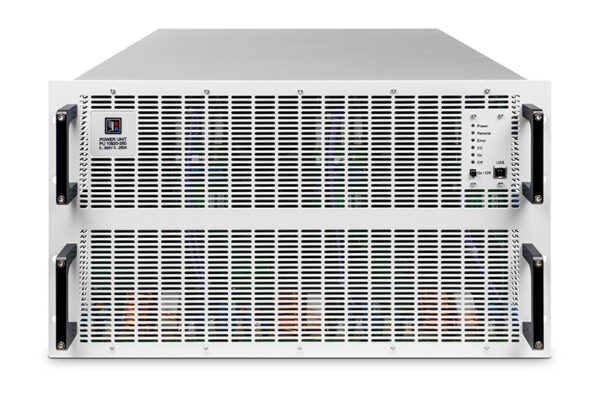
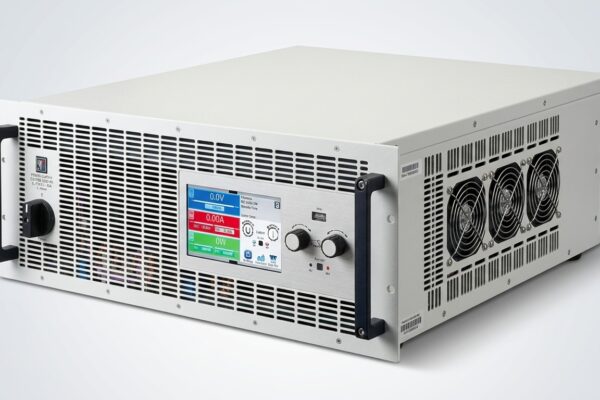
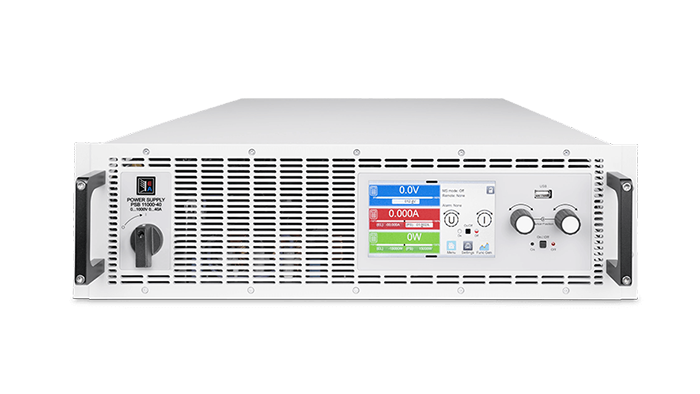
TPS Elektronik’s high voltage high power supply development service closes this gap. By engineering custom programmable DC sources and regenerative power systems that can operate at transmission‑level voltages and power, TPS enables comprehensive HVDC converter testing, grid emulation, and power hardware‑in‑the‑loop (PHIL) validation. This service designed for utilities, transmission system operators, and OEMs who need to prove the stability and fault ride‑through capability of their equipment before it is connected to the public grid.
1. Why HVDC and grid simulation demand high‑voltage, high‑power test sources
Testing a modular multilevel converter (MMC) for an HVDC link requires a DC source that can deliver hundreds of kilovolts and several megawatts. While also being able to reverse power flow to simulate energy fed back from the AC grid during a fault. Traditional transformer‑rectifier sets are unidirectional, bulky, and offer limited dynamic response. A programmable high‑voltage DC source based on modern power electronics overcomes these limitations. Which providing bidirectional power flow, fast voltage control, and the ability to emulate complex grid events such as low‑voltage ride‑through (LVRT) and phase jumps. TPS’s custom high‑power solutions for such demanding applications are built on the same engineering principles described in our overview of custom power supply capabilities, adapted for utility‑scale voltage and power requirements.
2. TPS high‑voltage high‑power solution overview
TPS Elektronik’s development service delivers complete, turnkey high‑voltage test systems. The scope includes design, manufacturing, factory acceptance testing, on‑site installation, and commissioning. Systems are built around modular power conversion blocks that can be series‑stacked to achieve high DC voltages and paralleled to scale power. Which enabling configurations from tens of kilowatts to multiple megawatts at voltages up to hundreds of kilovolts.
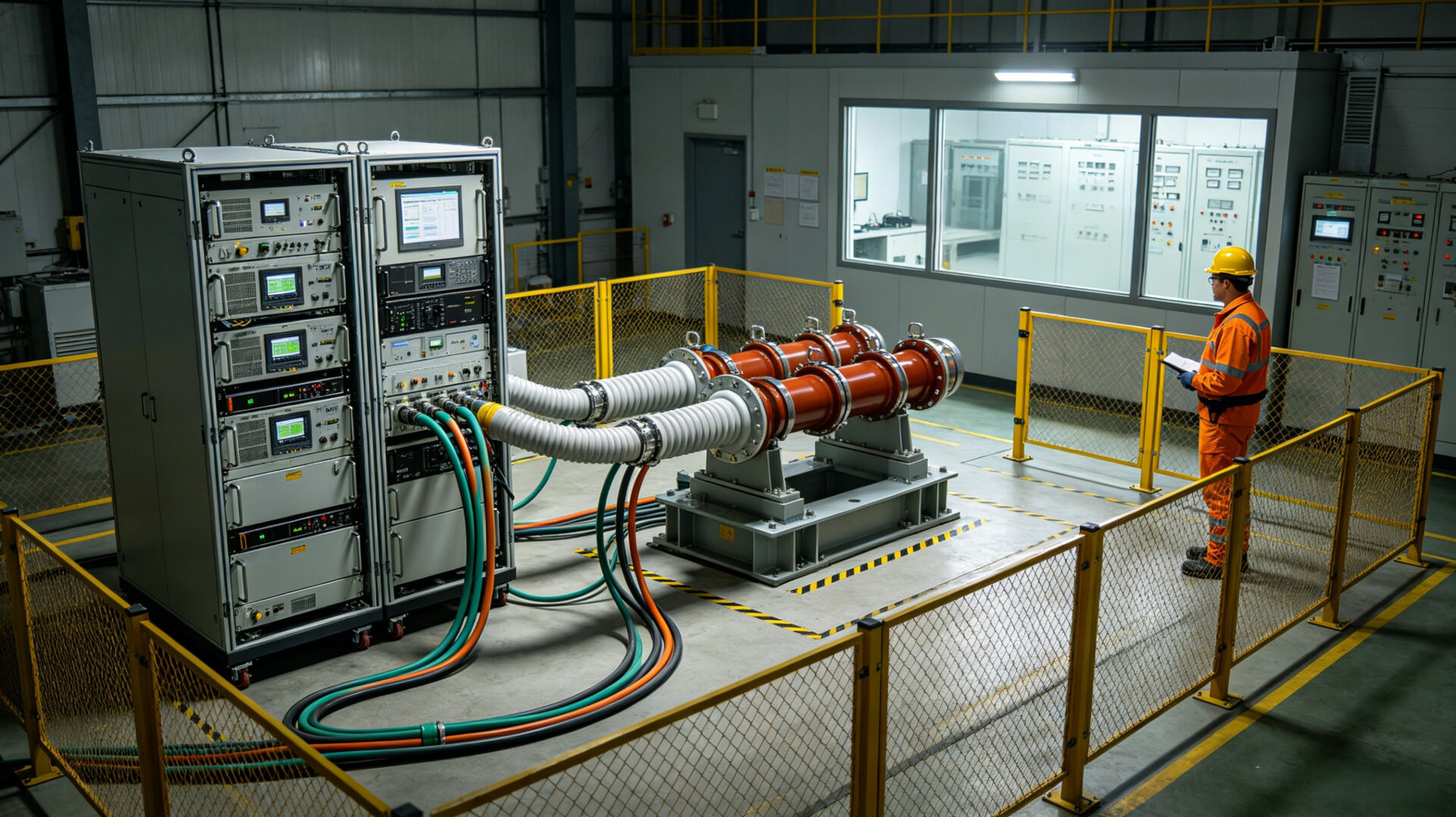
2.1 System architecture and voltage scaling
The core building blocks are high‑frequency, isolated DC‑DC converter modules with IGBT or SiC‑based switching stages. These modules are connected in series to build up the required DC output voltage, with each module operating at a safe, manageable voltage level (typically 1–2 kV). This modular approach provides inherent redundancy and simplifies maintenance. The output actively regulated, with voltage ripple and stability suitable for the most demanding HVDC converter and cable testing. The system design informed by TPS’s deep expertise in power electronics and PCB design. Which similar to the principles outlined in our guide on buck‑boost converter design and reliability.
2.2 Regenerative operation for grid simulation
When acting as a grid emulator, the TPS system must both source and sink power. During an LVRT test, the equipment under test (EUT). Such as an HVDC converter or a wind turbine’s power converter—feeds energy back into the test supply. The TPS system absorbs this energy and returns it to the facility’s AC grid with an efficiency exceeding 95 %, dramatically reducing the operating cost and thermal management burden compared to a resistive load bank. The system’s active front end maintains a power factor >0.99 and low harmonic distortion. Which ensuring that the regenerated power does not degrade the local grid quality. This capability is an extension of the battery test system principles documented in our case study on custom power supply design and battery test systems.
3. Applications in power system stability testing
TPS high‑voltage high‑power supplies deployed in several critical test scenarios for grid modernization:
- HVDC converter valve testing: Applying DC voltage to converter valves during factory acceptance testing, verifying insulation integrity and partial discharge performance.
- HVDC cable system testing: Providing a stable, high‑voltage DC source for after‑laying tests on land and submarine HVDC cables, per IEC 62895 and CIGRÉ TB 496.
- Grid fault ride‑through (FRT) and LVRT/HVRT testing: Using the TPS system as a programmable grid emulator to simulate voltage dips, swells, and frequency deviations, verifying that renewable generators and converters meet the requirements of IEC 61400‑21 and relevant grid codes.
- Power hardware‑in‑the‑loop (PHIL) simulation: Interfacing the TPS power supply with a real‑time digital simulator to create a closed‑loop test environment, enabling validation of control strategies for smart grids and flexible AC transmission systems (FACTS).
4. RFQ checklist for high‑voltage high‑power systems
- Voltage and power requirements: Maximum DC output voltage, maximum DC current, total power per channel, and number of channels.
- Application type: HVDC converter test, cable test, grid emulation, or PHIL.
- Dynamic performance: Required voltage slew rate, response time, and any specific fault profiles (LVRT, HVRT, phase jump).
- Bidirectional operation: Is regenerative energy recovery required?
- Control interface: Ethernet/SCPI, CAN, or other fieldbus, and any real‑time digital simulator interface requirements.
- Safety and compliance: Applicable standards (IEC 61010‑1, IEC 61400‑21, IEC 62895), and required certifications (CE, UL).
5. FAQ
What is the highest voltage TPS can achieve with its high‑voltage power supplies?
By series‑connecting modular converter blocks, TPS can design systems delivering hundreds of kilovolts. The exact voltage limit depends on the application’s insulation and safety requirements.
Can TPS’s systems simulate grid faults for renewable energy compliance testing?
Yes, the systems can be programmed to emulate a wide range of grid faults, including LVRT, HVRT, and frequency deviations, to verify compliance with grid codes.
Does TPS provide on‑site commissioning and training?
Yes, as part of the turnkey development service, TPS provides on‑site installation, commissioning, and operator training.
Where can I learn more about TPS’s custom power supply capabilities?
Visit the TPS development service page or read about our custom power supply solutions and battery test systems.