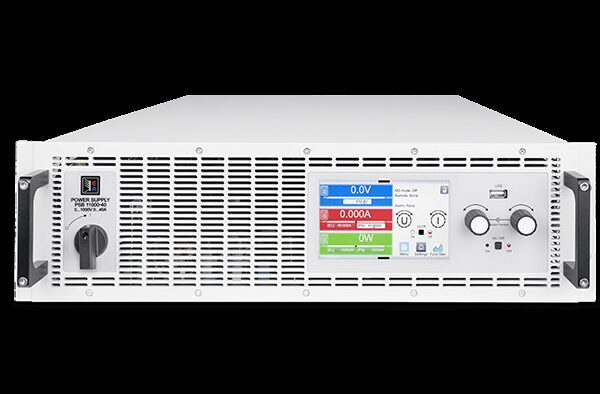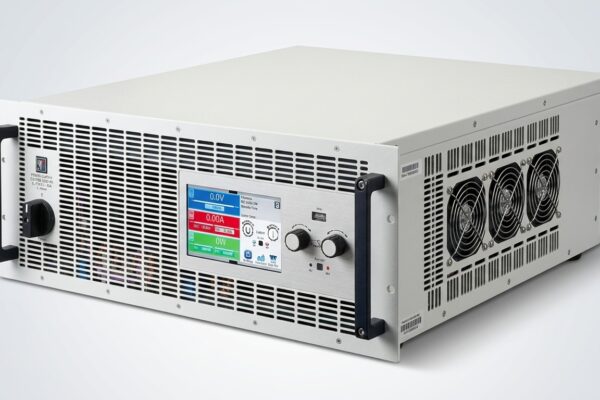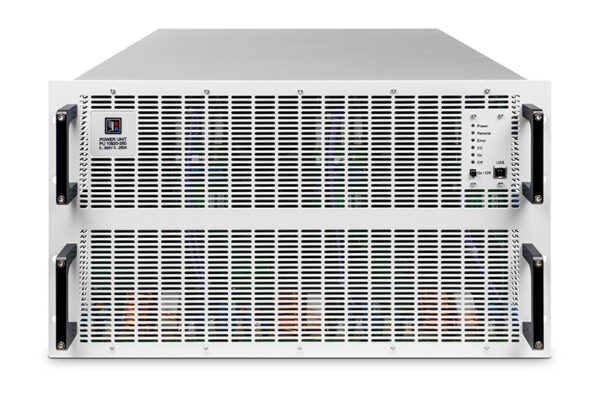


For system integrators, panel builders, and engineering‑driven procurement teams, which selecting a power supply for an automated test system is not only about voltage and current ratings. It also involves rack density, energy efficiency, thermal management, and whether the system can simulate real‑world load conditions. Such as a battery charging and discharging — without needing separate instrumentation. When a test lab allocates 42U of rack space for power supplies that could have been accommodated in 16U, it wastes valuable floor area and increases cooling costs.
The TPS high power bidirectional programmable power supply, based on the EA‑PSBE 10000 series and exemplified by the EA‑PSBE 10360‑240 4U, addresses these challenges directly. It delivers up to 30 kW of regenerative DC power in a single 4U chassis. Which operates as both a source and an electronic load, and returns absorbed energy to the grid with up to 95.8 % efficiency. For high‑density ATE systems, battery test labs, and EV charger test benches. Which means fewer racks, lower electricity bills, and a single instrument that replaces two.
What a bidirectional programmable power supply is and why ATE systems need it
A conventional DC power supply sources current to a device under test. When the test requires the device to discharge energy. Such as a battery during a capacity test. A separate electronic load must dissipate that energy as heat. This configuration consumes rack space, generates waste heat, and discards usable electrical energy. A bidirectional programmable power supply consolidates both functions into a single instrument. It can source power (act as a power supply) or sink power (act as a regenerative electronic load). Which returning the absorbed energy to the grid instead of converting it to heat.
In an ATE system testing electric vehicle batteries, on‑board chargers, or fuel cells, this capability is transformative. The same instrument that charges a battery during one test sequence can discharge it during the next, with the discharge energy recovered and reused within the facility. This reduces the total electrical energy consumed by the test system, lowers the air‑conditioning load in the lab, and eliminates the cost of purchasing and maintaining separate loads. For a deeper look at how programmable power supplies used across test environments, refer to the TPS guide on top programmable power supply options for every need.
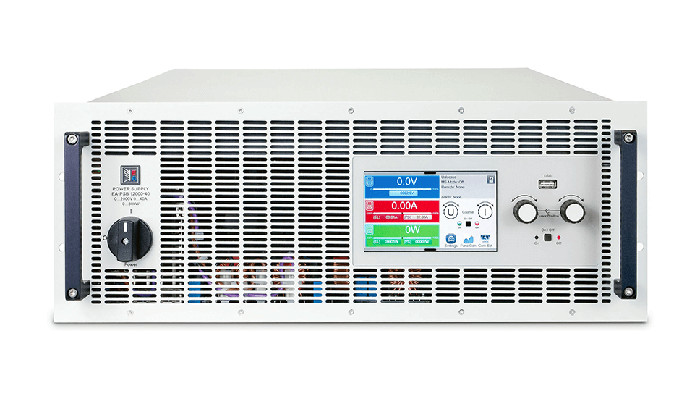
Power density and space savings: 30 kW in 4U
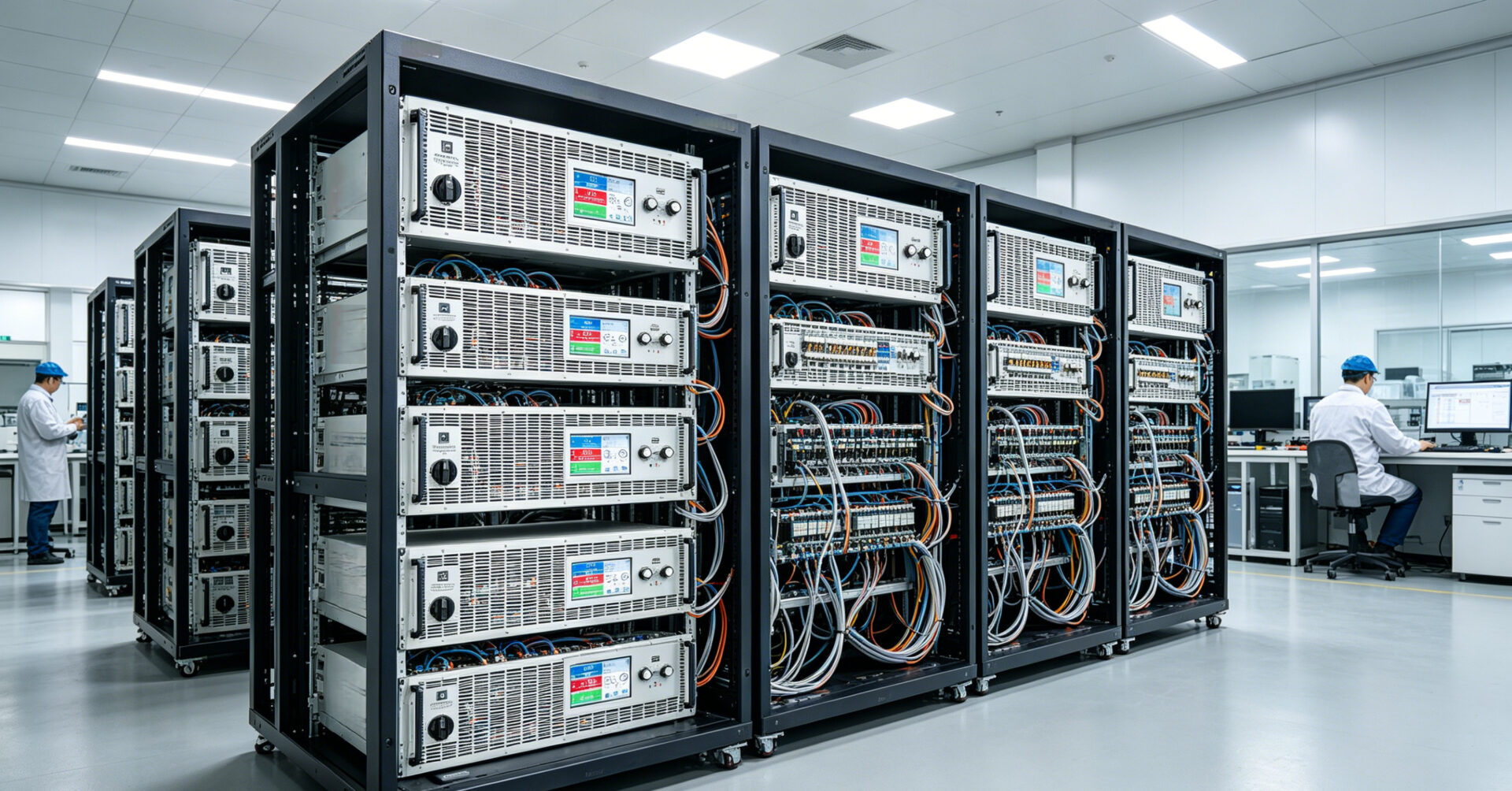
Rack space in a test laboratory is a fixed asset. A 42U rack filled with 5 kW single‑function power supplies might deliver 60 kW total. Which leaving no room for the equipment under test. The TPS EA‑PSBE 10360‑240 delivers 30 kW from a single 4U chassis. Six such units in a 42U rack provide up to 180 kW, effectively tripling the power available from the same footprint. This high power density achieved through a combination of advanced switching technology, efficient thermal design with forced‑air cooling. And a compact mechanical layout that fits the power electronics, control circuitry, and front‑panel interface into a standard 19‑inch rack‑mount form factor.
For laboratories building new ATE installations or retrofitting existing ones, the space savings translate directly into capital cost avoidance — fewer racks, less cabling, and reduced floor area. The 4U form factor is one of several rack‑mount options available from TPS. Which complementing the 3U programmable DC power supplies and 2U programmable DC power supplies for lower‑power channels.
Bidirectional and regenerative operation: how it saves energy
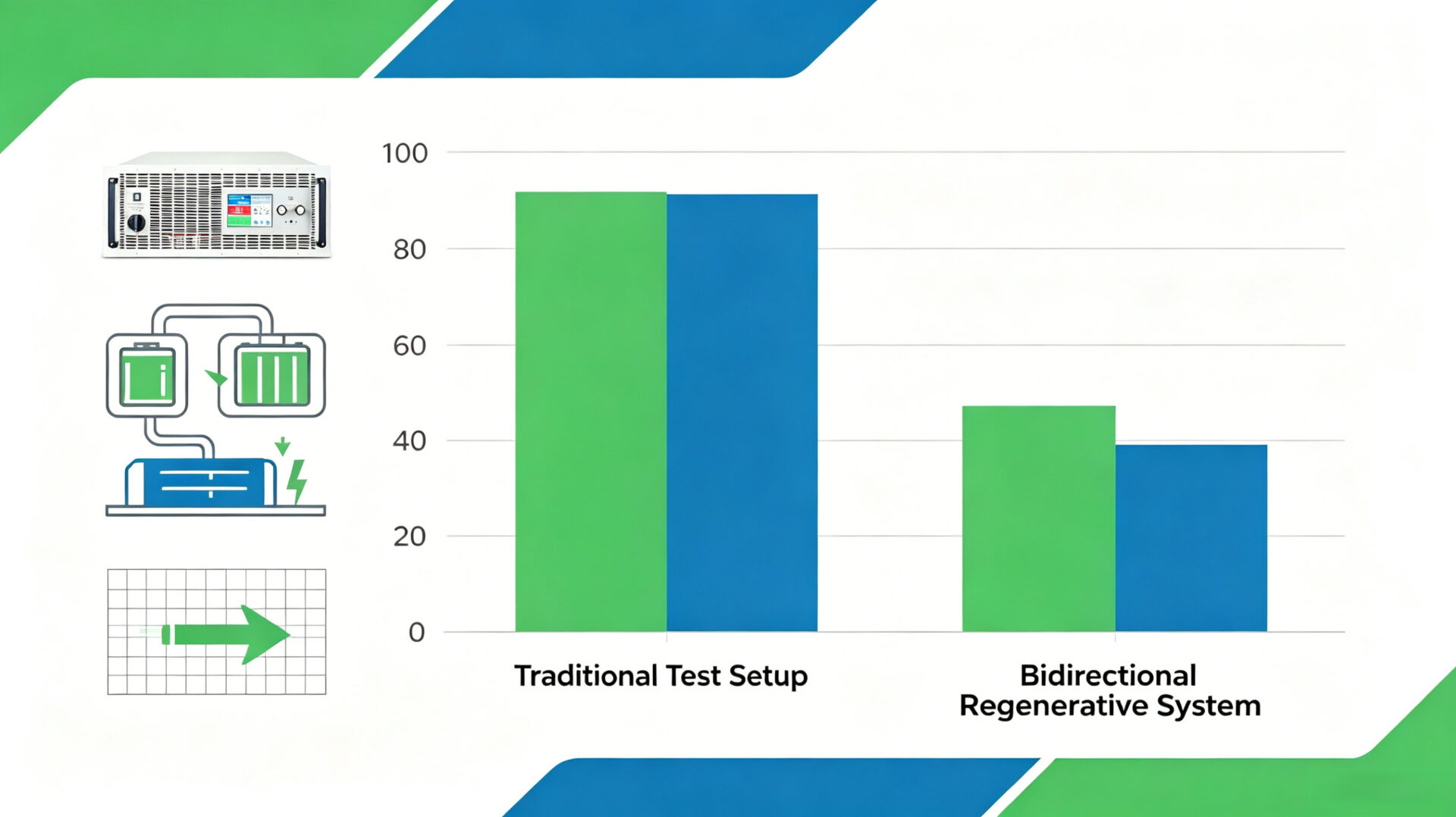
The energy efficiency of a bidirectional power supply measured not only by its conversion efficiency when sourcing power, but also by its ability to recover energy when sinking. The EA‑PSBE 10360‑240 achieves up to 95.8 % efficiency in sink mode. Which meaning that over 95 % of the energy absorbed from the device under test converted back to AC and returned to the grid. The remaining losses dissipated as heat within the instrument and removed by the cooling system.
This contrasts with a conventional electronic load. Which converts 100 % of the absorbed energy into heat and then requires additional air conditioning to remove that heat from the lab. The total cost of ownership improvement is substantial: a 30 kW test running continuously at full sink power saves approximately 262,800 kWh per year compared to a resistive load, assuming 8,760 hours of operation. At typical industrial electricity rates, this represents a significant operating cost reduction that often recovers the price difference between a unidirectional and bidirectional power supply within the first year of operation.
Autoranging output: flexible voltage and current in one unit
Conventional power supplies have a fixed maximum voltage and a fixed maximum current. To deliver full power, the load must draw exactly the maximum rated voltage at the maximum rated current. In practice, most test applications never operate at this exact point. A traditional 360 V, 80 A supply can deliver 28.8 kW only at 360 V. At lower voltages — for example, 200 V — the maximum current remains 80 A, limiting the output power to 16 kW.
The EA‑PSBE 10360‑240 uses an autoranging output stage that delivers full power (30 kW) over a wide voltage range — approximately 125 V to 360 V in this model — by increasing the available current as the voltage decreases. At 125 V, the instrument can source or sink up to 240 A, maintaining the full 30 kW rating. This flexibility means a single instrument can replace multiple fixed‑range power supplies. Which covering applications from low‑voltage, high‑current battery testing to high‑voltage, moderate‑current inverter testing. For additional details on space‑saving form factors, see the guide on 1U programmable DC power supply space‑saving setups.
Scalability: master‑slave parallel operation up to 1,920 kW
Individual test systems rarely stop at 30 kW. Electric vehicle battery pack testing, grid‑tied inverter validation, and large‑scale fuel cell characterization all require hundreds of kilowatts. The EA‑PSBE 10360‑240 supports master‑slave parallel operation of up to 64 units. Which creating a single synchronized system capable of delivering up to 1,920 kW (1.92 MW). The master unit controls the entire array, presenting a single interface to the operator and ensuring balanced current sharing across all units.
This scalability is particularly valuable for system integrators designing modular ATE architectures. A baseline system can start with two units providing 60 kW and expand incrementally as test requirements grow, without replacing existing hardware. The TPS 6U programmable DC power supplies also support this parallel configuration for applications where even higher power density per chassis is preferred.
Control, interfaces, and software
Integration into an ATE environment requires more than raw power. The EA‑PSBE 10360‑240 provides built‑in USB and Ethernet interfaces as standard, along with an isolated analog interface (DB15) for direct connection to PLCs or data acquisition systems. The digital regulation loop uses 16‑bit ADCs and DACs, providing precise voltage and current control with selectable regulation speed (Normal, Fast, Slow) to match the dynamic requirements of different test profiles.
For battery testing, TPS offers the EA‑Battery Simulator software, which enables the power supply to emulate the electrical behavior of different battery chemistries. For general ATE control, the EA‑Power Control software provides a comprehensive programming environment. Both packages support SCPI commands, enabling integration with LabVIEW, Python, MATLAB, and other test automation platforms. Optional interfaces include CAN, CANopen, Profibus, Profinet, EtherCAT, and Modbus TCP.
Compliance and safety
Safety and EMC compliance are critical for equipment installed in industrial and laboratory environments. The EA‑PSBE 10360‑240 is designed to meet the requirements of IEC 62368‑1 for audio/video, information, and communication technology equipment — the hazard‑based safety standard that has replaced IEC 60950‑1. EMC compliance is demonstrated against EN 55032 Class A (CISPR 32) for conducted and radiated emissions, and against the IEC 61000‑4‑x series for immunity. The active power factor correction circuit maintains a typical power factor of 0.99, complying with harmonic current emission limits defined in IEC 61000‑3‑2.
Protection functions include adjustable over‑voltage, over‑current, and over‑power protection, as well as over‑temperature shutdown. The instrument is eligible for CE marking, supporting the integrator’s own regulatory documentation. For the desktop form factor equivalent of this technology, see the EA‑PSI 9000 DT desktop programmable DC power supply.
Application scenarios: battery test, EV charger, fuel cell
The EA‑PSBE 10360‑240 is applied across several high‑growth test sectors:
- Battery testing and simulation: Charge/discharge cycling for cell, module, and pack testing, with energy recovery during discharge cycles. The autoranging output covers the wide voltage ranges needed for different pack configurations.
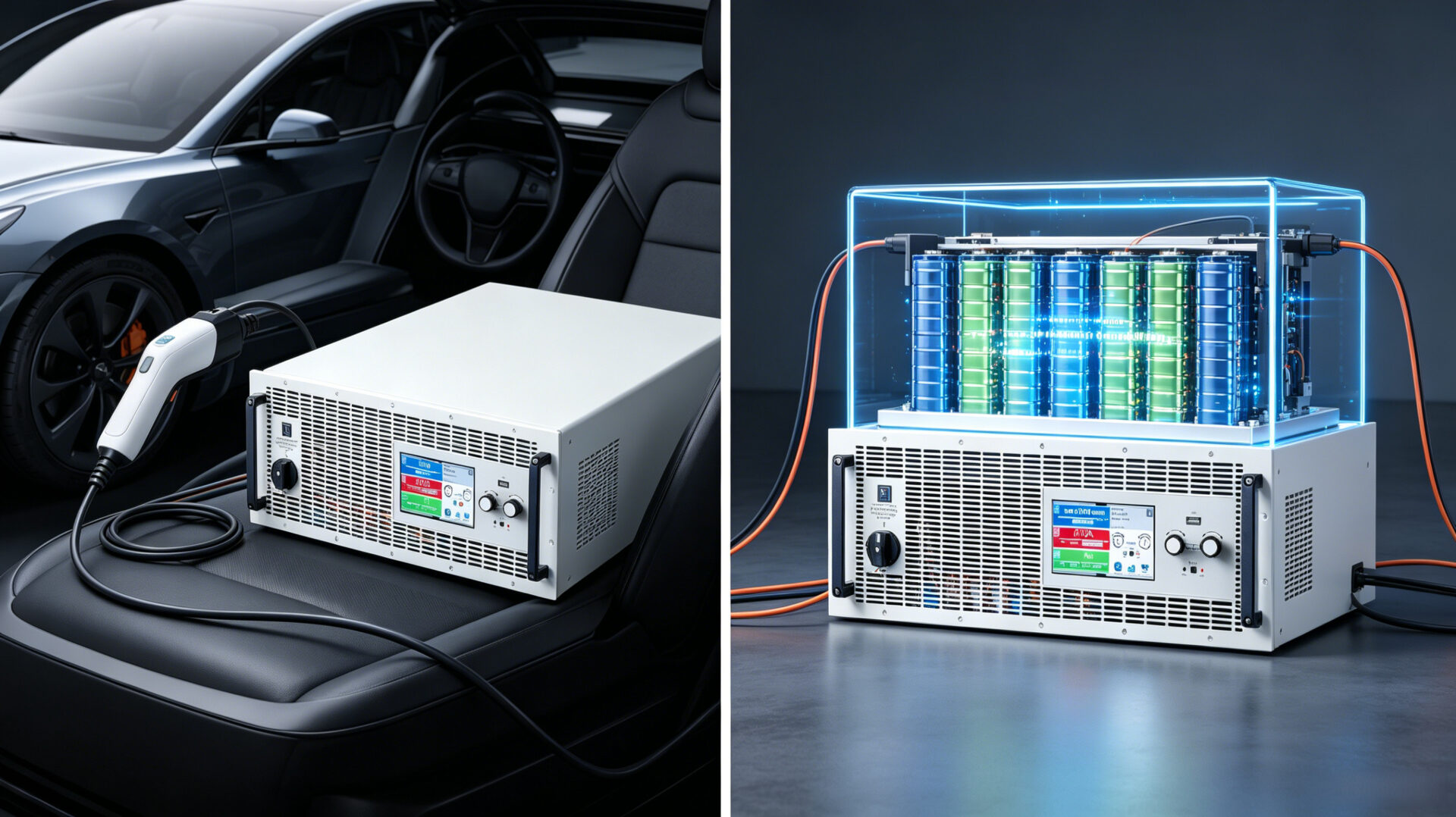
- Electric vehicle on‑board charger (OBC) test: Simulates the battery while testing the OBC, sinking the charger’s output power and regenerating it to the grid. Bidirectional capability also allows testing of vehicle‑to‑grid (V2G) functionality.
- Fuel cell characterization: Provides a controlled load for fuel cell stacks, measuring performance under varying load conditions while recovering the generated energy.
- Power supply and converter burn‑in: Applies a bidirectional load to a device under test, cycling between sourcing and sinking to stress‑test power electronics.
RFQ checklist
- Power and voltage requirements: Maximum power (kW), voltage range, and current range needed.
- Form factor: Desktop, 1U, 2U, 3U, 4U, or 6U rack‑mount.
- Bidirectional requirement: Is regenerative sinking required, or is sourcing only sufficient?
- Number of channels: Single channel or multi‑channel, with any parallel operation requirement.
- Interfaces: USB, Ethernet, CAN, Profibus, EtherCAT, or other.
- Software: EA‑Power Control, EA‑Battery Simulator, or custom integration.
- Quantities and schedule: Prototype, pilot, and series volumes.
Frequently Asked Questions
What is the difference between a bidirectional and a unidirectional programmable power supply?
A unidirectional supply can only source power. A bidirectional supply can both source and sink power, acting as an electronic load that regenerates energy back to the grid instead of dissipating it as heat.
How much energy can a bidirectional power supply save compared to a traditional setup?
In sink mode, up to 95.8 % of the absorbed energy is returned to the grid. A 30 kW system operating continuously at full sink power can save over 260,000 kWh per year compared to a resistive load, significantly reducing operating costs.
Can multiple TPS bidirectional power supplies be paralleled for higher power?
Yes. Up to 64 units of the EA‑PSBE 10360‑240 can be connected in a master‑slave configuration, providing up to 1,920 kW from a single synchronized system.
What communication interfaces are available?
Built‑in interfaces include USB and Ethernet. Optional fieldbus interfaces include CAN, CANopen, Profibus, Profinet, EtherCAT, and Modbus TCP. The isolated analog interface (DB15) allows direct analog control.
Where can I find the complete product range?
Visit the TPS programmable power supply category, which includes desktop, 1U, 2U, 3U, 4U, and 6U models.