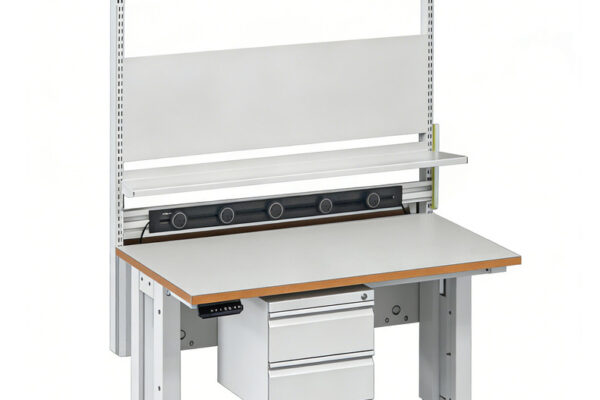


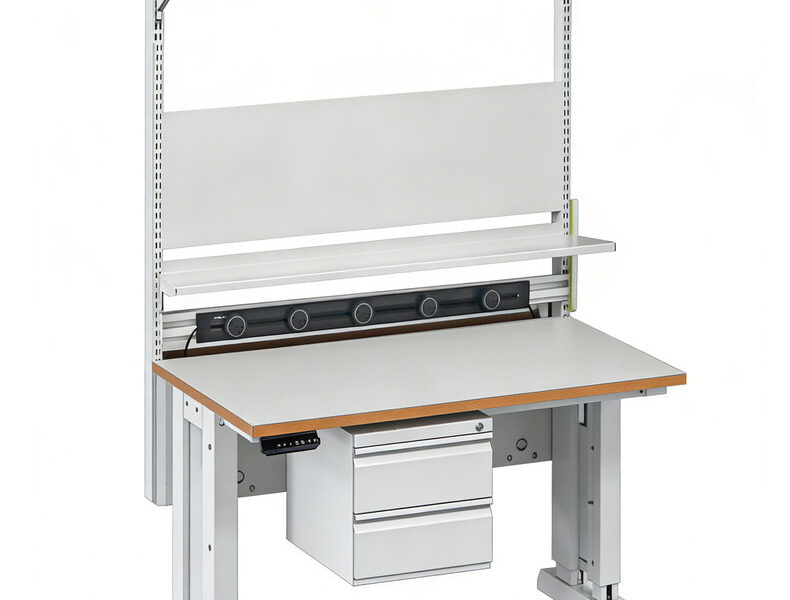
The TPS ESD workbench — available in fixed, height‑adjustable, and L‑shaped configurations. Which engineered to eliminate this risk at its source. By providing a fully compliant, static‑dissipative work surface with integrated grounding, robust mechanical construction. And compatibility with a full suite of ESD accessories, the TPS workbench transforms a generic assembly table into a certified ESD Protected Area (EPA) workstation. This article examines the TPS ESD workbench platform, with particular focus on the Lifting‑1890 model, and explains why it forms the foundation of reliable, static‑safe electronics manufacturing.
Why ESD workbenches are essential for electronics assembly and repair
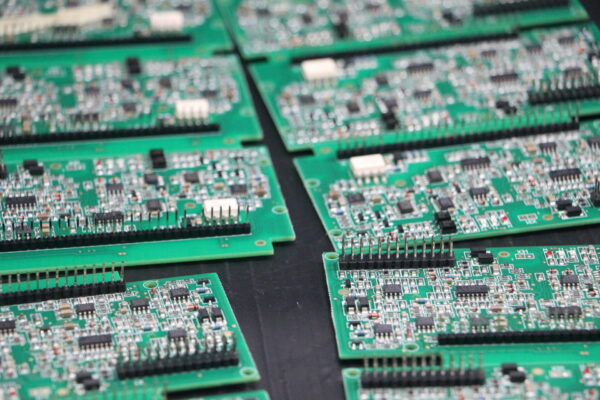
In an electronics assembly or repair environment, ESD-sensitive devices handled continuously. A printed circuit board populated with microcontrollers, FPGAs, and precision analog ICs can damaged by a discharge of just 100 V — far below the human perception threshold of approximately 3,000 V. Standard wooden or metal workbenches offer no controlled dissipation path, allowing static charge to accumulate on the surface, tools, and the operator’s body. When a charged operator picks up a PCB, the resulting discharge can destroy components instantly or, worse, cause latent damage that passes functional test but fails weeks later in the field.
A properly designed static‑safe assembly workstation prevents this by ensuring that all surfaces, tools, and personnel maintained at the same electrical potential, and that any generated charge bleeds to ground through a controlled resistance path. The TPS ESD workbench achieves this through a combination of a static‑dissipative HPL laminate work surface, a grounded steel frame, and integrated wrist strap grounding points. All verified to meet the requirements of IEC 61340‑5‑1. For a broader perspective on how ESD protection integrates into manufacturing quality systems, see the TPS services overview.
Grounding and surface resistance: IEC 61340‑5‑1 compliance
The defining characteristic of an ESD workbench is not its height or its shelving. It is the controlled electrical path from the work surface to facility ground. Without this path, the workbench is simply a table. IEC 61340‑5‑1, the international standard governing the protection of electronic devices from electrostatic phenomena, which defines the requirements for an ESD control program, including EPA workstation grounding and surface resistance limits.
Within an EPA, any surface on which ESD‑sensitive devices are placed must have a point‑to‑ground resistance (Rgp) below 1 × 10⁹ Ω and a point‑to‑point resistance (Rpp) within defined limits. The TPS ESD workbench achieves this through a 25 mm thick HPL laminate top with controlled resistivity and a dedicated grounding point on the steel frame. The grounding point connected to facility ground via a grounding cord with an integrated 1 MΩ current‑limiting resistor. A standard safety feature that protects personnel while maintaining the ground path. All TPS workstations — including the Lifting‑1890 — maintain stable ESD performance across a relative humidity range of 10 % to 60 %, which making them suitable for environments where humidity control limited.
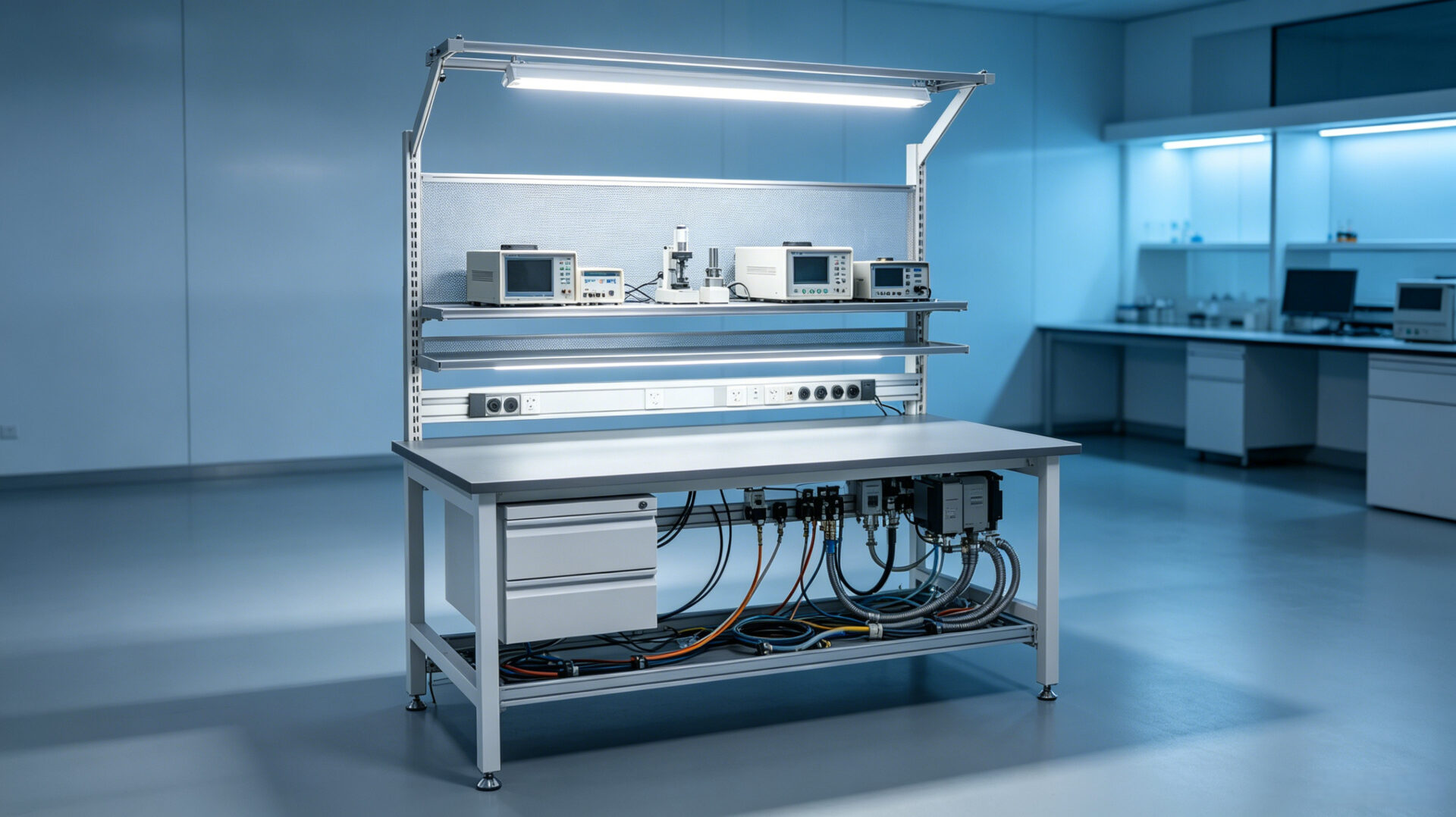
Work surface design: HPL laminate, durability, and ergonomics
The work surface is the physical interface between the technician and the task. The TPS ESD workbench uses a 25 mm thick HPL (High‑Pressure Laminate) top in RAL 7035 light gray. HPL manufactured by bonding multiple layers of phenolic resin‑impregnated kraft paper under high pressure and temperature. Which creating a material that is dense, dimensionally stable, and resistant to common chemicals including isopropyl alcohol, flux removers, and mild acids.
The ESD property achieved through the incorporation of conductive elements within the laminate structure. Which producing a dissipative surface with controlled resistivity. The 25 mm thickness provides the mechanical stiffness necessary to support heavy test equipment, power supplies, and PCB fixtures without sagging. While the smooth, non‑porous surface facilitates cleaning and prevents particulate contamination.
The Lifting‑1890 model features an electrically adjustable height range of 720 mm to 1,060 mm. Which allowing operators to alternate between seated and standing positions throughout a shift. This sit‑stand capability is not merely an ergonomic convenience; it directly reduces operator fatigue, improves concentration, and lowers the incidence of repetitive strain injuries that can affect soldering quality and throughput. The electric lifting mechanism rated for a uniform static load of 200 kg and a dynamic load of 100 kg. Which ensuring that the workbench remains stable even when fully loaded with instrumentation. For further details on work surface performance in electronics environments, see the TPS news and insights section.
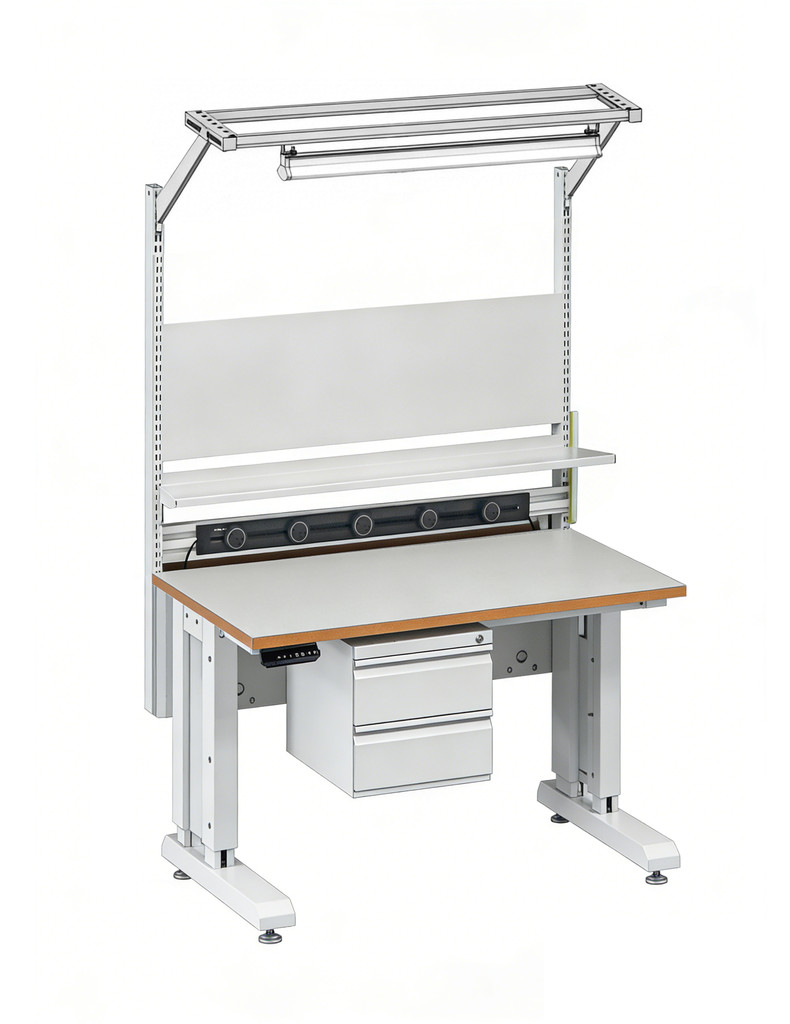
Product range overview: Fixed, Lifting, and L‑shaped ESD workstations
The TPS ESD workbench portfolio organized into three form factors, each designed for specific workflow requirements. All models share the same core features: IEC 61340‑5‑1 compliant static‑dissipative HPL laminate top, grounded steel frame with RAL 7035 powder coating, and full accessory compatibility.
Fixed ESD workstations
Fixed‑height workbenches are the foundation of the product line. Available in multiple size variants. Including Fixed‑1260 (1,220 × 600 × 760 mm), Fixed‑1575 (1,550 × 750 × 760 mm), and Fixed‑1890 (1,850 × 900 × 760 mm). These workbenches support a uniform static load of 500 kg. The heavy‑gauge steel frame provides corrosion resistance and structural rigidity suitable for permanent production line installations.
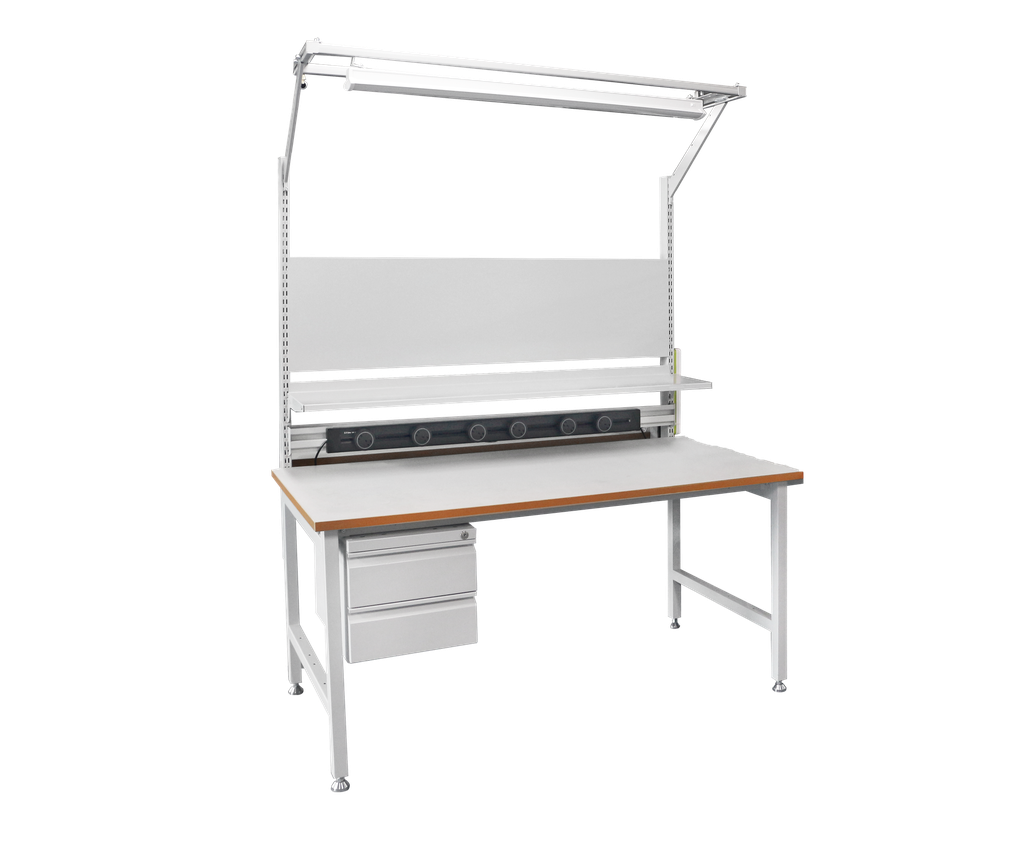
Lifting ESD workstations
Height‑adjustable models include the Lifting‑1260, Lifting‑1575, and the flagship Lifting‑1890. These workbenches feature an electric lifting mechanism with a height range of 720–1,060 mm, supporting a static load of 200 kg and a dynamic load of 100–130 kg depending on model. The Lifting‑1890, with its extra‑large 1,830 × 900 mm work surface, accommodates large test setups and multiple operators.
L‑shaped ESD workstations
For laboratories where floor space is at a premium, L‑shaped configurations maximize usable surface area within a compact footprint. Available in L‑shaped‑12060, L‑shaped‑15375, and L‑shaped‑18390, these workstations support a uniform static load of 500 kg and accommodate two operators simultaneously, making them ideal for collaborative repair and test environments.
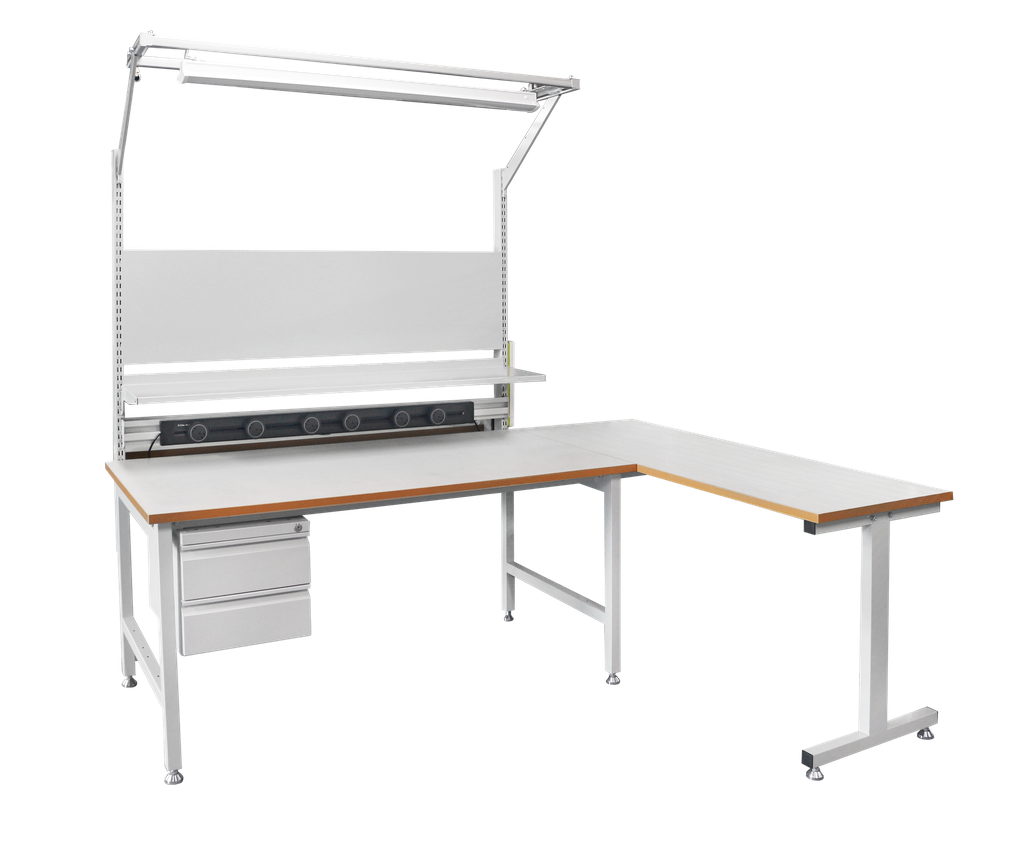
The complete product line is available on the TPS ESD workbench category page.
Accessory ecosystem: shelving, lighting, drawers, and power rails
A workbench without proper accessories forces operators to improvise — stacking instruments on unstable surfaces, draping cables across the work area, and working under inadequate lighting. TPS ESD workstations are pre‑engineered for compatibility with a full accessory ecosystem that transforms the workbench into a complete, organized workstation.
Standard accessories include antistatic steel shelving (649 mm depth) for instrument storage, a 40 W LED lamp (5,000 K white light) for detailed inspection and soldering, suspension drawers for tool and component storage, a back panel with tool holders, and a power rail (German‑type sockets, optional network and pneumatic interfaces) for centralized power distribution. All accessories share the RAL 7035 finish and are designed for quick‑disassembly, enabling reconfiguration as workflow requirements change.
Application scenarios: assembly, repair, and quality control
TPS ESD workbenches serve three primary roles in electronics manufacturing and service environments:
- Electronics assembly: In PCB assembly lines, the workbench provides a static‑safe surface for manual placement, soldering, and inspection. The Lifting‑1890’s extra‑large surface accommodates multiple PCBs and assembly fixtures, while the height adjustability allows operators to optimize their posture for precision soldering tasks.
- Repair and rework stations: For repair technicians handling returned units, the workbench ensures that ESD‑sensitive components are protected during disassembly, diagnosis, and reassembly. The integrated wrist strap grounding point and dissipative surface prevent charge buildup during handling.
- Quality control and test stations: In QC laboratories, the workbench supports test instruments, oscilloscopes, and probes in a grounded environment, eliminating measurement errors caused by static interference. The accessory shelving organizes test leads and adapters, reducing clutter and setup time.
RFQ checklist for ESD workbenches
- Workstation type: Fixed, height‑adjustable (Lifting), or L‑shaped configuration.
- Dimensions: Required work surface dimensions (L × W × H in mm) or select standard size.
- Load requirements: Maximum static and dynamic load per workstation.
- Accessories: Antistatic steel shelf, LED lamp, suspension drawer, back panel, power rail, ESD chair.
- Surface finish: Standard RAL 7035 HPL laminate top or custom color requirements.
- Compliance documentation: IEC 61340‑5‑1 compliance certificate, surface resistance test reports.
- Quantity and schedule: Number of workstations and delivery timeline.
Frequently Asked Questions
What standard does the TPS ESD workbench comply with?
TPS ESD workstations are fully compliant with IEC 61340‑5‑1:2016, the international standard for the protection of electronic devices from electrostatic phenomena. Compliance is verified through point‑to‑point and point‑to‑ground resistance measurements, stable across 10 % to 60 % relative humidity.
What is the difference between the Fixed, Lifting, and L‑shaped ESD workstations?
Fixed workstations provide a permanent, 760 mm high work surface with a 500 kg static load capacity. Lifting workstations feature electric height adjustment (720–1,060 mm) for sit‑stand ergonomics, with a 200 kg static load. L‑shaped configurations maximize space for dual‑operator workflows, also with a 500 kg static load.
Can the TPS ESD workbench support heavy test equipment?
Yes. The Lifting‑1890 supports a uniform static load of 200 kg and a dynamic load of 100 kg, sufficient for multiple oscilloscopes, power supplies, and test fixtures. Fixed models support up to 500 kg static load.
What accessories are compatible with the TPS ESD workbench?
A full accessory ecosystem is available, including antistatic steel shelves, 40 W LED lamps, suspension drawers, back panels with tool holders, power rails with German‑type sockets, and ESD chairs. All accessories are designed for quick‑disassembly and tool‑free reconfiguration.
Where can I find the complete product specifications?
Visit the TPS ESD workbench category page or contact TPS sales through the TPS services page for detailed datasheets.