

For system integrators, panel builders, and procurement teams in the battery energy storage industry, sheet metal fabrication is not simply about enclosing batteries—it is about ensuring structural integrity under multi-ton loads and containing thermal runaway events that could escalate into catastrophic fires. The mechanical structure of a BESS container must support hundreds of kilograms of lithium-ion battery modules while meeting stringent fire resistance requirements.
TPS Elektronik’s custom sheet metal fabrication services for BESS container internal racks and busbar enclosures is built to address these challenges: heavy-gauge steel construction for high load capacity, fire-rated enclosure design per UL 9540 and NFPA 855, and precision fabrication that ensures dimensional accuracy—from prototype to series production.
1. The BESS Structural Challenge: Load, Fire, and Environmental Demands
Battery Energy Storage Systems (BESS) are the backbone of the global energy transition. Utility-scale BESS installations can exceed 100 MWh of storage capacity, with containerized systems housing thousands of lithium-ion battery modules in a single footprint. Each module weighs between 30 and 60 kg, and a fully populated 40-foot container can support over 60 metric tons of batteries.
For system integrators and electrical engineers, the mechanical design of a BESS container presents three interconnected challenges:
- High load capacity: Battery racks must support the static weight of battery modules while maintaining structural integrity under seismic and transportation loads
- Fire resistance: Enclosures must contain thermal runaway events and prevent fire propagation between battery modules, compartments, and adjacent containers
- Environmental durability: Outdoor BESS installations require corrosion-resistant materials and IP-rated sealing against moisture, dust, and extreme temperatures
The battery rack is the primary structural element—a multi-tier steel framework that supports battery modules in a vertical arrangement. Each tier must provide stable, level mounting surfaces while allowing access for cable routing, thermal management, and maintenance. The rack design must also accommodate the thermal expansion of battery modules during charging and discharging cycles.
TPS Elektronik’s custom sheet metal fabrication services addresses these challenges through heavy-gauge steel construction, precision welding, and modular design that scales from prototype to production volumes.
2. Battery Racks: High Load Capacity and Modular Design
Battery racks are the backbone of any BESS container. They must support the static weight of battery modules while accommodating the dynamic loads of seismic events and transportation. Typical heavy-duty battery rack sheet metal construction uses 12-gauge to 16-gauge steel, with welded frames that distribute loads across the container floor. Each rack tier must provide stable, level mounting surfaces—typically within ±1 mm flatness—to ensure proper battery module alignment and connection.
For modular battery rack sheet metal fabrication, the design must accommodate:
- Adjustable tier spacing: Different battery module heights require flexible rack configurations
- Cable management channels: Power and signal cables must be routed without interfering with module installation
- Thermal management integration: Airflow paths for cooling and heating must be maintained
- Seismic restraints: Racks must remain stable under seismic loads per applicable building codes
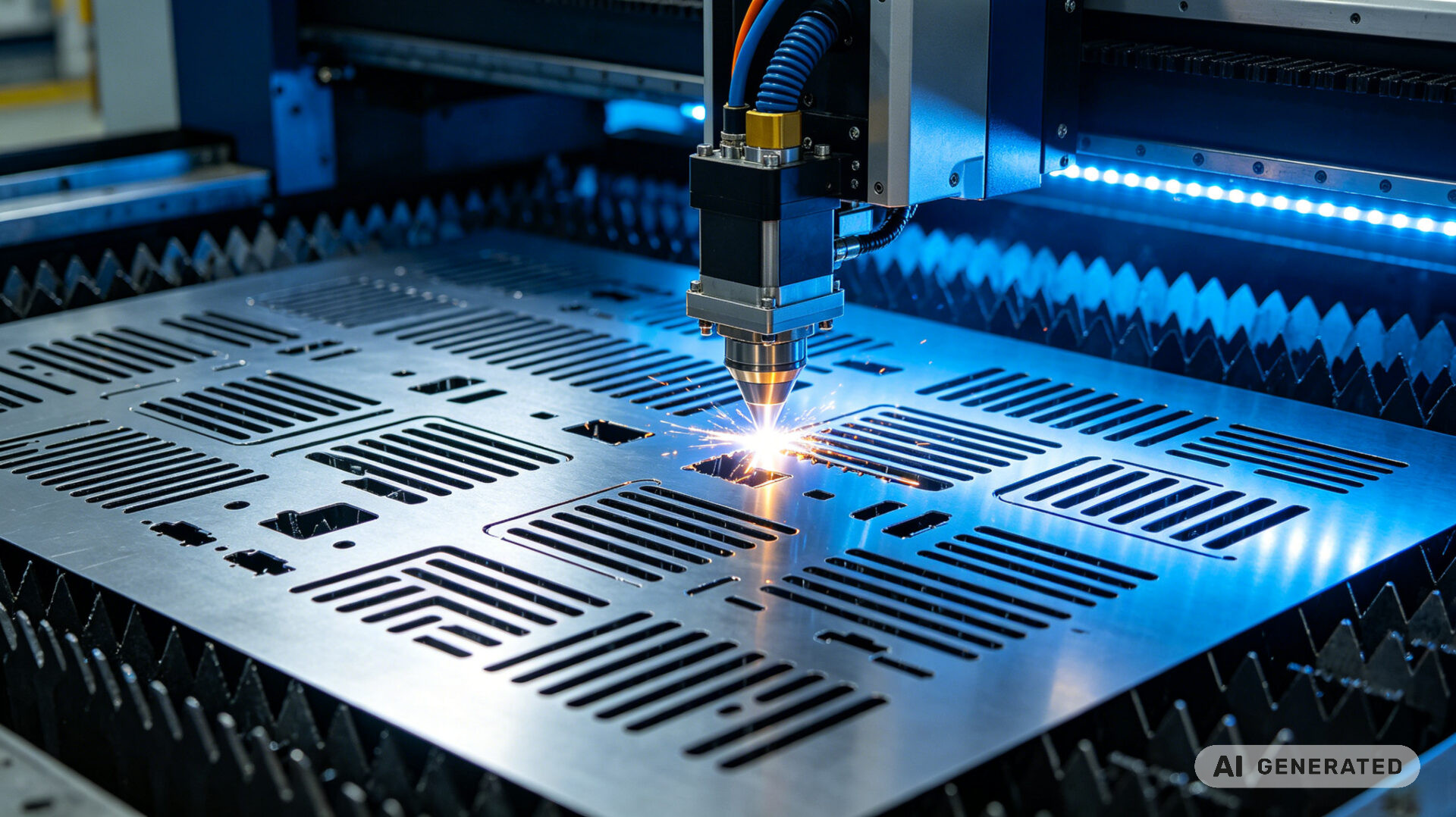
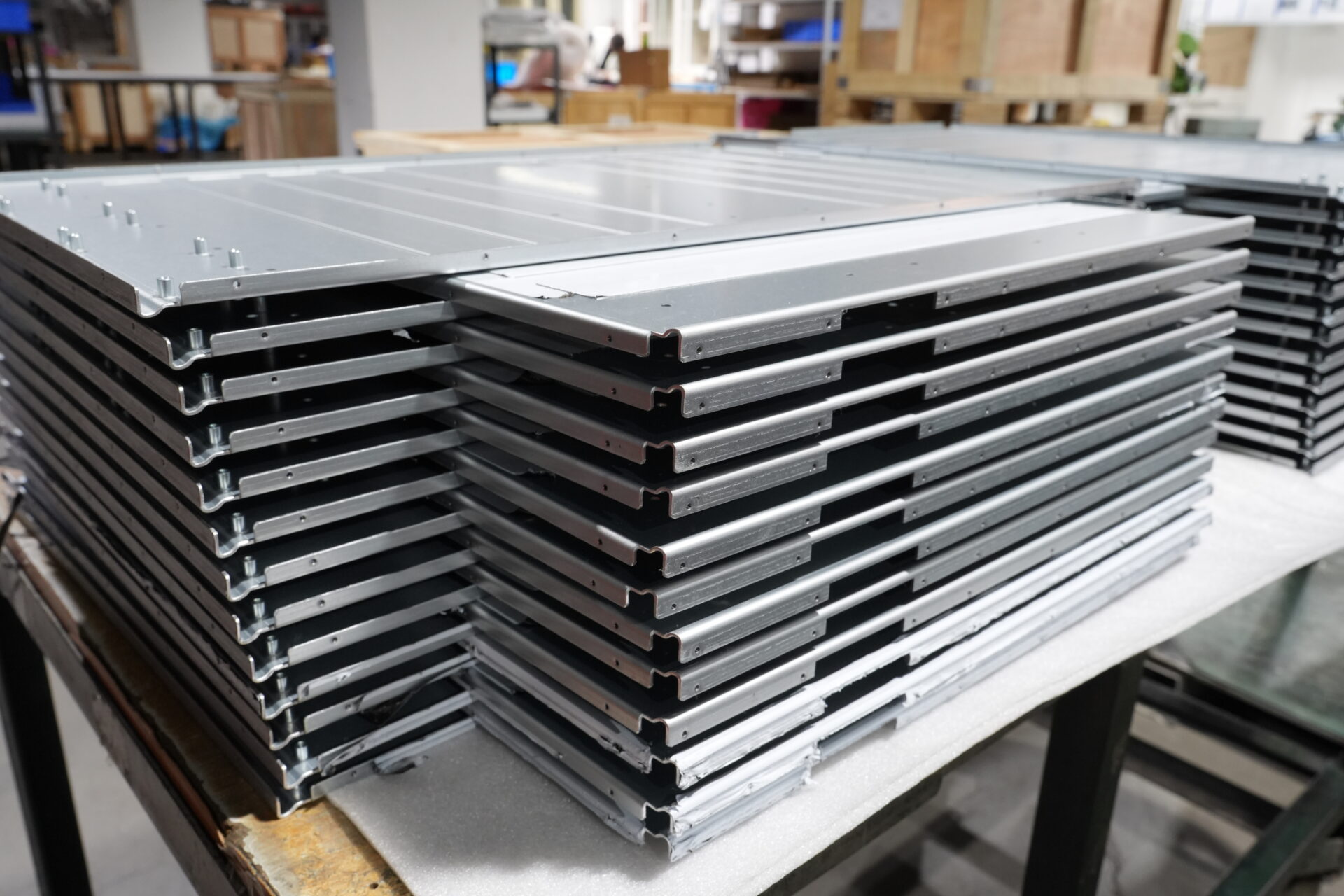
TPS’s custom sheet metal fabrication services include precision laser cutting, CNC press brake bending, and robotic welding—enabling complex rack geometries with tight dimensional tolerances. The integration of sheet metal fabrication with broader EMS capabilities ensures that mechanical structures are designed in coordination with electrical integration requirements, including grounding paths, cable entry points, and connector access.
3. Busbar Enclosures: Fire Resistance and Electrical Safety
DC busbars are the electrical backbone of a BESS container, carrying hundreds or thousands of amperes of DC current between battery racks and the power conversion system. The busbar enclosure must protect these high-current conductors from physical damage, moisture ingress, and accidental contact—while also containing any electrical faults that could lead to arcing or fire.
For busbar enclosure sheet metal fabrication, the requirements are demanding:
- Fire-rated construction: Enclosures must resist fire propagation per UL 9540 and NFPA 855 requirements
- Electrical clearance and creepage: Sufficient distance between conductors and grounded enclosure walls
- IP-rated sealing: Protection against moisture and dust ingress for outdoor installations
- Thermal management: Enclosure design must allow heat dissipation from busbars
- Accessibility: Maintenance access for inspection and cleaning of busbar connections
TPS’s energy storage container fabrication capability includes busbar enclosures fabricated from galvanized steel or aluminum, with precision-formed panels that maintain dimensional accuracy across large surface areas. Enclosures can be powder-coated for corrosion resistance and include fire-rated insulation where required.
TPS’s custom sheet metal fabrication services delivers enclosures that meet the structural and safety requirements of BESS applications—from small-scale commercial systems to utility-scale containerized installations.
4. Regulatory Compliance: UL 9540, UL 9540A, and NFPA 855
BESS installations are subject to rigorous safety standards that directly impact sheet metal enclosure design. Compliance with these standards is not optional—it is a prerequisite for market access and insurability.
UL 9540 is the Standard for Energy Storage Systems and Equipment, covering electrical, electrochemical, and mechanical safety requirements for ESS. It requires that enclosures have the strength and rigidity to resist physical abuses during transport, installation, and intended use. For BESS, the enclosure shall be evaluated to UL 9540A Unit Level testing and meet the unit level performance criteria.
UL 9540A is the Standard Test Method for Evaluating Thermal Runaway Fire Propagation in Battery Energy Storage Systems. It is the American and Canadian national standard for assessing fire propagation related to thermal runaway events. UL 9540A is the only fire and explosion testing method referenced in the 2026 edition of NFPA 855.
NFPA 855, the Standard for the Installation of Stationary Energy Storage Systems, sets minimum safety requirements for separation distances, fire protection, and emergency response. It requires that ESS enclosures be constructed from noncombustible materials and adhere to specific dimensional limits. Fire testing in accordance with UL 9540A and large-scale fire testing is required on representative ESS. Equipment enclosures shall have a fire rating of at least two hours.
For fire-rated sheet metal enclosure BESS applications, compliance with these standards drives design decisions:
- Material selection: Noncombustible steel or aluminum with fire-rated insulation
- Fire barriers: Rated fire partitions separating battery compartments
- Venting: Deflagration venting per NFPA 68 requirements
- Sealing: Fire-rated penetrations and intumescent seals
TPS Elektronik’s BESS sheet metal fabrication service includes design guidance for UL 9540 and NFPA 855 compliance, with documentation packages that support system certification.
5. TPS Custom Sheet Metal Fabrication Capabilities for BESS
TPS Elektronik’s custom sheet metal fabrication service for BESS applications combines precision manufacturing, material expertise, and regulatory compliance in a single integrated workflow.
Manufacturing Capabilities:
- CNC laser cutting: Precision cutting of steel, stainless steel, and aluminum up to 20mm thickness
- CNC press brake bending: Complex geometries with tight dimensional tolerances
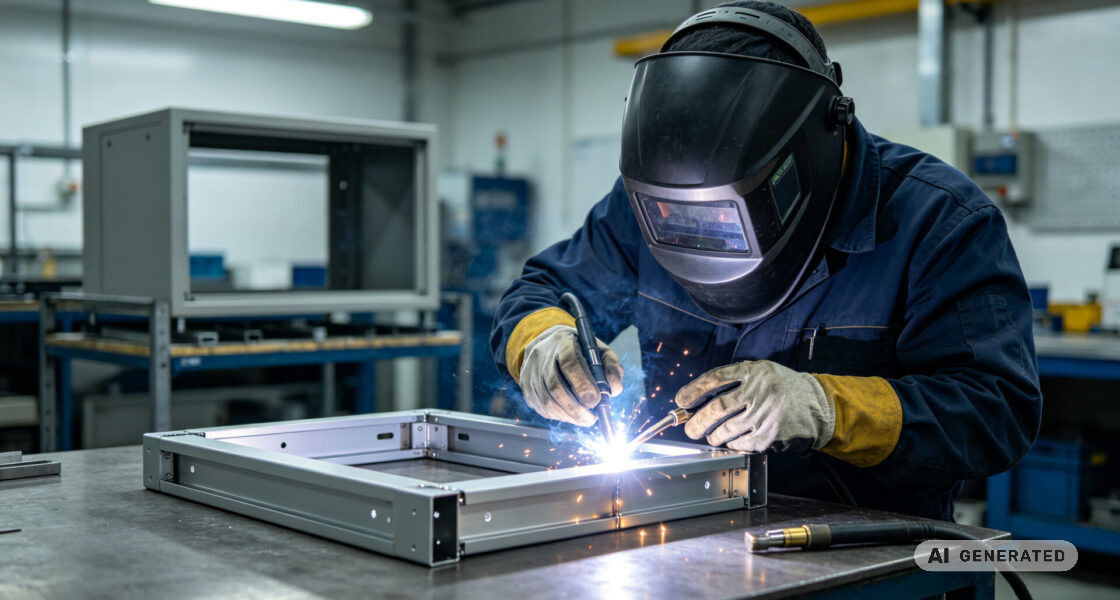
- Robotic and manual welding: MIG and TIG welding for structural integrity
- Hardware insertion and assembly: Threaded inserts, rivet nuts, and fasteners
- Surface finishing: Powder coating, anodizing, and galvanizing for corrosion resistance
BESS-Specific Capabilities:
- Heavy-gauge steel fabrication: 12-gauge to 1/4-inch steel for high load capacity
- Fire-rated enclosure design: 1-hour and 2-hour fire-rated construction per UL 9540 and NFPA 855
- Modular rack systems: Configurable battery racks for different module sizes and capacities
- Busbar enclosures: Precision-formed enclosures for DC power distribution
- Container integration: Racks and enclosures designed for 20-ft and 40-ft ISO container footprints
Engineering and Design Support:
- DFM feedback: Design for manufacturability optimization during the design phase
- Structural FEA: Finite Element Analysis for load capacity and seismic performance
- Material selection guidance: Steel gauge, alloy, and finish recommendations
- Tolerance management: Dimensional control for rack alignment and module fit
Quality and Compliance:
- ISO 9001 and IATF 16949: Quality management systems
- First Article Inspection (FAI): Comprehensive dimensional reports
- Material certificates: Full traceability of material provenance
- PPAP: Production Part Approval Process available on request
TPS supports both prototype and production volumes, with scalable manufacturing capacity for BESS programs of any size. TPS’s custom sheet metal fabrication service is integrated with broader EMS capabilities—including cable assembly, PCB assembly, and system integration—reducing supply chain complexity for system integrators and procurement teams.