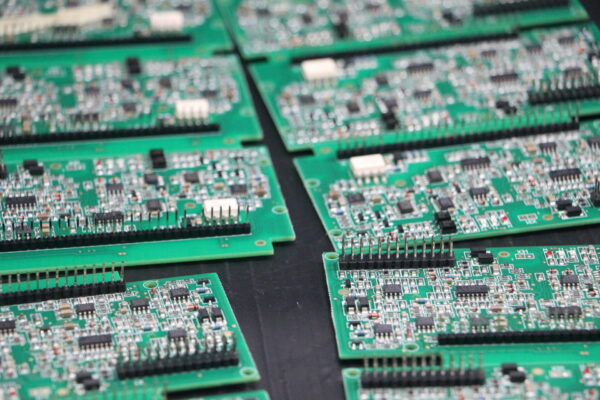


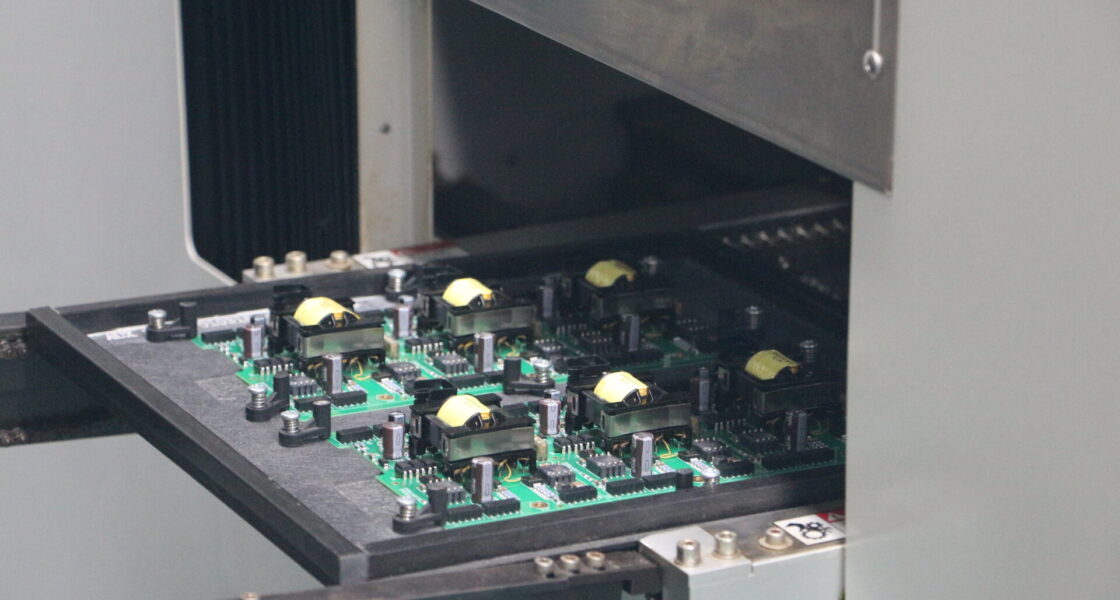
System integrators, panel builders, and procurement teams rarely encounter challenges because of the PCB design itself. More often, delays and additional costs arise when the selected assembly partner cannot reliably place 01005 passive components, solder 0.5 mm pitch BGAs with consistent quality, or manage the thermal requirements of a 16-layer rigid-flex PCB. The result may be a prototype that performs well during bench testing but fails under thermal cycling, or a pilot build that cannot transition smoothly into series production without extensive process requalification.
TPS Elektronik’s PCB assembly service is designed to support complex electronic manufacturing from prototype through production. From Design for Manufacturability (DFM) review and component sourcing to SMT assembly, X-ray inspection, conformal coating, and functional testing, TPS provides a single manufacturing partner for complex HDI, multilayer, and rigid-flex assemblies. Manufacturing processes are documented according to IPC-A-610 Class 2 or Class 3 requirements and supported by certifications including ISO 9001, ISO 13485, and IATF 16949.
1. Why Complex PCB Assembly Requires More Than Standard SMT
A conventional SMT production line assembling 4-layer FR-4 PCBs with 0603 passive components and QFP devices operates within relatively wide process tolerances. The same equipment cannot reliably assemble a 12-layer HDI PCB populated with 01005 components, blind microvias, and 0.4 mm pitch BGAs without significant adjustments to stencil design, solder paste selection, reflow profiling, and inspection methods. As board density increases, the manufacturing process window becomes considerably narrower.
This is where differences between PCB assembly providers become apparent. A supplier advertising BGA capability may not perform X-ray inspection of hidden solder joints. Likewise, experience with rigid-flex PCBs requires dedicated carrier fixtures to minimize board deformation during reflow. For procurement teams and system integrators evaluating manufacturing partners, these differences may affect first-pass yield, production consistency, lead times, and long-term product reliability.
TPS Elektronik addresses these requirements through an integrated Electronic Manufacturing Services (EMS) approach. PCB assembly is supported by component sourcing, DFM engineering, mechanical integration, and final system testing rather than being treated as an isolated manufacturing step. For a broader overview of these capabilities, see the Electronic Manufacturing Services Complete Guide.
2. HDI and Multilayer Assembly: Blind Vias, Microvias, and Thermal Management
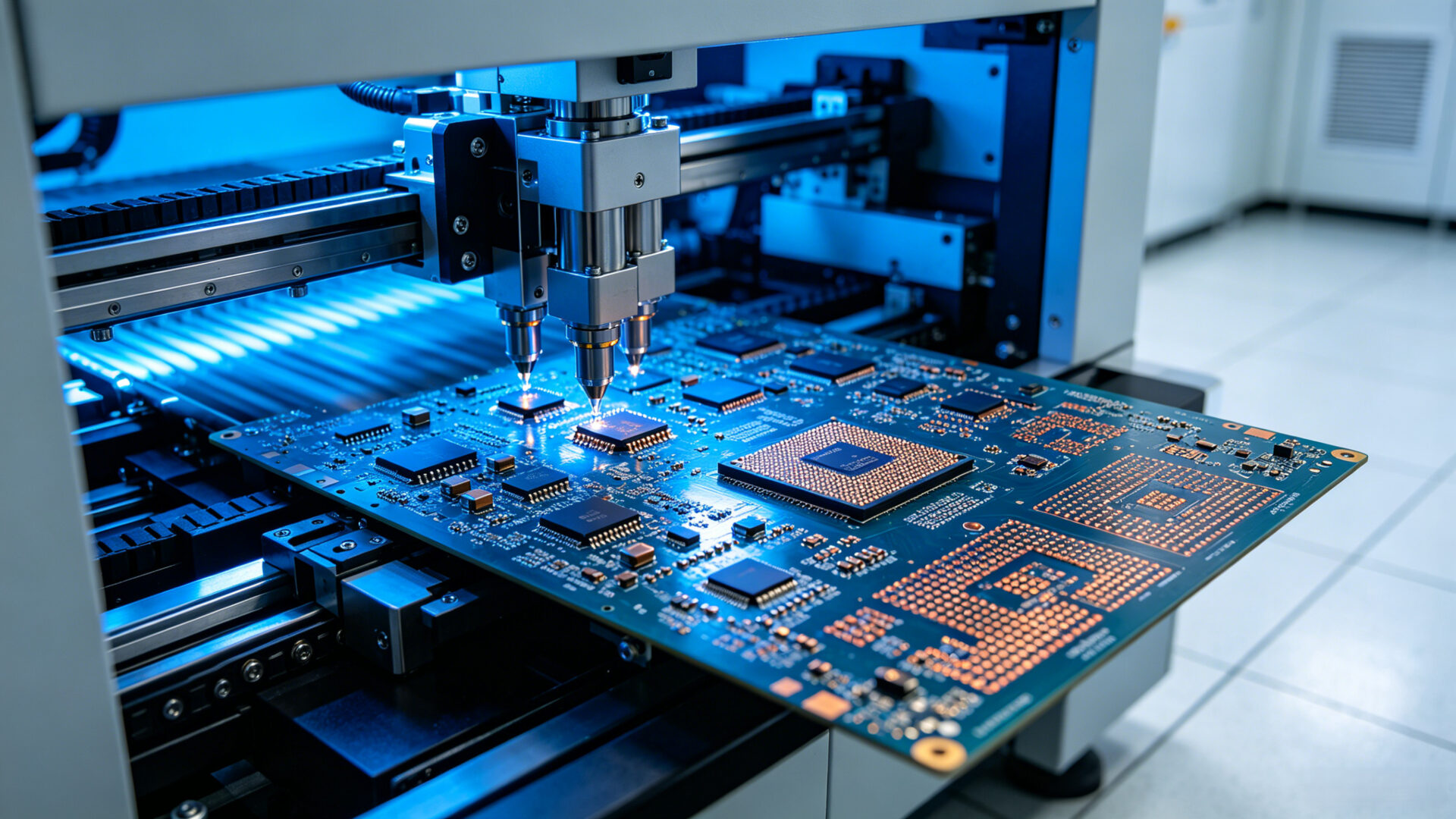
High-Density Interconnect (HDI) PCBs use finer conductor spacing, higher routing density, smaller vias, and increased interconnection density compared with conventional PCB designs. Laser-drilled microvias—typically 0.1 mm or smaller—connect the outer layers to adjacent internal layers, while buried vias provide additional routing flexibility. These designs require highly controlled assembly processes due to reduced pad sizes, tighter solder paste tolerances, and demanding thermal profiles.
TPS supports HDI assembly through multiple process controls, including:
- Solder Paste Inspection (SPI) to verify paste volume and deposition accuracy on fine-pitch pads
- Stepped stencil designs where different stencil thicknesses are required on the same PCB
- Thermal profiling using thermocouples attached to production assemblies
- Process-specific reflow profiles based on PCB layer count and thermal mass
These controls help maintain solder joint consistency while avoiding excessive thermal stress on components.
For additional background on PCB assembly processes and component integration, see the Electronic Components PCB Guide.
3. Rigid-Flex Assembly: Fixturing, Stiffeners, and Reflow Control
Rigid-flex PCBs combine rigid FR-4 sections with flexible polyimide circuits within a single assembly, reducing the need for connectors and cable harnesses. While this architecture can improve packaging efficiency and reduce interconnections, it introduces additional manufacturing challenges.
Flexible sections require stable mechanical support during solder paste printing, component placement, and reflow. Without proper fixturing, thermal expansion differences between rigid and flexible materials may cause board warpage or placement inaccuracies.
TPS manufactures rigid-flex assemblies using dedicated carrier fixtures designed specifically for each PCB layout. These fixtures support flexible sections throughout the SMT process and help maintain board flatness during:
- Solder paste printing
- Component placement
- Reflow soldering
Where required, stiffeners are incorporated to provide additional mechanical support around connectors and high-stress regions. Reflow profiles are also adjusted to accommodate the lower thermal mass of flexible substrates while achieving proper solder wetting across rigid sections.
For additional information, refer to the guide on SMD PCB Assembly and THT Assembly for Industrial Manufacturing.
4. BGA and Microelectronics Capability: µBGA, QFN, and 01005 Placement
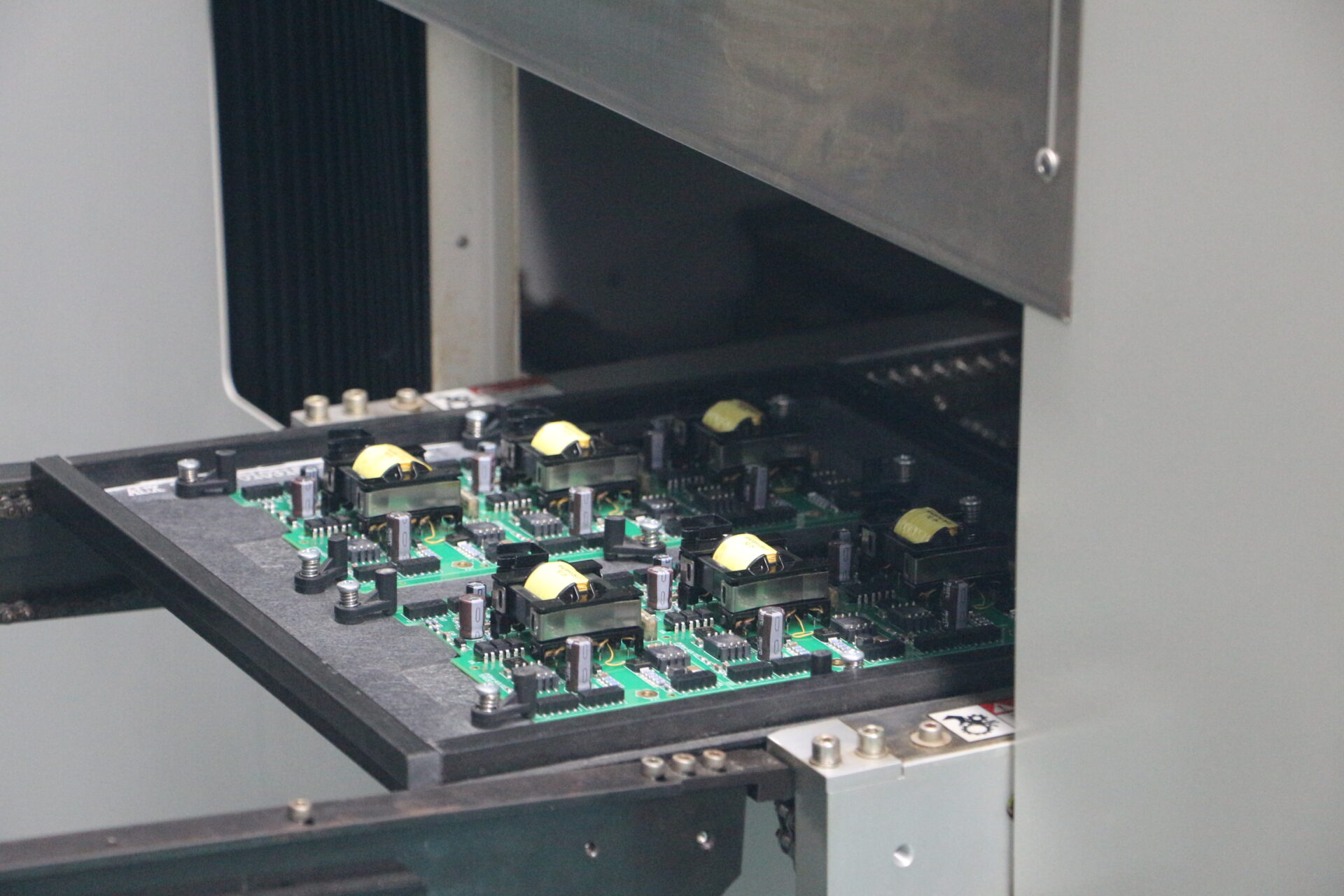
Ball Grid Array (BGA) packages provide high connection density within a compact footprint. A 0.4 mm pitch µBGA containing hundreds of solder balls offers minimal tolerance for placement or soldering errors. Similarly, QFN packages rely on hidden thermal pads that require carefully controlled solder coverage to achieve effective thermal transfer.
TPS supports these package technologies through a combination of process control and inspection:
- SPI verifies solder paste volume before placement.
- Nitrogen reflow supports consistent solder wetting while reducing oxidation.
- 3D Automated Optical Inspection (AOI) evaluates visible solder joints.
- X-ray inspection analyzes hidden BGA solder joints for voiding, bridging, and open connections.
- Thermal coupons or sacrificial boards may be used to validate reflow profiles for demanding applications.
At the opposite end of the component size range, 01005 passive components—approximately 0.4 mm × 0.2 mm—require extremely accurate placement. TPS SMT equipment supports these devices using vision-assisted alignment systems and calibrated placement nozzles.
For additional information on inspection methods, see the EMS PCB Assembly: Rapid Prototyping to Medical-Grade Production Guide.
5. DFM Integration: Identifying Manufacturing Issues Before Stencil Release
Design for Manufacturability (DFM) is often one of the most effective opportunities to reduce manufacturing issues before production begins. Missing fiducials, insufficient solder mask clearances, or inadequate spacing between components and board edges may lead to production defects that are significantly more expensive to address after stencil fabrication.
As part of every PCB assembly quotation, TPS reviews:
- Gerber data
- Bill of Materials (BOM)
- Pick-and-place files
- Assembly drawings
Typical DFM recommendations include:
- Pad geometry optimization
- Solder mask clearance verification
- Component-to-edge clearance review
- Thermal pad via evaluation for BGA and QFN devices
- Tooling accessibility assessment
The resulting DFM report allows design teams to address manufacturability concerns before production tooling is released.
For additional information, see the PCB Assembly Services EMS Guide.

6. Quality Assurance and Testing: SPI, AOI, X-Ray, ICT, and Functional Test
Visual inspection alone cannot evaluate hidden BGA solder joints or detect defects beneath large components. For this reason, TPS applies multiple inspection and test stages throughout production.
The inspection sequence typically includes:
- Solder Paste Inspection (SPI) to measure paste height, volume, and alignment
- Automated Optical Inspection (AOI) to verify component placement, polarity, and visible solder joints
- X-ray inspection for BGAs, QFN thermal pads, and other hidden connections
- In-Circuit Test (ICT) for high-volume production
- Flying probe testing for prototypes and lower production volumes
- Functional testing (FCT) using customer-specific fixtures and software where applicable
Inspection and test results are documented as part of the manufacturing records supplied with each shipment.
7. Conformal Coating and Environmental Protection
Electronic assemblies used in industrial, automotive, mining, marine, or outdoor environments may be exposed to moisture, corrosive atmospheres, conductive dust, and other environmental contaminants.
TPS offers automated selective conformal coating using acrylic, silicone, or polyurethane materials. Robotic application equipment coats designated PCB regions while masking connectors, test points, and other components that must remain uncoated.
Compared with manual coating methods, selective coating provides:
- More consistent coating application
- Improved edge definition
- Reduced manual processing
- Controlled coating thickness
Coating thickness is verified through measurement, while UV inspection confirms coverage of designated coated areas.
8. Certifications and Compliance
For procurement teams evaluating PCB assembly providers, recognized certifications provide evidence of established manufacturing processes and quality management systems.
TPS Elektronik supports PCB assembly through the following standards:
- IPC-A-610 — Acceptance criteria for electronic assemblies. Production is available to Class 2 or Class 3 requirements as specified by the customer.
- J-STD-001 — Requirements for soldered electrical and electronic assemblies.
- ISO 9001 — Quality management system certification.
- ISO 13485 — Medical device quality management system certification supporting traceability and documentation requirements.
- IATF 16949 — Automotive quality management system certification supporting automotive manufacturing processes.
Where applicable, assembled products may also support compliance activities for standards such as IEC 62368-1 through documented creepage and clearance verification. Final product compliance remains the responsibility of the equipment manufacturer.
For additional information, see the TPS PCB Assembly Service overview.
9. RFQ Checklist for Complex PCB Assembly
To prepare an accurate quotation, TPS recommends including the following information:
Design Files
- Gerber (RS-274X or ODB++)
- Bill of Materials with approved alternatives
- Pick-and-place (centroid) files
- Assembly drawings
- Test requirements
PCB Specification
- Layer count
- PCB thickness
- Surface finish (ENIG, HASL, OSP)
- Minimum trace/space
- Via structure (through, blind, buried, microvia)
- Rigid-flex construction, if applicable
Component Information
- Package types (BGA, QFN, QFP, 01005, etc.)
- Fine-pitch devices
- Moisture Sensitivity Level (MSL)
- ESD handling requirements
Production Requirements
- Prototype quantity
- Pilot production volume
- Series production volume
- Target delivery schedule
Quality Requirements
- IPC-A-610 Class 2 or Class 3
- Customer-specific acceptance criteria
- ICT, flying probe, or functional testing
- X-ray inspection requirements
- Environmental stress screening, if required
Conformal Coating
- Coating material
- Areas to coat
- Areas to mask
Documentation
- First Article Inspection (FAI)
- Certificate of Conformance (CoC)
- Material certifications
- PPAP documentation, if required
Sourcing Model
- Turnkey assembly
- Consigned components
10. FAQ
What is the difference between IPC-A-610 Class 2 and Class 3?
Class 2 applies to dedicated-service electronic products where continued performance is expected and extended service life is desirable. Class 3 applies to high-performance or harsh-environment products where continuous operation is critical and downtime cannot readily be tolerated. Class 3 includes more stringent acceptance criteria for solder joints and other assembly characteristics.
Can TPS assemble boards containing both SMT and through-hole components?
Yes. TPS supports mixed-technology assemblies that combine SMT and THT components. Typical production begins with SMT assembly and reflow, followed by through-hole insertion and selective or wave soldering, with inspection performed after each soldering stage.
Does TPS support prototypes as well as volume production?
Yes. TPS supports prototype builds, pilot production, and series manufacturing. Prototype assemblies benefit from DFM feedback and production-oriented manufacturing processes, helping support a smoother transition to higher production volumes.
Which file formats are accepted?
TPS accepts:
- Gerber RS-274X
- ODB++
- Pick-and-place data in CSV or TXT format
- BOM in Excel or CSV format
- Assembly drawings in PDF format
Native CAD files may also be reviewed for DFM analysis where appropriate.
Which certifications does TPS maintain?
TPS maintains certifications including ISO 9001, ISO 13485, and IATF 16949. Assembly processes are performed according to IPC-A-610 Class 2/Class 3 acceptance criteria and J-STD-001 requirements.
Where can I learn more about TPS PCB assembly capabilities?
Additional information is available on the TPS PCB Assembly Service page and in the technical guides covering PCB Assembly Services EMS and Electronic Components and Assembly.