

For system integrators, panel builders, and procurement professionals, selecting a PCB assembly partner is an important decision that can influence cost, quality requirements, and project timelines.
This guide outlines key considerations when evaluating an electronics manufacturing services (EMS) provider, including assembly technologies, quality processes, Design for Manufacturability (DFM), supply-chain integration, and the role of a full-service EMS partner.
1. What Is PCB Assembly?
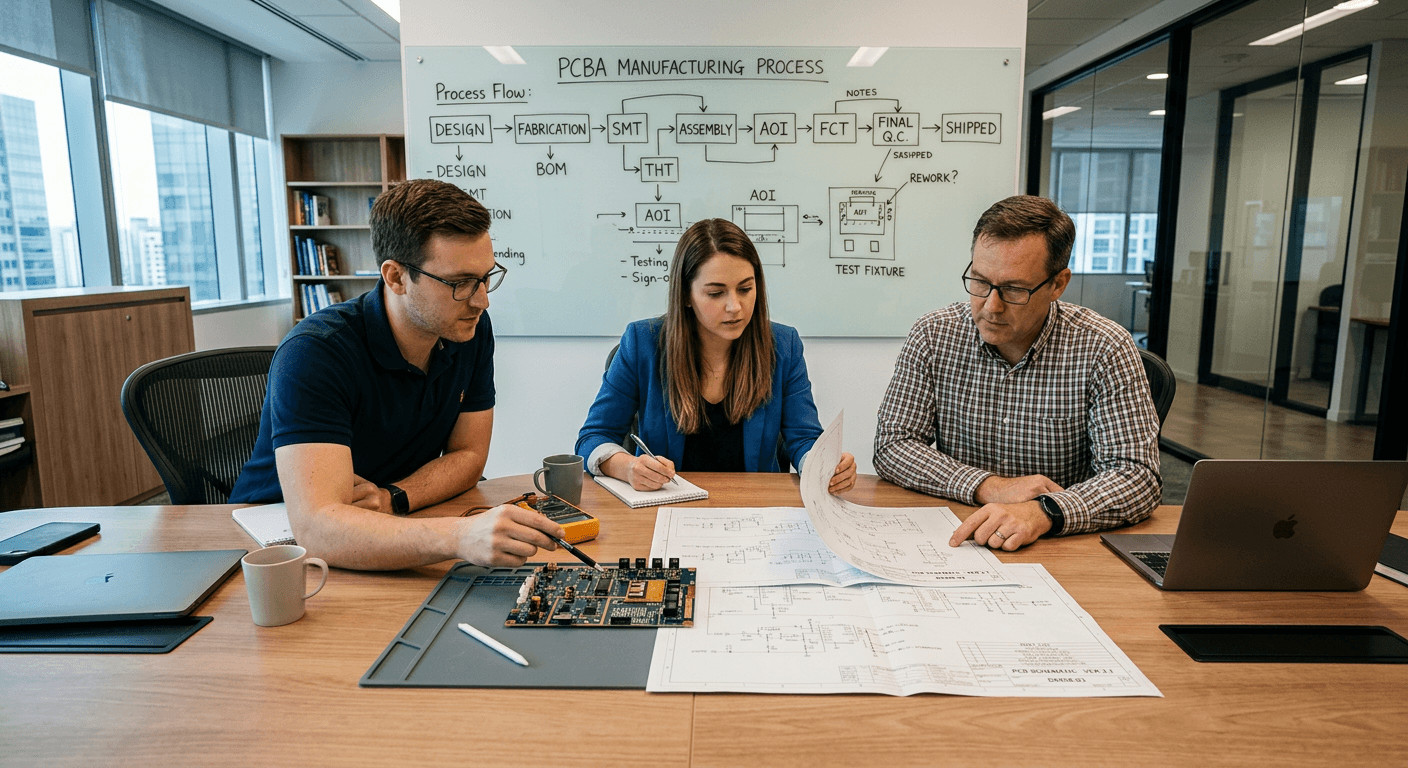
PCB assembly (PCBA) is the process of mounting and soldering electronic components onto a printed circuit board to create a functional electronic assembly.
Within electronics manufacturing services (EMS), PCB assembly transforms a bare PCB into a completed module suitable for integration into industrial, medical, automotive, or other electronic systems.
For procurement teams and engineers, PCB assembly involves more than component placement. Typical considerations include:
- Manufacturing process control
- Inspection and testing procedures
- Component sourcing
- Traceability requirements
- DFM support
A PCB assembly provider may support projects through engineering feedback, procurement assistance, and documented manufacturing processes in addition to the assembly itself.
IPC-A-610 is widely used as an acceptance standard for electronic assemblies and defines workmanship criteria for different application classes.
For a broader introduction, see our Electronic Manufacturing Services – Complete Guide.
2. PCB Assembly Technologies: SMT, THT, and Mixed Assembly
Modern PCB assembly projects typically use one or more assembly technologies depending on design requirements, component types, and operating conditions.
Surface Mount Technology (SMT)
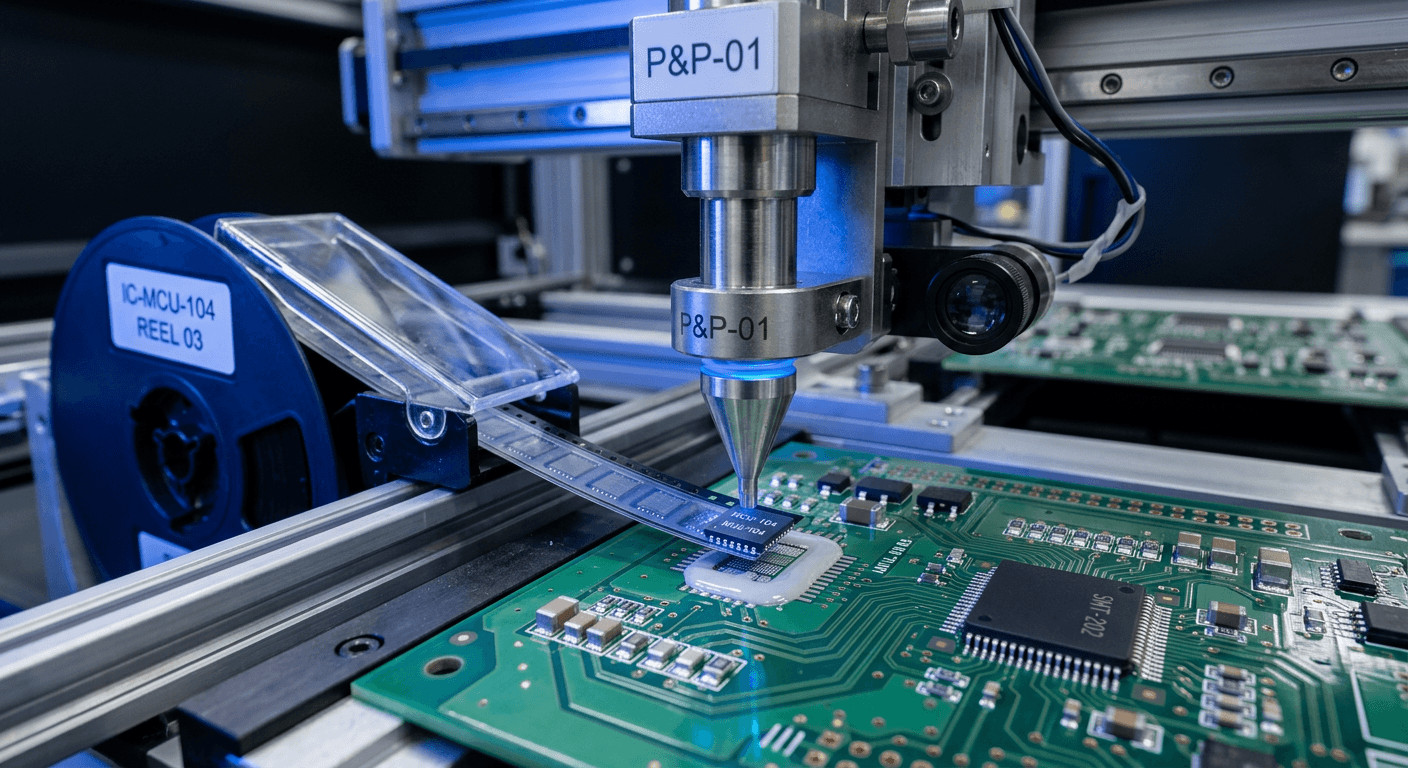
SMT places components directly onto the surface of the PCB using automated equipment.
Typical advantages include:
- High component density
- Automated production processes
- Compact designs
- Consistent placement accuracy
Through-Hole Technology (THT)
THT involves inserting component leads through drilled holes before soldering.
This method is commonly used for:
- Connectors
- Larger capacitors
- Components exposed to vibration
- Applications with higher mechanical loads
Mixed Assembly
Many industrial PCBs combine SMT and THT technologies on the same board.
In these cases, the assembly process must accommodate multiple manufacturing and inspection steps while maintaining process control throughout production.
For a detailed comparison, see our SMD PCB Assembly & THT Assembly – Industrial PCB Manufacturing article.
3. Quality Assurance and Testing in Electronic Assembly
Quality assurance plays a central role in PCB assembly.
When evaluating an EMS provider, consider which inspection and testing methods are available for the project.
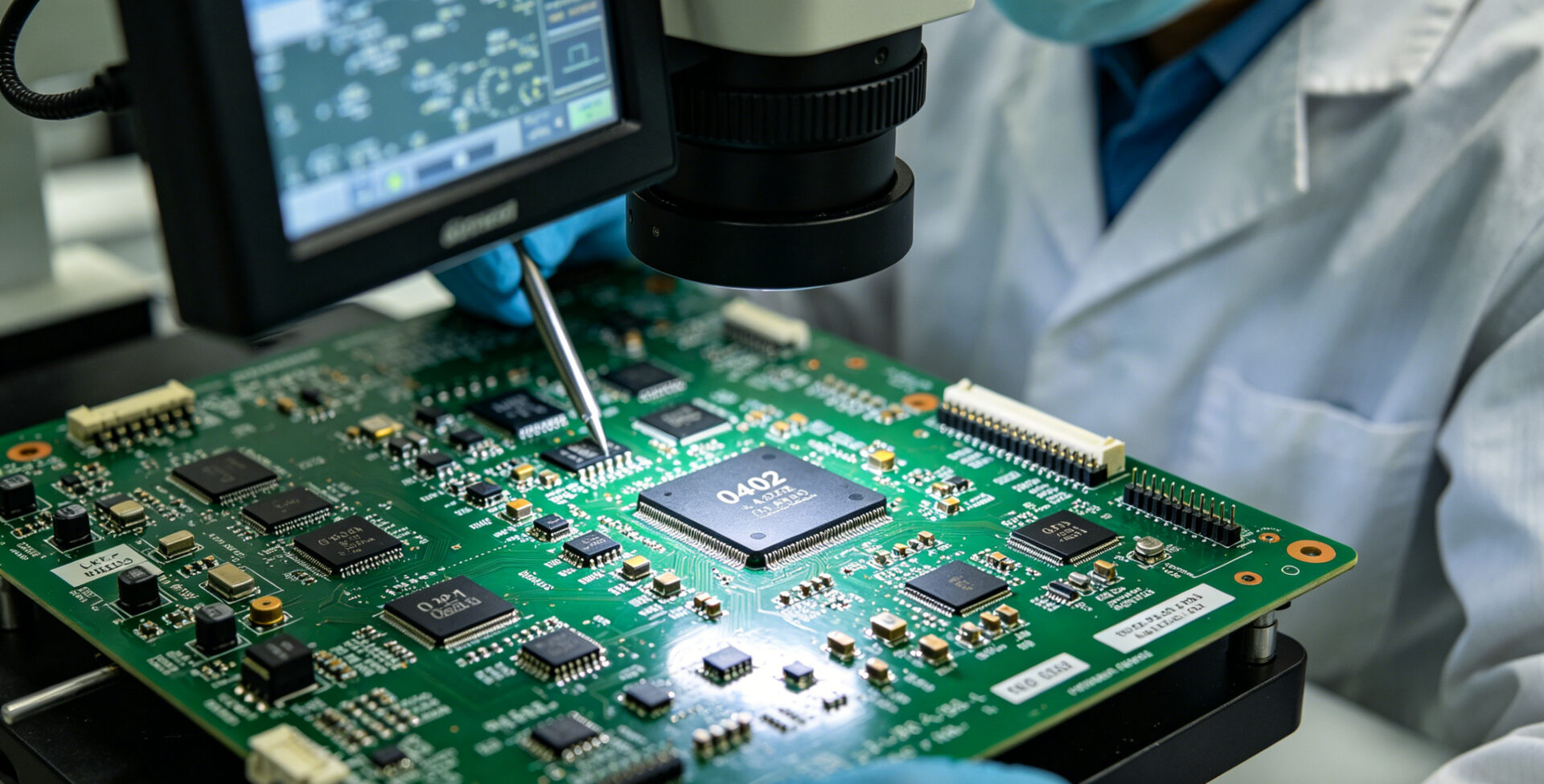
Automated Optical Inspection (AOI)
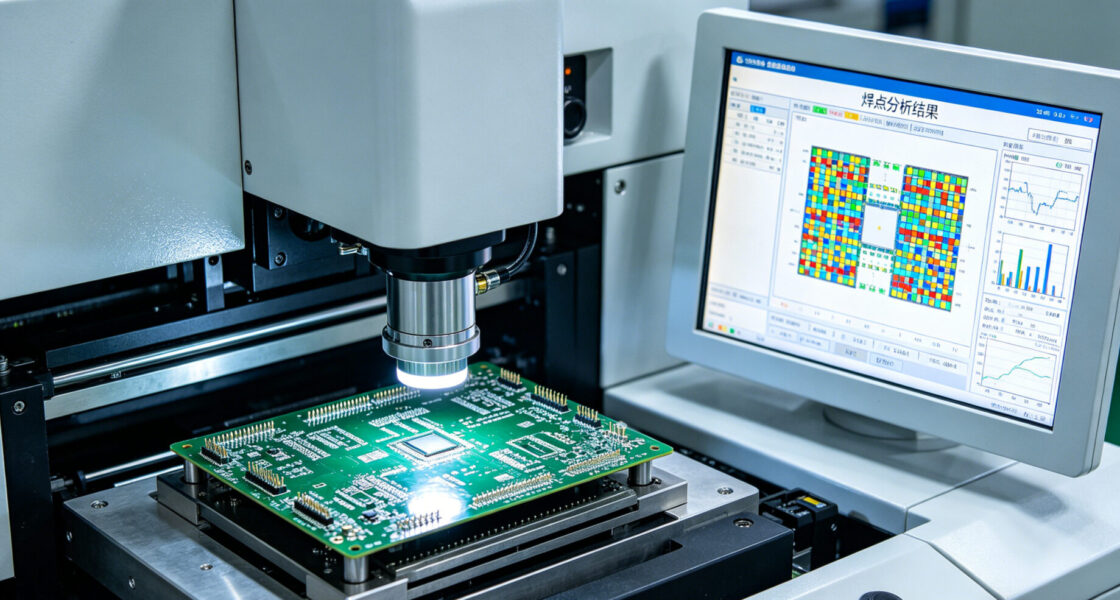
AOI systems use cameras to verify:
- Component placement
- Orientation and polarity
- Solder-joint appearance
Solder Paste Inspection (SPI)
SPI systems measure solder-paste deposition before component placement and can help identify process deviations at an early stage.
In-Circuit Test (ICT)
ICT evaluates electrical characteristics of individual circuits and components to identify issues such as:
- Open circuits
- Short circuits
- Incorrect component values
Functional Test (FCT)
Functional testing verifies operation under defined test conditions using dedicated fixtures or software-based procedures.
X-Ray Inspection
For BGA packages and other hidden solder joints, X-ray inspection can be used to evaluate solder-joint quality.
Project documentation may include:
- First Article Inspection (FAI)
- Test reports
- Traceability records
- Production documentation
Documentation requirements vary depending on industry and application.
For additional information, see our Electronic Components PCB Guide – Assembly & Testing.
4. DFM and Supply Chain Integration
One factor that differentiates EMS providers is the level of DFM support and supply-chain integration offered during a project.
Design for Manufacturability (DFM)
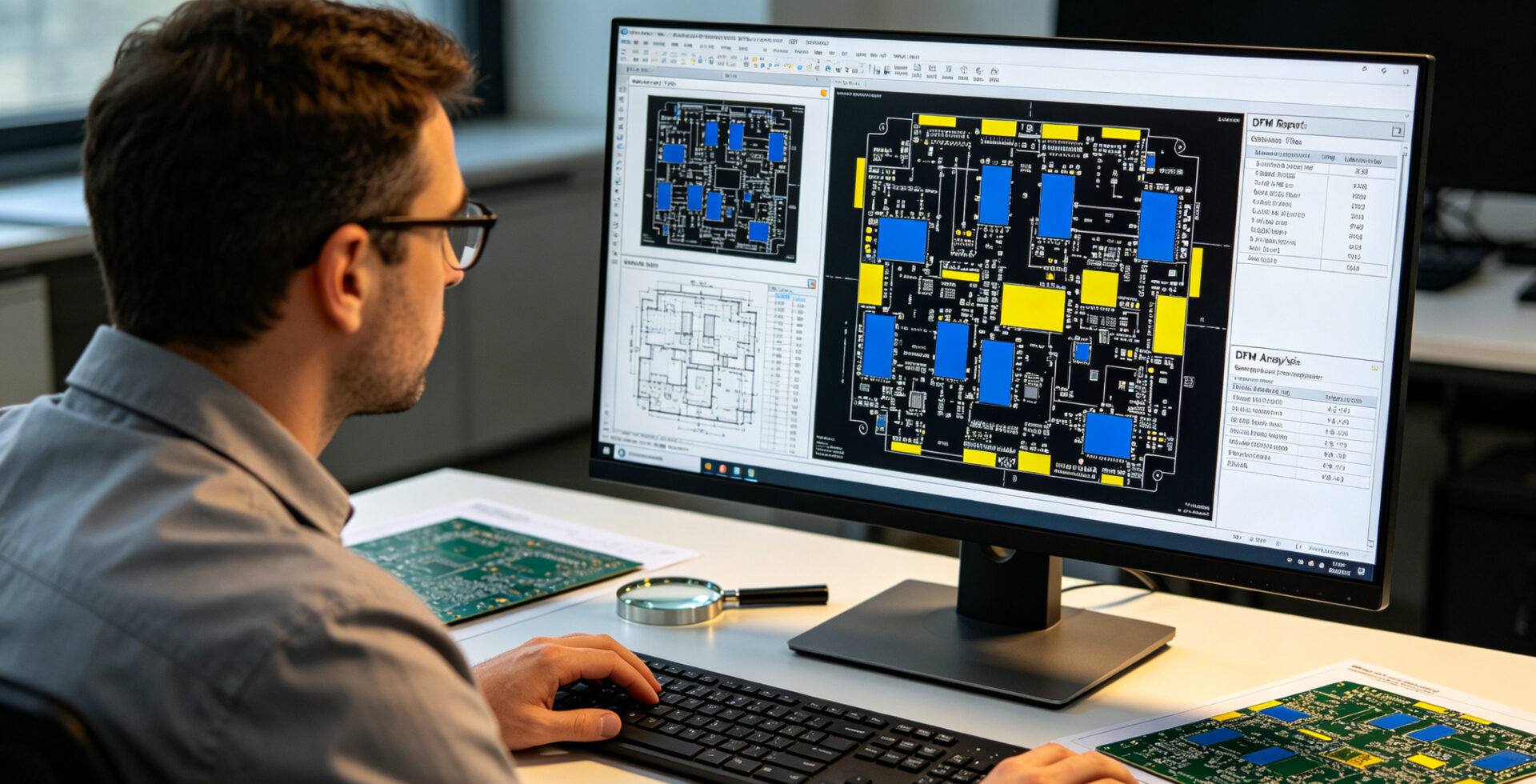
DFM reviews typically examine:
- Gerber data
- Bill of Materials (BOM)
- Assembly drawings
The objective is to identify potential manufacturing challenges before production begins.
Examples may include:
- Solder-mask clearance issues
- Pad-design concerns
- Component-placement constraints
Component Sourcing
Supply-chain support can include:
- Procurement through authorized distributors
- Lifecycle monitoring
- Obsolescence management
- Alternative-component evaluation where appropriate
Turnkey and Consigned Assembly
Two common sourcing models are:
Turnkey assembly
The EMS provider procures components and materials in addition to manufacturing.
Consigned assembly
The customer supplies components while the EMS provider performs assembly and testing.
The appropriate approach depends on project requirements, procurement strategy, and internal resources.
TPS Elektronik supports DFM reviews and procurement activities as part of its EMS offering.
For development projects with accelerated schedules, see our EMS PCB Assembly Rapid Prototyping & Quick-Turn Medical services.
5. Why EMS Integration Matters
For system integrators and panel builders, PCB assembly is often only one part of the overall manufacturing scope.
Many projects also involve:
- Cable assembly
- Mechanical integration
- Enclosure assembly
- Final system assembly
- Functional verification
Working with a provider that supports multiple manufacturing stages can simplify project coordination and documentation management.
Potential advantages may include:
- Reduced supplier interfaces
- Consolidated documentation
- Coordinated production planning
- Simplified logistics management
The relevance of these factors depends on project complexity and sourcing strategy.
6. PCB Assembly Services from TPS Elektronik
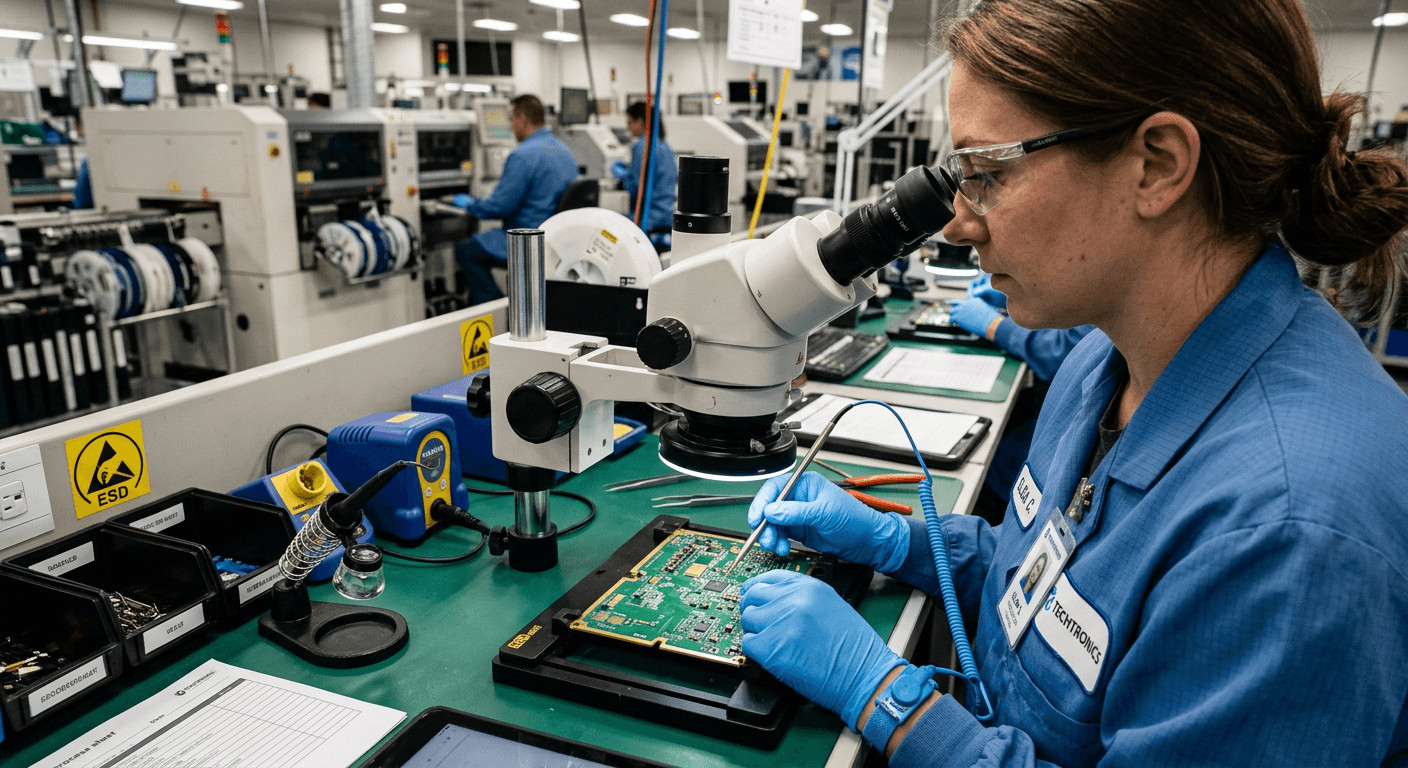
TPS Elektronik provides PCB assembly services for industrial applications and supports projects from prototype quantities through series production.
Capabilities include:
SMT Assembly
- Automated SMT production lines
- Solder Paste Inspection (SPI)
- Automated component placement
- Reflow soldering processes
THT Assembly
- Wave soldering
- Selective soldering
- Manual assembly operations where required
Conformal Coating
Selective coating processes for applications requiring additional environmental protection.
Functional Testing
Development of project-specific test fixtures and validation procedures.
Box Build and System Integration
Integration of assembled PCBs into complete systems, including enclosure assembly and cable integration where required.
TPS Elektronik operates under certified management systems including ISO 9001, ISO 13485, and IATF 16949, depending on project and application requirements.
For project evaluation, submit your RFQ together with available technical documentation, including BOMs, Gerber files, assembly drawings, and testing requirements.
7. FAQ
What is the difference between PCB and PCBA?
A PCB (Printed Circuit Board) is an unpopulated circuit board.
A PCBA (Printed Circuit Board Assembly) is a PCB after electronic components have been assembled and soldered onto it.
What are the main PCB assembly technologies?
The two primary technologies are:
- Surface Mount Technology (SMT)
- Through-Hole Technology (THT)
Many industrial assemblies use a combination of both.
Which certifications and standards are commonly relevant?
Depending on the industry, relevant standards and certifications may include:
- ISO 9001
- IPC-A-610
- ISO 13485
- IATF 16949
- ANSI/ESD S20.20
Requirements vary by application and customer specifications.
What is the difference between turnkey and consigned PCB assembly?
In turnkey assembly, the EMS provider procures components and materials.
In consigned assembly, the customer supplies the components while the EMS provider performs assembly and testing.
Which documentation is commonly provided?
Depending on project requirements, documentation may include:
- DFM reports
- First Article Inspection (FAI)
- AOI reports
- Test records
- Traceability documentation
- Certificates of conformity
Additional requirements may apply in regulated industries.