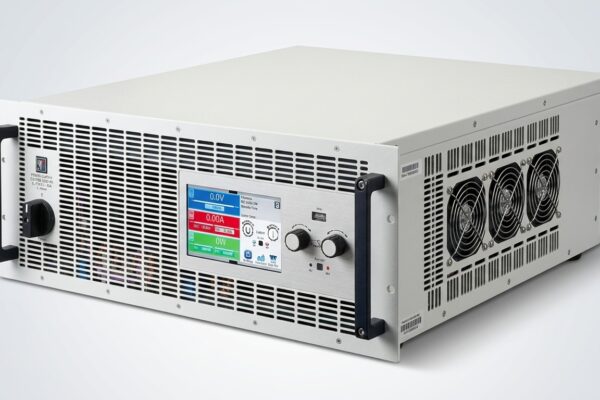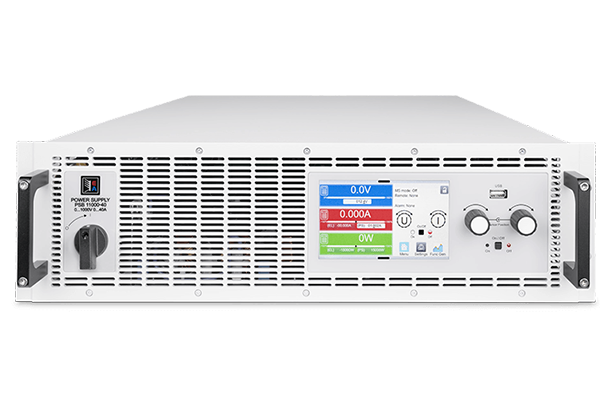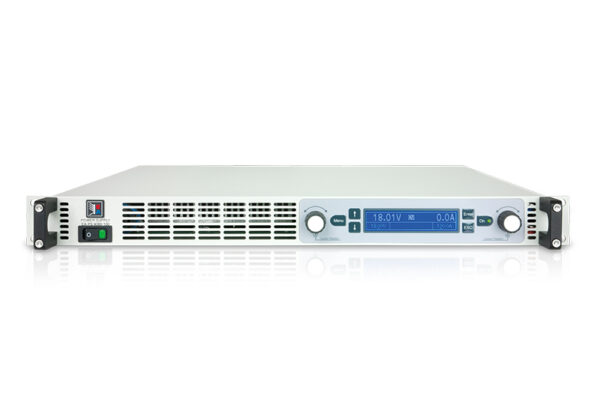


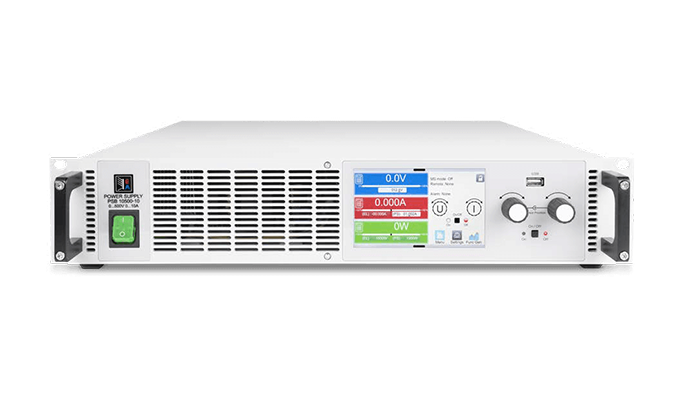
For system integrators, test engineers, and procurement teams building Automated Test Equipment (ATE), rack space is a premium commodity. Every unit of rack height (U) dedicated to power delivery is space taken away from measurement instruments, switching matrices, or the Device Under Test (DUT) itself. Furthermore, modern testing protocols require power supplies that are not just powerful, but highly responsive, precise, and easily integrated into complex software ecosystems. The solution lies in the rack mount programmable dc power supply. Specifically, high-density 1U and 2U units like the EA-PS 9000 1U series (e.g., the EA-PS 9080-50 1U) redefine what is possible in a 19-inch rack. Delivering up to 1500W of autoranging power in a compact 1U footprint, these units provide the flexibility, precision, and digital connectivity required for advanced R&D, electronic testing, and prototype validation.
1. What is a programmable DC power supply in ATE?
When engineers ask, “what is programmable dc power supply?”, the answer goes beyond simply providing voltage and current. In the context of Automated Test Equipment (ATE), an ATE programmable power supply is a highly sophisticated instrument. It allows test scripts to dynamically adjust output voltage, current limits, and power thresholds in real-time via digital interfaces (like USB, Ethernet, or RS-232).
Unlike standard fixed-output supplies, a configurable DC power system can simulate complex real-world conditions—such as battery voltage drops during engine cranking, or the fluctuating power profiles of solar panels. This dynamic control is essential for validating the performance and safety of electronic components before they reach mass production.
For smaller setups, engineers might use a desktop programmable DC power supply, but for industrial-scale testing, rack-mounted solutions are mandatory.

2. High power density: The 1U 19-inch rack advantage
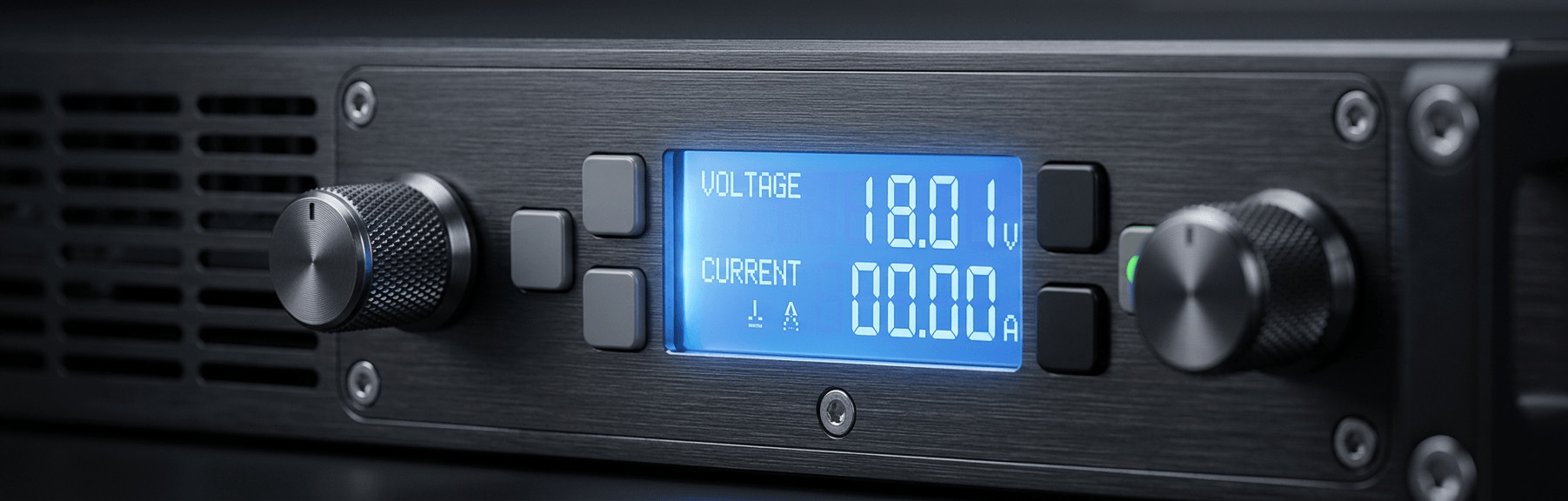
The primary challenge in ATE design is managing the physical footprint. A high density DC power supply addresses this by packing maximum wattage into minimum volume. The EA-PS 9080-50 1U model exemplifies this, delivering 1500W of power within a compact 1U (1.75 inches high) 19-inch rack-mount chassis (19″ x 1U x 500mm).
Using a 1U programmable DC supply allows system integrators to stack multiple units to create a multi channel programmable DC power supply system without requiring massive, floor-standing cabinets. This space-saving design is crucial for modern laboratories and production floors where real estate is expensive.
For systems requiring even more power, engineers can scale up to 2U programmable power supply units or even 3U programmable DC power supply systems, maintaining the same modular architecture.
3. Flexible autoranging: Doing more with less
One of the most powerful features of a modern rack mount DC power module is the autoranging output stage. Traditional power supplies have a rectangular operating locus—they can only deliver maximum power at maximum voltage and maximum current simultaneously.
An autoranging programmable DC power supply 1U, however, automatically adjusts the voltage and current limits to maintain a constant maximum power output (e.g., 1500W) across a much wider operating range. For example, the EA-PS 9080-50 1U can provide high voltage (up to 80V) at lower currents, or high current (up to 50A) at lower voltages, all while staying within its 1500W envelope.
This flexibility means that a single automated test equipment power supply can test a wide variety of devices, replacing the need to purchase and rack multiple conventional power supplies with different voltage/current ratings. This significantly reduces capital expenditure (CapEx) and simplifies ATE architecture.
4. Electrical precision: Efficiency, ripple, and accuracy
In electronic testing, the quality of the power delivered to the DUT directly impacts the validity of the test results. A high power density DC supply must not compromise on signal integrity.
Efficiency and Active PFC
The EA-PS 9000 1U series boasts an efficiency of up to 91%, significantly cutting energy losses and reducing the thermal load inside the ATE rack. It features Active Power Factor Correction (PFC = 0.99), ensuring compatibility with 100…264V AC grids (45…65Hz) worldwide while minimizing harmonic distortion on the facility’s power grid.
Precision and Low Ripple
For sensitive prototype validation, voltage and current accuracy are paramount. This unit offers voltage accuracy of <0.1% (of rated value) and load regulation of <0.05%. Current accuracy is <0.2% with load regulation at <0.15%.
Crucially, the compact programmable DC supply maintains exceptional stability through low ripple characteristics: ≤100 mV PP (High Frequency) / 5.2 mV RMS (Low Frequency) for voltage, and ≤4 mA RMS for current. This ensures that switching noise from the power supply does not interfere with sensitive measurements.
5. Connectivity: Isolated interfaces, SCPI, and LabView
An ATE system is only as good as its software integration. A true programmable DC power supply ATE must communicate flawlessly with the master controller.
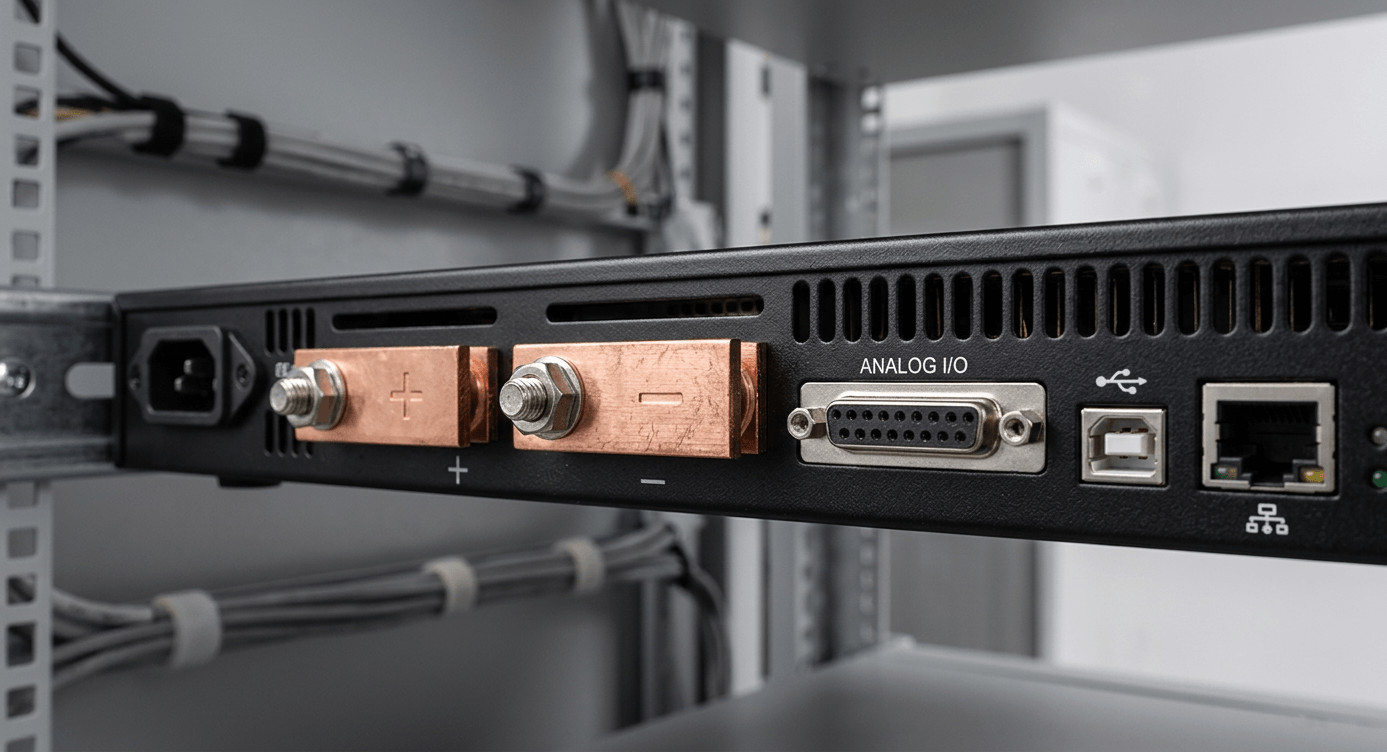
The EA-PS 9080-50 1U features galvanically isolated interfaces to prevent ground loops and protect sensitive control equipment. It includes:
- Analog Interface: A 15-pole D-Sub connector accepting 0…5V or 0…10V signals for setting and monitoring voltage/current.
- Digital Interfaces: USB and Ethernet ports are standard, supporting industry-standard SCPI (Standard Commands for Programmable Instruments) and ModBus RTU protocols.
For software engineers, the unit is fully compatible with National Instruments LabView VIs, allowing for rapid development of custom test applications. Additionally, it includes “EA Power Control” software for Windows, enabling multi-unit management right out of the box. For systems requiring higher power, units can be connected in parallel via a Share Bus, functioning as a cohesive modular programmable power supply.
6. Comprehensive protection and thermal management
When testing unproven prototypes, anomalies are expected. The power supply must protect both itself and the DUT. The EA-PS 9000 1U series includes a comprehensive suite of safety features:
- Overvoltage Protection (OVP): Instantly shuts off the DC output if voltage exceeds a safe threshold.
- Overcurrent Protection (OCP) & Overpower Protection (OPP): Prevents the DUT from drawing destructive amounts of current or power.
- Overtemperature Protection (OTP): Safeguards the power supply’s internal components.
Cooling is managed by intelligent, temperature-controlled fans that adjust their speed to maintain optimal internal temperatures while minimizing acoustic noise. The unit operates reliably between 0…50 °C and meets stringent standards including EN 60950 (safety), EN 61326 (EMC), and EN 55022 Class B (emissions). For authoritative standards information, refer to the International Electrotechnical Commission (IEC).
7. Applications for modular programmable power supplies
The versatility of a rack mount DC supply high density unit makes it ideal for various demanding sectors:
- Automotive Component Testing: Simulating vehicle battery networks (12V, 24V, 48V) to test ECUs, infotainment systems, and lighting modules.
- Semiconductor Burn-In: Providing stable, long-term power for accelerated life testing of microchips.
- DC-DC Converter Validation: Acting as a precise, adjustable input source to test the efficiency and regulation of downstream power converters.
For extremely high-power industrial applications, you might also explore our 60kW programmable DC power supply solutions.

8. RFQ and specification checklist
When procuring a rack mount programmable dc power supply for your ATE, ensure you specify the following to get the most accurate quote:
- Maximum Voltage and Current: (e.g., 80V, 50A).
- Total Power Requirement: (e.g., 1500W) and whether autoranging is required.
- Form Factor: 1U, 2U, or bench top rack mount power supply.
- Required Interfaces: USB, Ethernet, RS-232, Analog (isolated or non-isolated).
- Software Compatibility: SCPI, ModBus, LabView VIs.
- Input Voltage: Single-phase (100-264V AC) or three-phase requirements.