

For system integrators, panel builders, and procurement teams in the defense and aerospace sectors, component failure is not just an inconvenience—it is a mission-critical risk. Sourcing components that can withstand extreme temperatures, mechanical shock, and radiation requires rigorous electronic component testing. Failing to meet Defense Logistics Agency (DLA) requirements or Military Standards (MIL-STD) can result in rejected RFQs, delayed deployments, and catastrophic field failures.
TPS Elektronik’s Additional Services provide the comprehensive testing, verification, and supply chain security required to navigate these stringent regulations. From pre-compliance evaluations to deep-dive failure analysis, we ensure your components are mission-ready before they ever reach your production line.
1. Why Military & Aerospace Electronic Component Testing is Critical for RFQs
In the highly regulated defense and aerospace industries, procurement is about much more than finding the right part number. System integrators and electrical engineers face a constant battle against counterfeit parts, obsolete inventory, and commercial off-the-shelf (COTS) components that claim to be ruggedized but fail under stress. Military component qualification testing is the definitive barrier against these risks.
When responding to an RFQ, demonstrating a robust testing protocol is often a mandatory requirement. Buyers and government agencies demand proof of electronic component quality verification. Without documented evidence that your bill of materials (BOM) meets specific environmental and electrical tolerances, your bid will likely be disqualified. TPS Elektronik bridges this gap by offering specialized component qualification testing services that align directly with your procurement strategy, ensuring that every microchip, capacitor, and connector is fully vetted.
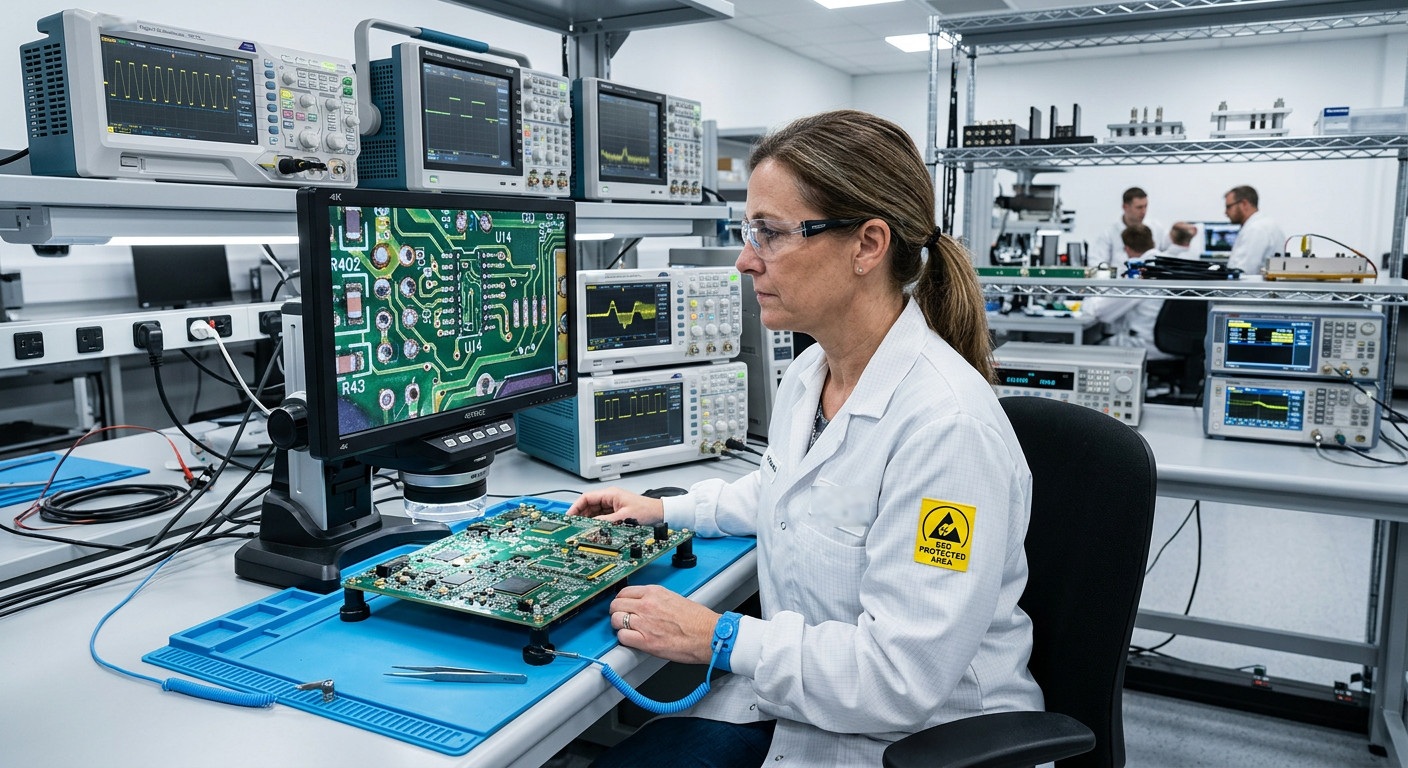
By integrating these testing protocols early in the design phase, companies can avoid the massive costs associated with late-stage redesigns. Learn more about how we integrate these processes in our comprehensive electronic design services.
2. Navigating MIL-STD and DLA Electronic Component Compliance
The foundation of defense electronics lies in strict adherence to standards published by the Department of Defense and managed by the Defense Logistics Agency (DLA). Achieving DLA electronic component compliance means proving that a component can survive the harshest environments on earth—and beyond.
2.1 MIL-STD-883 Component Testing
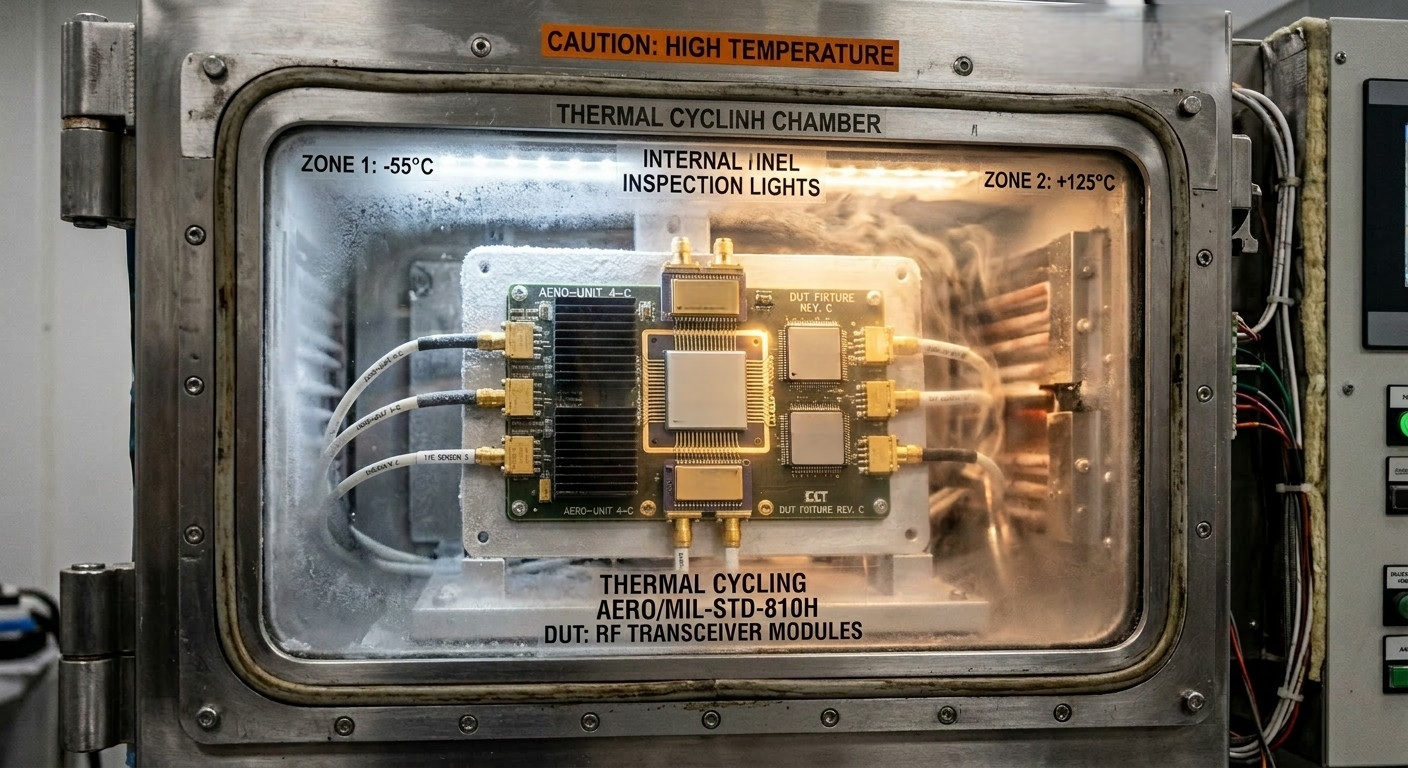
One of the most critical standards is MIL-STD-883, which establishes uniform methods, controls, and procedures for testing microelectronic devices. MIL STD 883 component testing covers a vast array of environmental, mechanical, and electrical tests. This includes temperature cycling, mechanical shock, vibration, and hermeticity testing (fine and gross leak tests). For panel builders designing control systems for armored vehicles or naval vessels, ensuring MIL STD component qualification under the 883 standard is non-negotiable. TPS Elektronik facilitates these rigorous test flows to guarantee that your microcircuits will not degrade under thermal or mechanical stress.
2.2 MIL-PRF-38534 Qualification
For hybrid microcircuits and multi-chip modules, MIL PRF 38534 qualification is the gold standard. This performance specification dictates the general requirements for the manufacturing and testing of custom hybrid circuits used in high-reliability applications. Whether you are sourcing a military specification electronic component for a radar system or a missile guidance module, verifying compliance with MIL-PRF-38534 ensures that the internal wire bonds, die attach methods, and substrate materials meet defense-grade criteria.
3. Aerospace Grade Component Verification & Reliability
Aerospace applications introduce unique challenges, including extreme temperature fluctuations, vacuum environments, and cosmic radiation. The Aerospace electronic component testing goes beyond standard military specs to address these specific atmospheric and exoatmospheric conditions.
3.1 Accelerated Life Test Electronic
To predict how a component will behave over a 15-to-20-year mission lifespan, engineers rely on an accelerated life test electronic protocol. By subjecting components to elevated temperatures, high voltage stress, and humidity (such as Highly Accelerated Temperature and Humidity Stress Test – HAST), we can simulate years of aging in a matter of weeks. This electronic component reliability testing is crucial for satellites and avionics, where maintenance is impossible once deployed.
3.2 JEDEC Component Qualification Testing
While MIL-STD governs defense, the JEDEC Solid State Technology Association provides the baseline for commercial and aerospace microelectronics. JEDEC component qualification testing (such as JESD47 for stress-test-driven qualification) is often used in conjunction with military standards to evaluate COTS components for aerospace use. Through rigorous aerospace grade component verification, TPS Elektronik helps system integrators confidently upscreen commercial parts for high-reliability applications.
4. SMT Process Compatibility and Component Solderability Testing Services
Even the most robust military-grade chip is useless if it cannot be reliably attached to a printed circuit board. Oxidation, contamination, or poor plating on component leads can cause catastrophic solder joint failures during manufacturing or in the field.
This is where component solderability testing services become vital. Using methods like the “dip and look” test or wetting balance analysis, we verify that the component terminations will accept solder perfectly during the reflow process. Furthermore, SMT process compatibility testing ensures that the components can withstand the thermal profile of lead-free or traditional tin-lead soldering without suffering internal delamination or “popcorning.”
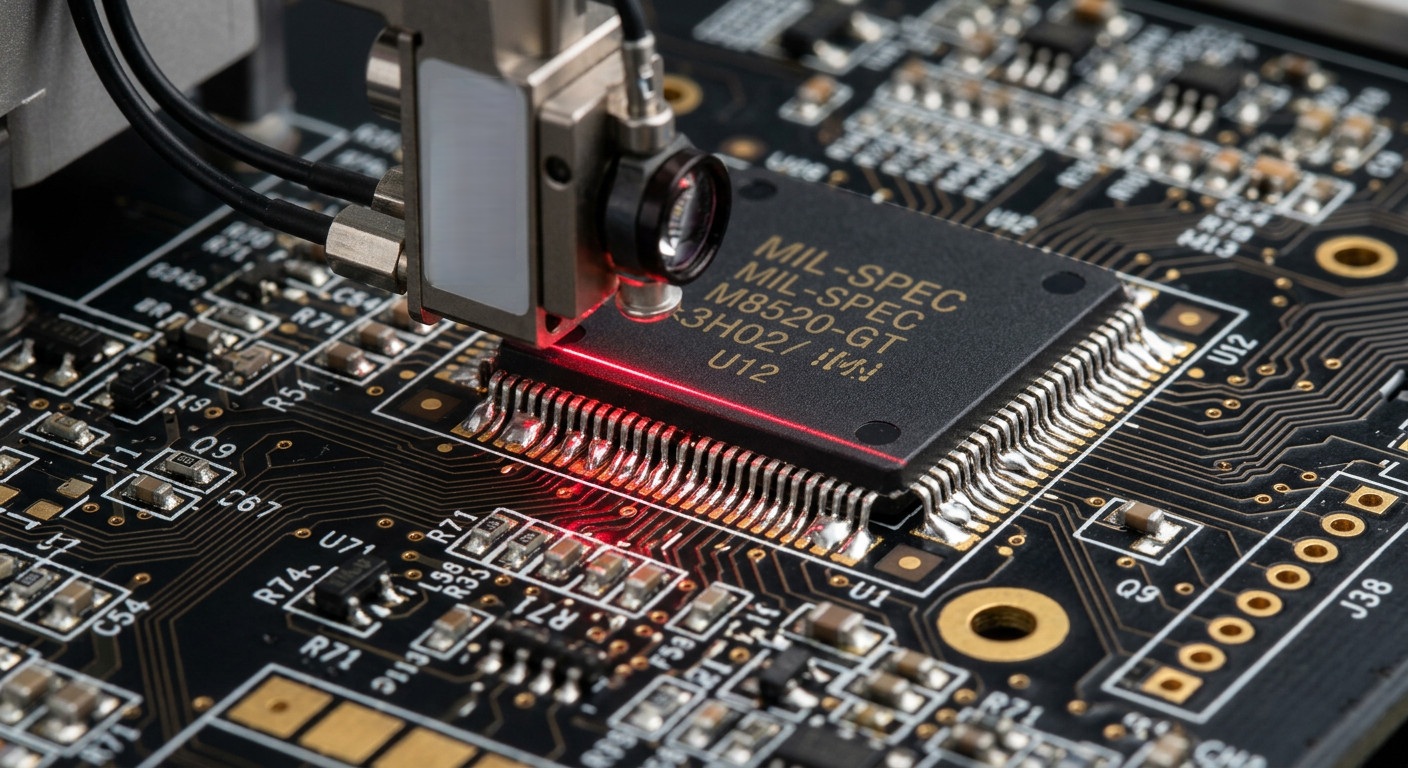
Ensuring solderability is a key part of our incoming goods inspection, which directly impacts production line efficiency and prevents costly rework.
5. Electronic Component Failure Analysis & Root Cause Identification
When a component fails during qualification testing or, worse, in the field, guessing the cause is not an option. Electronic component failure analysis is a systematic, forensic approach to discovering exactly why a part malfunctioned.
Our root cause failure electronic investigations utilize advanced techniques such as:
- Non-Destructive Testing (NDT): 3D X-ray imaging and Scanning Acoustic Microscopy (SAM) to detect internal voids, wire sweep, or die cracks without altering the component.
- Decapsulation and Cross-Sectioning: Safely removing the epoxy molding compound to inspect the silicon die and wire bonds under a Scanning Electron Microscope (SEM).
- Electrical Characterization: Curve tracing and fault isolation to pinpoint the exact transistor or junction that failed.
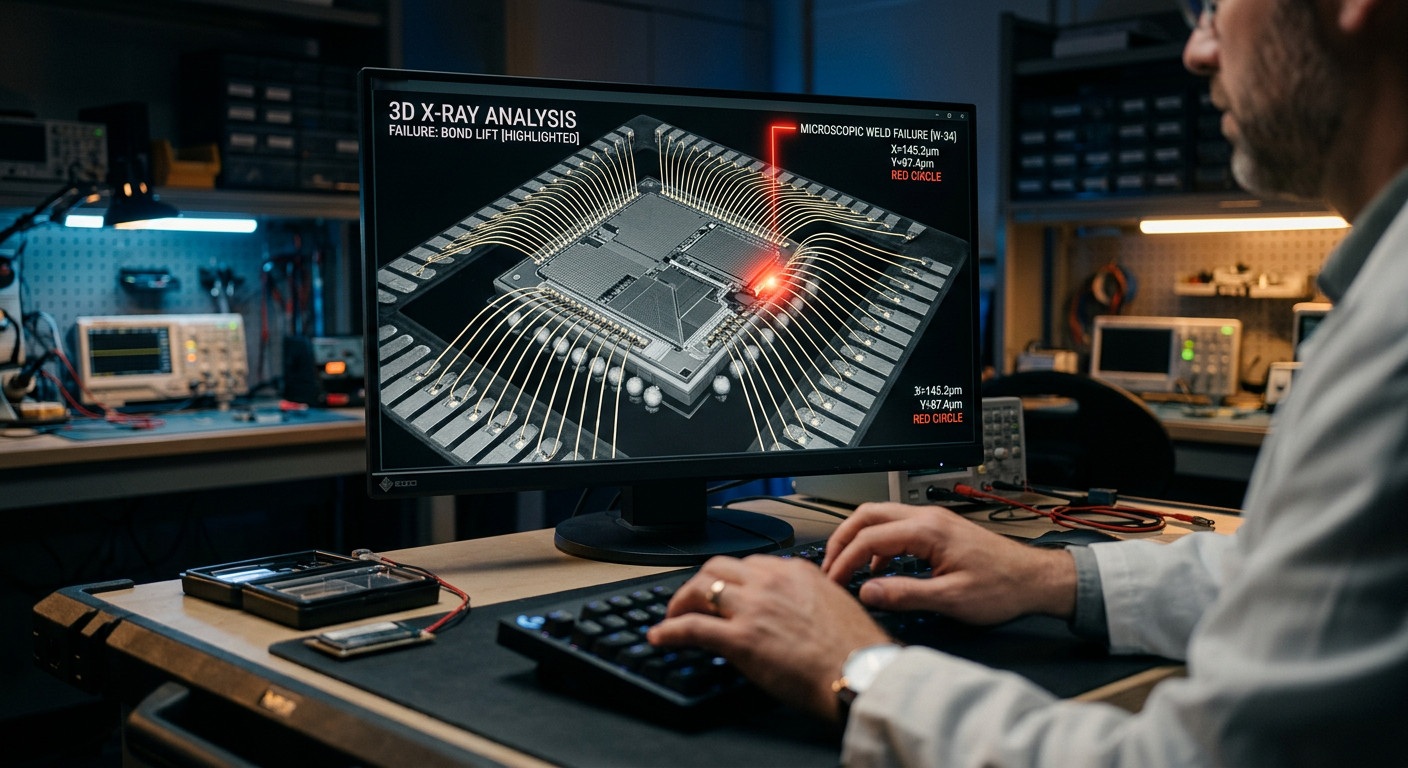
By identifying the root cause—whether it is electrical overstress (EOS), electrostatic discharge (ESD), or a manufacturing defect—we provide actionable data that allows procurement teams to hold suppliers accountable and engineers to improve system design. This level of detail is a core component of our Additional Services portfolio.
6. Integrating Testing into Procurement and Supply Chain
For procurement professionals, defense electronic component testing must be seamlessly integrated into the broader supply chain strategy. Delays in testing mean delays in manufacturing. TPS Elektronik combines testing with advanced logistics.
By utilizing our inventory management for electronics component stock, clients can have their BOM procured, tested, and held in a secure, climate-controlled environment until needed. Furthermore, our detailed incoming goods inspection reports provide the traceability and documentation required by defense contractors. Read our procurement solutions case study to see how integrated testing and sourcing reduces time-to-market.
7. FAQ
What is the difference between MIL-STD-883 and JEDEC component qualification testing?
MIL-STD-883 is a strict military standard specifically designed for microelectronics used in defense applications, focusing on extreme environmental and mechanical survivability. JEDEC standards are primarily developed for commercial and industrial solid-state devices, though they are often used as a baseline for upscreening COTS components for aerospace use.
Why is component solderability testing services necessary for military components?
Military components are often stored for long periods (long-term storage) before use. Over time, their leads can oxidize, leading to poor solder joints during manufacturing. Solderability testing ensures SMT process compatibility testing, preventing weak connections that could fail under vibration in the field.
How does accelerated life test electronic work?
Accelerated life testing subjects electronic components to elevated stress levels—such as high temperature, voltage, and humidity—to compress time. This allows engineers to identify potential wear-out mechanisms and calculate the expected operational lifespan of the component in a matter of weeks rather than years.
What happens during electronic component failure analysis?
During failure analysis, engineers use non-destructive (X-ray, acoustic microscopy) and destructive (decapsulation, cross-sectioning) methods to perform root cause failure electronic identification. This determines whether the failure was caused by manufacturing defects, electrical overstress, or environmental factors.