

For system integrators, panel builders, and electrical engineers designing conveyor and material handling control systems, the integration of distributed I/O and safety relays is not just about wiring components together—it is about creating a control architecture that is scalable, serviceable, and compliant with functional safety standards. A poorly designed control panel can lead to extended commissioning times, difficult troubleshooting, and safety certification failures that delay project handover.
TPS Elektronik’s automation control panel assembly service delivers integrated control solutions for conveyor and material handling systems—combining distributed I/O nodes, safety relays, PLC/IPC integration, and fieldbus communication in a single, documented workflow from design through FAT and SAT.
1. The Conveyor Control Challenge: Scalable, Safe, and Serviceable
Conveyor and material handling systems are the backbone of modern logistics, warehousing, and manufacturing operations. From simple belt conveyors to complex automated warehouse systems with thousands of I/O points, these systems require control architectures that balance three competing demands: scalability, safety, and serviceability.
For system integrators and electrical engineers, the challenges are significant:
- Scalability: Conveyor systems often grow over time. Adding new zones, diverters, or sorting stations should not require a complete control system redesign.
- Safety: Material handling equipment operates in proximity to personnel. Emergency stops, light curtains, and safety interlocks must be integrated reliably and meet functional safety standards such as ISO 13849-1 (Performance Level) and IEC 61508 (Safety Integrity Level).
- Serviceability: When a sensor or actuator fails, maintenance teams must be able to identify and replace the faulty component quickly. A well-organized control panel with clear labeling and documented wiring is essential for minimizing downtime.
TPS Elektronik’s automation control panel assembly service addresses these challenges through an integrated mechatronics approach—combining control panel design and build, harnessing, PLC/IPC integration, and documentation within a unified workflow. As described in TPS’s EMS mechatronics framework, this integrated approach supports clearer RFQs and more stable project execution—from subassemblies to complete automation lines.
2. Distributed I/O: Reducing Wiring and Enabling Scalability
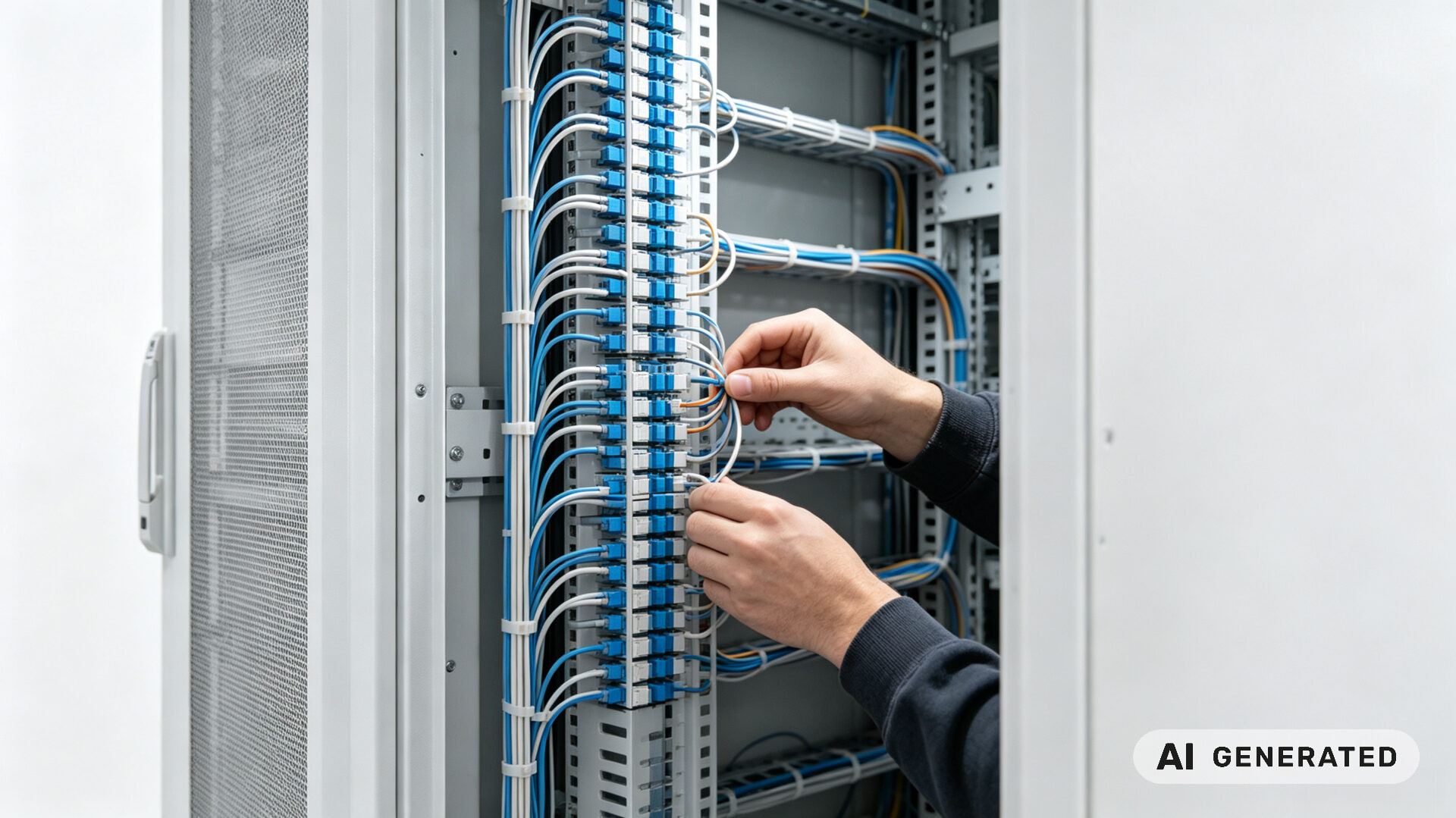
Traditional conveyor control architectures rely on centralized I/O—all sensors and actuators are wired directly back to a central control panel. While this approach is straightforward for small systems, it becomes impractical for large conveyors that may stretch hundreds of meters. The cost and complexity of running hundreds of individual wires from field devices to a central panel is prohibitive, and troubleshooting becomes a nightmare.
Distributed I/O addresses these challenges by placing I/O modules close to the sensors and actuators they serve. These distributed nodes communicate with the central PLC via a fieldbus network, requiring only a single communication cable and power cable to each zone instead of hundreds of individual wires.
Key benefits of distributed I/O for conveyor and material handling systems:
- Reduced wiring: One fieldbus cable replaces dozens or hundreds of individual wires, dramatically reducing installation time and material costs
- Simplified troubleshooting: Diagnostics are available at each I/O node, enabling faster fault identification
- Scalable architecture: New zones can be added by simply connecting additional I/O nodes to the fieldbus network—no changes to the central panel required
- Faster commissioning: Pre-tested I/O nodes can be installed and commissioned in parallel, reducing overall project timelines
Distributed control of conveyor system modules avoids long cycle times, makes commissioning faster, and reduces wiring costs. Actuators and sensors are connected directly in the field to IP67-rated I/O blocks, eliminating the need for intermediate junction boxes. For large conveyor networks with thousands of I/O points, distributed I/O platforms such as ControlLogix alongside POINT I/O and FLEX I/O provide the foundation for scalable field connections.
3. Safety Relays and Safety PLCs: Meeting ISO 13849 and IEC 61508
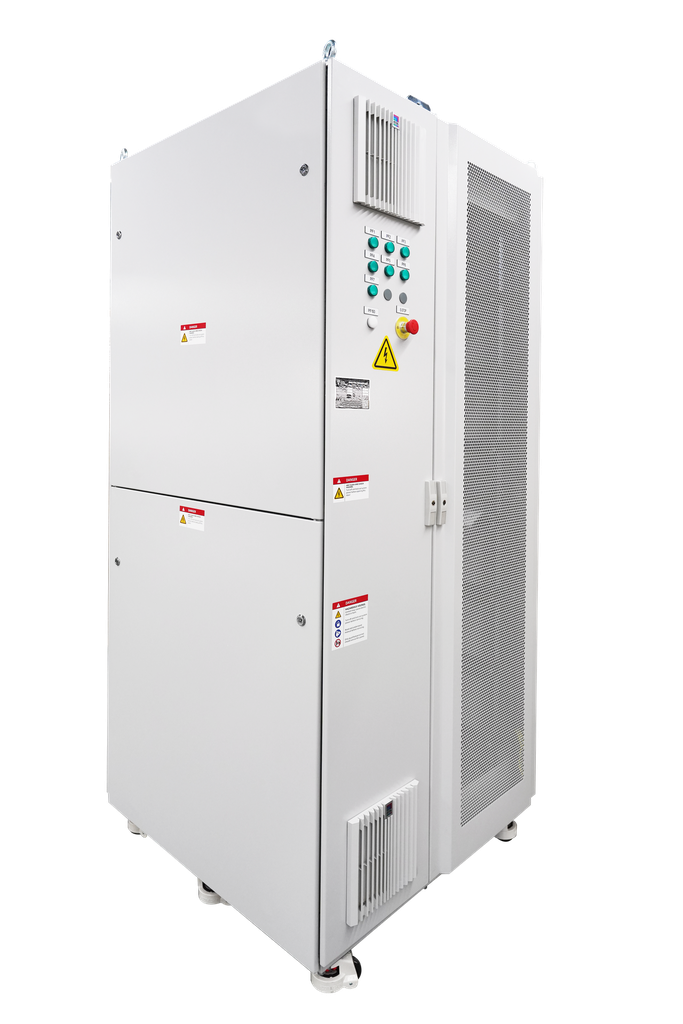
Conveyor and material handling systems operate in environments where personnel are present. Emergency stop buttons, pull-cords, light curtains, and safety interlocks are essential for protecting workers from moving machinery. The integration of these safety devices must meet the requirements of functional safety standards.
ISO 13849-1 provides safety requirements and guidance on the principles for the design and integration of safety-related parts of control systems (SRP/CS), including the design of software. The standard defines Performance Levels (PL) from PL a (lowest) to PL e (highest), with the required performance level (PLr) determined by risk assessment.
IEC 61508 defines Safety Integrity Levels (SIL) from SIL 1 to SIL 4, providing a framework for ensuring that safety functions achieve the required level of risk reduction. For most machine builders using standard electromechanical safety components such as safety relays, light curtains, and two-hand controls, ISO 13849-1 and PL is the correct starting point.
In conveyor and material handling control systems, safety is typically implemented through:
- Safety relays: Dedicated safety relays (e.g., Phoenix Contact PSR-SCP or Allen‑Bradley Guardmaster) with dual-channel wiring and contactor feedback loops to achieve SIL 2/PLd architectures
- Safety PLCs: Fail-safe CPUs capable of SIL 3/PL e performance for complex safety logic
- Distributed safety I/O: Safety-rated fieldbus nodes that bring safety functionality to the field level
Distributed safety I/O on DeviceNet Safety or CIP Safety enables emergency stop chains to be monitored at the field level without running individual wires back to a central safety relay. This approach reduces wiring complexity while maintaining the integrity of the safety circuit.
4. Fieldbus Integration: Connecting Distributed Nodes to the PLC
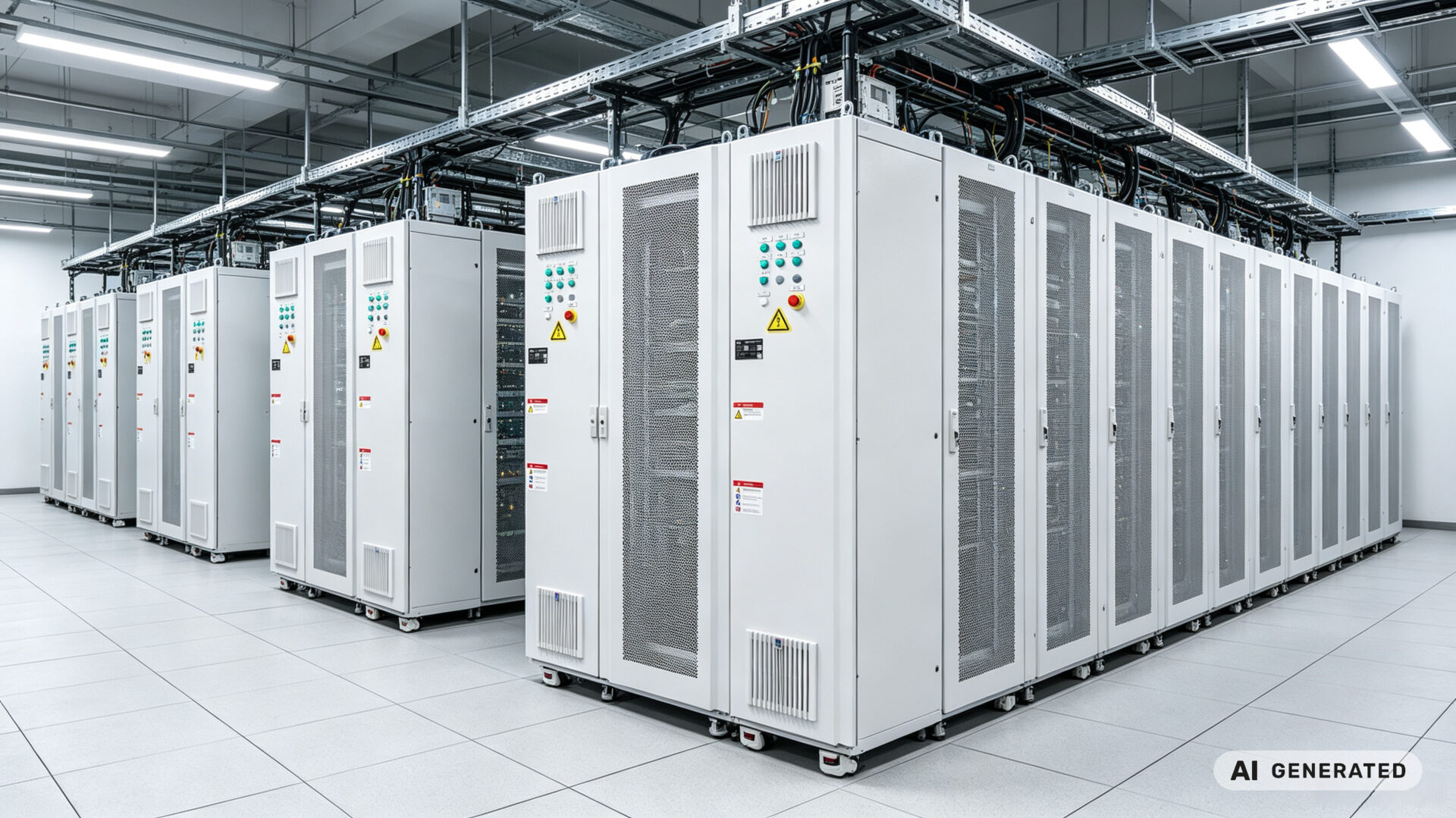
The fieldbus network is the communication backbone of a distributed conveyor control system. It connects the central PLC or IPC to the distributed I/O nodes, drives, and other field devices, enabling real-time control and monitoring of the entire system.
Common fieldbus protocols used in conveyor and material handling applications include:
- PROFINET: Widely used in European and automotive applications, offering real-time Ethernet communication
- EtherNet/IP: Common in North American industrial automation, supporting both standard and safety communication (CIP Safety)
- EtherCAT: High-performance protocol for applications requiring fast cycle times and precise motion control
- MODBUS TCP/IP: Simple, open protocol for less demanding applications
The choice of fieldbus protocol affects not only communication speed but also the availability of distributed I/O modules, drives, and safety devices. TPS Elektronik supports multiple fieldbus protocols and provides integration guidance based on the customer’s existing infrastructure and application requirements.
In a well-designed distributed architecture, the central PLC handles:
- Deterministic control logic and motion sequences
- Safety interlocks and zone coordination
- Device-level communication with distributed nodes
Higher-level systems such as SCADA, MES, and ERP focus on visualization, data collection, and production management, with frameworks such as ISA-95 helping to separate these responsibilities and avoid unclear system definitions.
5. TPS Automation Control Panel Assembly Capabilities
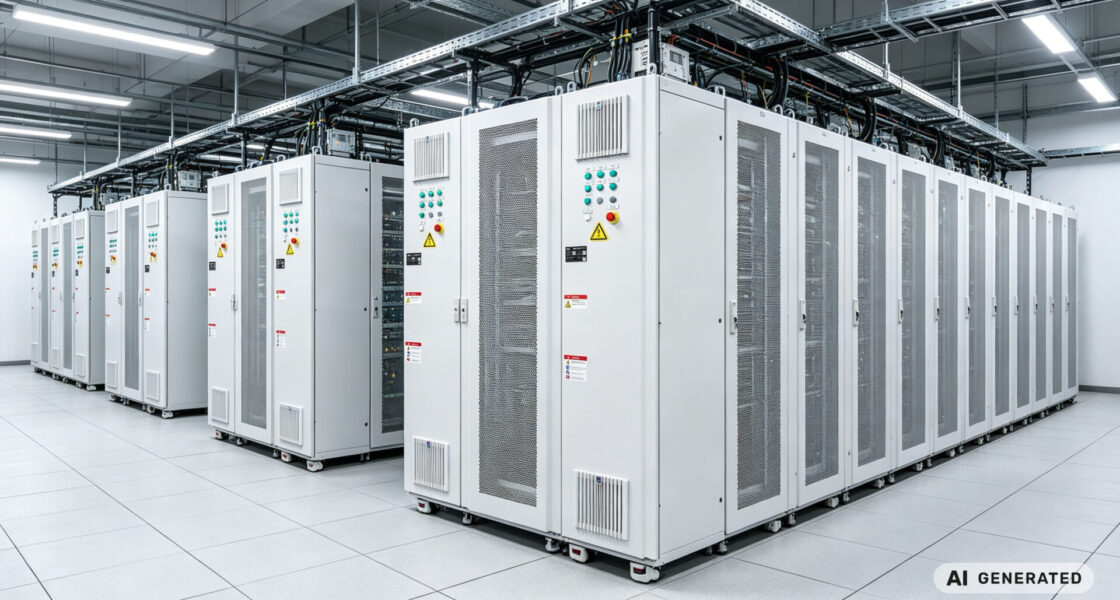
TPS Elektronik’s automation control panel assembly service for conveyor and material handling systems combines engineering expertise, precision assembly, and comprehensive quality assurance in a single integrated workflow.
Design and Engineering:
- Control cabinet design and layout optimization for serviceability and thermal management
- Distributed I/O architecture planning with fieldbus selection and node placement
- Safety system design per ISO 13849-1 and IEC 61508, including safety relay and safety PLC integration
- PLC/IPC selection based on logic complexity, diagnostics requirements, and customer standards
- SCADA/MES interface planning for data collection and traceability
Panel Assembly and Wiring:
- Precision panel building with standardized harnessing and cable duct routing
- Distributed I/O module mounting and fieldbus wiring
- Safety relay and safety PLC integration with dual-channel wiring and contactor feedback loops
- Terminal block labeling and documentation for serviceability
- End-of-line testing and functional verification
Integration and Commissioning:
- PLC programming and logic validation per customer requirements
- Fieldbus configuration and distributed I/O node integration
- Safety system validation and functional testing
- FAT (Factory Acceptance Testing) and SAT (Site Acceptance Testing) documentation
- Lifecycle support and documentation
Quality and Documentation:
- Documented wiring diagrams and schematics
- IEC 61131-3 compliant programming for maintainability
- Safety validation documentation for regulatory compliance
- FAT/SAT test reports and traceability documentation
As an integrated EMS mechatronics provider, TPS Elektronik connects control panel assembly with broader capabilities—including electro-mechanical assemblies, harnessing, and system integration. This single-source approach reduces supply chain complexity for system integrators and procurement teams, ensuring that control panels are delivered on time and to specification.