

Engineering and manufacturing update
Compact industrial switching power supplies require magnetics that fit the converter, enclosure, and production process. A working sample is only the first milestone: procurement also needs a controlled specification, repeatable inspection, and an agreed route to series supply.
TPS Elektronik’s electrical winding offering includes custom transformers, engineering support, winding, and electrical testing. This update outlines the decisions that make a high-frequency transformer project ready for quotation and manufacturing release.
1. Define the converter operating window
Start a custom transformer winding inquiry with the converter topology, input range, output requirements, switching-frequency range, and relevant current waveforms. Include startup, overload, and variable-frequency operation where applicable. Output power and turns ratio alone do not define a usable component.
State the installation envelope, pinout, mounting, ambient temperature, and available cooling. For panel builders and system integrators, the component must be assessed inside the intended power supply. Identify who owns the magnetic design and who approves changes before requesting samples.
2. Coordinate core, conductor, and winding arrangement
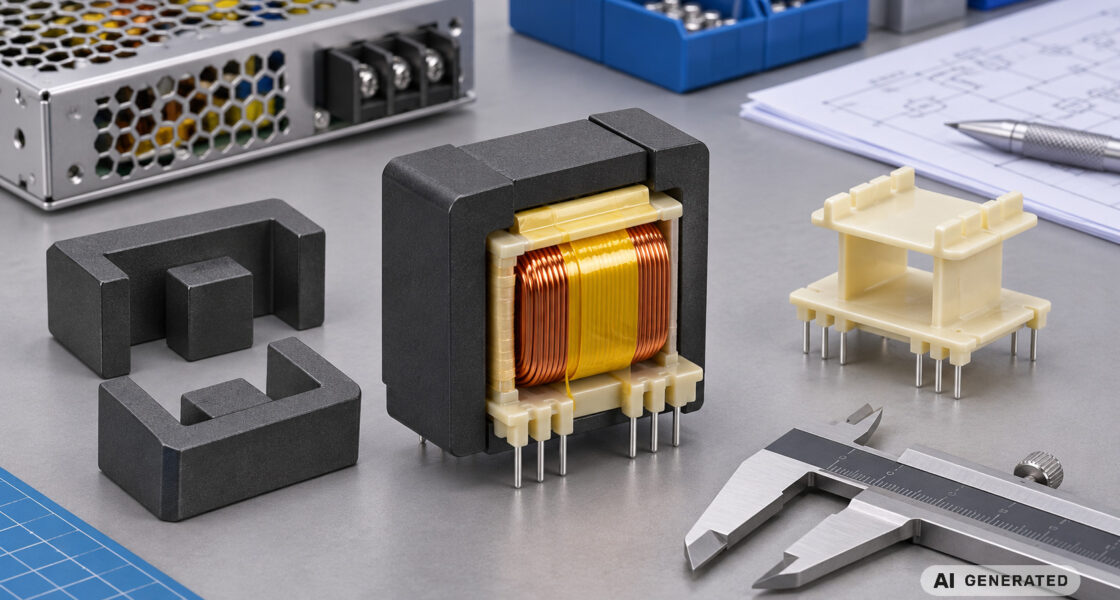
A high frequency transformer requires core and winding choices matched to its operating conditions. Evaluate a ferrite core transformer using the selected material’s data and the converter’s voltage waveform. Higher frequency does not automatically deliver a smaller, cooler component.
For custom coil winding, review conductor construction, winding sequence, terminations, and available winding space together. Interleaving can alter leakage inductance and interwinding capacitance; its effect must be evaluated in the circuit. The official Texas Instruments power-transformer design guide explains related design tradeoffs.
Document proposed construction choices in the winding drawing. Record acceptance conditions for dimensions and electrical characteristics so that supplier proposals can be compared consistently.
3. Establish insulation requirements before reducing size
Define the required insulation function, working voltages, environment, and applicable end-product standard. Coordinate wire, bobbin, barriers, and any impregnation system. A wire temperature class alone does not establish the suitability of the complete insulation system.
The TPS resource on wire-insulation materials supports this discussion. IEC 61558-2-16 addresses switch-mode power supplies and their transformers within its scope, together with IEC 61558-1. Confirm the applicable evaluation route and regional requirements for the actual product; component testing does not establish approval of the finished supply.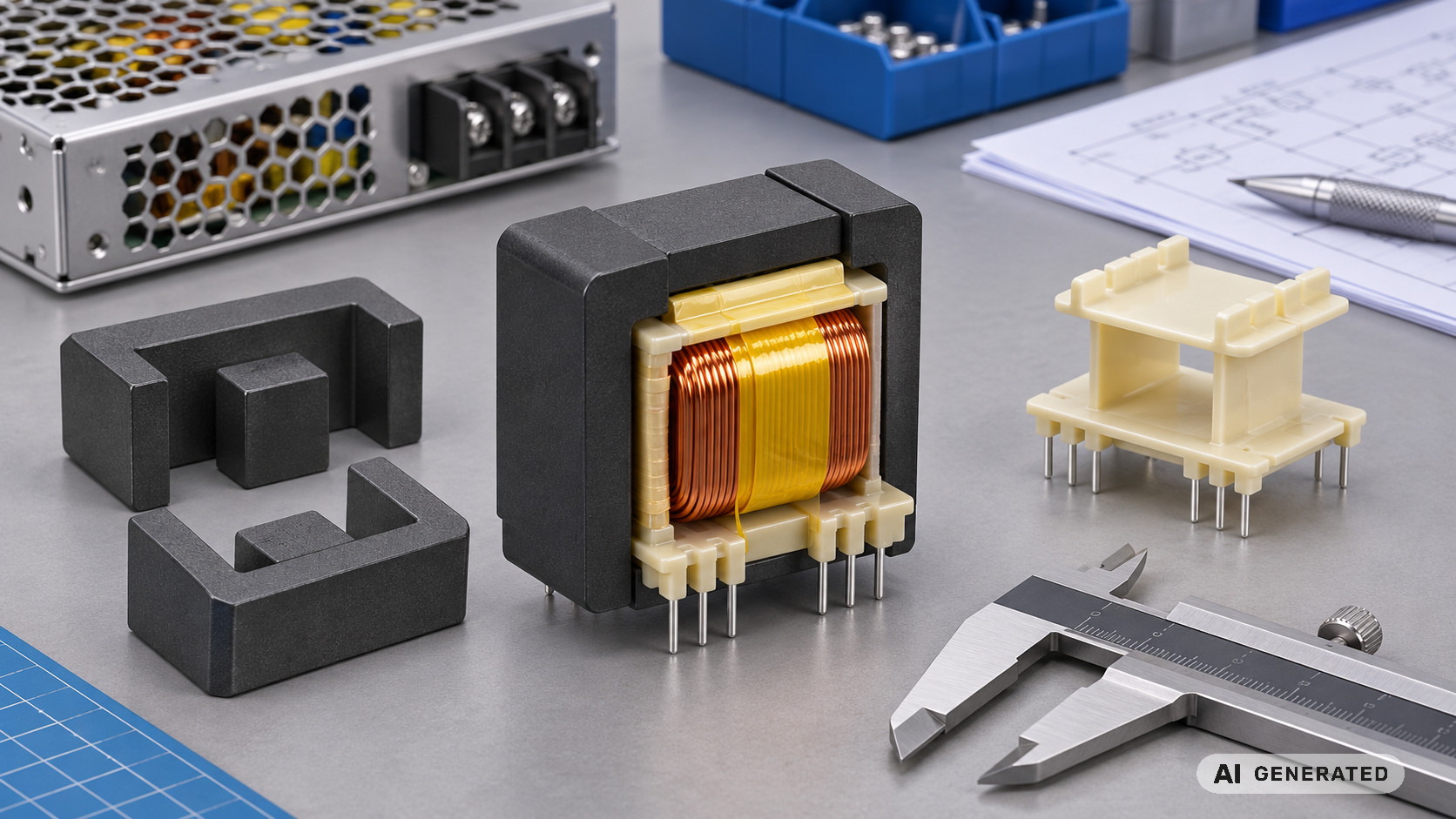
4. Validate the prototype in the intended converter
When comparing transformer winding services, request a sample build record and an agreed test plan. Define measurement frequency, excitation level, temperature, winding connections, and limits. An inductance value without its measurement conditions is insufficient for a reliable comparison.
Evaluate the switch mode transformer in the converter across the agreed operating cases. Check temperatures, relevant waveforms, and mechanical integration. Investigate deviations before changing the winding specification. Separate design qualification from routine production tests; they serve different purposes.
Discuss prototype construction, tests, and release criteria with TPS →
Keep a reference sample and record the converter configuration used for acceptance. If later measurements differ, compare the test setup and build revision before concluding that the component is defective. This also helps separate an application change from a manufacturing deviation.
5. Convert the approved sample into a controlled series build
A custom transformer manufacturer needs a released construction package: approved materials, winding sequence, termination details, assembly method, and inspection limits. For custom magnetic components, seemingly minor substitutions can affect the qualified configuration. Agree which changes require renewed engineering approval.
Keep sample revisions, batch identification, and test records linked. Define handling, packaging, forecast assumptions, and material commitments. TPS’s update on production-ready transformers and wound components offers related manufacturing context.
Agree the first-order commercial boundaries: minimum quantities, ownership of dedicated tooling, reserved materials, and the procedure for forecast changes. Request confirmation of current material availability rather than assuming that sample procurement conditions will continue unchanged. Keep replacement and end-of-life arrangements visible when the component supports a long-lived industrial platform.
Specify whether pilot units may enter customer builds or remain engineering samples. Establish who closes deviations and authorizes the first recurring order. This makes the transition reviewable for engineering and purchasing.
6. Prepare an RFQ that defines scope and evidence
| RFQ area | Information to provide |
|---|---|
| Electrical | Topology, voltage ranges, frequency range, waveforms, outputs, and target characteristics. |
| Construction | Envelope, pinout, mounting, proposed core, conductor, and insulation requirements. |
| Quality | Acceptance limits, test conditions, documentation, and traceability expectations. |
| Commercial | Prototype quantity, pilot batch, forecast, milestones, packaging, and delivery scope. |
Mark unresolved inputs and request separate pricing for engineering, tooling, samples, recurring units, and special testing. Clarify whether TPS is reviewing a customer design or developing the magnetic component against agreed requirements.
The TPS winding-service RFQ guide provides further handover context. Require explicit assumptions and release gates rather than treating an indicative quotation as confirmation of every technical detail.
7. FAQ
Can TPS quote without a finished winding drawing?
Submit the operating requirements and available design data. Agree the engineering scope and unresolved inputs before committing to final construction or recurring pricing.
Are flyback and other transformer designs interchangeable?
No. The magnetic design must match the converter topology and operating waveforms. Similar power ratings or turns ratios do not establish interchangeability.
Which tests should be specified?
Agree electrical, insulation, thermal, and dimensional checks for the application. Define conditions and limits, distinguishing qualification from routine inspection.