

System integrators, panel builders, and procurement teams rarely fail because they lack a product design. They lose time—and budget—when electromagnetic compatibility issues surface during formal compliance testing, forcing costly redesigns and delaying market entry.
TPS Elektronik’s EMC laboratory services are built to reduce that risk: pre-compliance testing for conducted and radiated emissions, immunity testing, shielding evaluation, and close integration with development so that issues are resolved before certification begins.
1. Why EMC testing affects RFQ outcomes and project timelines
In electronics development, EMC testing is often treated as a final verification step—something to be handled after prototypes are built. That approach carries significant risk. When emc testing conducted emissions or radiated emissions fail at an accredited lab, the project faces weeks of rework, re-testing fees, and delayed market entry. For procurement, that translates to unplanned costs and schedule uncertainty. For engineering, it means revisiting layout, filtering, and shielding decisions that should have been validated earlier.
An integrated EMC laboratory approach changes this dynamic. By performing pre-compliance testing during development—including emc conducted emissions test and emc radiated emissions testing—issues are identified when they are still inexpensive to fix. TPS Elektronik’s EMC laboratory is designed to support this iterative process, offering both emissions and immunity testing aligned with IEC, CISPR, and automotive standards.
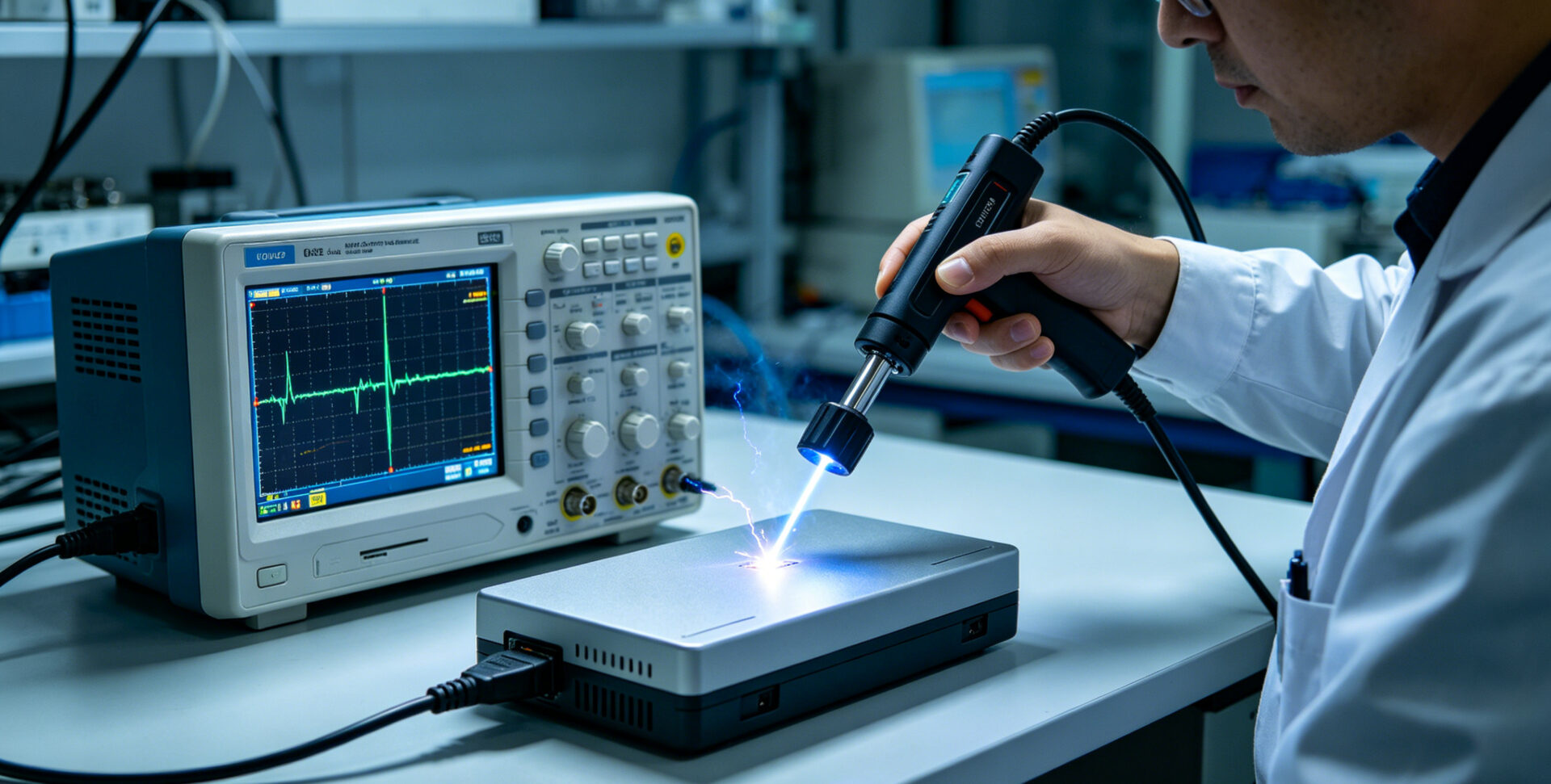
This is why experienced buyers do not just search for emc testing conducted emissions services. They look for a partner who understands how EMC integrates with hardware design, PCB layout, and system architecture—someone who can help them enter formal certification with confidence. TPS’s resources on electromagnetic compatibility testing news and compliance guides reflect this integration logic.
2. Emissions testing: conducted and radiated emissions
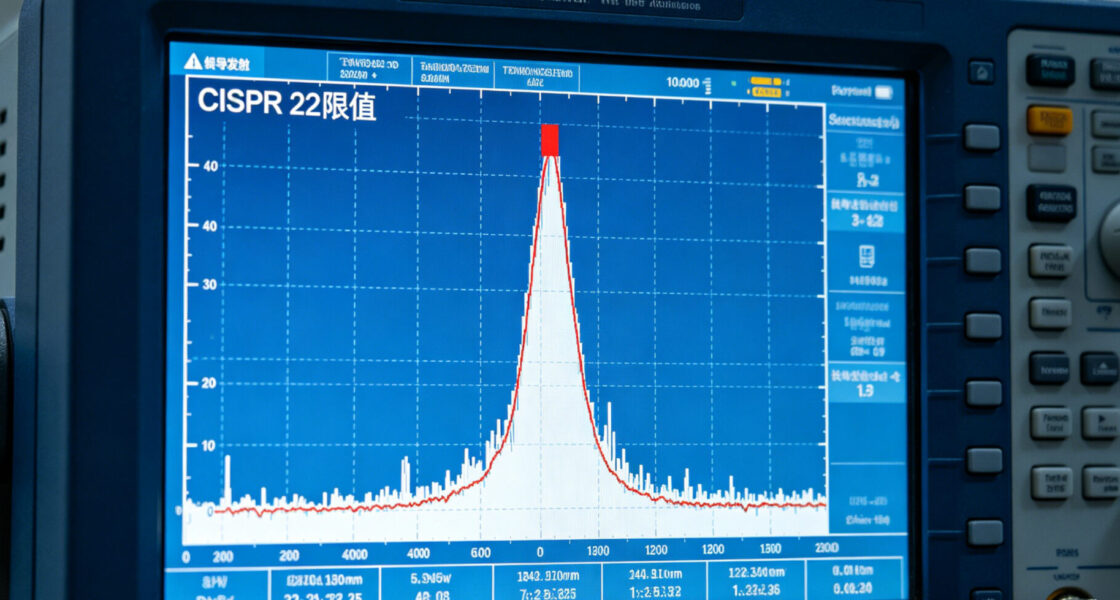
Emissions testing measures the electromagnetic energy unintentionally generated by a device. If emissions exceed limits defined by standards such as CISPR 11, CISPR 22, or CISPR 32, the product cannot be marketed in regulated regions. Two categories of emissions are tested: conducted and radiated.
2.1 Conducted emissions: mains ports and control lines
Emc testing conducted emissions focuses on disturbances that propagate through power and signal cables. Using a line impedance stabilization network (LISN) and spectrum analyzer, we measure noise on AC mains, DC power lines, and control ports. The emc testing part 2 conducted emissions (referring to CISPR 16-2-1) defines the measurement method. Common failure sources include switching power supplies, clock harmonics, and poor filtering design.
In our laboratory, conducted emissions testing is performed as part of pre-compliance to identify problematic frequencies early. We provide actionable feedback: add ferrites, adjust filter component values, or modify PCB layout to reduce common-mode currents.
2.2 Radiated emissions: enclosure and cabling
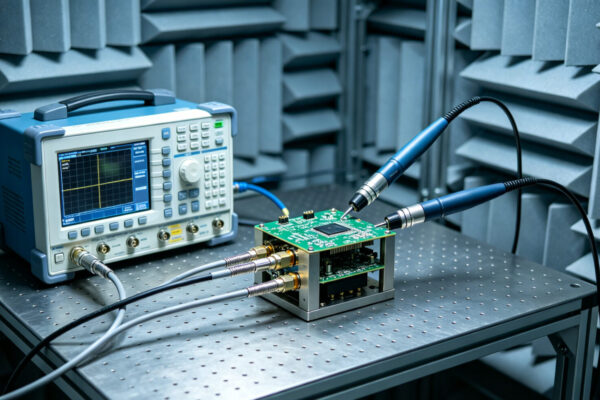
Emc radiated emissions testing measures electromagnetic fields radiated from the device and its cables. Testing takes place in a semi-anechoic chamber with calibrated antennas positioned at specified distances. Radiated emissions often originate from high-speed digital signals, switching converters, and poorly shielded cables. Early identification through pre-compliance allows design teams to evaluate shielding, cable routing, and enclosure gasketing before committing to production tooling.
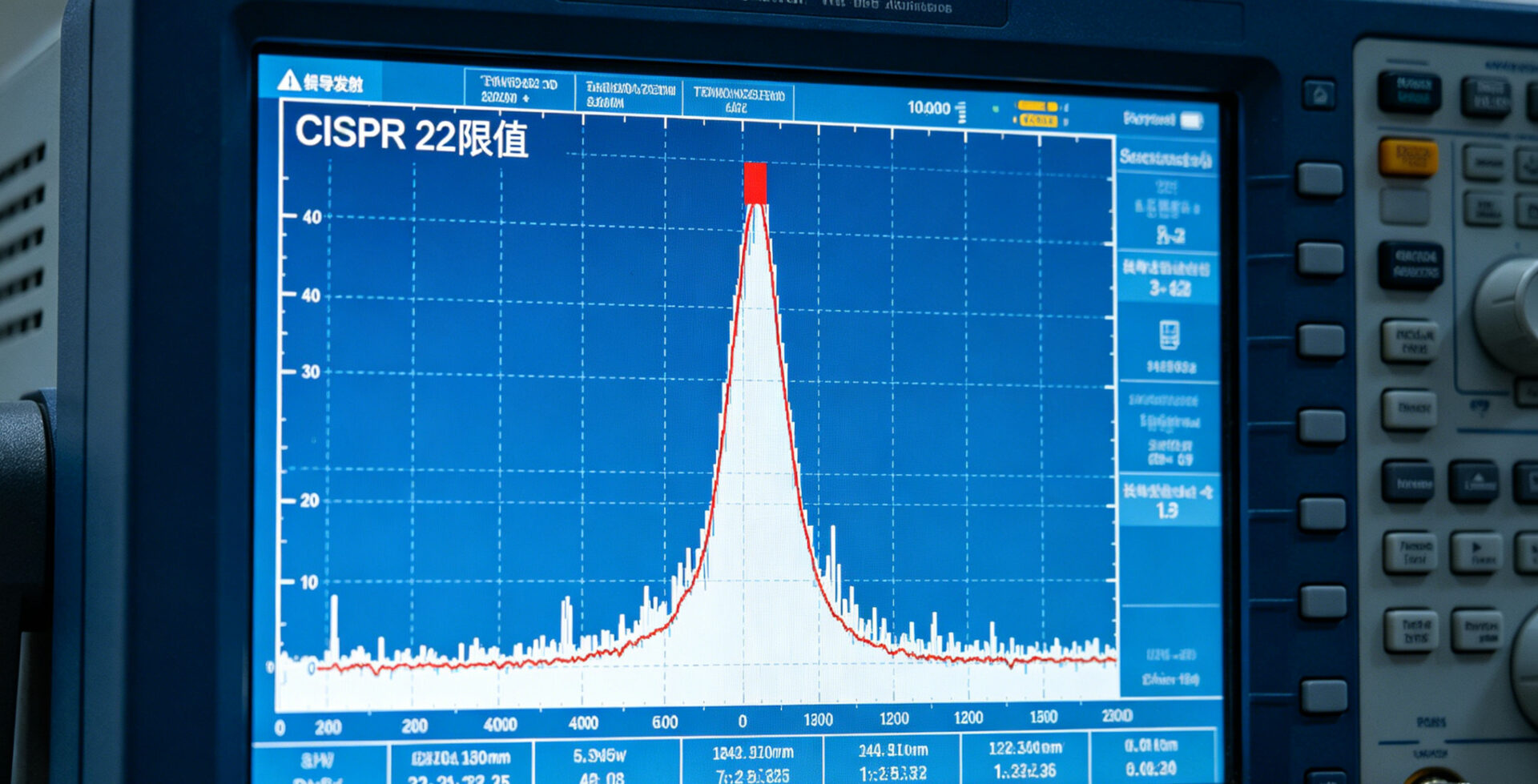
For a deeper dive into emissions testing methodology, see our how to test electromagnetic compatibility guide and compliance testing guide.
3. Immunity testing: ensuring reliable operation under disturbance
Emissions are about not disturbing others. Immunity is about not being disturbed. Immunity testing subjects the device to controlled electromagnetic disturbances to verify it continues to operate as intended. Standards such as IEC 61000-4-2 (ESD), IEC 61000-4-3 (radiated RF), IEC 61000-4-4 (electrical fast transients), IEC 61000-4-5 (surge), and IEC 61000-4-6 (conducted RF) define test methods and levels.
For medical devices, the collateral standard electromagnetic disturbances-requirements and tests (IEC 60601-1-2) adds specific immunity requirements. In our laboratory, we perform immunity testing to help clients understand how their devices behave under real-world disturbance scenarios—from electrostatic discharge during handling to power line surges in industrial environments.
Electromagnetic disturbance testing is particularly critical for systems with microcontrollers, sensitive analog circuits, or wireless communication. A device that passes emissions but fails immunity can still cause field failures, leading to warranty claims and reputational damage. Pre-compliance immunity testing gives development teams confidence before formal certification.
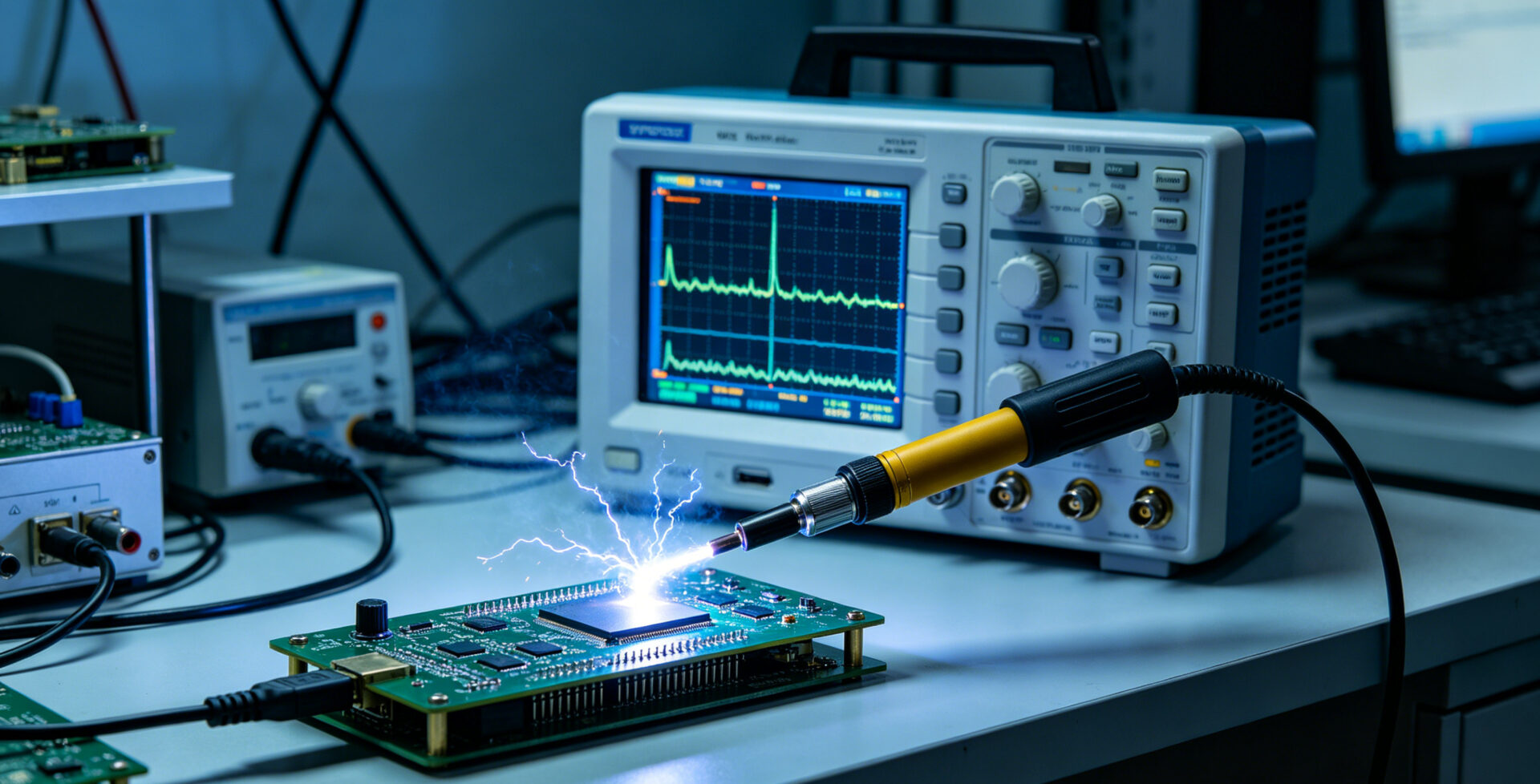
For real-world examples, see our case studies: EMC testing customer case and combined EMC and electrical safety case.
4. Electromagnetic shielding solutions: when emissions need containment
Sometimes, even with optimized PCB layout and filtering, a device generates emissions that cannot be fully suppressed at the source. In these cases, an electromagnetic shielding solution becomes necessary. Shielding can take many forms: conductive coatings on plastic enclosures, metal cans over sensitive circuits, gasketed seams, or shielded cables.
Our EMC laboratory can evaluate shielding effectiveness through near-field probing and chamber-based measurements. We help clients select appropriate shielding materials and verify that shielding implementations actually reduce emissions to acceptable levels. This is especially relevant for high-power converters, RF modules, and devices with external cabling that acts as an antenna.
Shielding is not a substitute for good design, but it is a valuable tool when emissions cannot be resolved by filtering and layout alone. We provide recommendations grounded in measurement data, not guesswork.
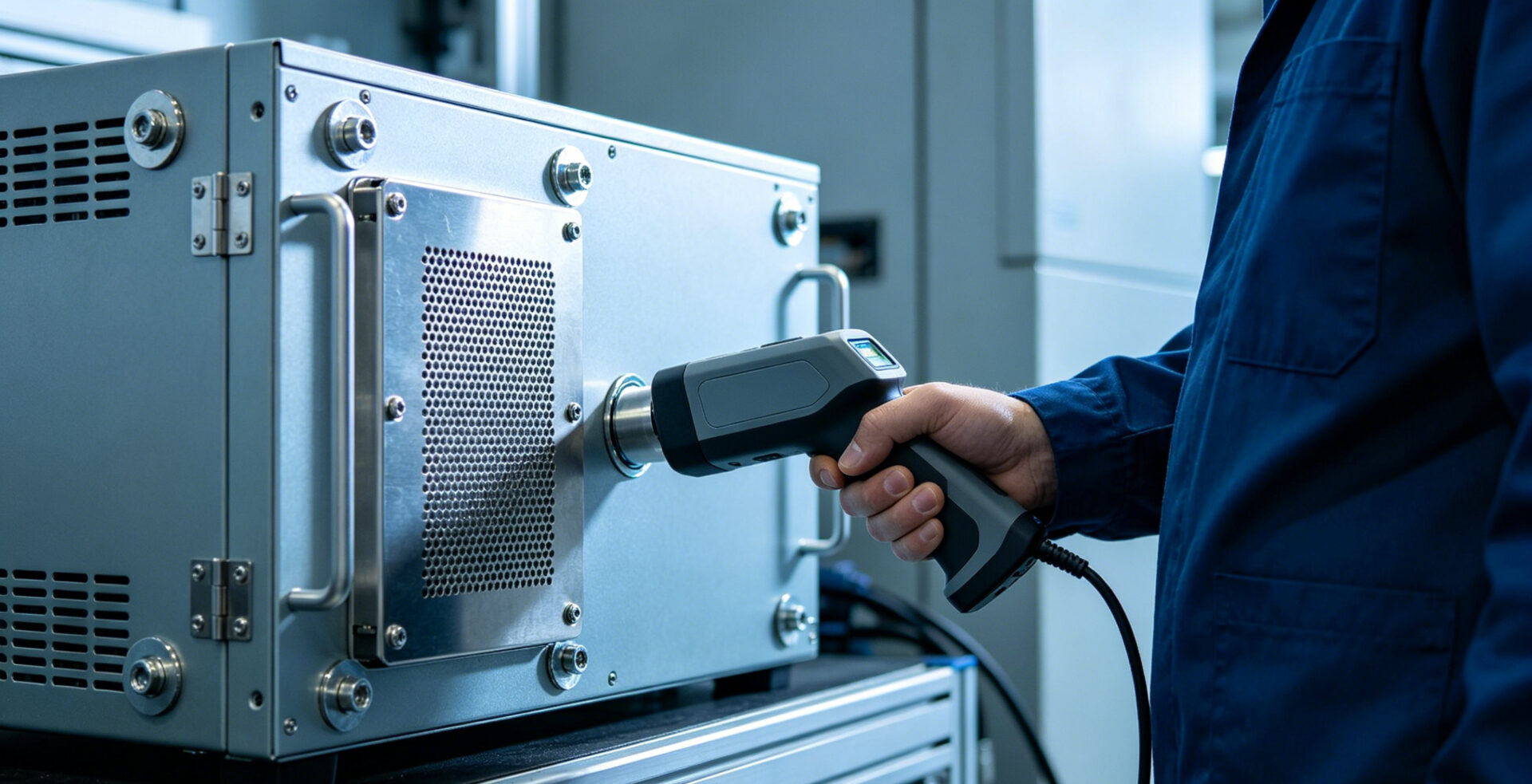
For additional insights, refer to our EMC and electrical safety testing guide.
5. The pre-compliance advantage: fixing issues before formal testing
Formal EMC testing at accredited laboratories is expensive and time-sensitive. A single failure can cost thousands in re-test fees and weeks in schedule delays. Pre-compliance testing is the countermeasure.
At TPS, our pre compliance testing laboratory approach is integrated with our development and EMS services. We perform conducted and radiated emissions testing, immunity testing, and shielding evaluation on prototypes, pilot units, and even early production samples. The goal is not just to pass tests, but to build products that are intrinsically robust.
Our process includes:
- Early-stage assessment: reviewing schematics, PCB layout, and mechanical design for EMC risk factors.
- Pre-compliance measurement: running the same tests as accredited labs would, using calibrated equipment and standard-compliant methods.
- Iterative improvement: making changes—filtering, layout adjustments, shielding additions—and re-testing to verify effectiveness.
- Documentation: providing test reports that can be referenced during formal certification.
This approach is especially valuable for medical device developers. For amplifiers medical equipment, both emissions and immunity requirements are strict. Our EMC lab for medical devices resource details how we support this sector.

6. EMC for medical devices: collateral standards and special requirements
Medical electrical equipment must comply with IEC 60601-1-2, the collateral standard electromagnetic disturbances-requirements and tests. This standard imposes stricter immunity levels than general industrial equipment, reflecting the critical nature of medical applications. It also defines essential performance: the function that must remain safe even under disturbance.
TPS has extensive experience testing medical devices, from patient monitors to therapeutic equipment. Our laboratory services help medical device developers understand the specific EMC requirements for their products, including:
- Immunity testing to IEC 61000-4-3 at levels up to 30 V/m for life-supporting equipment.
- Conducted emissions testing to CISPR 11, Group 1 or Group 2 classification.
- ESD testing with both contact and air discharge up to ±8 kV / ±15 kV.
For medical device software and hardware integration, see our medical device software development guide and electrical safety testing for medical devices.
7. The European EMC Directive and global market access
For products destined for the European market, compliance with the European EMC Directive (2014/30/EU) is mandatory. The directive requires that equipment be designed and manufactured to ensure that electromagnetic disturbances do not exceed levels allowing other equipment to operate as intended, and that the equipment has adequate immunity for its intended use.
Demonstrating compliance typically involves applying harmonized standards (such as EN 55032 for emissions and EN 61000-6-1/2 for generic immunity). Our laboratory conducts testing aligned with these standards, providing documentation that supports CE marking. For automotive applications, we also support european automotive safety standards and ECE R10.
TPS’s experience with the european emc directive is documented in our resources: EMC directive and product certification and immunity and emissions testing under the directive.