

For system integrators, panel builders, and electrical engineers designing advanced battery testing or energy storage systems, managing power efficiency is a critical challenge. Traditional testing setups waste massive amounts of energy as heat.
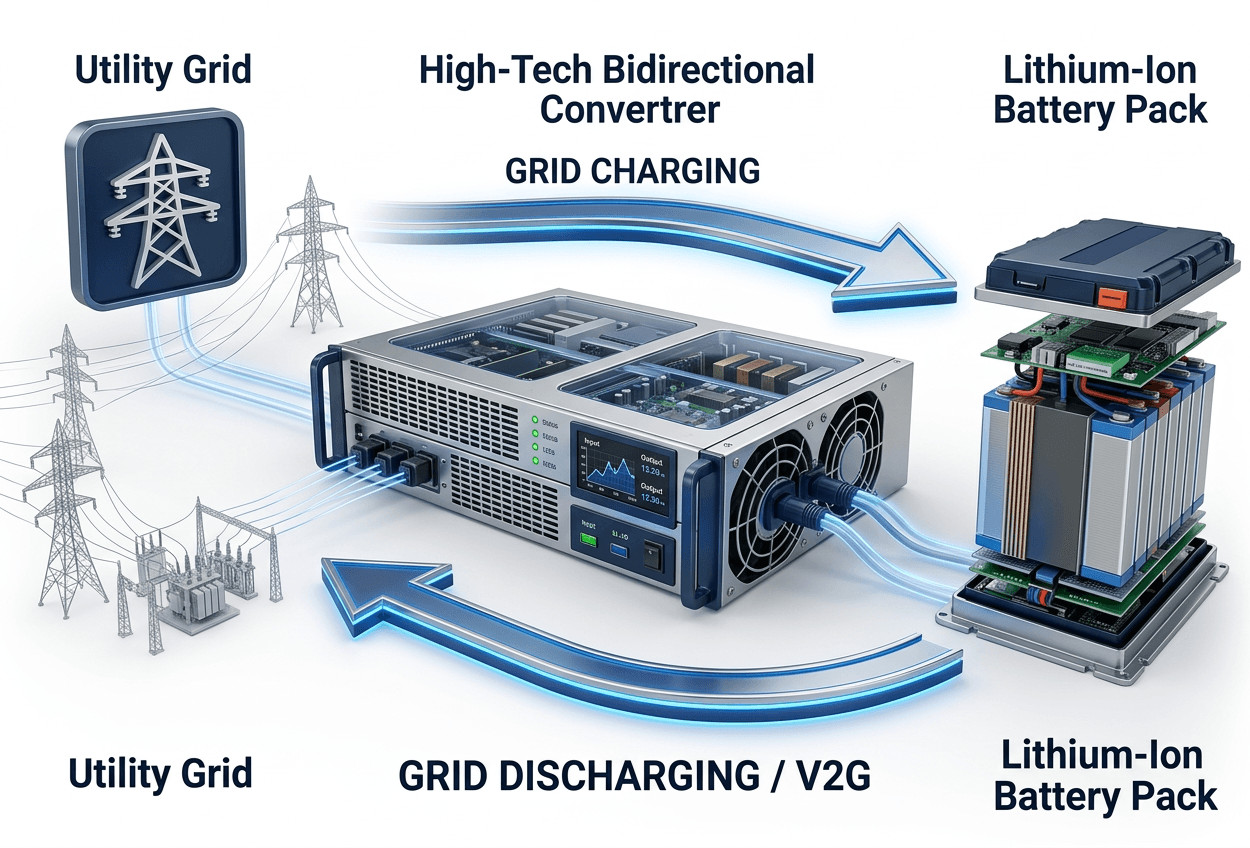
This is where a bidirectional power supply changes the paradigm. By combining a DC power supply and an electronic load into a single unit, these devices can both source power to a device under test (DUT) and sink power back into the local grid or DC bus.
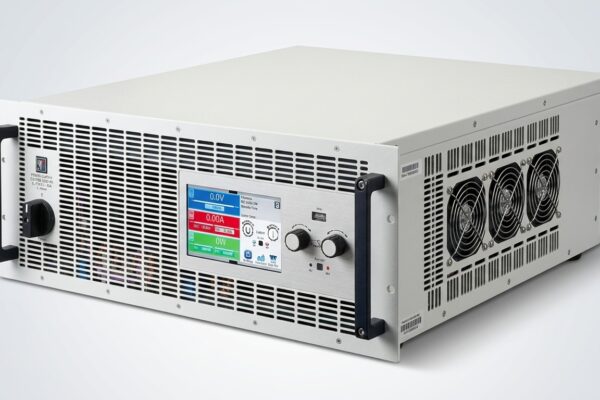
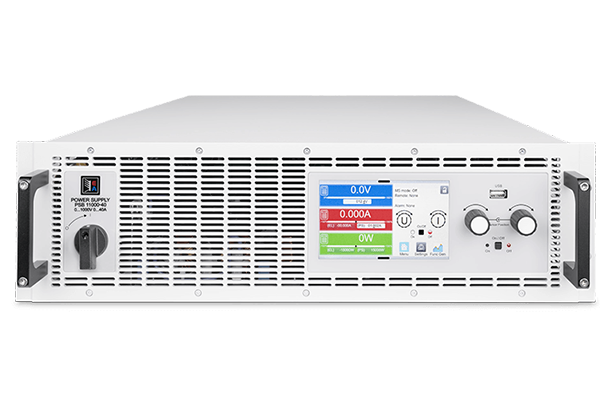
While many engineers search for an EA bidirectional power supply due to brand familiarity, evaluating high-performance alternatives like the TPS-DM570T1512KIF can reveal specialized DC-DC solutions that offer exceptional power density, high-frequency isolation, and seamless energy recovery for demanding industrial applications.
What Is a Bidirectional Power Supply (Source and Sink)?
A standard DC power supply only pushes (sources) current to a load. A standard electronic load only pulls (sinks) current and dissipates it as heat. A bidirectional DC power supply seamlessly transitions between sourcing and sinking current without any physical relay switching or interruption.
When acting as a sink, an energy recovery power supply (or regenerative load) does not burn the energy as heat. Instead, it converts the absorbed DC power and feeds it back to the AC grid or a shared DC bus. This power supply energy regeneration process can recover up to 95% of the energy, drastically reducing electricity costs and HVAC cooling requirements in testing facilities.
Evaluating EA Bidirectional Power Supply Alternatives
Engineers frequently specify an EA regenerative power supply or an EA autoranging bidirectional source for laboratory environments. However, when moving from the lab to mass production, panel building, or specialized DC-DC integration, highly specific modules are required.
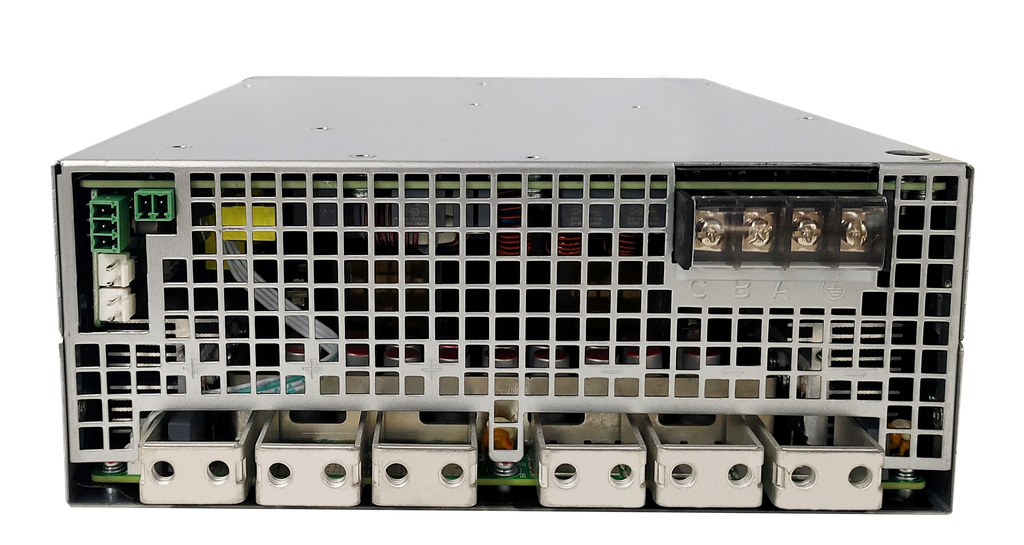
For applications requiring a dedicated 570VDC input and high-current low-voltage output (14-16VDC), the TPS bidirectional power modules offer a highly optimized, compact alternative. Unlike general-purpose lab equipment, the TPS-DM570T1512KIF is engineered specifically for integration into larger automated testing equipment (ATE) and energy storage systems.
Core Specifications: TPS-DM570T1512KIF
The TPS-DM570T1512KIF is a high-performance DC-DC solution designed for versatile energy conversion. It functions as a true bidirectional energy flow power module.
- High Power Capacity: As a 12000W/9600W DC-DC module, it delivers 12000W in the positive direction (source) and 9600W in the opposite direction (sink), meeting extreme high-power demands.
- Stable Input & Output: It features a 570VDC input (with a functional range of 513-627VDC, subject to derating in specific ranges) and a tightly regulated 14-16VDC output.
- High Current Handling: Designed for heavy loads, it is an 800A/640A current power module, providing 800A positive and 640A opposite rated current.
For systems requiring different voltage or current profiles, engineers can also evaluate the TPS-DM570T1512KIRF variant.
Key Product Features & Efficiency
When integrating a sink source DC power module, efficiency and safety are paramount. The TPS module excels in several critical areas:
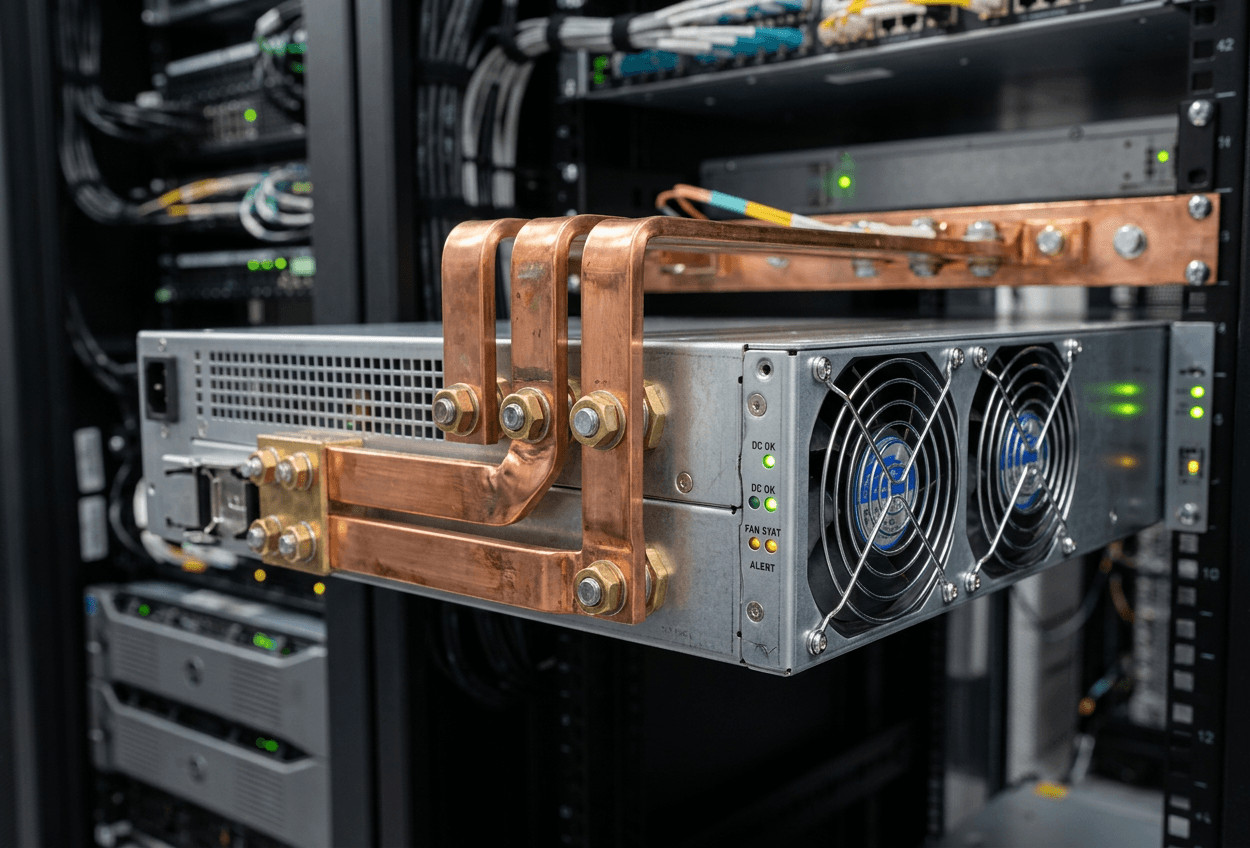
- High Efficiency: It is a 94.5% high efficiency power module, achieving peak efficiency of 94.5% @ 570VDC. This minimizes energy loss during both sourcing and sinking operations.
- Safe Isolation: Equipped with a built-in high frequency isolation transformer, it ensures safe operation and galvanic separation between the high-voltage DC bus and the low-voltage battery side.
- Reliable Cooling: It operates as a forced air cooling power module. The intelligent control system adjusts fan speed based on thermal loads, maintaining optimal internal temperatures.
These features align with stringent industrial safety standards, similar to those outlined by IEC 62368-1 for ICT and AV equipment.
Primary Applications: EV Battery Test & Energy Storage
The ability to seamlessly switch between charging and discharging makes this module ideal for specific industrial sectors.
Lithium Formation and Testing
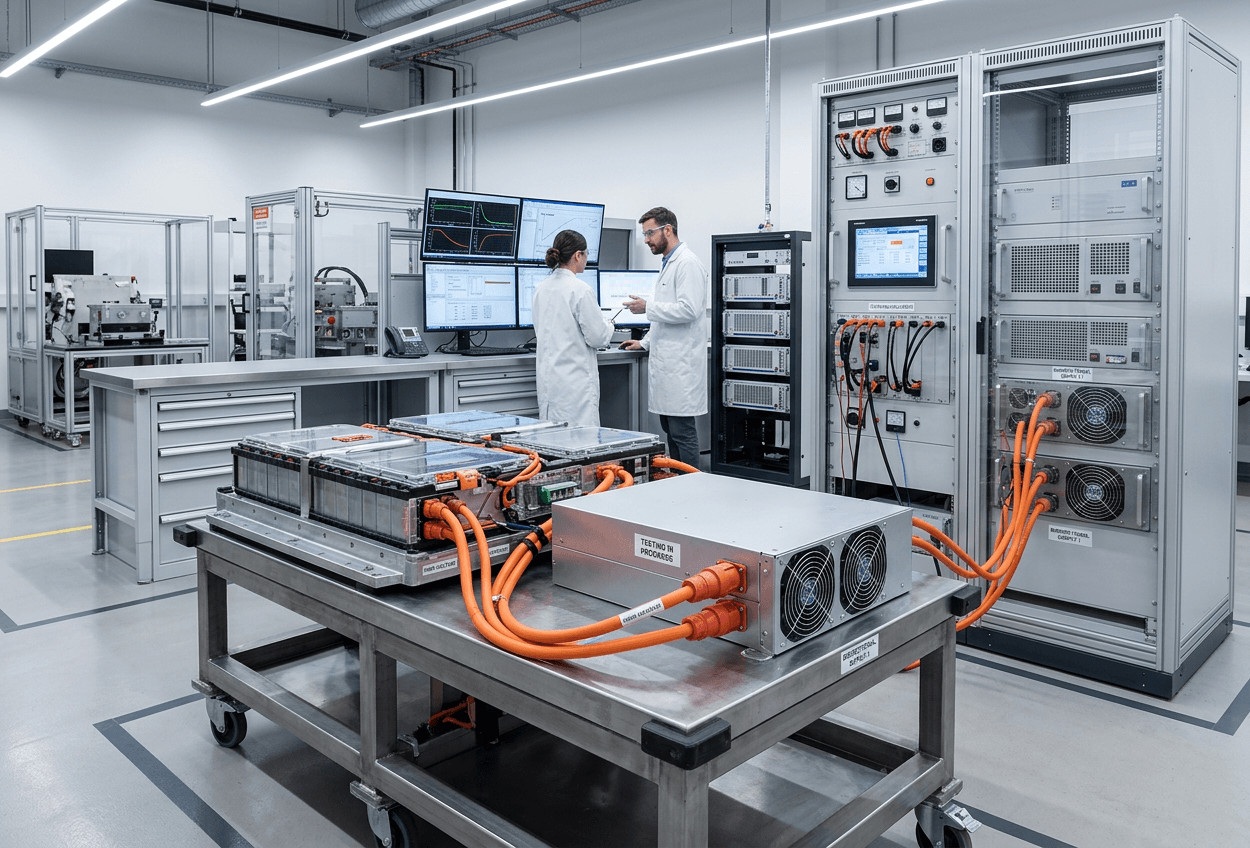
During battery manufacturing, cells must undergo formation (initial charging/discharging cycles). The TPS unit serves as a dedicated lithium formation test module. As a battery cycling bidirectional PSU, it discharges the battery and feeds the energy back to the 570VDC bus to charge other cells on the line, drastically reducing factory power consumption.
Energy Storage Systems (ESS)
As an energy storage bidirectional module, it facilitates the transfer of power between battery banks and the main DC link. It is highly effective for EV battery test bidirectional setups, where simulating real-world driving (rapid acceleration/braking) requires instantaneous source and sink capabilities.
Mechanical Integration & Environment
System integrators must account for physical space and communication protocols when building automated test equipment.
- Compact Design: Measuring just 300mm × 220mm × 86mm, it is a highly dense power module. Weighing only 5.5kg, this 5.5kg bidirectional power module balances extreme performance with portability and ease of rack installation.
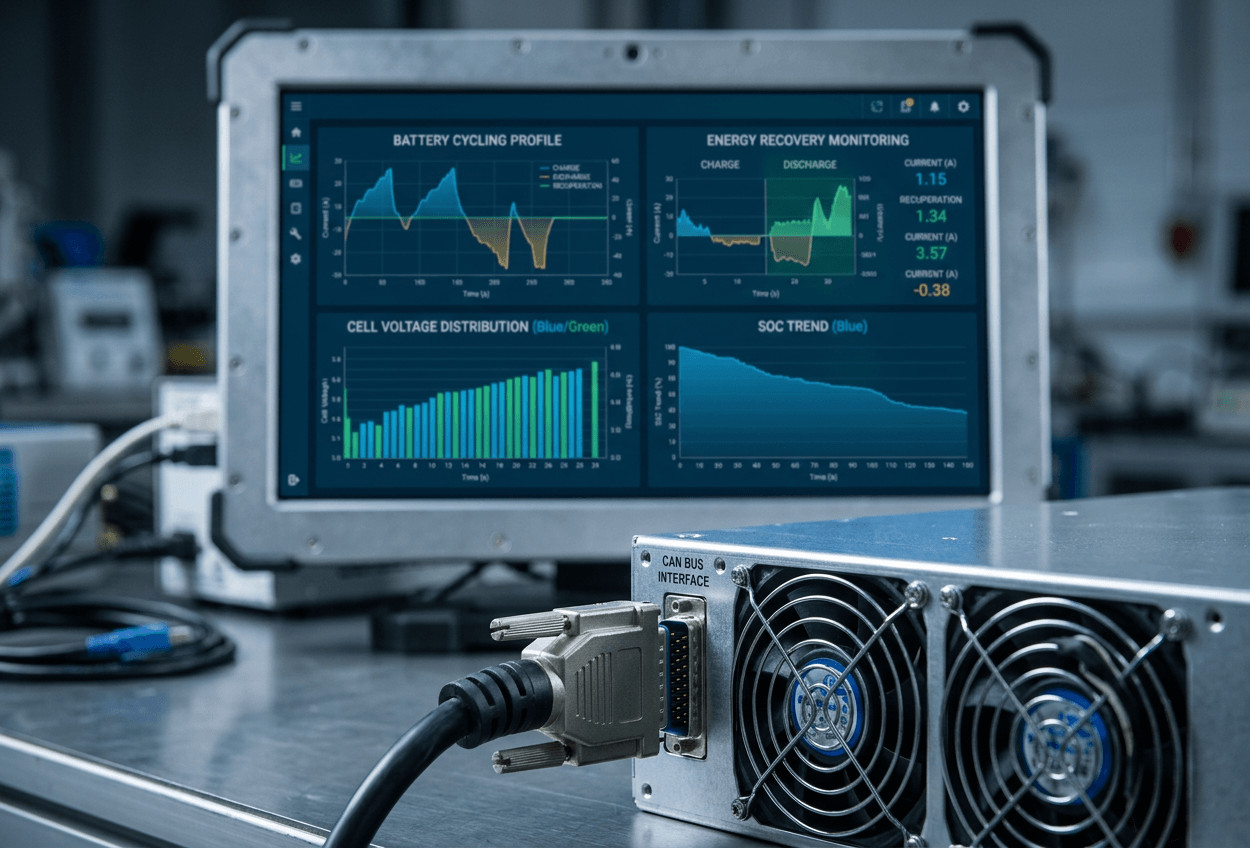
- Smart Communication: It is a CAN communication power module. Utilizing the robust CAN bus protocol, it allows PLCs and industrial PCs to send precise voltage/current commands and read back real-time telemetry for data logging.
- Wide Operating Temperature: It functions as a -10°C to 60°C operating module. It supports full load between -10°C and 30°C, with a 90% power derating curve applied between 30°C and 60°C to protect internal components.
For more insights on integrating power modules into production lines, visit our Production capabilities page.
RFQ Checklist for Procurement
To ensure rapid processing of your Request for Quotation (RFQ) for bidirectional modules, please prepare the following details:
- Application Type: (e.g., EV battery testing, lithium formation, ESS).
- Voltage/Current Requirements: Confirm if the 570VDC input and 14-16VDC/800A output match your DC bus architecture.
- Quantity: Prototype vs. mass production volumes.
- Control Interface: Confirmation of CAN bus compatibility.
Read more technical articles and integration guides on our Engineering Blog.
FAQ
What is the difference between a standard electronic load and a regenerative bidirectional DC test load?
A standard load dissipates absorbed power as heat, requiring massive cooling fans or water cooling. A regenerative load (like the TPS bidirectional module) converts the absorbed power and feeds it back to the DC bus or AC grid, recovering energy.
Can the TPS-DM570T1512KIF replace an EA battery test power supply?
Yes, for specific DC-DC applications. While EA provides excellent standalone lab equipment, the TPS module is designed for deep integration into OEM systems, offering 12kW of power in a highly compact, CAN-controlled, 570VDC-input form factor.
How does the module handle thermal management?
It utilizes an intelligent forced air cooling system. However, system integrators must ensure adequate ambient airflow within the cabinet, especially when operating near the 60°C upper limit where derating occurs.
Is the output galvanically isolated?
Yes, the module features a built-in high-frequency isolation transformer, ensuring safety between the high-voltage input and the low-voltage output.