

For system integrators, panel builders, and electrical engineers, sourcing reliable winding goods is often a bottleneck. Off-the-shelf inductors and transformers rarely meet the strict spatial constraints, thermal requirements, or specific inductance values needed for advanced power electronics or medical devices. A poorly wound coil can lead to excessive EMI, thermal runaway, or catastrophic failure in the field.
TPS Elektronik’s EMS winding goods services are designed to solve these exact problems. By offering custom magnetic coil winding, precise control over wire insulation, and expertise in complex assemblies like the medical transformer and Helmholtz coil, we ensure your magnetic components perform exactly as designed.
1. The critical role of custom magnetic coil winding
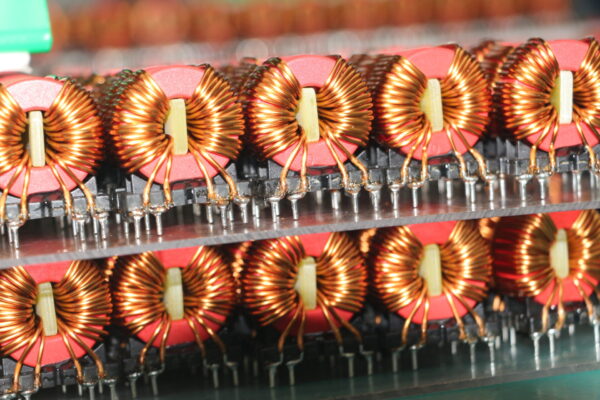
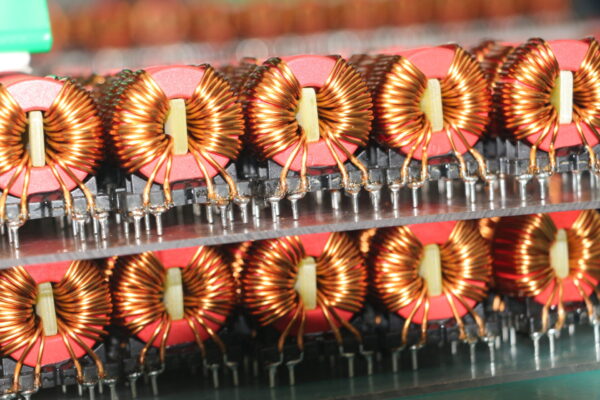
In modern power electronics, the magnetic coil is the heart of energy transfer and filtering. Whether it is a high-frequency choke for a switch-mode power supply or a precision sensor coil, standard components often fall short. Custom magnetic coil winding allows engineers to specify the exact core material, winding geometry, and wire type to optimize efficiency and minimize parasitic capacitance.
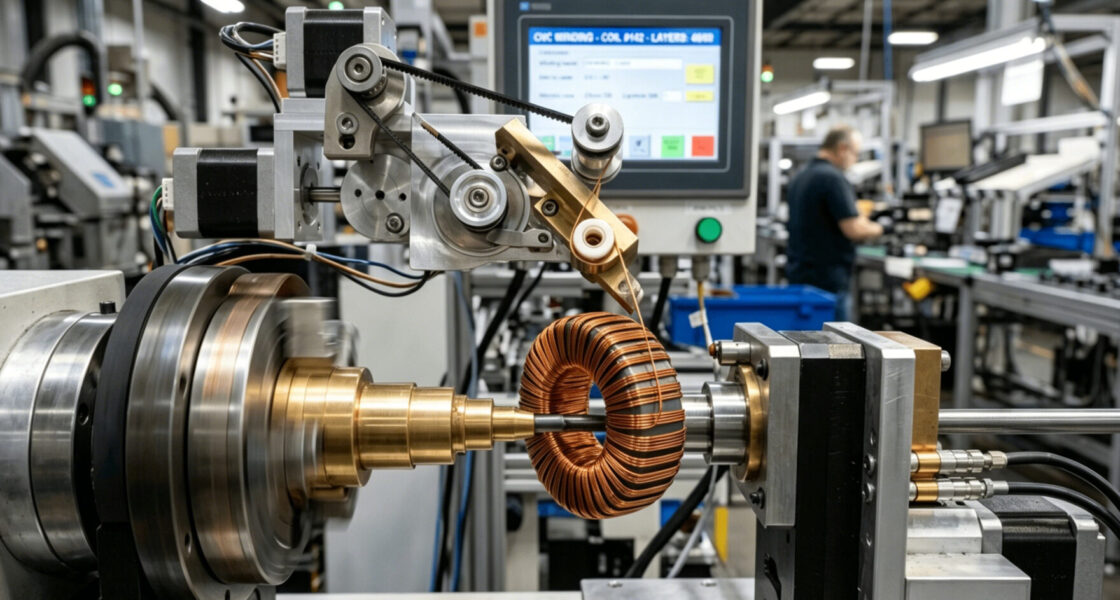
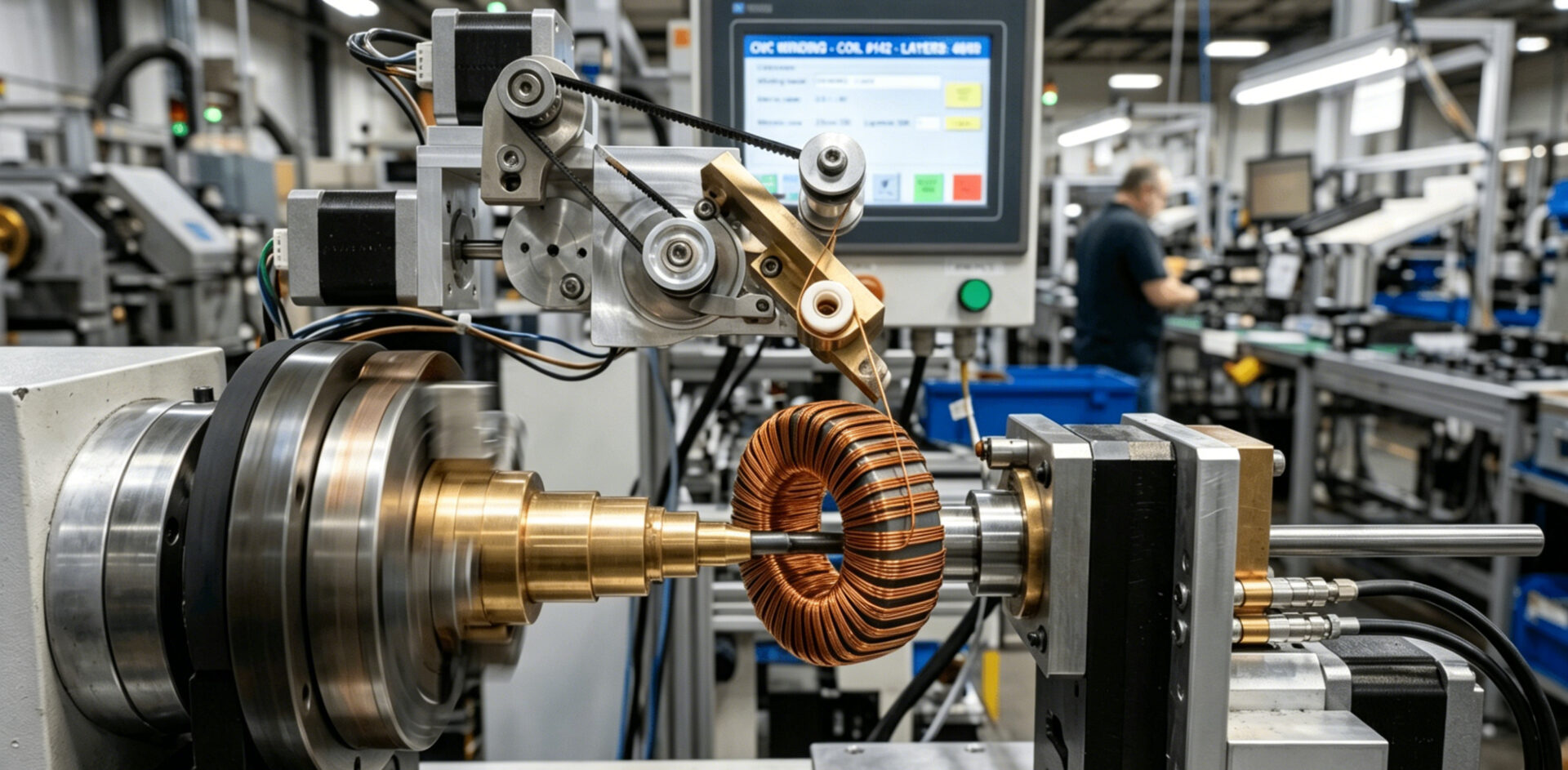
At TPS Elektronik, our automated winding machines ensure perfect layer alignment, which is crucial for high-voltage applications where uneven winding can cause corona discharge. We specialize in everything from simple wire coil assemblies to complex toroidal coils and dV/dt chokes.
2. Selecting the right magnet and wire: AWG sizes and insulation
The performance of any wound component depends heavily on the magnet and wire selection. This involves two primary factors: the conductor size and the dielectric coating.
2.1 Understanding AWG sizes for optimal current density
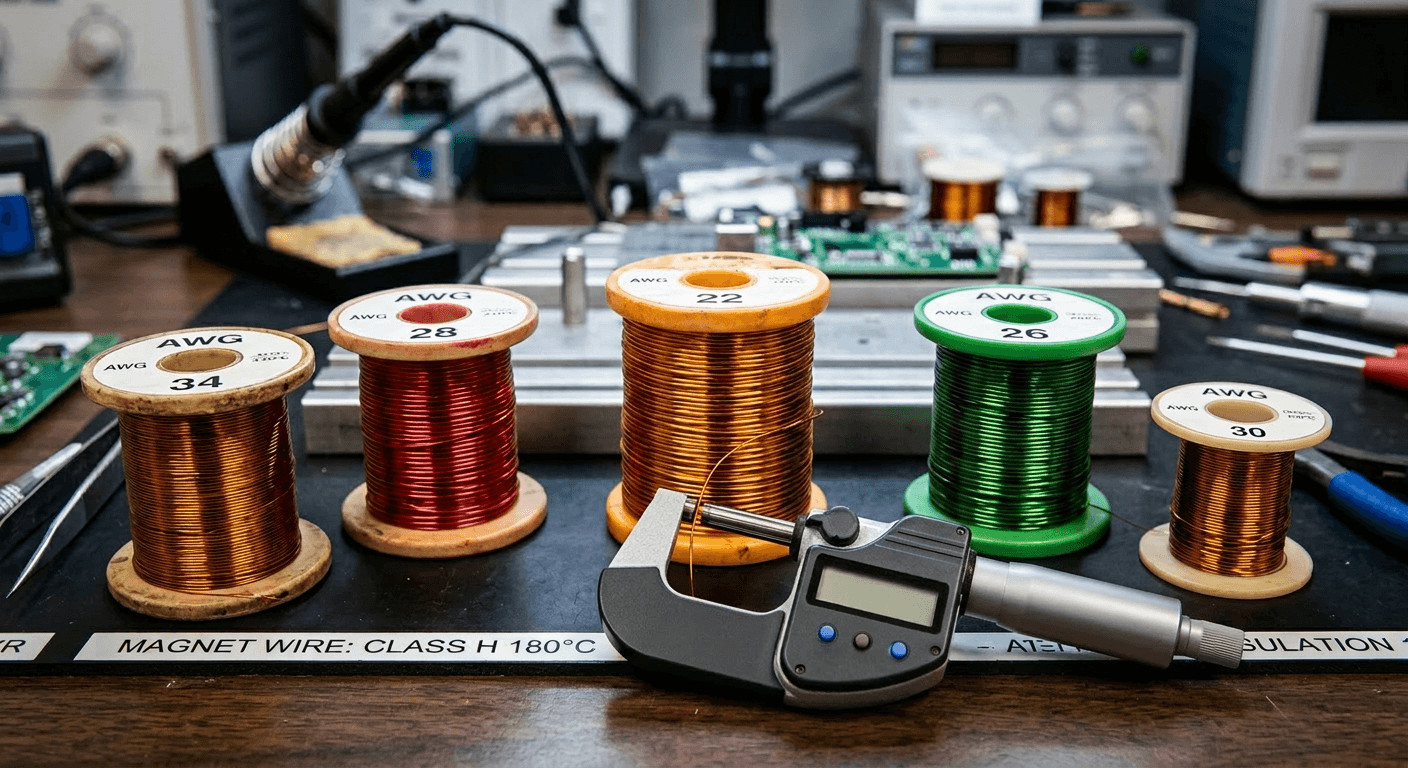
Choosing the correct wire gauge from standard AWG sizes (American Wire Gauge) is critical for managing current density and thermal dissipation. A wire that is too thin will overheat, while a wire that is too thick will not fit within the core’s window area. For high-frequency applications, skin effect becomes a major issue, often requiring the use of Litz wire (multiple insulated strands woven together) instead of a single solid magnet wiring conductor.
2.2 Wire insulation and bonding wire technologies
The wire insulation must withstand the operating voltage and temperature of the application. Standard polyurethane enamel might suffice for low-voltage applications, but high-temperature environments require polyimide or polyamide-imide coatings (Class F or Class H). Furthermore, we utilize specialized bonding wire (self-bonding wire) which features an outer adhesive layer. When heated or treated with a solvent, this layer melts and fuses the coil together, eliminating the need for external bobbins or varnishing in certain compact designs. Learn more about wire insulation materials and applications.
3. Medical transformer winding: Meeting strict safety standards
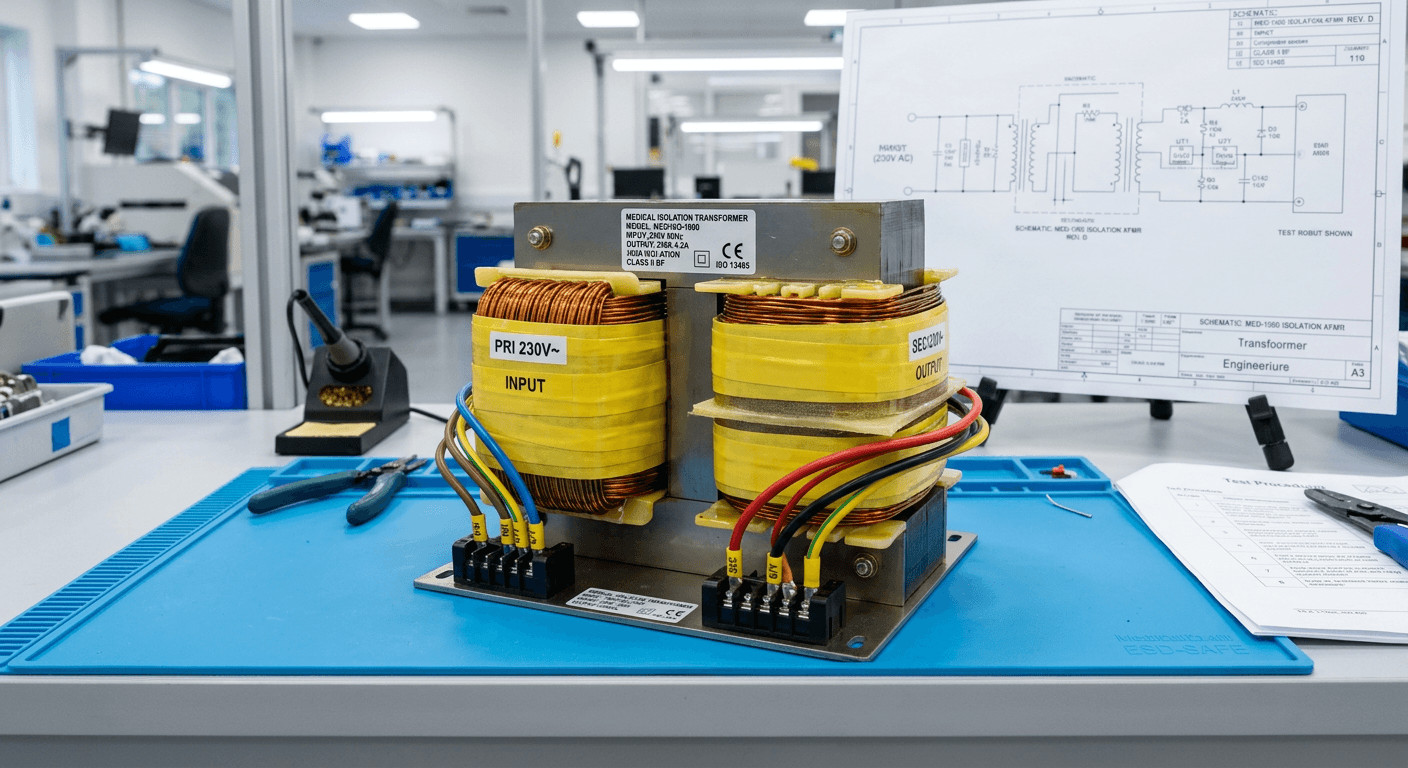
Designing a medical transformer requires adherence to stringent safety standards, such as IEC 60601-1. These transformers must provide reinforced insulation and extremely low leakage currents to protect patients and operators. This often necessitates specialized winding techniques, such as using triple-insulated wire (TIW) or incorporating extensive creepage and clearance margins using margin tape.
TPS Elektronik has deep expertise in medical high-frequency transformer coil winding. We ensure that every medical-grade component we produce undergoes rigorous dielectric withstand (hi-pot) testing to guarantee compliance and safety.
4. Precision applications: Manufacturing Helmholtz coils
A Helmholtz coil is a specialized arrangement of two identical circular magnetic coils placed symmetrically along a common axis. When equal current flows through both helmholtz coils in the same direction, it creates a highly uniform magnetic field in the space between them. These are critical for scientific instruments, sensor calibration, and electromagnetic susceptibility testing.
Manufacturing a helmholtz coil requires extreme precision. The number of turns, the wire tension, and the physical alignment must be perfectly matched. TPS Elektronik provides the engineering precision required to manufacture these specialized coils to exact specifications. Read our Helmholtz coil uniform magnetic field guide for more technical details.
5. The TPS Elektronik advantage in EMS winding goods
By integrating custom magnetic coil winding into our broader EMS offerings, TPS Elektronik provides a single-source solution for your most complex electronic assemblies. We don’t just wind wire; we engineer magnetic solutions that optimize your entire system’s performance, ensuring quality from the raw copper to the final tested product.
Discuss your specific winding requirements with our engineers →
6. FAQ
What is the advantage of custom magnetic coil winding over off-the-shelf components?
Custom magnetic coil winding allows you to optimize the exact inductance, DCR (DC resistance), physical footprint, and thermal characteristics for your specific application, rather than compromising with a standard part that “almost” fits.
How do I choose the right AWG sizes for my magnet wiring?
Selecting AWG sizes depends on the required current rating and acceptable temperature rise. Thicker wire handles more current but takes up more space. For high frequencies, skin effect must be considered, often requiring multiple thinner strands (Litz wire) instead of one thick wire.
What makes a medical transformer different from a standard transformer?
A medical transformer must meet strict IEC 60601-1 safety standards, requiring reinforced wire insulation, larger creepage/clearance distances, and extremely low leakage currents to ensure patient safety.
What are Helmholtz coils used for?
Helmholtz coils are used to produce a highly uniform magnetic field. They are essential in applications like calibrating magnetic sensors, scientific experiments, and specific types of electromagnetic testing.