

For system integrators, panel builders, and procurement teams in the industrial automation industry, the HMI touch panel front plate is not just a cosmetic cover—it is the primary interface between operators and the machine. A front plate with misaligned display cutouts, poorly positioned mounting holes, or an inconsistent surface finish can delay production, increase assembly costs, and compromise the user experience of the final product.
TPS Elektronik’s aluminum CNC milling service engaged by an anonymous industrial automation OEM to manufacture precision HMI touch panel front plates with complex display cutouts, precisely positioned mounting hole patterns, and an anodized finish that met both aesthetic and durability requirements—from prototype validation to volume production.
1. The Challenge: Precision Cutouts and Mounting Holes for HMI Touch Panels
The customer—an industrial automation OEM developing a next-generation machine control system—needed high-quality aluminum front plates for their HMI touch panel assemblies. The front plates serve as the visible interface between the operator and the machine, housing a touchscreen display and a set of control buttons.
Key requirements included:
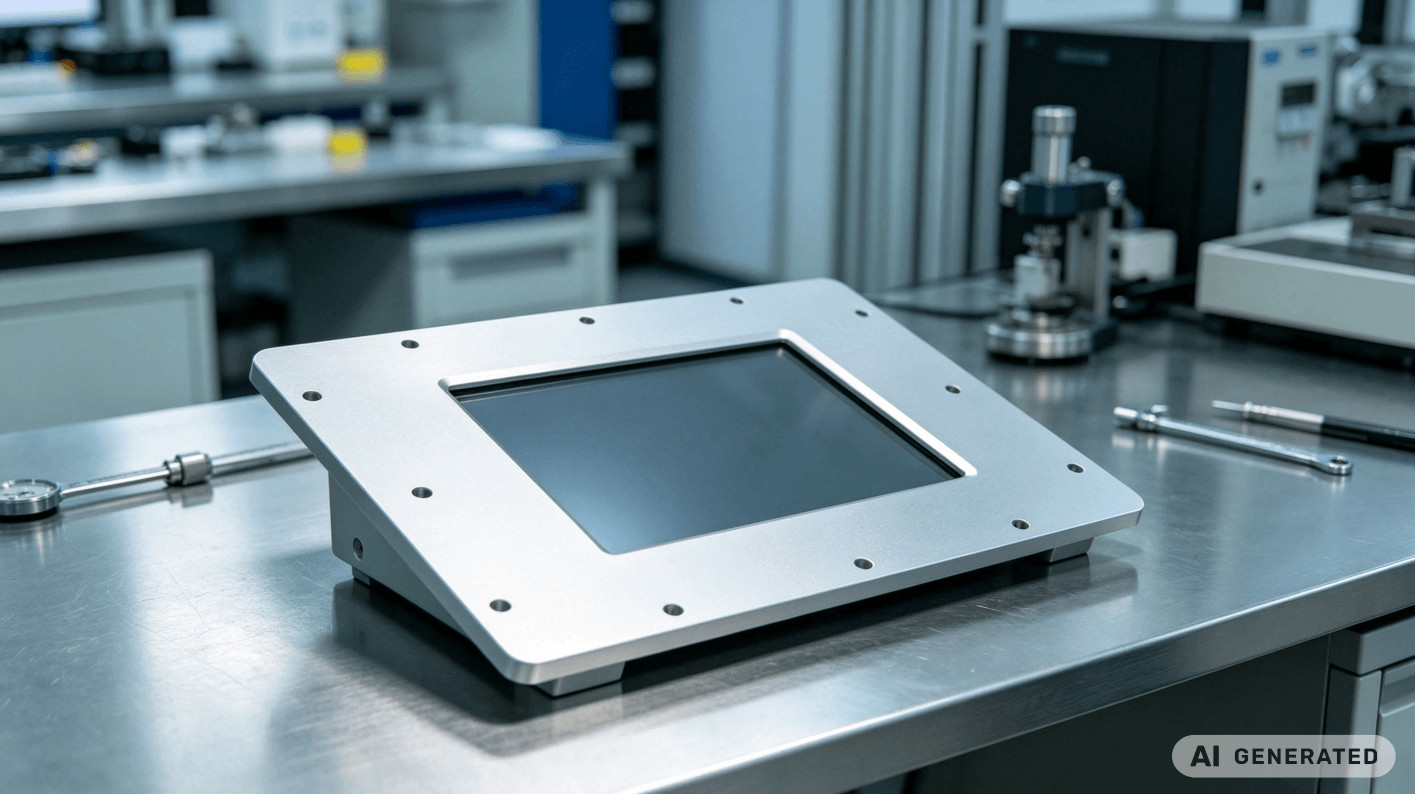
- Precision display cutouts: A large rectangular opening for the touchscreen display with tight dimensional tolerances
- Precise mounting hole patterns: Multiple mounting holes with countersinks for secure attachment to the enclosure
- Consistent surface finish: Bead-blasted and anodized finish for durability and aesthetics
- Material stability: Aluminum 6061-T6 with stress-relief processing to maintain flatness
- Scalability: From prototype quantities to production volumes without compromising quality
TPS Elektronik’s aluminum CNC milling service selected for its ability to deliver precision-machined aluminum components with tight tolerances, integrated DFM feedback, and documented quality assurance—all within the broader context of an Electronic Manufacturing Services (EMS) environment.
2. The TPS Solution: Integrated Aluminum CNC Milling for HMI Front Plates
TPS Elektronik’s approach combined precision CNC milling with integrated EMS capabilities to deliver HMI front plates that met all customer requirements while simplifying the broader manufacturing workflow.
Design for Manufacturing (DFM) Review:
- TPS engineers reviewed the customer’s design to optimize cutout geometries for machinability and tool access
- Mounting hole patterns evaluated for positional accuracy and countersink depth consistency
- Material selection confirmed: 6061-T6 aluminum for excellent strength-to-weight ratio, corrosion resistance, and machinability
Precision Machining:
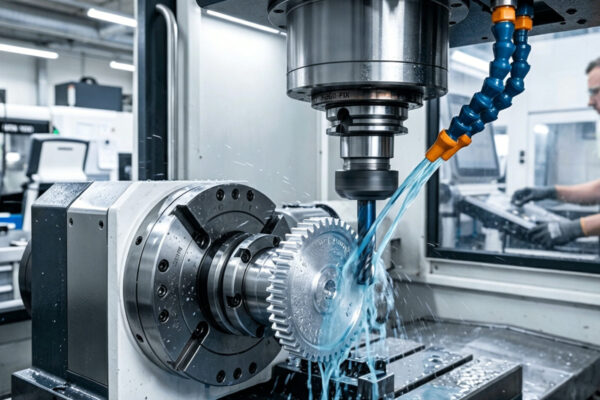
- 3-axis and 4-axis CNC milling of aluminum billets into finished front plates
- Precision display cutouts with dimensional tolerances of ±0.01–0.05 mm for critical features
- Mounting hole patterns with positional accuracy to match enclosure and PCB interfaces
- Countersinks and chamfered edges for clean, professional appearance
Surface Finishing:
- Bead blasting for uniform matte surface preparation
- Type II anodizing for corrosion resistance and durability
- Color matching to customer specifications for consistent brand appearance
For industrial HMI aluminum panel applications, the combination of precision machining and surface finishing ensures that the front plate meets both functional and aesthetic requirements. The display cutout must be precisely positioned to avoid obstructing the touchscreen, while the mounting holes must align perfectly with the enclosure to prevent gaps or misalignment.
3. Manufacturing Approach: From Solid Billet to Finished Front Plate
The manufacturing process for the HMI front plates designed to deliver consistent quality across prototype and production volumes:
Material Preparation:
- Aluminum 6061-T6 billets selected for their stability after thermal treatment
- Stress-relief processing applied to minimize residual stresses that could cause distortion during machining
CNC Milling Operations:
- Roughing passes removed the bulk of material efficiently
- Finishing passes achieved the required dimensional accuracy and surface finish
- Precision toolpaths optimized for aluminum machining to minimize tool wear and ensure consistent results
Secondary Operations:
- Countersinking of mounting holes for flush fasteners
- Edge chamfering for clean, safe edges and professional appearance
- Deburring of all cutouts and edges per customer specifications
Surface Finishing:
- Bead blasting to achieve a uniform matte surface
- Type II anodizing for corrosion resistance and durability
- Dimensional allowances for anodizing were incorporated into tolerances
For CNC milled front plate applications, the combination of precision machining and controlled surface finishing ensures that the final component meets both dimensional and aesthetic specifications. The anodized finish not only protects the aluminum from corrosion but also provides a professional appearance that enhances the perceived quality of the final product.
4. Quality Assurance: Dimensional Accuracy and Surface Finish
Quality assurance embedded throughout the manufacturing process to ensure that every front plate met the customer’s specifications:
In-Process Inspection:
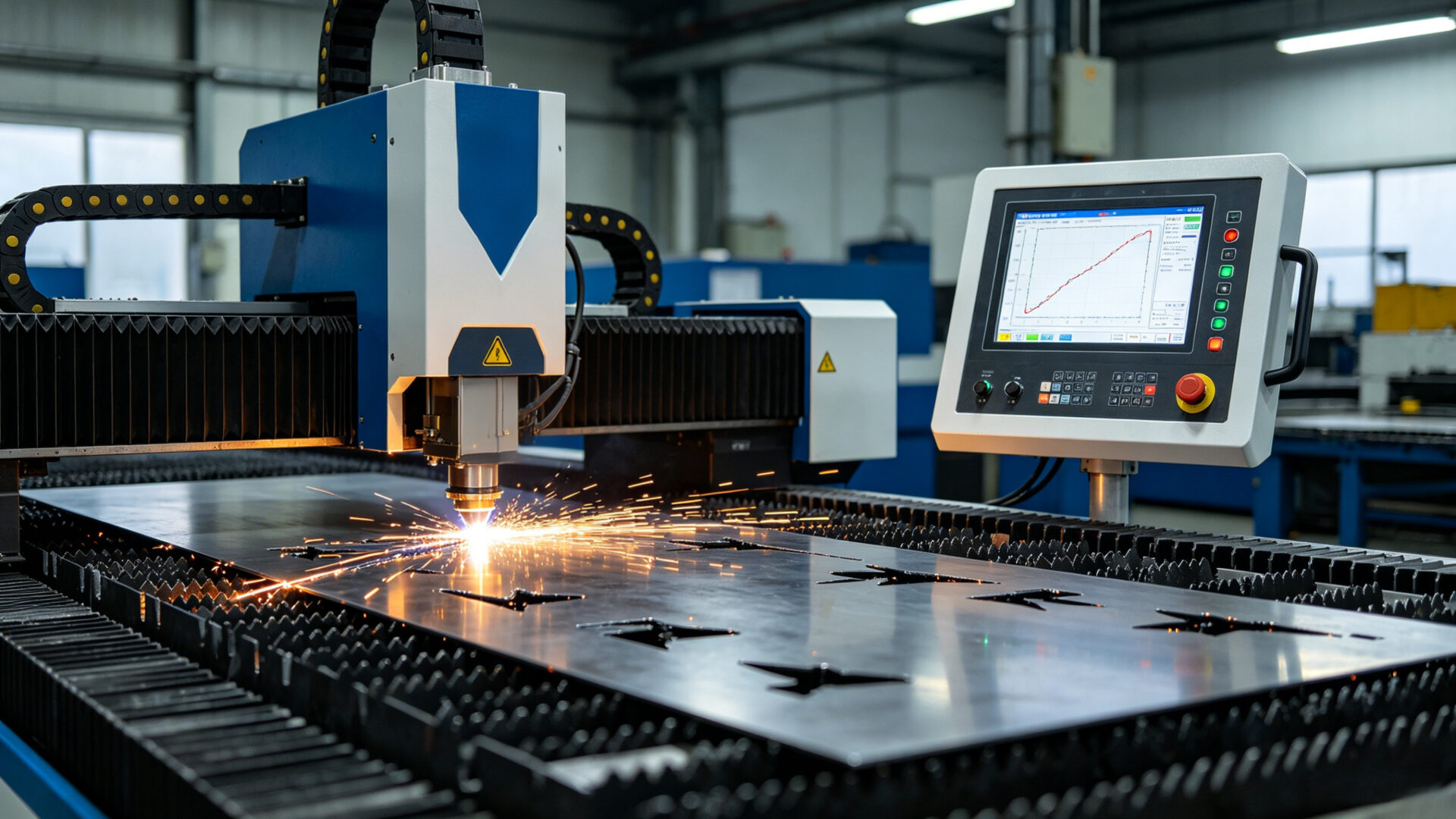
- Critical dimensions verified during machining using in-process probing
- Tool wear was monitored to maintain consistent dimensional accuracy
Final Inspection:
- CMM (Coordinate Measuring Machine) inspection verified all critical dimensions, including cutout size, hole positions, and flatness
- Surface finish verified against customer specifications
- Anodizing thickness and color consistency were checked
Documentation:
- First Article Inspection (FAI) reports provided for the first part of each production run
- Material certificates with full traceability of material provenance
- Dimensional inspection reports for quality records and audits
For aluminum faceplate machining applications, the combination of precision machining, in-process inspection, and comprehensive documentation ensures that every component meets the required specifications. This is particularly important for HMI front plates where dimensional accuracy directly impacts the fit and function of the touchscreen and controls.
5. The Integration Advantage: From Machining to Assembly
What distinguishes TPS’s aluminum CNC milling service from a conventional machine shop is integration. TPS EMS CNC Milling Service is not a standalone machining operation—it is an integrated manufacturing capability within the TPS EMS portfolio.
For the HMI front plate project, this integration meant:
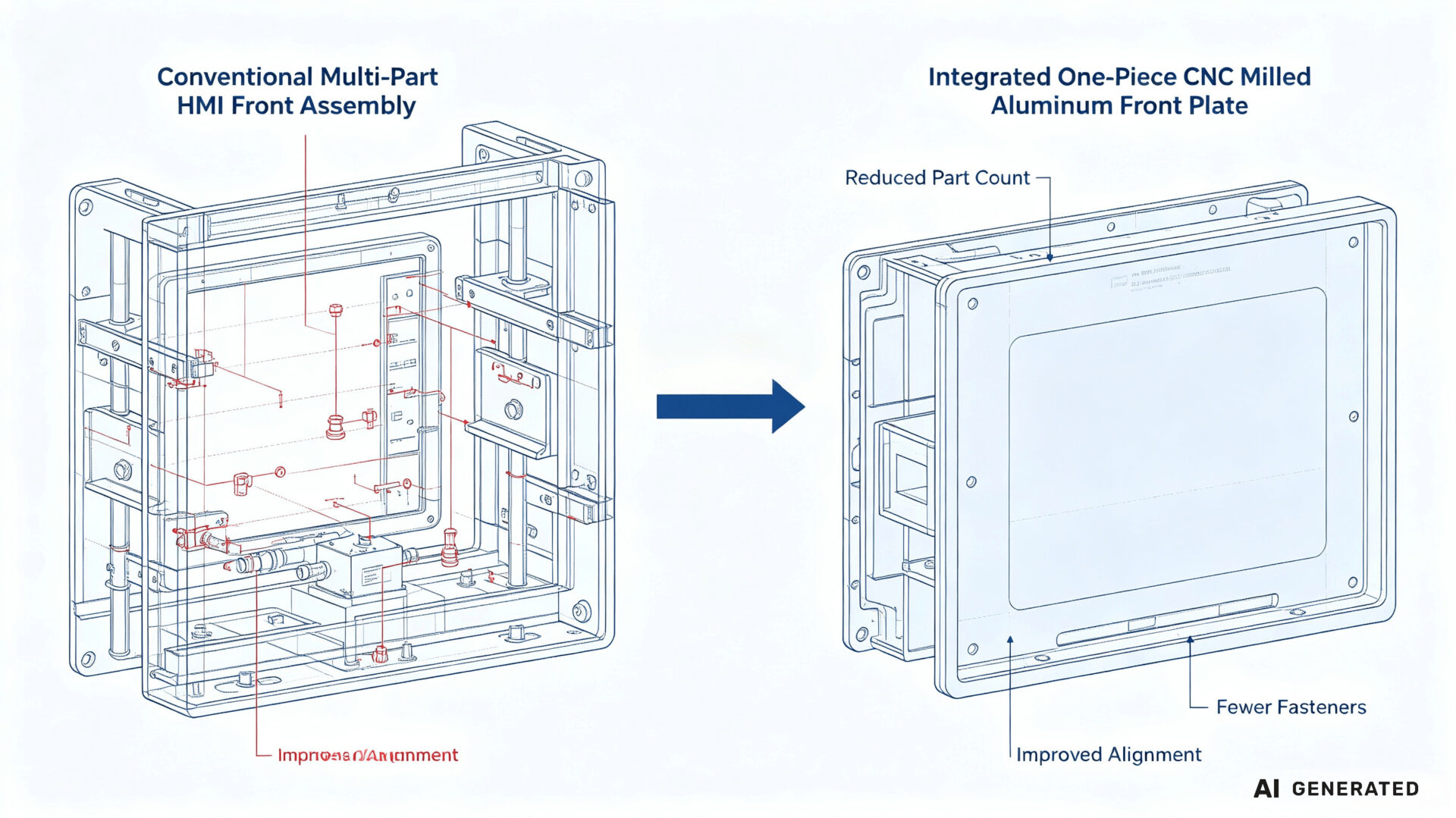
- Coordinated documentation: Machining, finishing, and assembly requirements were documented in a single workflow
- Supply chain continuity: A single partner provided machined parts, finishing, and assembly coordination
- Reduced interface risk: Mechanical tolerances, material choices, and inspection references were aligned with broader assembly requirements
- Simplified logistics: The front plates were delivered ready for final assembly with the touchscreen and controls
A conventional machine shop delivers parts to a drawing. TPS delivers parts that are verified to fit into your electronic assembly workflow, with coordinated quality documentation and supply chain continuity.
For custom front bezel CNC applications, this integrated approach means that the front plate is not just a machined part—it is a component that has been designed, machined, finished, and inspected with the final assembly in mind. The result is a front plate that fits perfectly, looks professional, and performs reliably in the field.
TPS’s aluminum CNC milling service is supported by a range of machine technologies—including 3-axis, 4-axis, and 5-axis milling—allowing complex geometries to be produced in a single setup, improving accuracy and reducing lead time.