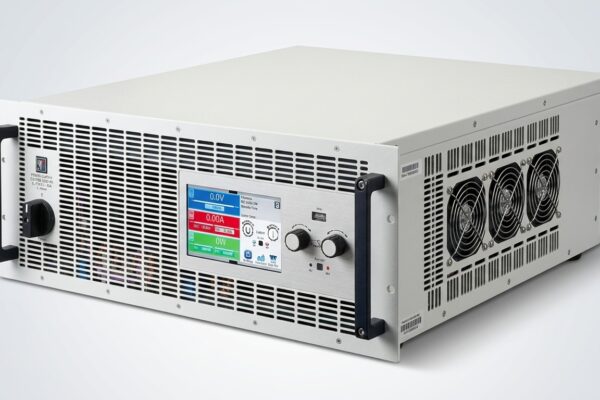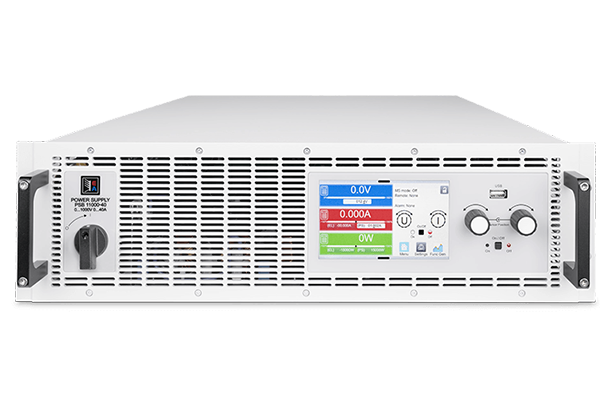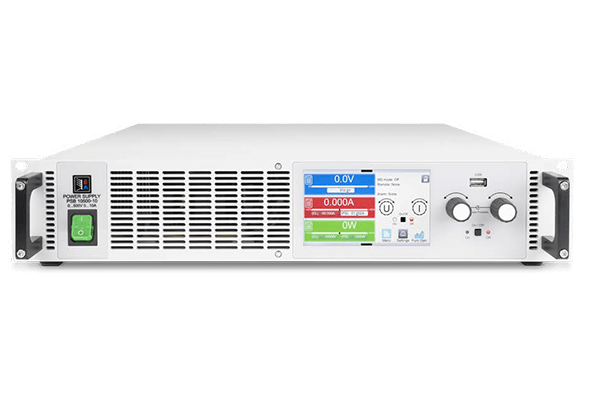


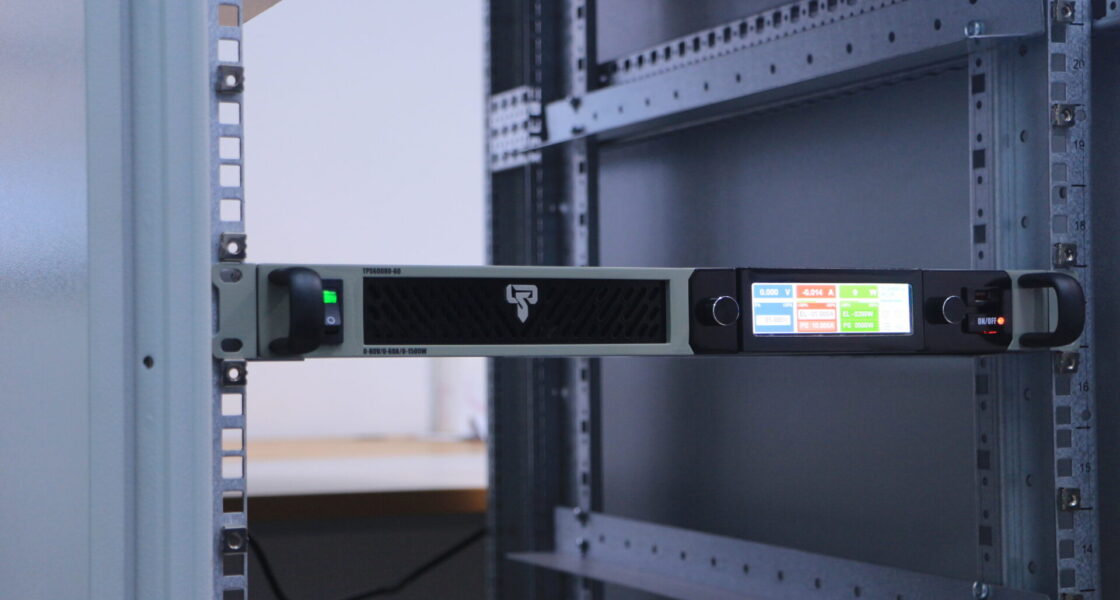
Modern labs need a 1U programmable DC power supply for 19-inch rack-mount systems. You can use it for prototype validation. Control it via USB or Ethernet. Core technologies include auto-ranging, active discharge, and isolated hybrid interfaces. This article explores these features. It helps you distinguish a true benchtop power supply from a typical DC power supply.
This guide covers three must-have features: autoranging output, safe discharge, and hybrid digital-analog interfaces. These capabilities are built into our entire product line. They cover everything from a simple 24V supply to a 3000W benchtop unit. All meet high standards for precision, safety, and connectivity.
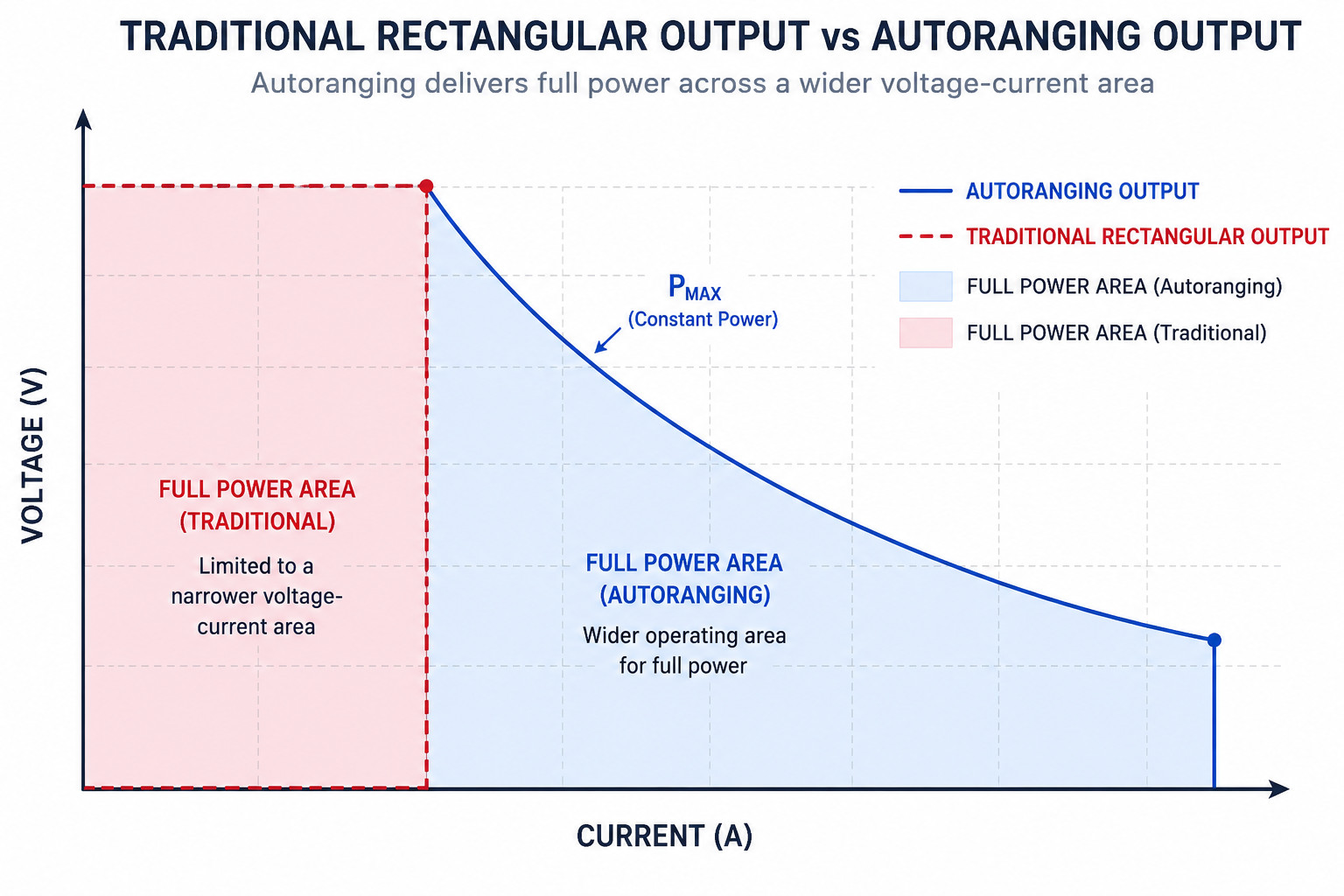
1. Flexible Autoranging Output – Beyond Traditional Rectangular Boundaries
Flexible Autoranging Output DC Power is the first cornerstone of a modern lab power supply. Unlike conventional power supplies that are limited by a fixed voltage and current rating (forming a rectangular operating area), an autoranging unit allows the user to access the full rated power across a wide range of voltage and current combinations. For example, a 1500W unit can deliver 1500W at 80V/18.75A, at 150V/10A, or at 500V/3A – automatically, without manual range switching. This capability is especially valuable for Electronic Testing High-Current DC Power applications where a device under test (DUT) may draw high current at low voltage during startup, then switch to high voltage at lower current during steady state.
- Continuous power regulation within the rated envelope – no sudden output collapse
- Automatic transition between constant voltage (CV), constant current (CC), and constant power (CP) modes
- Reduces the number of power supply units needed in a test setup, saving rack space and cost
- Ideal for battery charging, supercapacitor testing, LED driver validation, and motor start-up simulations
Our self-developed programmable dc power supply series implements true autoranging with a high-efficiency topology (up to 95%). This means you can purchase a single Laboratory Programmable DC Power unit and cover test scenarios that would otherwise require three or four fixed-range dc power supplies. From Workshop High-Voltage DC Power (up to 750V) to Electronic Testing High-Current DC Power (up to 100A), the autoranging architecture ensures that you never pay for unused power. As a result, your benchtop power supply from psu becomes a true multi-tool, capable of handling diverse loads without manual intervention.
2. Active Discharge Circuit – Ensuring Operator Safety in High-Voltage Systems
Safe Discharge Technology for High-Voltage DC Power is a non-negotiable safety feature when dealing with outputs above 60V DC. Many dc power supplies leave output capacitors charged even after the output is turned off, creating a shock hazard for technicians and engineers. Our design incorporates an active discharge circuit (standard on all models with nominal voltage ≥200V) that rapidly bleeds the output capacitance down to below 60V within seconds of shutoff. This feature is essential for any Workshop High-Voltage DC Power environment where frequent connection and disconnection of loads occurs.
- Automatic activation upon output shutdown – no extra operator step required
- Reduces output voltage to <60V DC within a few seconds (typically <5 seconds)
- Prevents accidental electric shock during probe attachment or cable reconfiguration
- Compliant with international safety standards for test equipment
For Prototype Test Programmable DC Power setups where engineers constantly swap connections, the discharge circuit dramatically reduces downtime and increases workflow safety. Even when you are working with a 24v power supply (low voltage), the same philosophy extends to comprehensive protection features: OVP, OCP, OPP, and OTP (over-temperature protection). Our Industrial 1U DC Power Supply products integrate these protections at the hardware level, ensuring that your power supply supplies never become a liability. Whether you are testing automotive electronics or aerospace subsystems, active discharge is a mark of professional-grade tps products (where TPS stands for our advanced power series).
3. Galvanically Isolated Hybrid Interfaces – USB, Ethernet, and Analog for Seamless Integration
Galvanically Isolated Interface DC Power and Hybrid Digital-Analog Control represent the third pillar of next-generation programmable power supply design. Modern labs no longer rely solely on front-panel adjustments; they need USB Control DC Power for quick scripting, Ethernet Control DC Power for remote monitoring across the factory floor, and isolated analog inputs for integration with legacy PLCs or custom controllers. Our standard-equipped Galvanically Isolated Analog Interface DC Power provides 0-10V or 0-5V programming and monitoring, while the digital side supports both SCPI command set and ModBus RTU over USB and Ethernet.
- True galvanic isolation between control interfaces and output stage (no ground loops)
- Simultaneous analog and digital control – monitor via analog while commanding via Ethernet
- SCPI and ModBus RTU support ensures compatibility with LabVIEW, Python, C++, and PLC environments
- Included Windows control software and LabVIEW VIs accelerate development
This hybrid approach means that your benchtop power supply from psu can be used as a standalone bench power supply with the intuitive front panel (blue LCD, rotary encoders with decimal jump, and Panel Lock Anti-Misuse DC Power to prevent accidental changes), or as a fully remote-controlled asset in an automated test system. Engineers working on ac supplies conversion or tps programmable power applications appreciate the ability to switch between manual and remote operation without rebooting the unit. Moreover, the Remote Sensing DC Power feature compensates for voltage drops in long test leads, while the Parallel Operation DC Power capability (via share bus) allows you to combine multiple units for even higher current – all without complex master-slave programming.
4. High Precision and Low Ripple – The Measure of a True Laboratory Source
High Precision DC Power and Low Ripple DC Power are often the deciding factors for sensitive electronics testing. Our self-developed architecture delivers programming resolution with typical values as low as 3 mV and 1 mA (depending on model), with ripple and noise figures as low as 4.2 mVrms / 76 mVpp for a 100A model. This level of Low Ripple DC Power ensures that your measurements are not corrupted by switching noise or line harmonics, making it ideal for RF circuits, sensor excitation, and precision analog designs.
- Wideband ripple measurement (800 kHz for RMS, 20 MHz for peak-peak) ensures realistic noise assessment
- High-resolution 16-bit ADCs for readback accuracy
- Temperature-Controlled Fan DC Power minimizes acoustic noise while preventing thermal drift
- Active Power Factor Correction (PFC) – Active PFC DC Power reduces input harmonics and improves efficiency
Whether you are characterizing a low-noise amplifier or performing Electronic Testing High-Current DC Power on a motor driver, the combination of low ripple and high precision ensures that the power source does not become the error term. Our 1U Programmable DC Power models (ranging from 80V/100A to 750V/12A, 1500W or 3000W) all share this performance baseline. Additionally, the Remote Sensing DC Power capability eliminates lead resistance errors, delivering the set voltage exactly at the DUT terminals – a critical requirement for High Precision DC Power applications.
5. Built for the Real World – AC Input Flexibility, Thermal Management, and Mechanical Robustness
No Industrial 1U DC Power Supply can succeed without robust AC input handling and thermal design. Our 3000W units accept AC Input 180-264V DC Power with active PFC, delivering full rated power at nominal line voltage and automatically derating to 2500W when input voltage sags to 180V. For worldwide operation, 1500W models offer a wider 100-264V input range, derating to 1000W below 150V AC. This ensures that your power supply supplies remain operational during brownout conditions, keeping your production line or lab experiment running.
- Wide AC input range with active PFC – global operation without jumpers
- Intelligent derating prevents unexpected shutdown – output power smoothly reduced under low input conditions
- Temperature-controlled variable-speed fans – quiet during low load, max cooling at full power
- Compact 1U height (44mm / 1.75”) fits any 19” rack system
From a 24v power supply for sensor arrays to a 750V unit for photovoltaic inverter testing, the mechanical and thermal design remains consistent: all outputs and AC input are located on the rear panel for clean cable management, while the front panel houses the blue LCD, pushbuttons, and lockable rotary knobs. The Panel Lock Anti-Misuse DC Power function protects against unauthorized adjustments – a necessity in shared lab or production environments.
Technical Summary – Complete Programmable DC Power Supply Family
Our self-developed product line (internally referenced as tps products and tps programmable power series) covers a full matrix of voltage, current, and power ratings. All models share the same 1U form factor, autoranging output, active discharge (≥200V models), isolated hybrid interfaces, and comprehensive protection suite. Below is a representative selection:
| Model Range | Voltage | Current | Power | Ripple (rms/pp) | Efficiency |
|---|---|---|---|---|---|
| 80V Series | 0-80V | 0-100A | 3000W | 4.2mV / 76mV | 92% |
| 200V Series | 0-200V | 0-50A | 3000W | 40mV / 234mV | 93% |
| 360V Series | 0-360V | 0-30A | 3000W | 26mV / 156mV | 93% |
| 500V Series | 0-500V | 0-20A | 3000W | 50mV / 234mV | 93% |
| 750V Series | 0-750V | 0-12A | 3000W | 40mV / 260mV | 93% |
For lower power requirements, 1500W versions are also available with the same feature set. All models include USB Control DC Power and Ethernet Control DC Power as standard, plus the galvanically isolated analog interface. The Parallel Operation DC Power capability (share bus) allows multiple units to be connected in parallel, sharing current evenly without additional programming.