

For system integrators, panel builders, and engineering-driven procurement teams, selecting a power conversion module for battery testing, energy storage, or Vehicle-to-Grid (V2G) applications is no longer just about raw wattage. It is about energy efficiency, grid compliance, thermal management, and the ability to seamlessly recycle power back to the grid.
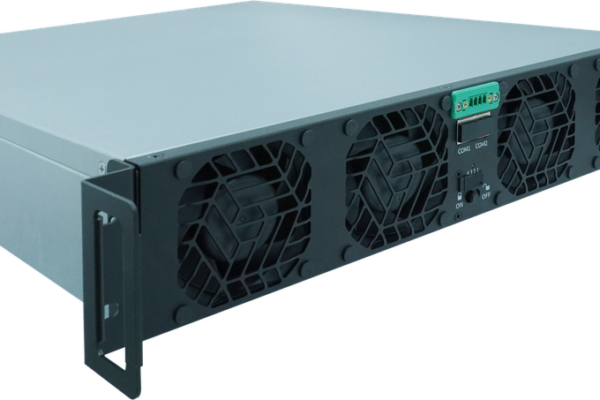
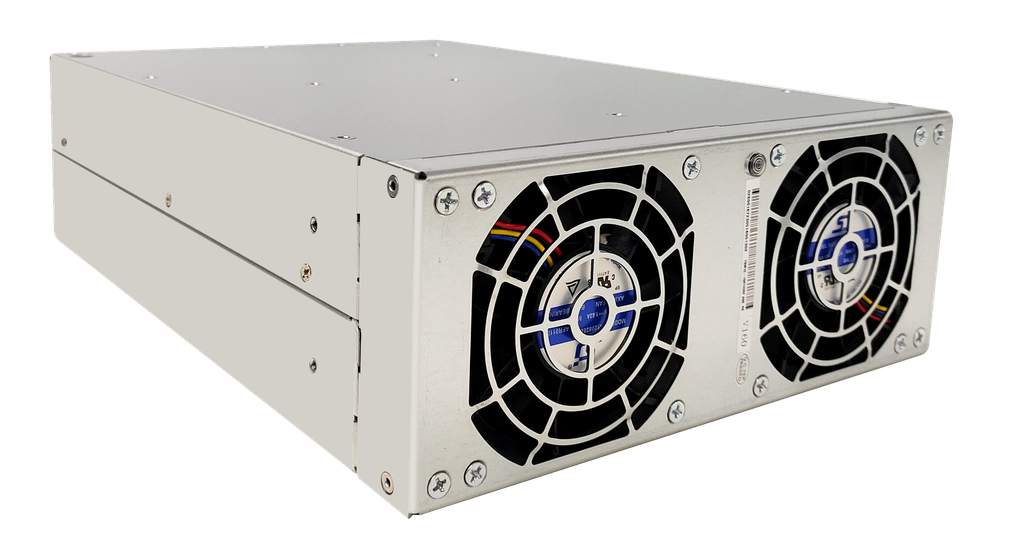
Traditional unidirectional power supplies waste massive amounts of energy as heat during battery discharge cycles. The solution lies in advanced acdc bidirectional converters. The TPS-BM142250SIR Series is a high-performance, modular bidirectional AC/DC converter designed specifically for seamless industrial energy flow. Delivering 2250W of power with a 14VDC/161A output, it is the ultimate building block for Cell Formation Testing, energy-recyclable aging, and complex power bidirectional testing.
1. The Shift to Energy-Recyclable Testing & V2G
In industries such as lithium-ion battery manufacturing, the “formation and grading” process consumes enormous amounts of electricity. Historically, discharging batteries meant burning off energy through resistive load banks, generating massive heat that required further energy to cool via HVAC systems.
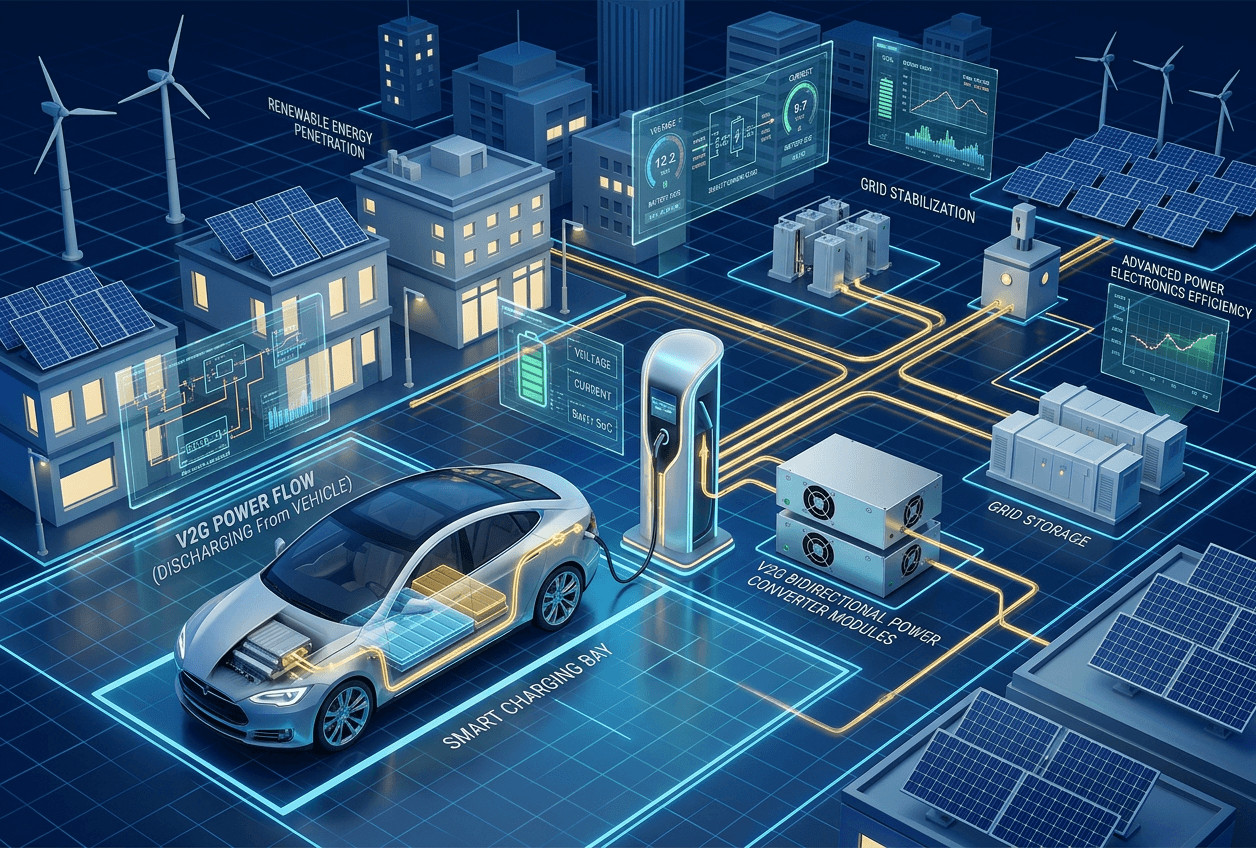
The introduction of the acdc bidirectional energy storage converter has revolutionized this process. By utilizing the TPS-BM142250SIR, facilities can recycle up to 86% of the discharged energy back into the local AC grid to be used by other equipment. This energy-recyclable power aging drastically reduces operational costs (OPEX) and carbon footprints. Furthermore, this same bidirectional technology is the foundational element for electric vehicle grid integration (V2G), allowing EV batteries to stabilize the grid during peak demand.

2. Core Architecture: Soft-Switching & High Efficiency
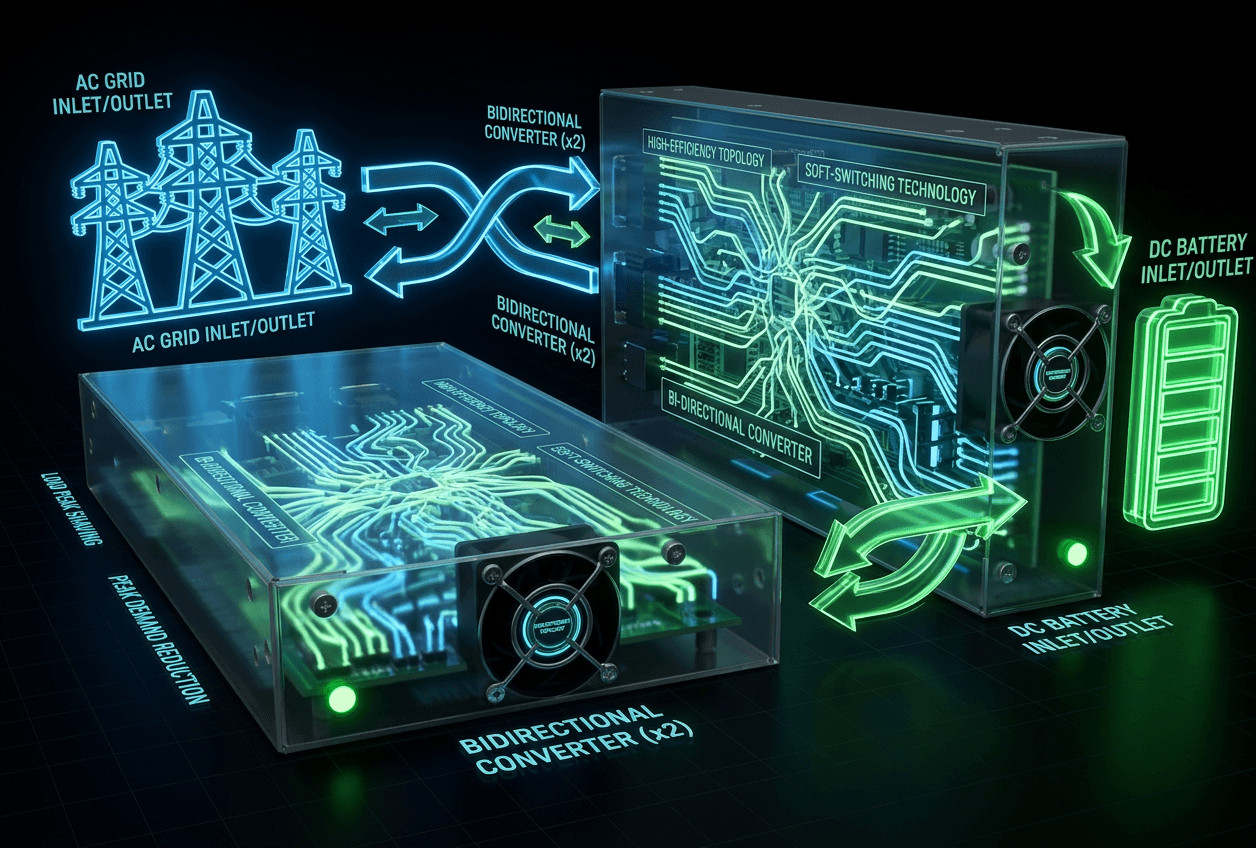
Achieving high efficiency in both directions requires advanced power electronics topologies. The TPS-BM142250SIR is not a basic rectifier; it is a highly sophisticated high efficiency power module.
While some systems rely on bulky transformers and hard-switching, our modules utilize advanced soft-switched bidirectional converter technology. Soft-switching (such as Zero Voltage Switching – ZVS) minimizes the overlap of voltage and current during transistor transitions, drastically reducing switching losses and electromagnetic interference (EMI).
Depending on the specific model within our bidirectional portfolio, architectures may include a three-level bidirectional converter design, which reduces voltage stress on components and improves the output waveform, or an isolated bidirectional dc converter stage to ensure strict galvanic isolation between the grid and the sensitive battery cells. The result is a top-tier performance of 93.5% efficiency in AC-DC mode (rectifier) and 86% in DC-AC mode (inverter).
3. Electrical Performance & Grid Compliance
When pushing power back into the grid, power quality is paramount. Utility companies impose strict regulations on Total Harmonic Distortion (THDi) and Power Factor (PF). A poorly designed inverter can pollute the local grid, causing equipment malfunctions and incurring utility penalties.
The TPS-BM142250SIR operates as a high power factor rectifier and a clean grid-tied inverter. It boasts a Power Factor (PF) > 0.99 and a THDi < 5% (tested at 220VAC full load, assuming grid THDu ≤ 2%). This ensures that whether it is drawing power or feeding it back, the impact on the AC grid is negligible.
Furthermore, the module features an ultra-fast <10ms Mode Switching speed. This near-instantaneous transition between rectifier and inverter modes is critical for dynamic battery testing profiles and rapid grid-stabilization responses in a grid-tied bidirectional converter setup.
4. Scalability: Parallel Operation & Modular Design
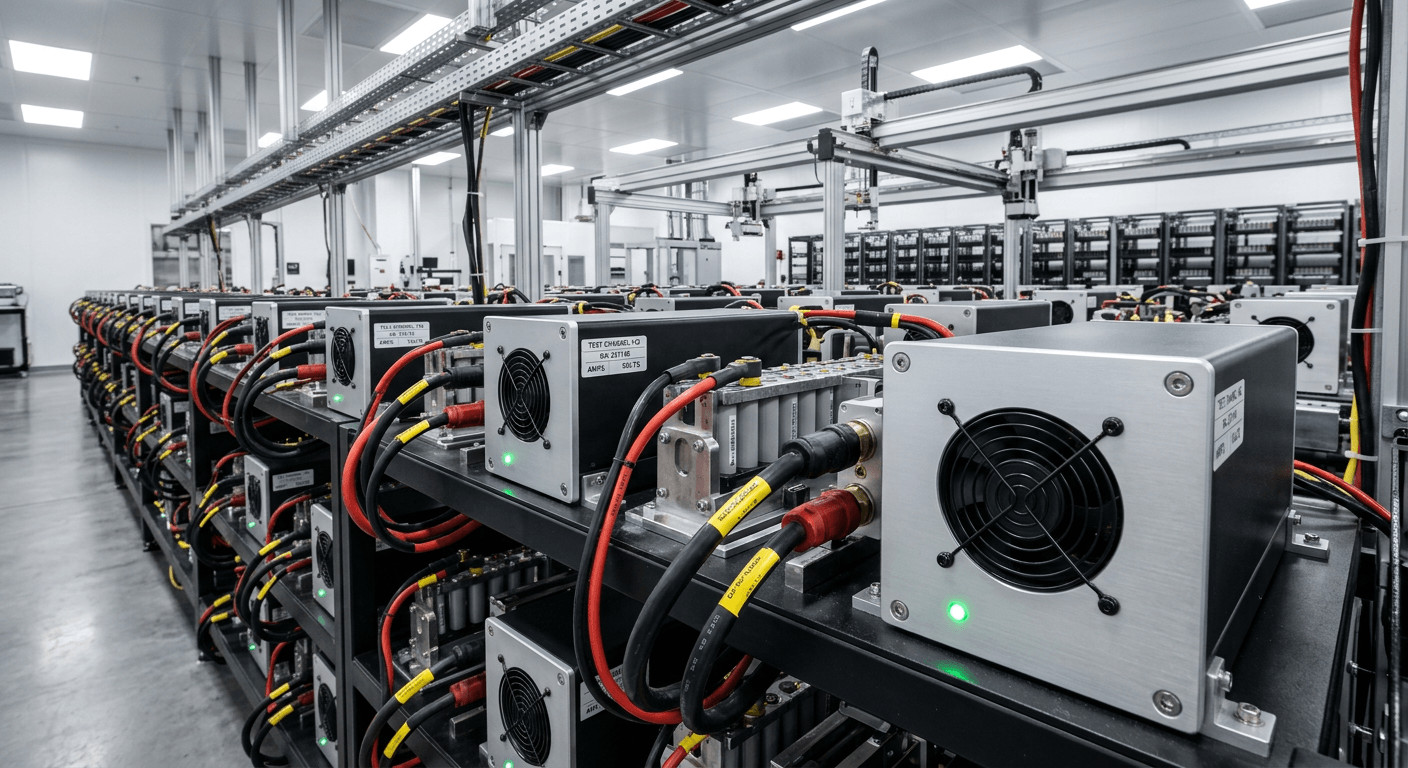
Industrial applications rarely rely on a single 2250W module. System integrators need scalable solutions. The TPS-BM142250SIR is designed for seamless parallel operation. You can connect up to 8 Units in Parallel to scale the system up to 18kW per rack, with a current sharing imbalance of ≤5%. This ensures even thermal distribution and prevents any single module from being overstressed.
The module provides a highly precise 14VDC output with a massive 161A capacity per unit. The precision is guaranteed by a 0.5% Voltage Accuracy and a maximum Ripple Voltage of 500mV, ensuring stable, clean power delivery to sensitive battery cells during the critical formation process. For different voltage requirements, TPS offers a range of modules, including the TPS-BM142400SI and the TPS-BM142650SIR, providing a wide voltage range bidirectional portfolio.
5. Key Applications: From Cell Formation to EV Integration
The unique 14VDC / 161A specification of the TPS-BM142250SIR makes it highly specialized for specific industrial tasks:
- Cell Formation Testing: The initial charging and discharging of lithium-ion cells require precise voltage control (often at lower voltages like 5V to 14V for cell packs) and massive current. The bidirectional nature allows the energy from discharging cells to charge adjacent cells or return to the grid.
- Energy Recyclable Power Aging: Testing power supplies or electronic loads by burning energy is obsolete. This module allows for burn-in testing where the energy is recycled, drastically cutting electricity bills.
- Microgrid & V2G Simulation: While 14V is low for direct EV traction batteries, these modules are used in scaled-down simulation rigs for electric vehicle grid integration research, or in series configurations for higher voltage testing.
6. Product Specifications & Features Overview
To assist engineering teams in their evaluation, below is a structured overview of the TPS-BM142250SIR capabilities.
7. Integration & RFQ Checklist
When requesting a quote for acdc bidirectional converters, providing the following details will accelerate the engineering review process:
- Application Type: Is this for cell formation, V2G, or general power aging?
- Voltage & Current Requirements: Do you need the 14V/161A (TPS-BM142250SIR) or a different variant like the TPS-BM152250SIF-U?
- Scalability: How many units do you plan to parallel? (Max 8 for this series).
- Grid Conditions: What is your local AC grid voltage and expected THDu?
- Cooling Constraints: Can your cabinet support the front-to-rear forced air cooling?
8. FAQ
What is the primary benefit of a bidirectional converter in battery testing?
The primary benefit is energy recycling. Instead of dissipating discharged battery energy as heat through resistors, a bidirectional converter feeds the energy back into the AC grid, drastically reducing electricity costs and HVAC cooling requirements.
How fast does the TPS-BM142250SIR switch between charging and discharging?
The module features a mode switching time of less than 10 milliseconds (<10ms), allowing for highly dynamic and responsive testing profiles without interrupting the power flow.
Can I connect multiple units together for higher power?
Yes, the modular design allows up to 8 units to be connected in parallel. The system maintains a current sharing imbalance of ≤5%, ensuring stable operation up to 18kW per array.
Does this module meet international EMC and safety standards?
Yes, the TPS-BM142250SIR meets EN55032 EMC standards and is designed to be eligible for UL, CE, and TUV certifications, ensuring safe integration into global industrial systems.
What is a single-stage bidirectional converter?
A single-stage bidirectional converter performs AC-DC rectification and DC-DC conversion in one power stage, reducing component count and improving efficiency compared to traditional two-stage designs. While topologies vary by specific model, TPS focuses on minimizing conversion losses.