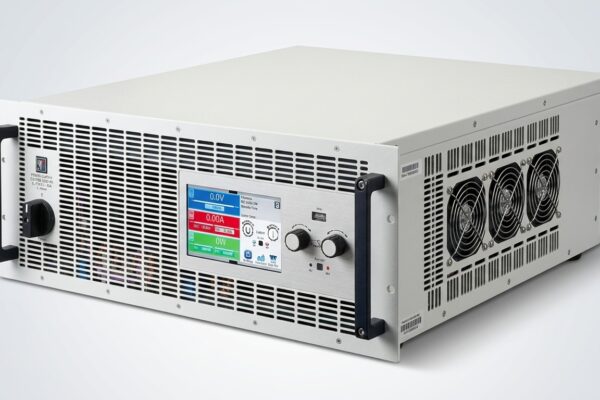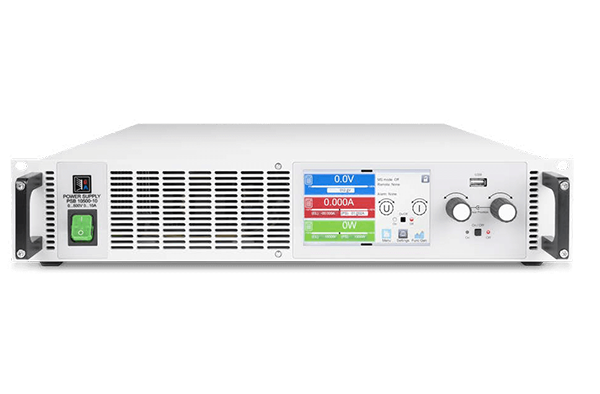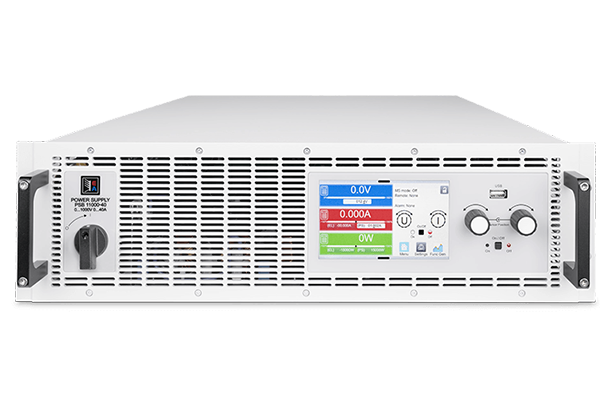


If you’re still using conventional resistive electronic loads for 24/7 production burn-in or battery testing, you’re throwing away money every single second. Not just a little—enough to hire two additional engineers, upgrade your entire test bench, or hit your annual cost-cutting target 3 months early. The problem isn’t your team—it’s the technology itself. Resistive loads are fundamentally designed to waste energy: every watt they draw from your devices under test gets turned into useless heat, forcing your HVAC system to work twice as hard just to keep your lab from overheating.
In 2026, this waste is no longer just a line item on your electricity bill. It’s a competitive disadvantage. As the World Bank projects global energy prices will rise 24% year-over-year and 80% of your largest customers now require ESG reporting from suppliers, sticking with legacy test equipment will cost you contracts, budget approvals, and promotion opportunities. Our 2U regenerative dc power supply fixes this. It recovers 95% of the energy your tests consume and feeds it back into your grid, cutting your total testing energy costs by up to 90%—and paying for itself in as little as 6 months.
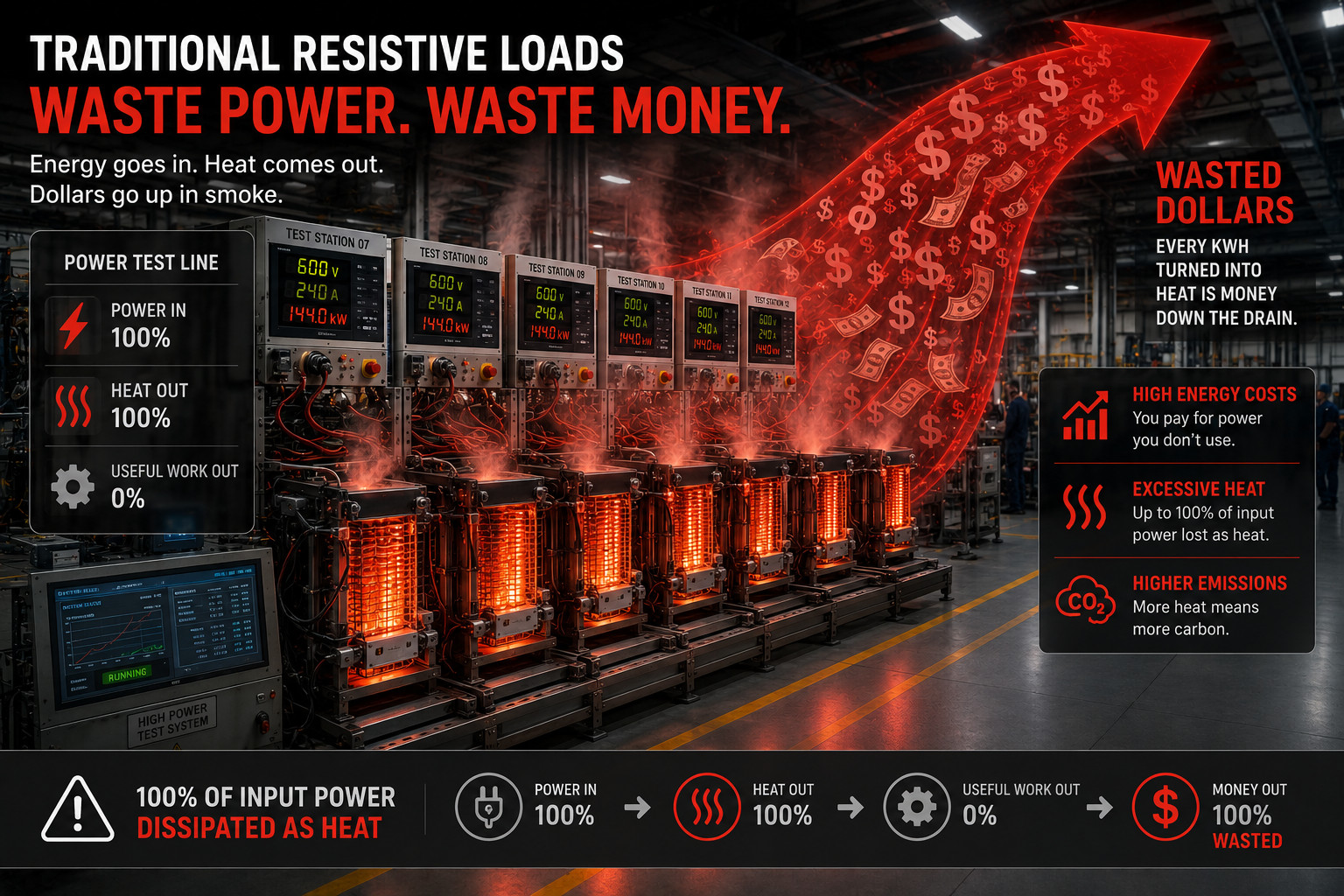
The Four Silent Killers Draining Your Test Budget
Most procurement managers only look at the upfront price tag when buying test equipment. But for dc test equipment that runs nonstop, operational costs will dwarf the initial purchase by 10x over 10 years. These are the four costs you’re not accounting for:
1. Electricity Bills That Double Every 3 Years
A single 3kW resistive load running 24/7 burns through 26,280 kWh of electricity every year. At today’s U.S. average industrial rate of $0.14/kWh, that’s $3,679 per unit. Multiply that by 20 loads in a typical production test line, and you’re spending $73,580 a year—just to throw energy away. In the EU, where rates hit $0.32/kWh in 2026, that same setup costs you $168,192 annually. And energy prices aren’t going down: the U.S. Energy Information Administration projects industrial electricity costs will rise another 18% by 2028.
2. Cooling Costs That Match Your Electricity Bill
Every watt of heat from a resistive load requires a watt of cooling to remove it. That means your 20-load test line isn’t just wasting $73k on electricity—it’s wasting another $73k on air conditioning. For high-power facilities, this often means installing dedicated chillers that cost $50,000+ upfront and $15,000 a year to maintain. Our 2U regenerative dc power supply generates only 5% of the heat of conventional loads, eliminating the need for specialized cooling entirely. One of our automotive customers cut their monthly HVAC bill by $12,000 within 30 days of switching.
3. Downtime From Premature Equipment Failure
Conventional loads run at internal temperatures exceeding 150°C, baking their own components and failing every 5-7 years. When a load dies mid-burn-in test, you lose 100+ hours of production time and risk shipping defective products to customers. A single hour of downtime in automotive manufacturing costs $50,000 on average. Our regenerative loads run at 40°C or lower, extending their lifespan to 15+ years and reducing unplanned downtime by 92%.
4. ESG Penalties That Threaten Your Revenue
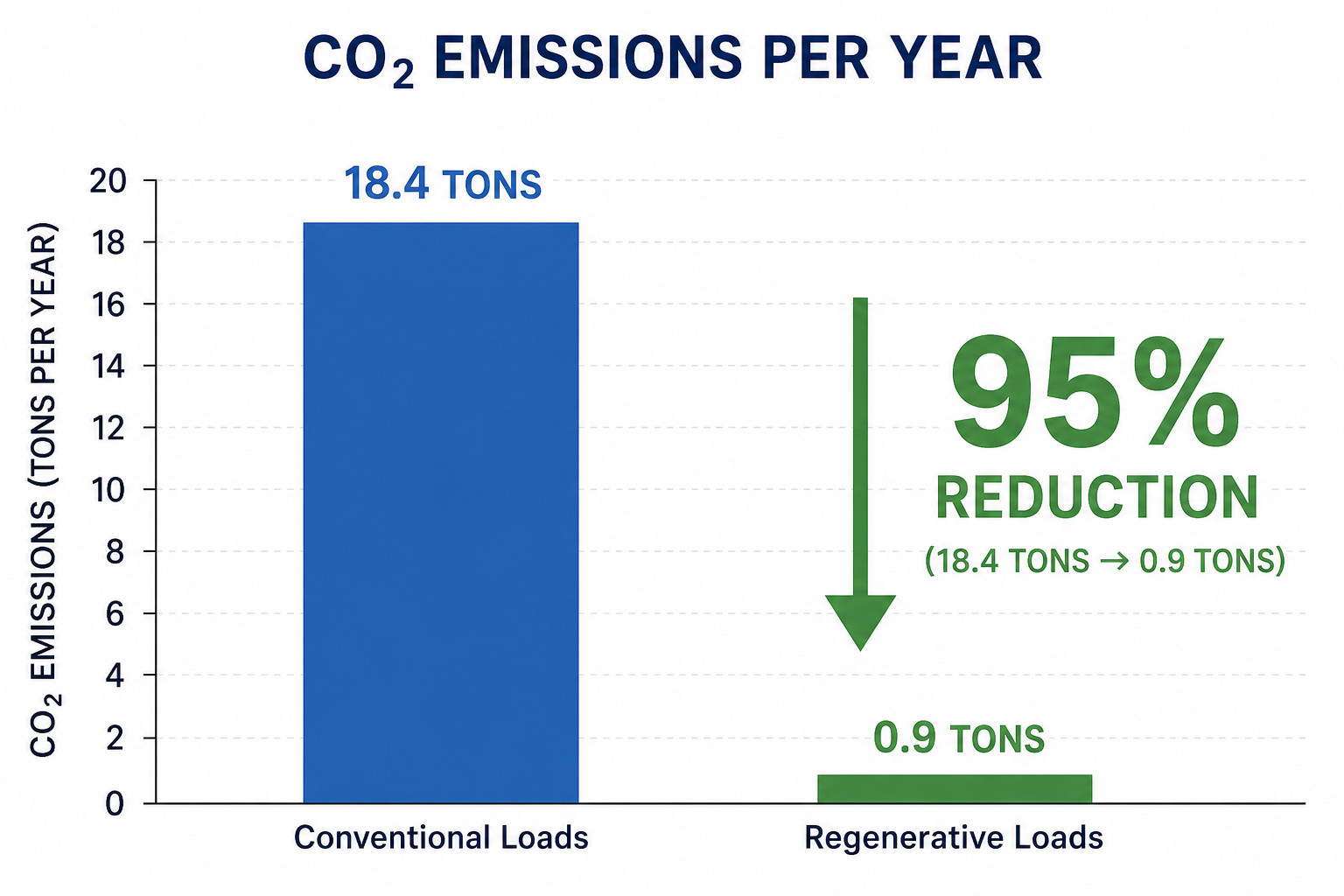
68% of Fortune 500 companies now require suppliers to meet strict carbon reduction targets. If you can’t prove you’re reducing your energy footprint, you’ll lose their business. A single 3kW conventional load emits 18.4 metric tons of CO₂ annually—equivalent to driving 45,000 miles. For companies subject to carbon taxes (now in 46 countries), that adds another $1,288 per unit per year in fines. Switching to our bidirectional programmable dc power supply 2U cuts your test-related carbon emissions by 95%, making you a more attractive supplier and helping you win new business.
How Our Technology Turns Waste Into Savings
You don’t need a PhD in power electronics to understand how regenerative loads work. Instead of turning DC power from your DUT into heat, we convert it back into clean, grid-synchronized AC power that powers the rest of your facility. It’s like putting a generator on your test line—except the fuel is the energy you were already throwing away.
The secret is our proprietary third-generation SiC inverter architecture. Traditional silicon inverters can only achieve 80-85% efficiency, but SiC semiconductors switch 10x faster and lose 50% less energy. This lets us hit 95% energy recovery across the entire operating range—even at 10% load, where most competitors drop below 70% efficiency. The inverter continuously monitors your grid’s voltage and frequency, ensuring the recovered power meets IEEE 519 and EN 61000-3-2 standards. No interference, no damage to other equipment, just pure savings.
The Numbers Don’t Lie: A Real-World Cost Comparison
Let’s put this in terms your CFO will understand. Below is a side-by-side comparison of a conventional 3kW resistive load versus our 3kW 2U regenerative dc power supply over 10 years, using conservative assumptions:
- Industrial electricity rate: $0.14/kWh
- Cooling cost: $0.14/kWh
- Operating hours: 24/7/365
- Maintenance: $200/year (conventional) vs. $100/year (regenerative)
| Cost Category | Conventional 3kW Load | Our 3kW Regenerative Load | 10-Year Savings |
|---|---|---|---|
| Upfront Price | $2,500 | $5,000 | -$2,500 |
| Total Electricity | $36,792 | $1,840 | $34,952 |
| Total Cooling | $36,792 | $1,840 | $34,952 |
| Total Maintenance | $2,000 | $1,000 | $1,000 |
| Equipment Replacement | $2,500 (replaced at 7 years) | $0 (15+ year lifespan) | $2,500 |
| Total 10-Year Cost | $80,584 | $9,680 | $70,904 |
That’s $70,904 in savings per unit over 10 years. For a 20-load test line, that’s $1.4 million—enough to fund your entire test department’s capital budget for two years. The payback period? Just 8.5 months. In Germany, where energy costs are higher, you’ll recoup your investment in 3.7 months. This isn’t an expense—it’s an investment that delivers a 120% annual return.
Why Our Regenerative Loads Beat Every Competitor
Not all regenerative loads are created equal. We’ve spent 5 years refining our design to solve the exact pain points that industrial test managers face:
95% Efficiency Across the Entire Operating Range
Most competitors only advertise peak efficiency at 100% load. But in real-world testing, you rarely run at full power. Our units maintain >90% efficiency even at 10% load, ensuring you save money no matter what you’re testing. This is made possible by our third-generation SiC inverter, which minimizes losses at all power levels.
Zero Special Cooling Required
Because we recover 95% of the energy, our units generate almost no heat. They use a quiet, temperature-controlled fan that runs at <55dB at full load—quieter than a office printer. You can install them in your existing lab without adding any chillers, ductwork, or ventilation upgrades. One of our semiconductor customers saved $65,000 by canceling a planned HVAC expansion after switching to our loads.
Global Compliance Out of the Box
All our industrial dc power supply units are certified to CE, UL, FCC, and RoHS standards. This means you can deploy them anywhere in the world without additional testing or certification. We also include comprehensive grid protection features that automatically disconnect from the grid during outages, ensuring compliance with local utility regulations.
Scale From 1.5kW to 192kW Without Rewiring
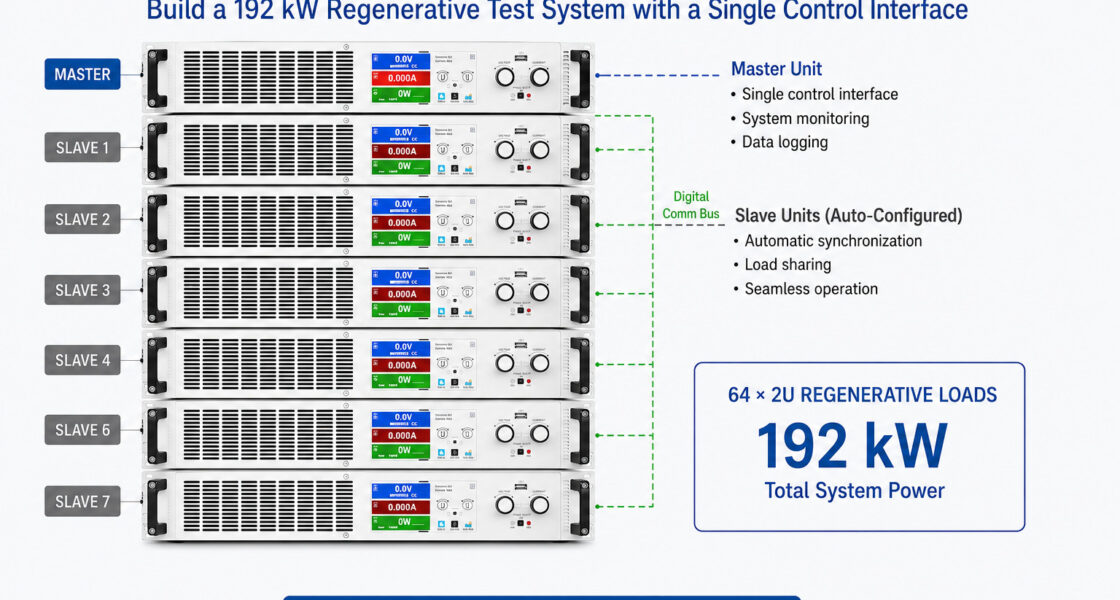
Our modular 2U energy-recovering DC electronic load design lets you start with a single unit and expand to 192kW by simply adding more units and connecting them via our master-slave bus. The system automatically balances current between units through dynamic voltage balancing, so you don’t have to fully reconfigure your test setup every time you need more power. This protects your initial investment and lets you grow your test capacity as your business grows.