

Battery testing sits at the center of every stage of the modern energy transition, from cell development and module validation to pack production, EOL verification, and second-life recovery. Yet for years, the equipment used to perform that testing has been stuck in an inefficient paradigm. A conventional regenerative battery tester was once a niche product; today it is becoming the baseline expectation for any serious industrial battery test system. The reason is simple: discharging a battery by burning its energy as heat is expensive, slow, and thermally punishing. Our company’s 4U power supply was engineered to eliminate that waste entirely.
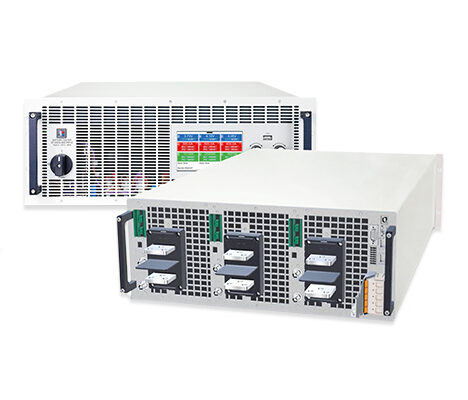
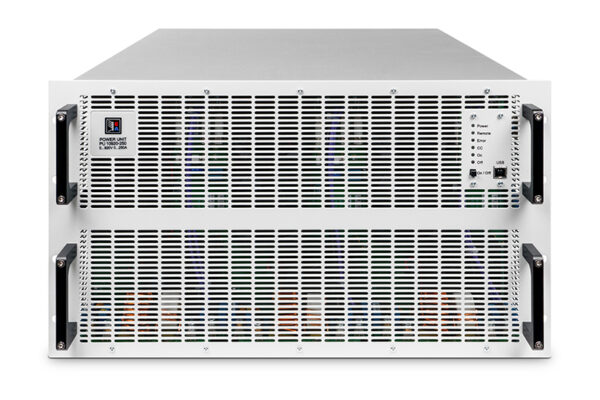
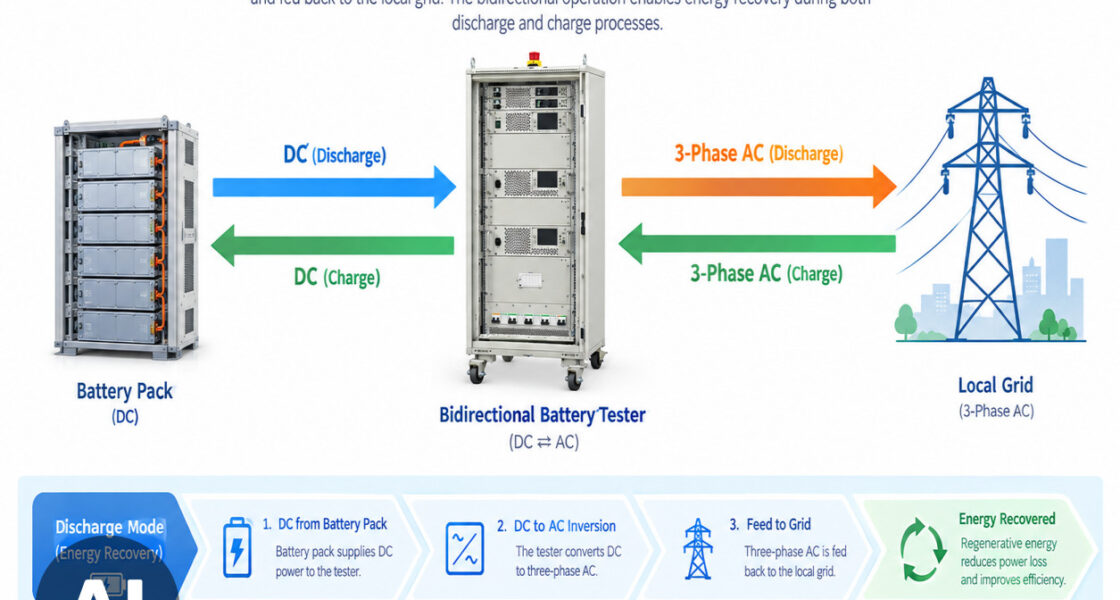
This unit is a 2-quadrant battery tester and bidirectional battery tester in a standard 19-inch, 4U rackmount battery tester chassis. It operates as a bidirectional DC power supply for charging, and as a regenerative electronic load, also called a regenerative DC load, for discharging. Instead of dissipating energy through resistor banks, it converts the battery’s DC output back into three-phase AC and returns it to the local grid. The result is a high efficiency battery tester reaching up to 96.8% conversion efficiency, with single-unit power up to 30kW and parallel expansion into the megawatt range. For teams evaluating EV battery testing equipment, battery recycling equipment, or a flexible battery charge discharge tester, this platform addresses the three persistent problems of the category: energy cost, equipment proliferation, and system scalability. It also serves as a compelling Elektro-Automatik battery tester alternative for laboratories that need a 30kW battery tester with energy recovery and a wide input voltage tester architecture.
The Three Problems Traditional Battery Test Benches Never Solved
Before examining the architecture, it is worth naming the pain points precisely. First, energy waste: a conventional DC load turns every amp-hour of discharge into heat, which means the facility pays twice, once for the electricity that charged the battery, and again for the air conditioning that removes the heat. Second, equipment fragmentation: legacy supplies and loads are rated at a single voltage-current point, so a lab testing 12V modules and 800V packs needs multiple machines. Third, scalability: stitching together separate chargers, loads, and controllers introduces synchronization errors and cabling complexity that undermine data quality.
A properly designed regenerative energy recovery platform collapses all three problems into one chassis. Our 4U unit does this by pairing wide-range constant power output with grid-tied regeneration and a unified digital control layer, giving engineers a single 30kW battery tester that behaves like an entire test bench. It also supports battery simulation mode, ampere hour counter functions, and SOH battery testing, making it suitable for both R&D and production environments.
Core Capabilities of the 4U Regenerative Battery Tester
Up to 96% Regenerative Energy Recovery
The defining feature of this platform is its grid-tied regeneration circuit. During discharge, the battery’s DC energy is inverted into clean three-phase AC and fed back into the facility’s electrical system rather than being burned off as heat. This is the practical difference between a regenerative battery tester and a conventional resistive load. It is also what makes the unit a true battery tester with energy recovery rather than simply another electronic load.
- Peak conversion efficiency of up to 96.8%, substantially lowering the cost per test cycle
- Discharged energy is reused by other equipment on the same grid, cutting net electricity consumption
- Dramatically reduced heat generation means smaller HVAC loads and lower cooling investment
- No need for external resistive load banks, freeing floor space and eliminating a major heat source
- Cleaner, quieter laboratory and production environments with fewer thermal hotspots
- Supports 96% energy efficiency targets in high-duty battery cycling and recycling operations
Wide-Range Three-Phase Input with Active PFC
Global deployment usually means dealing with different grid voltages. This three-phase battery tester accepts 208V to 480V AC ±10% at 45–65Hz, making it a genuinely wide input voltage tester suitable for North American, European, and Asian industrial grids without an external transformer. The integrated active power factor correction, often shortened to active PFC, keeps the input current waveform clean and stable.
- Built-in active power factor correction with a typical power factor of 0.99
- Automatic mains voltage detection, with no manual tap changes or reconfiguration required
- Reduced harmonic pollution, helping facilities meet industrial grid compliance requirements
- Automatic derating on 208–240V grids for the 30kW configuration, preserving reliable operation
- Transformer-free installation simplifies commissioning and reduces cabinet footprint
- Well suited to facilities that need a robust three-phase battery tester for global deployment
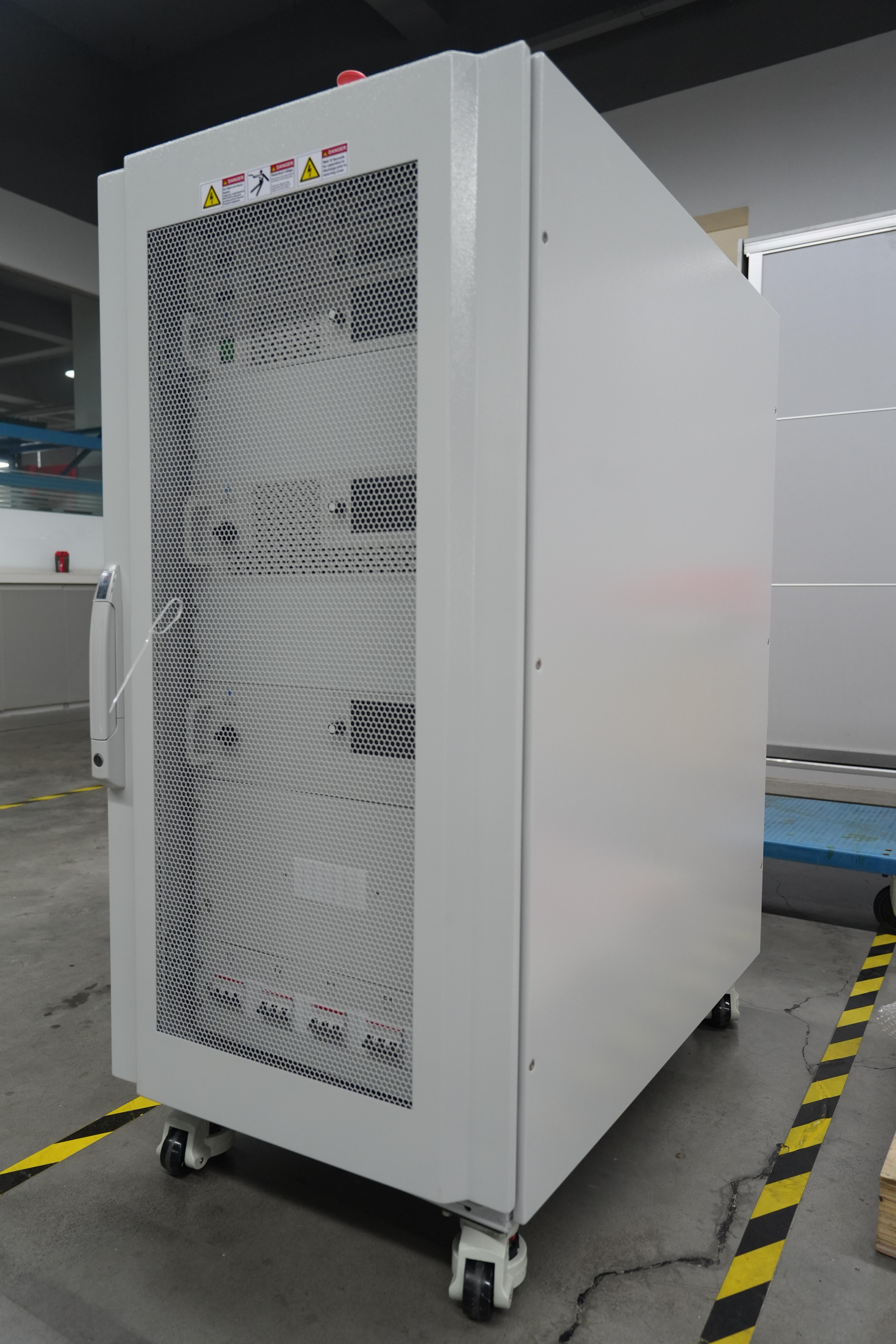
Autoranging Constant Power Output — One Unit, Many Test Profiles
Traditional test equipment follows a rectangular output envelope: full current only at full voltage. Our autoranging battery tester instead maintains full power across a wide voltage-current locus, which is what allows a single chassis to replace several conventional instruments. This is especially valuable for laboratories that need a battery cell tester, battery module tester, and battery pack tester without buying three separate systems.
- Full rated power available across a broad voltage and current window
- Example: a 30kW / 500V configuration delivers 60A at 500V and still delivers 180A at 166.6V
- Fewer instruments to purchase, calibrate, and maintain, lowering total cost of ownership
- No range switching or device swapping when moving between cell, module, and pack samples
- Critical for battery recycling equipment: sustained high-current discharge even below 2V
- Supports constant power output for dynamic operating condition simulation
High-Precision Digital Regulation with CV, CC, CP, and CR Modes
This is a fully digital regulation battery tester built around 16-bit ADC DAC conversion, delivering the stability and transient behavior that research-grade EV battery testing equipment demands. All four standard regulation modes, collectively known as CV CC CP CR regulation, are available and switch cleanly without overshoot. The result is precise control for battery charge discharge tester workflows, from slow capacity checks to fast dynamic profiles.
- Voltage stability ≤0.05% FS and current stability ≤0.1% FS for repeatable measurements
- Voltage rise/fall (10%–90%) ≤10ms; current rise/fall ≤2ms for dynamic operating condition simulation
- CV (constant voltage), CC (constant current), CP (constant power), CR (constant resistance) modes
- Adjustable overvoltage, overcurrent, overpower, and overtemperature protection
- Protects both the device under test and the tester itself during fault conditions
- Ideal for engineers who need a SCPI programmable tester with precise digital regulation
Full Galvanic Isolation Across All Ports
Safety and signal integrity both depend on isolation. Every communication and control port on this galvanically isolated interface platform is separated from the DC power stage. This is particularly important in industrial battery test system environments where PLCs, sensors, and operators share the same electrical environment.
- AC input to DC output isolation withstand: 3750Vrms
- DC terminal to chassis and interface isolation up to 2000V DC depending on model
- Compliance with EN 61010-1 certified, IEC 61010-1 compliant, and UL 61010-1 tester safety requirements
- Suitable for industrial floors where operators, PLCs, and instrumentation share a common environment
- Isolation also suppresses ground loops that distort low-level measurement data
- Helps system integrators build a safer industrial battery test system
Coverage from Low-Voltage High-Current to High-Voltage Low-Current
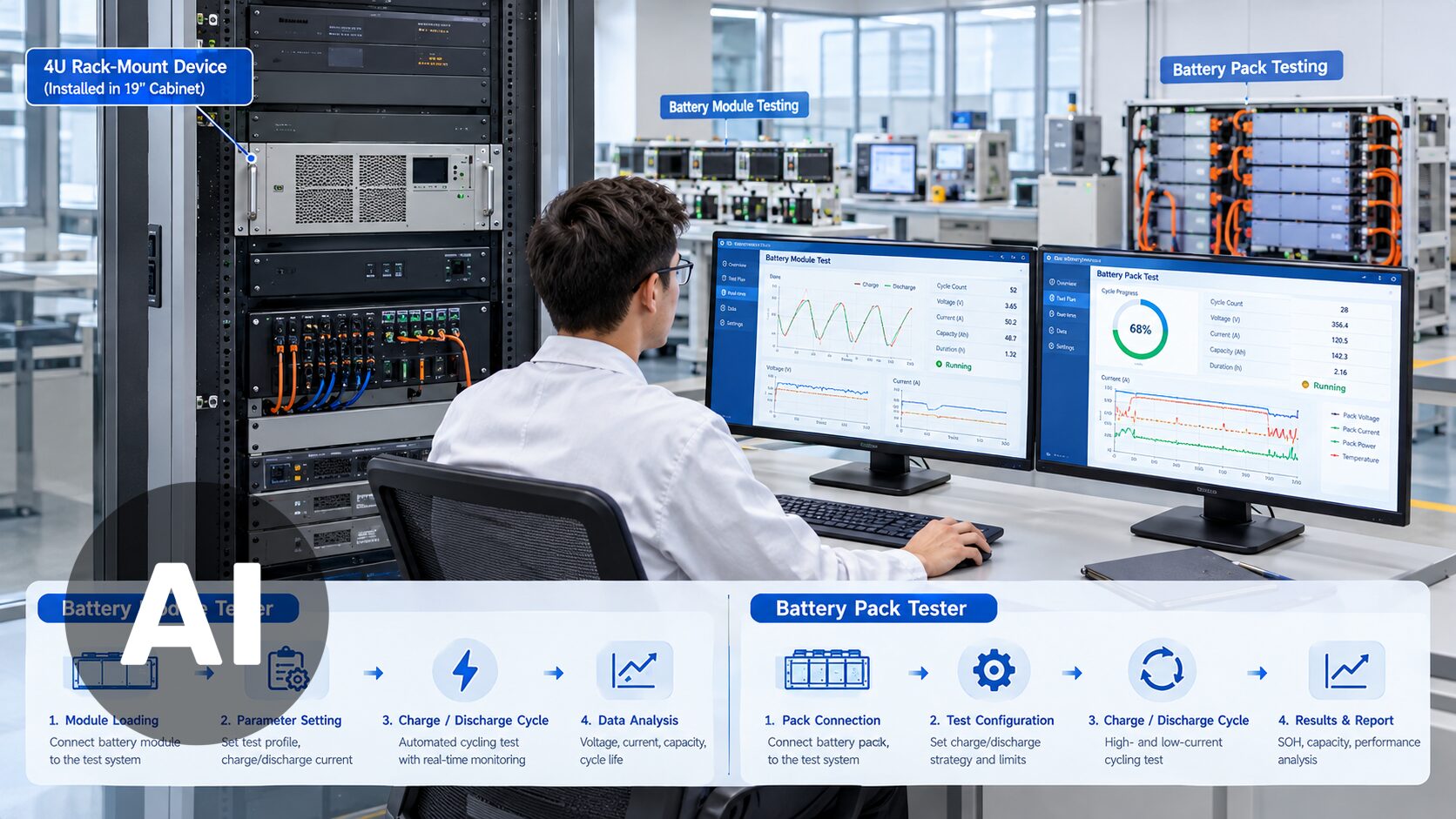
The platform spans a wide application space. As a 0-2000V DC tester it can validate high-voltage pack architectures, and as a 0-1000A DC tester it can drive low-voltage, high-current cells and modules. Ten standard ratings cover the spectrum between those extremes, with single-unit power up to 30kW and peak efficiency up to 96.8%. A water cooled battery tester variant is available for high ambient temperatures, sealed cabinets, or low-noise installations. This breadth means the same 4U rackmount battery tester can serve early-stage cell research and full-scale pack validation.
Interfaces, Protocols, and Megawatt-Level Parallel Operation
Industrial Communication Interfaces as Standard
Automation engineers need more than a serial port. This SCPI programmable tester ships with the connectivity required to slot directly into a modern test cell. Whether the facility uses an EtherCAT battery tester architecture, a Modbus battery tester network, or a LabVIEW battery driver, the unit can integrate quickly and reliably.
- Rear-panel USB, 1Gbps Ethernet, EtherCAT battery tester interface, and CAN FD
- Front-panel USB Host for data logging and test program import/export via flash drive
- Control IO: 3 digital inputs, 3 dry-contact outputs, 3 temperature sensor inputs
- Protocol support including SCPI, Modbus battery tester integration, and a LabVIEW battery driver
- Bundled PC software for rapid automation system development and commissioning
- Galvanically isolated interface design for noise immunity and safety
Master-Auxiliary Bus and Share-Bus Parallel Operation
When a single chassis is not enough, the master-auxiliary bus and share-bus parallel operation architecture allows clean vertical scaling into a parallel battery test system. This makes it possible to start with one 30kW battery tester and expand to megawatt-class testing without replacing the original investment.
- Up to 64 units paralleled per channel, reaching 1920kW and up to 64,000A
- The paralleled system behaves as a single instrument controlled from the master unit
- Automatic load sharing maintains balanced current distribution across all units
- Up to 240kW can be integrated into a single 42U cabinet occupying only 0.6 m²
- Scaling is incremental, so capacity can be added as test demand grows rather than overbuilding upfront
- Ideal for a parallel battery test system used in pack-level validation and recycling lines
Applications Across the Battery Lifecycle
Battery Cell, Module, and Pack Testing
As a battery cell tester, battery module tester, and battery pack tester, the platform supports the full hierarchy of validation work. It is equally at home in a research laboratory, a pilot line, or a high-volume production environment.
- R&D: charge/discharge performance characterization, cycle life testing, and dynamic operating condition simulation
- Production: EOL battery test stations, capacity calibration, and SOH battery testing
- Battery simulation mode for emulating pack behavior during downstream inverter or charger testing
- Integrated ampere hour counter functionality for coulombic efficiency and capacity measurement
- High precision and fast dynamics support automated line cycle times and data consistency
- Suitable for EV battery testing equipment specifications across cell, module, and pack levels
Second-Life and Battery Recycling Operations
In recycling and second-life grading, the economics of regeneration are especially compelling because discharge dominates the process. A regenerative battery tester turns what used to be a pure cost center into a partially recoverable energy stream.
- Ampere-hour metering and SOH screening to identify packs suitable for second-life use
- Autoranging behavior supports deep discharge at high current even below 2V cell voltage
- Energy returned to the grid reduces the electricity cost per processed pack
- Lower thermal load means recycling lines can run at higher duty cycles without HVAC upgrades
- Improves the overall business case for battery recycling equipment investment
- Supports EOL battery test and SOH battery testing in a single integrated platform
Energy Storage and General DC Test Applications
Beyond batteries, the bidirectional architecture serves as a general-purpose bidirectional DC power supply and regenerative DC load for power conversion equipment testing. It can also act as a regenerative electronic load for high-power DC benches that need energy recovery instead of heat dissipation.
- Power conversion system (PCS) and energy storage inverter testing
- DC motor drive testing and regenerative loading
- Simulation of high-power DC loads with energy recovery instead of heat dissipation
- Benchmarking of DC/DC converters and charging infrastructure components
- Useful as a bidirectional DC power supply in microgrid and storage research
- Supports battery simulation mode for complex system-level test scenarios
Mechanical and Environmental Specifications
- Form factor: standard 19-inch 4U rackmount battery tester; chassis 483mm (W) × 177mm (H) × 668mm (D), minimum 802mm total depth including terminals
- Weight: 50kg air-cooled, 56kg water-cooled
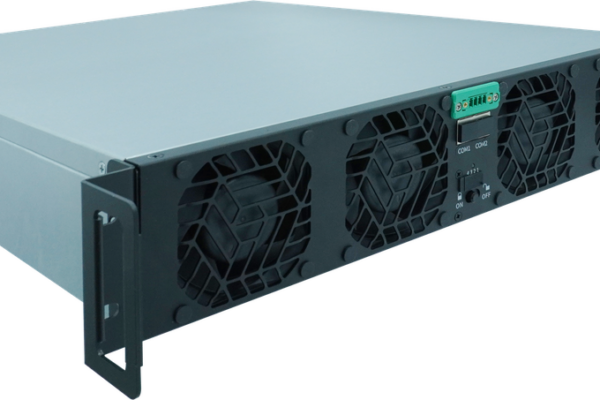
- Cooling: front-to-rear temperature-controlled air cooling with variable fan speed; stainless steel water cooling optional
- Operating temperature: 0–50°C (derating above 40°C); storage: −20 to 70°C
- Relative humidity ≤80% non-condensing; altitude ≤2000m
- Protection rating: IP20
- EMC: EN 55011 Class A, FCC Part 15B; Safety: EN/IEC/UL/CSA 61010-1
Summary of Key Parameters
To summarize the platform in a single view: this is a 2-quadrant battery tester and bidirectional battery tester rated up to 30kW per chassis, with DC voltage coverage from 0–10V to 0–2000V and current coverage from 0–40A to 0–1000A. It delivers up to 96.8% 96% energy efficiency through regenerative energy recovery, accepts 208–480V three-phase input with active PFC, and provides autoranging battery tester behavior with constant power output across the operating envelope. Regulation is fully digital via 16-bit ADC DAC hardware supporting CV CC CP CR regulation, with ≤0.05% FS voltage stability and ≤0.1% FS current stability. All interfaces are galvanically isolated, with EtherCAT, Modbus, SCPI, and LabVIEW support, plus master-auxiliary bus and share-bus parallel operation scaling to 1920kW and 64,000A. The unit is EN 61010-1 certified, IEC 61010-1 compliant, and available as a UL 61010-1 tester configuration, making it a complete industrial battery test system for cell, module, pack, and second-life applications.
For teams specifying EV battery testing equipment or building out battery recycling equipment lines, the decision usually comes down to total cost of ownership. A regenerative battery tester with regenerative electronic load capability changes that calculation fundamentally, not by a marginal percentage, but by removing the largest recurring cost in the test cell. That is the case for this 4U platform, and it is why bidirectional DC power supply architecture is rapidly becoming the default specification for serious battery test programs. Whether the requirement is a battery charge discharge tester for R&D, a battery pack tester for production, or a water cooled battery tester for harsh environments, this platform delivers the combination of efficiency, precision, and scalability that modern battery testing demands.