

For system integrators, panel builders, and electrical engineers deploying AI infrastructure, power distribution is no longer a simple afterthought. A single AI GPU server cabinet can draw 40kW to over 100kW—power densities that traditional single-phase PDUs cannot support and that demand intelligent three-phase power distribution with per-outlet remote switching for operational control.
TPS Elektronik’s rack PDU power distribution service for high-density AI GPU server cabinets is built to address these challenges: three-phase power balancing across phases, per-outlet remote switching for GPU server management, and real-time power monitoring for capacity planning—from design to deployment.
1. The AI Power Density Challenge: Why Rack PDU Power Distribution Matters
The AI revolution has fundamentally transformed data center power architecture. Traditional enterprise racks historically operated within a threshold of 5kW to 10kW per rack footprint. Today’s fully populated GPU racks draw around 132 kilowatts, with next-generation systems expected to approach 240 kilowatts per rack. Industry roadmaps are already exploring future densities of one megawatt per rack.
This power density escalation is driven by the GPU hardware itself. The NVIDIA B200 GPU operates at a Thermal Design Power (TDP) of 1,000W (air-cooled) to 1,200W (liquid-cooled). A standard eight-GPU node pulls roughly 10.2kW, and a fully populated 42U rack with multiple nodes quickly exceeds 100kW. Rack densities have already climbed from 40kW to 130kW, potentially reaching 250kW by 2030.
For system integrators and electrical engineers, this power density reality means:
- Single-phase power is obsolete—the current draw would be dangerously high
- Three-phase power is mandatory—for both capacity and safety
- Intelligent rack PDU power distribution is essential—for monitoring, control, and balancing
- Per-outlet remote switching is critical—for GPU server management and troubleshooting
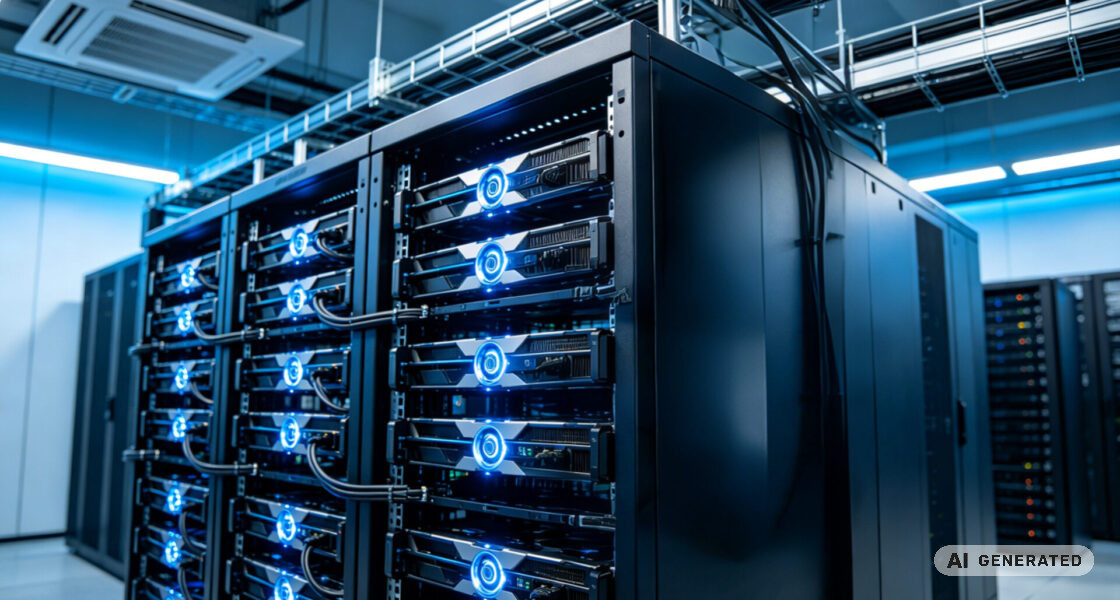
TPS Elektronik’s rack PDU power distribution service addresses these challenges through intelligent three-phase PDUs with per-outlet switching, real-time monitoring, and high-density outlet configurations designed specifically for AI GPU server cabinets.
2. Three-Phase Power Balancing: The Foundation of AI Rack Stability
Three-phase power distribution is the foundation of AI rack infrastructure. A 60A three-phase PDU at 208V delivers approximately 17.3kVA of capacity—sufficient to power multiple GPU servers while maintaining safe current levels on each phase.
However, simply having three-phase power is not enough. Phase balancing is equally critical. In a three-phase system, loads must be distributed evenly across L1, L2, and L3 phases to prevent:
- Neutral current overload—unbalanced loads cause excessive neutral current
- UPS capacity derating—phase imbalance reduces effective UPS capacity
- Transformer heating—unbalanced loads increase transformer losses
- Voltage asymmetry—uneven loading causes voltage variations across phases
- Premature equipment failure—voltage asymmetry stresses power supplies
For three-phase rack PDU applications in AI clusters, phase balancing requires careful planning at both the rack and cabinet level. Each GPU server should be connected to a specific phase to distribute the load evenly. This is particularly challenging in AI environments where:
- GPU servers have variable power draw—depending on workload intensity
- Racks are populated incrementally—phases must be balanced as servers are added
- Workloads are dynamic—power draw changes with training and inference tasks
TPS Elektronik’s rack PDU power distribution service includes phase balancing guidance during the design phase, with intelligent PDUs that provide real-time phase load visibility. For high-density rack power distribution applications, TPS works with customers to ensure that phase loads remain balanced as AI clusters scale.
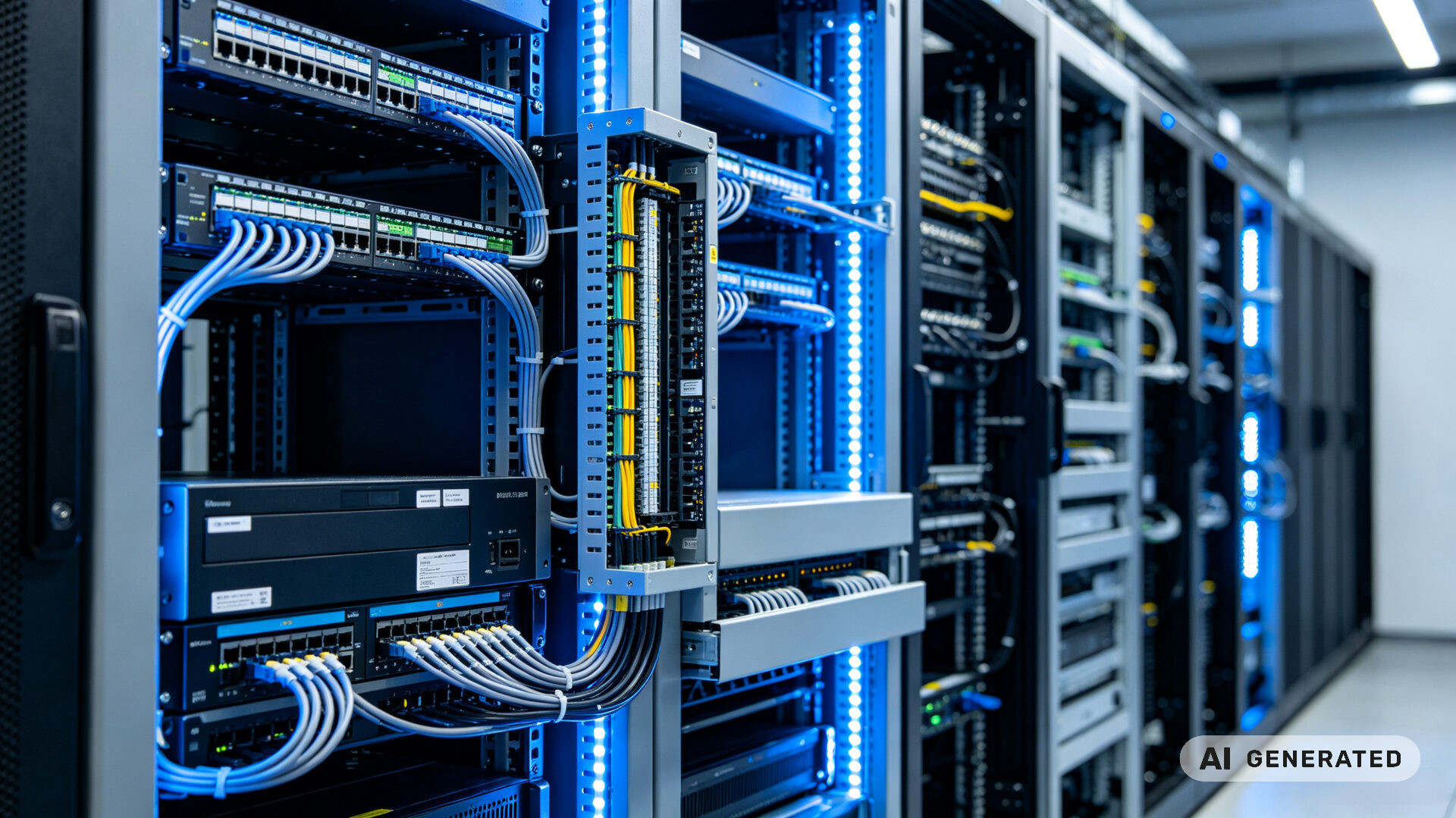
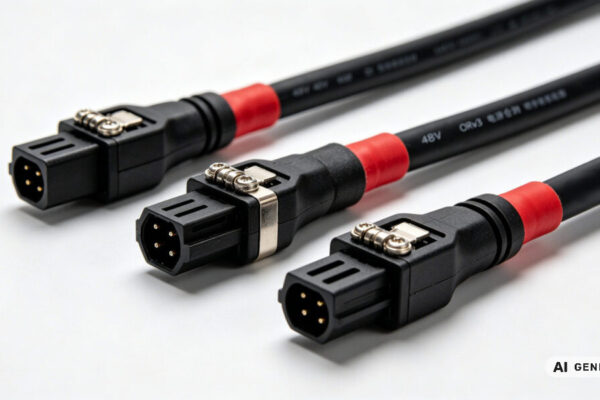
For hyperscale data center PDU applications, TPS also supports Open Rack V3 (ORv3) specifications, where the vertical ORv3 busbar distributes DC power from a power shelf to equipment through convenient blind-mate power connections.
3. Per-Outlet Remote Switching: Operational Control for GPU Clusters
In AI GPU clusters, the ability to remotely control power at the individual outlet level is not a convenience—it is an operational necessity. Per-outlet remote switching enables data center operators to:
- Power cycle hung GPU servers without dispatching personnel to the data center floor
- Isolate faulty equipment to prevent cascading failures
- Sequential power-on to manage inrush current and prevent circuit breaker trips
- Load shedding to prioritize critical workloads during power constraints
- Restrict unauthorized device connections for security and compliance
Switched PDUs provide remote control of each outlet, allowing operators to turn individual outlets off, on, or cycle power to the outlet and attached equipment remotely using a web browser. Advanced switched PDUs offer power sequencing delays to minimize inrush currents and prevent unauthorized device provisioning.
For switched PDU AI cluster applications, TPS’s rack PDU power distribution service includes:
- Per-outlet switching with individual outlet control (on, off, power cycle)
- Power sequencing to manage inrush currents during startup
- Group control to cycle power for multiple outlets simultaneously
- IP-based management for remote access from anywhere
For intelligent rack PDU data center applications, TPS supports both switched and metered-switched PDU configurations, with outlet-level control integrated into the broader data center management system.
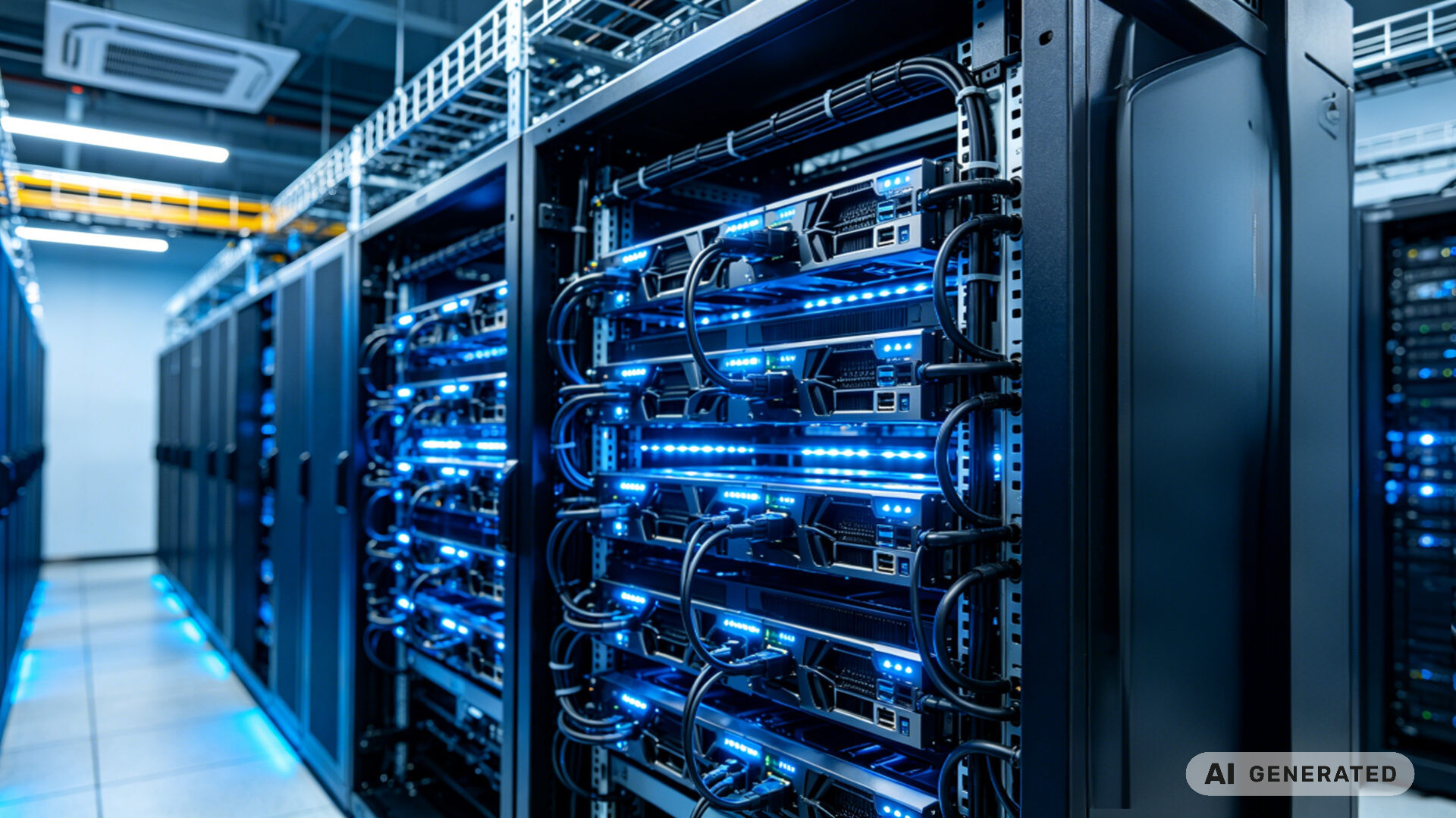
TPS Elektronik’s AI GPU server PDU solutions include switched PDUs with per-outlet remote switching, enabling AI cluster operators to manage GPU servers remotely and reduce mean time to recovery (MTTR).
4. Intelligent Power Monitoring: Real-Time Visibility and Capacity Planning
In high-density AI environments, power visibility is as important as power delivery. Intelligent rack PDU power distribution provides real-time monitoring at the outlet, branch circuit, and PDU level, enabling:
- Real-time power consumption visibility—per-outlet current, voltage, power factor, active power, and energy usage
- Capacity planning—tracking power consumption trends to identify when racks are approaching capacity
- Workload scheduling—optimizing job placement based on power availability
- Fault detection—identifying abnormal power consumption patterns
- Energy efficiency optimization—identifying underutilized or overprovisioned equipment
Intelligent PDUs with outlet-level power sensing provide highly accurate, outlet-level power measurements and control. This granularity is essential for AI clusters where:
- GPU power consumption varies—by 30-50% depending on workload
- Billing and chargeback—requires per-tenant or per-workload power measurement
- SLAs depend on power availability—real-time monitoring prevents outages
- Cooling is tied to IT power—power monitoring informs cooling system control
For real-time power monitoring PDU applications, TPS supports intelligent PDUs with web-based management interfaces, SNMP monitoring, and integration with DCIM (Data Center Infrastructure Management) systems.
TPS Elektronik’s server rack power balancing service includes intelligent PDU deployment with real-time monitoring, enabling data center operators to optimize power utilization and prevent overloading.
5. High-Density Outlet Configurations: C13, C19, and Hybrid Solutions
AI GPU servers typically require high-current power connections. Standard servers use C13 outlets (10A/250V), but high-power GPU servers often require C19 outlets (16A/250V) to accommodate their higher current draw. A typical AI rack may contain dozens of GPU servers, each requiring one or two power connections.
For C19 outlet rack PDU applications, the PDU must provide sufficient C19 outlets to support high-power GPU servers while maintaining adequate spacing and cable management. High-density outlet technologies address this challenge by:
- Hybrid C13/C19 outlets that accommodate both C14 and C20 power cables in a single flexible outlet
- High-density outlet spacing that maximizes outlet count in limited PDU space
- Locking outlets that prevent accidental disconnection in vibration-prone environments
- Color-coded outlets for phase identification and load balancing
For AI GPU server PDU applications, TPS works with customers to determine the optimal outlet configuration based on:
- Server power requirements—C13 for standard servers, C19 for high-power GPU servers
- Rack density—number of servers per rack determines outlet count needed
- Redundancy requirements—A/B power feeds require dual PDUs per rack
- Cable management—outlet spacing must accommodate cable routing
TPS Elektronik’s rack PDU power distribution service includes outlet configuration planning and PDU selection, ensuring that AI GPU server cabinets have the right outlet types and counts for current and future needs.
6. TPS Rack PDU Power Distribution Capabilities for AI Infrastructure
TPS Elektronik’s rack PDU power distribution service for high-density AI GPU server cabinets combines intelligent PDU selection, deployment, and integration with broader EMS capabilities.
Engineering and Design Support:
- Power requirement analysis for AI GPU server cabinets
- Three-phase load balancing and phase assignment planning
- PDU selection based on capacity, outlet type, and form factor
- Cable management and routing design
- Redundancy planning (A/B power feeds)
PDU Solutions:
- Three-phase PDUs—60A, 208V with IEC 60309 inputs
- Switched PDUs—per-outlet remote switching with IP-based management
- Metered PDUs—real-time power monitoring at outlet and PDU level
- High-density outlet configurations—C13, C19, and hybrid outlets
- Locking outlet options—prevent accidental disconnection
Integration and Deployment:
- PDU installation in 19-inch racks (0U, 1U, 2U form factors)
- Network configuration for IP-based management
- Integration with DCIM and monitoring systems
- Load testing and verification
- Documentation and as-built drawings
Ongoing Support:
- Remote power management and troubleshooting
- Capacity planning and phase balancing optimization
- Firmware updates and security patches
- Hardware support and replacement
TPS supports AI infrastructure deployments of any scale, from single-rack proof-of-concept to hyperscale AI clusters with hundreds of racks. TPS’s rack PDU power distribution service is integrated with broader mechatronics and EMS capabilities—including cabinet integration, cable assembly, and system assembly—reducing supply chain complexity for system integrators and procurement teams.