

For system integrators, panel builders, and engineering‑driven procurement teams. Which selecting a power supply is not only about wattage. It also involves thermal margins, EMC behavior, safety documentation. And whether the system passes acceptance testing without rework. In compact industrial systems—where every cubic centimeter of enclosure space is contested. The physical size of the power supply can become the single most limiting factor in the entire design.
The TPS high power density open frame power supply range addresses this challenge directly. By delivering high wattage in a PCB‑mount, open‑frame format, these units enable system designers to maximize functional electronics within a given enclosure volume. From the ultra‑compact 24 W TPS‑MPT24S‑5V to the powerful 225 W TPS‑GSH225S‑12V, the TPS portfolio provides a scalable solution for space‑constrained industrial power conversion.
What an open frame power supply is and why it saves space
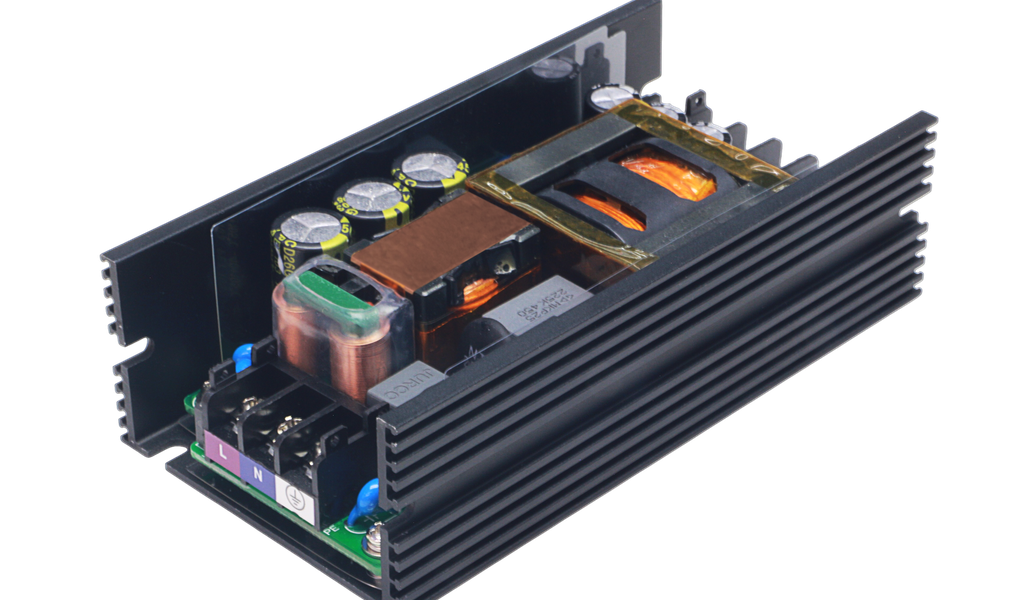
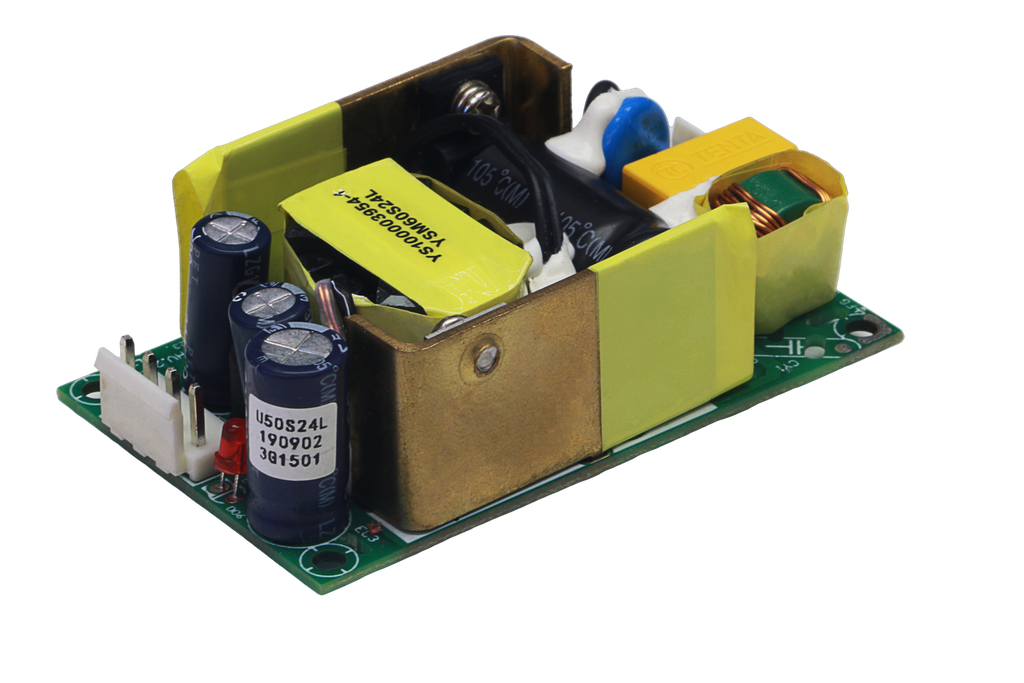
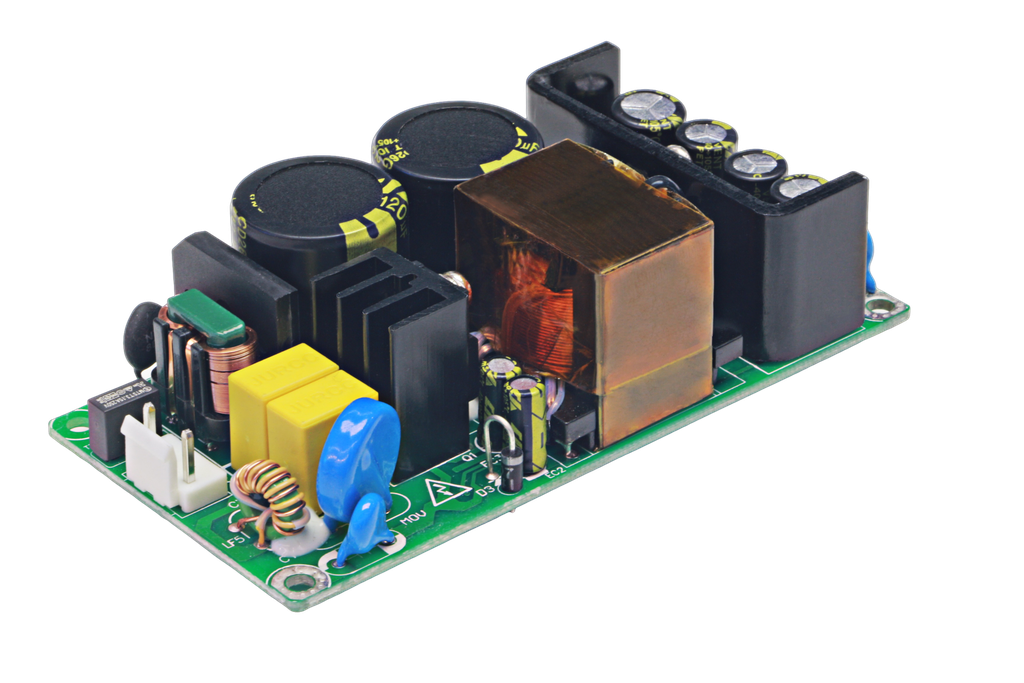
An open frame power supply consists of a populated printed circuit board with all power components—transformer, semiconductors, capacitors, and control circuitry. Which exposed and intended for integration into a larger system enclosure. Unlike a cased or DIN‑rail power supply, which carries its own protective housing. The open‑frame design relies on the end‑product’s enclosure to provide touch protection, environmental shielding, and defined airflow. This eliminates the volume, weight, and cost of a redundant outer case. Which enabling significantly higher power density within the host system.
In a typical industrial embedded controller, an open‑frame PSU can mounted directly onto the chassis or system PCB, using the available enclosure volume with minimal wasted space. This is particularly valuable in applications such as compact machine vision cameras, IoT gateways, and small‑form‑factor automation controllers. Where space is at an absolute premium. The TPS open‑frame portfolio, available on the open frame and enclosed power supply category page. Which is specifically engineered for this integration model.
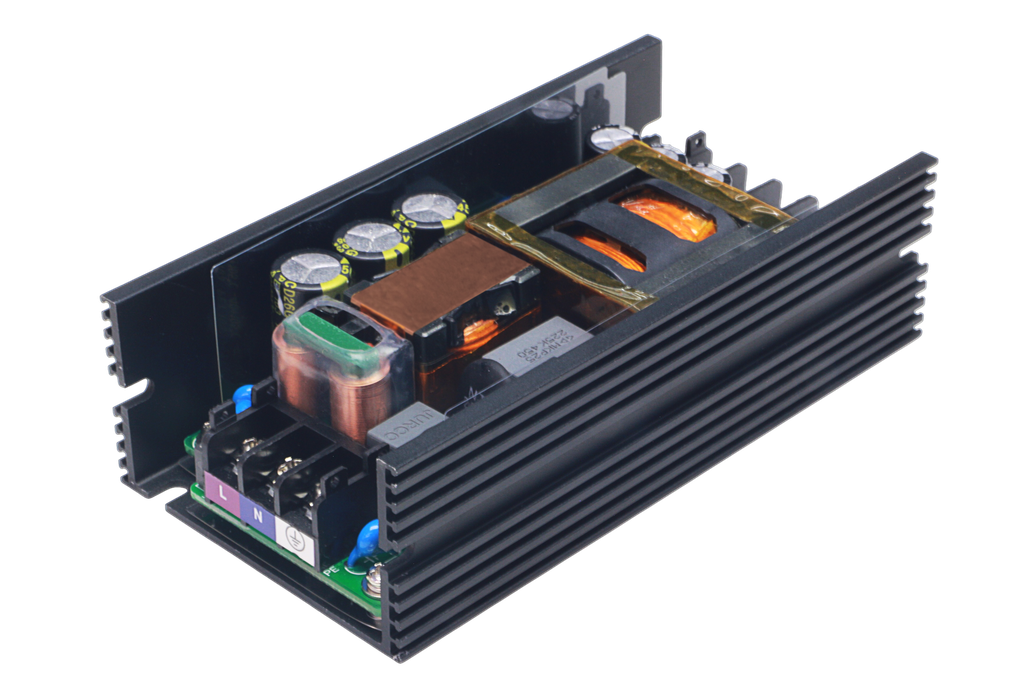
TPS high power density open frame range overview
The TPS open frame power supply family spans a wide power range. Which offering a solution for almost any compact industrial system. Key models include:
- TPS‑MPT24S‑5V: A 24 W unit delivering 5 V at 4.8 A, with a universal AC input and high efficiency in a compact PCB format.
- TPS‑YSU50SL‑5V: A 50 W power supply offering a regulated 5 V output, which suitable for logic and sensor supplies in tight spaces.
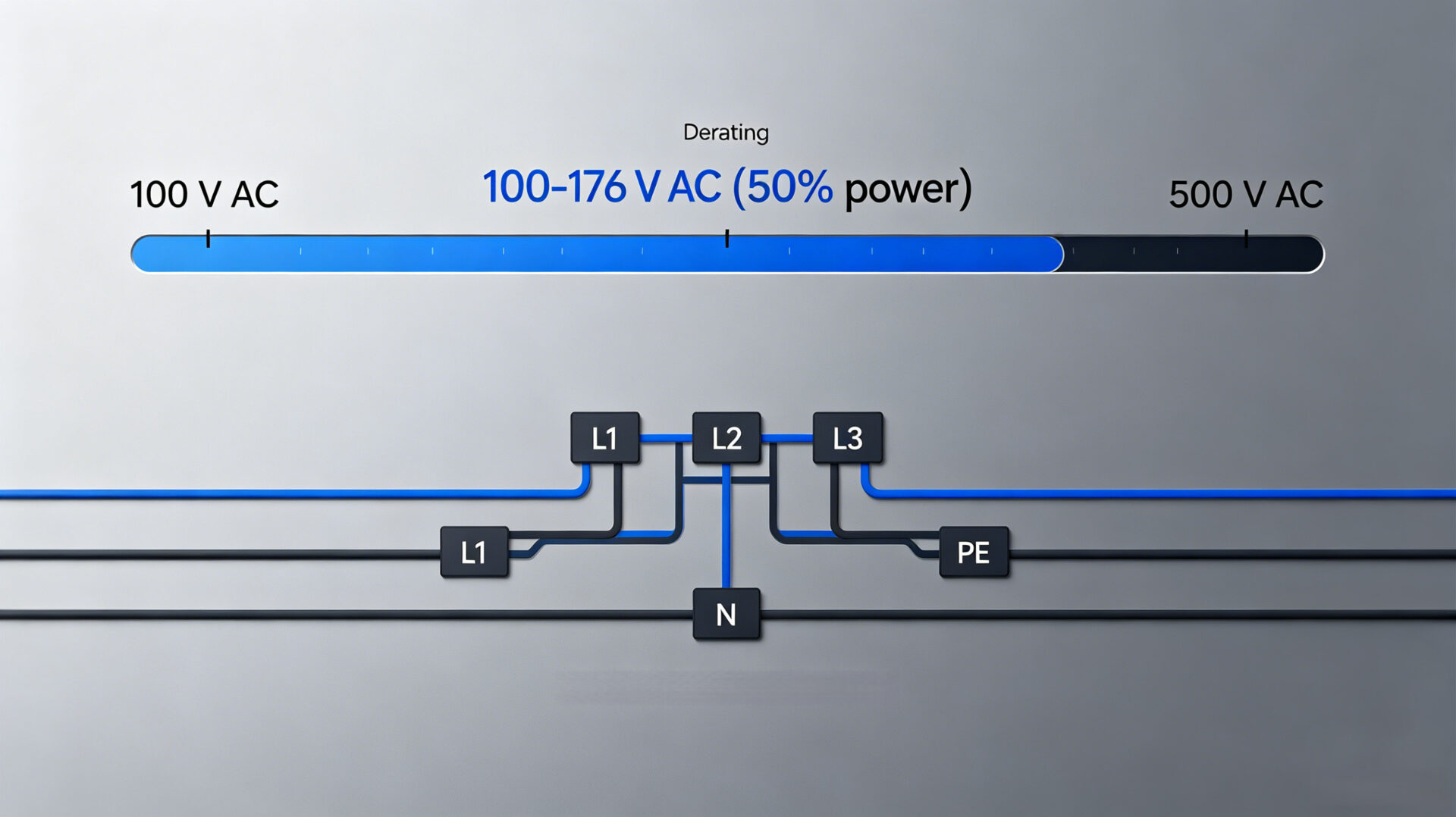
- TPS‑MPT72S‑12V: A 72 W unit with an exceptionally wide input range of 176–500 V AC (derated from 100 V AC), 12 V output at 6 A. And a compact footprint of just 101.6 × 50.8 × 30 mm. This model features a three‑phase four‑wire input, 4000 VAC isolation, and comprehensive protection functions.
- TPS‑GSH225S‑12V: A 225 W high‑power‑density model with active PFC, which delivering 12 V at 18.75 A. Suitable for demanding embedded computing and motor control applications.
All models share the open‑frame design philosophy: they supplied as a bare PCB with mounting holes. Which ready for direct integration. This approach eliminates the need for additional enclosures and maximizes power per unit volume.
Electrical performance: wide input, high efficiency, and low ripple
Industrial environments present unpredictable AC mains conditions. The TPS‑MPT72S‑12V, for example, accepts an input voltage from 176 V AC to 500 V AC at full rated power, and operates with 50 % derating down to 100 V AC. This ultra‑wide range allows the same power supply to deployed across global single‑phase and three‑phase installations. Which reducing the number of parts that OEMs must qualify and stock. The three‑phase four‑wire input design provides additional flexibility for connections between a live and neutral or between two live conductors.
Efficiency is a critical parameter for high‑power‑density designs because every watt of loss generates heat that must be dissipated within the host enclosure. TPS open‑frame supplies achieve typical efficiencies of ≥86 %, with higher‑power models reaching even higher values. The output ripple maintained below 150 mV peak‑to‑peak. Which ensuring clean power for sensitive analog and digital circuits. The output voltage is factory‑set and tightly regulated, with a load regulation typically within ±1 %.
Thermal design and power density
Achieving high power density in a small form factor requires careful thermal management. The TPS‑MPT72S measures just 101.6 × 50.8 × 30 mm and weighs only 158 g, yet delivers 72 W of regulated power. This power density—approximately 470 W per liter. Which made possible by efficient switching topologies, low‑loss semiconductor devices, and a PCB layout optimized for heat spreading. The open‑frame construction itself contributes to thermal performance by allowing direct airflow over components when the host enclosure ventilated.
The operating ambient temperature range is −30 °C to +60 °C, with derating at the upper end of the range. The unit designed for natural convection cooling. Which eliminating the need for a fan and its associated reliability risks. For system integrators, this means the power supply can placed in locations where forced air is unavailable or undesirable. Each unit undergoes a 100 % full‑load burn‑in test before shipment. Which verifying thermal stability and long‑term reliability.
Protection functions: overload, short circuit, and surge
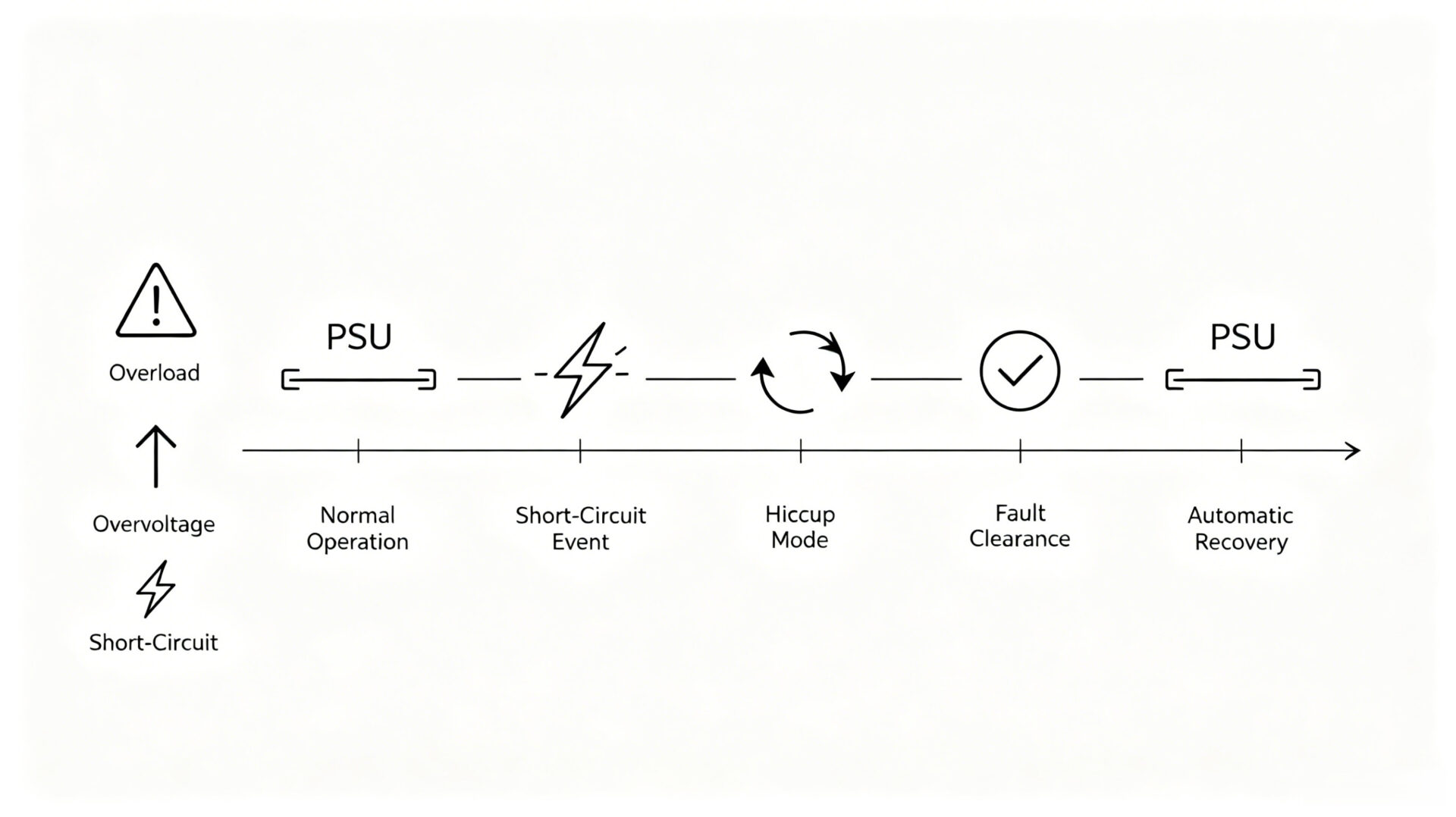
The TPS open‑frame series incorporates a full suite of protection functions that safeguard both the power supply and the connected load. Overload protection limits the output current when the load exceeds the rated value. Which operating between 115 % and 180 % of rated power. Short‑circuit protection employs a hiccup mode: in the event of a short, the output shuts down and the unit periodically attempts to restart. Once the fault cleared, normal operation resumes automatically—no manual intervention or power cycling required.
Overvoltage protection shuts down the output if the internal regulation loop fails. Which preventing a catastrophic overvoltage event from reaching the load. The TPS‑MPT72S also includes input surge protection, guarding against voltage spikes that can occur on industrial power lines. Collectively, these protection mechanisms reduce field failures and simplify system‑level safety design.
Mechanical integration: mounting, cooling, and wiring
The open‑frame form factor designed for direct integration into the host system. TPS power supplies include multiple mounting holes for secure attachment to a chassis or bulkhead. The input and output connectors are typically screw‑terminal blocks or solder pins. Which providing reliable electrical connections that withstand vibration and thermal cycling. The compact dimensions—exemplified by the TPS‑MPT72S at 101.6 × 50.8 × 30 mm—allow the PSU to placed adjacent to the load, minimizing voltage drops and cable clutter.
When integrating an open‑frame PSU, the system designer must provide adequate clearance for airflow and ensure that the enclosure meets touch‑safety requirements. The TPS‑MPT72S features 4000 VAC input‑to‑output isolation. Which supports compliance with reinforced insulation requirements defined in IEC 62368‑1. This high isolation voltage provides an extra margin of safety for equipment operating in harsh electrical environments. The power supply also compliant with GB 4943.1‑2011 and meets EN 55032 Class A EMC requirements, simplifying the host system’s path to regulatory approval.
Compliance and safety: isolation, EMC, and standards
Any power supply integrated into equipment destined for the European market must support compliance with the Low Voltage Directive (2014/35/EU) and the EMC Directive (2014/30/EU). TPS open‑frame power supplies designed and tested to meet IEC 62368‑1, the hazard‑based safety standard for AV, ICT, and industrial equipment. The 4000 VAC isolation provides galvanic separation between the primary and secondary circuits. Which supporting SELV output classification and operator safety.
EMC compliance demonstrated against EN 55032 Class A (CISPR 32) for conducted and radiated emissions. The power supply is a component in the overall EMC path. Final system‑level compliance depends on the enclosure design, cable routing, and grounding strategy. TPS provides a Declaration of Conformity and supporting test documentation with each shipment, which assisting the system integrator in compiling the necessary technical file for CE marking.
Application scenarios: embedded systems, gateways, and industrial controls
The TPS high power density open frame power supply serves a wide range of compact industrial applications:
- Embedded controllers and edge gateways: Powering ARM‑based or x86 embedded computers that require a compact, efficient 12 V or 5 V supply.
- Machine vision and sensor systems: Providing clean, regulated power to high‑resolution cameras and laser sensors where space is limited.
- Industrial IoT and communication modules: Supplying power to routers, protocol converters, and wireless access points in compact DIN‑rail or wall‑mount enclosures.
- Motor drives and robotics: Delivering isolated, high‑wattage DC power for servo drives and robotic controllers in constrained mechanical packages.
RFQ checklist for open frame power supplies
- Output voltage and current: Required DC output (e.g., 5 V, 12 V, 24 V, 48 V) and load current.
- Input voltage range: Nominal AC mains voltage, and whether a wide or three‑phase input is needed.
- Power rating: Total required wattage, including any short‑term peak demands.
- Isolation requirements: Basic or reinforced insulation, minimum withstand voltage.
- Mechanical constraints: Maximum allowable dimensions and mounting hole pattern.
- Cooling strategy: Natural convection or forced air, and available airflow in the host enclosure.
- Certifications: IEC 62368‑1, GB 4943.1, EN 55032 Class A/B, or customer‑specific.
- Quantities and schedule: Prototype, pilot, and series production volumes.
Frequently Asked Questions
What is the difference between an open‑frame and an enclosed power supply?
An open‑frame power supply is a bare PCB assembly intended for integration into a larger system enclosure that provides touch protection. An enclosed power supply has its own protective metal or plastic housing and can be used as a standalone unit.
Can the TPS‑MPT72S be used with a single‑phase supply?
Yes. The TPS‑MPT72S supports single‑phase operation across a wide input range of 176–500 V AC (full power) and 100–176 V AC (50 % derated).
How is the open‑frame power supply cooled?
The TPS open‑frame series is designed for natural convection cooling. Adequate clearance for airflow must be provided in the host enclosure.
Does the TPS‑MPT72S provide overvoltage protection?
Yes. Overvoltage protection shuts down the output if the internal regulation fails, preventing damage to the load.
Where can I find detailed technical specifications?
Datasheets and compliance certificates are available on the TPS open frame power supply category page.