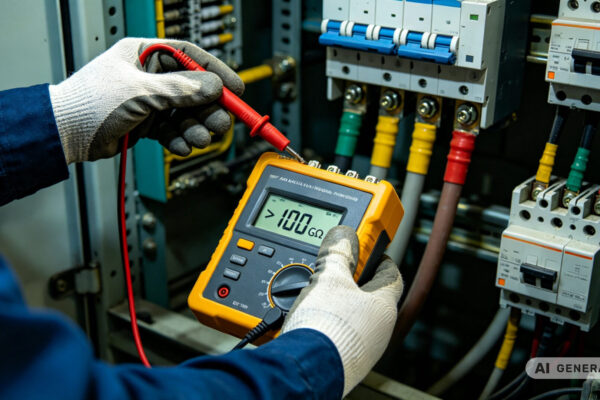



System integrators, plant engineers, and procurement teams rarely fail because they lack a transformer. They lose time—and budget. When a critical high‑voltage transformer fails unexpectedly during peak production, causing weeks of unplanned downtime while a replacement is sourced and installed. The direct costs are enormous, but the hidden costs of lost output and contractual penalties are often even greater.
TPS Elektronik’s transformer insulation resistance test service, delivered through its accredited EMC and electrical safety laboratory. Which is designed to mitigate this risk. By applying precision diagnostic testing—including Dielectric Absorption Ratio (DAR) and Polarization Index (PI) evaluation. TPS provides condition assessment data that enables maintenance teams to make informed decisions about repair, replacement, or continued operation of critical power assets.
1. Why insulation resistance testing is essential for transformer reliability
A power transformer is a long‑term investment, often expected to operate reliably for 30 years or more. Over its lifetime, the insulation system—comprising cellulose paper, pressboard, and mineral oil. Which is subjected to thermal, electrical, and mechanical stresses. Moisture ingress, contamination, and normal aging gradually reduce the dielectric strength of the insulation. When the insulation resistance falls below a critical threshold, the risk of a catastrophic inter‑turn or phase‑to‑ground fault increases dramatically.
Transformer insulation resistance measurement is one of the most effective non‑destructive tests available for assessing the condition of transformer insulation. It provides a quantitative measure of the integrity of the insulation system and can detect problems such as moisture absorption, surface contamination. And insulation degradation long before a failure occurs. When performed regularly and the results trended over time, insulation resistance testing becomes the foundation of a predictive maintenance program that can extend transformer life and prevent unplanned outages.
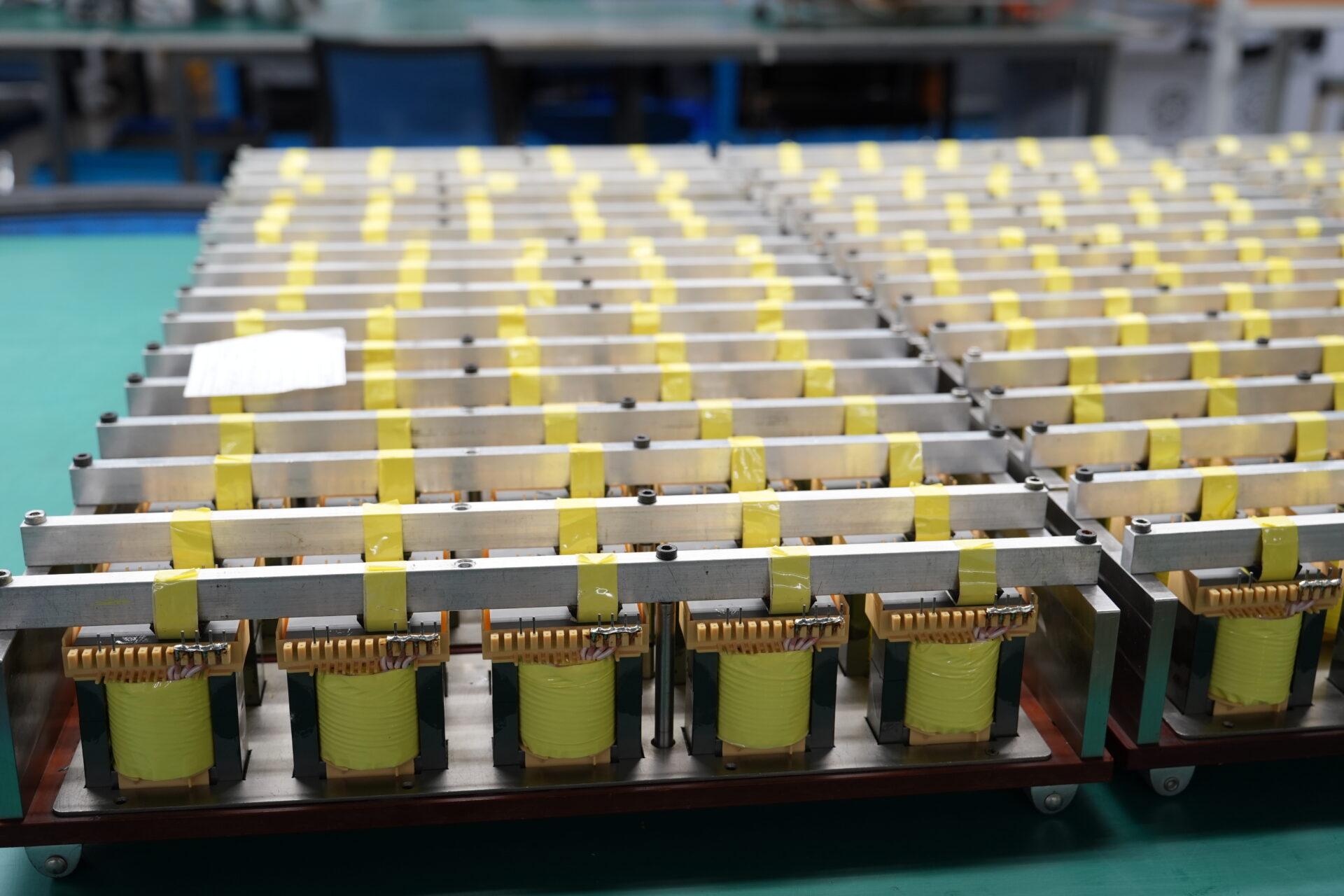
For facilities that rely on continuous power—such as data centers, manufacturing plants, and hospitals. The cost of a transformer failure far exceeds the cost of periodic diagnostic testing. The IEEE standard for insulation resistance testing recommends that baseline measurements be taken at installation and repeated at regular intervals throughout the transformer’s service life. TPS’s laboratory is equipped to perform these measurements under controlled conditions, ensuring repeatability and accurate trending.
2. Insulation resistance measurement methods: spot test, DAR, and polarization index
Insulation resistance testing is not a single measurement. Depending on the transformer type, voltage class, and the information required, different test methods are applied. The three primary methods are the spot reading test, the Dielectric Absorption Ratio (DAR) test, and the Polarization Index (PI) test. Each provides a different view of insulation condition.
2.1 Spot reading test
The spot reading test is the simplest form of insulation resistance measurement. A DC test voltage—typically 500 V, 1000 V, 2500 V, or 5000 V, depending on the transformer’s rated voltage. Which applied for a short duration (usually 60 seconds), and the resistance recorded. The resulting value is compared against the minimum acceptable value recommended by IEEE 43 or the transformer manufacturer. While quick and useful for a pass/fail assessment, the spot test provides limited insight into the condition of the insulation. Because it does not capture the time‑dependent behavior of the insulation material.
2.2 Dielectric Absorption Ratio (DAR)
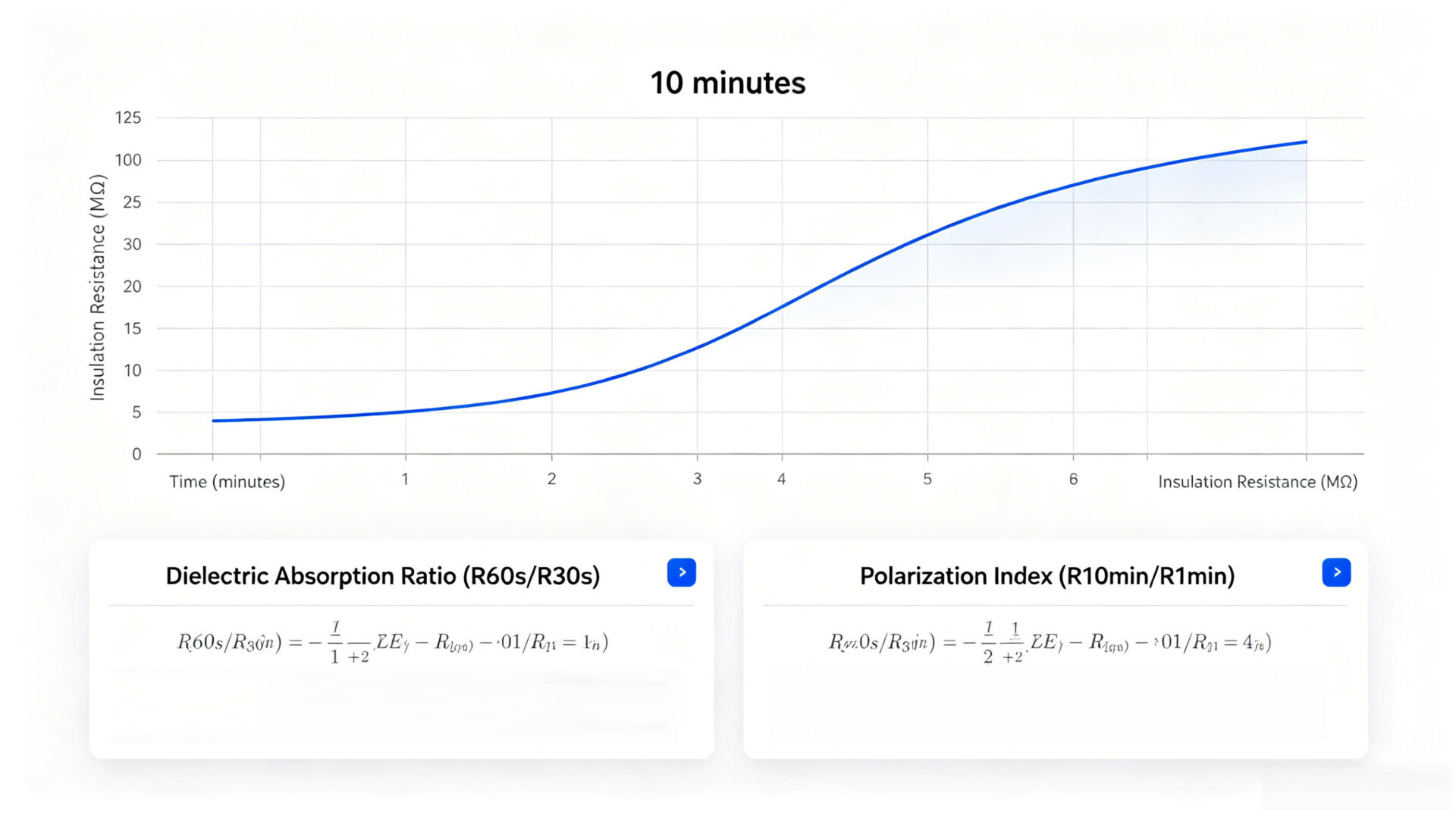
The DAR test improves on the spot test by measuring the insulation resistance at two points in time: 30 seconds and 60 seconds after the test voltage is applied. The ratio of these two readings (R60s / R30s) is the Dielectric Absorption Ratio. In a healthy, dry insulation system, the resistance increases over time as the dielectric absorption current decays. Which producing a ratio greater than approximately 1.25. A DAR value below 1.0 typically indicates moisture or contamination in the insulation. The DAR test is particularly useful for smaller transformers and is a quick indicator of insulation health.
2.3 Polarization Index (PI)
The Polarization Index test is the most comprehensive of the three methods. The test voltage applied for 10 minutes, and the insulation resistance is recorded at 1 minute and 10 minutes. The ratio (R10min / R1min) is the Polarization Index. For large, high‑voltage transformers, the PI value is a reliable indicator of insulation dryness and overall condition. A PI value above 2.0 generally considered good. The value between 1.5 and 2.0 suggests marginal insulation. And a value below 1.0 indicates dangerously degraded insulation that requires immediate attention. TPS performs PI testing in accordance with IEEE 43 guidelines. Which using calibrated megohmmeters and controlled test conditions to ensure accurate, repeatable results.
For further technical resources on related testing methodologies, see our comprehensive guide on electromagnetic compatibility testing compliance and the how to test electromagnetic compatibility guide.
3. Relevant standards: IEEE 43 and IEC 60076
Insulation resistance testing governed by two primary international standards. IEEE 43‑2013, the “IEEE Recommended Practice for Testing Insulation Resistance of Electric Machinery,” provides detailed procedures for measuring the insulation resistance of windings, including transformers. It defines minimum acceptable insulation resistance values based on the rated voltage and temperature of the machine. And it specifies the test voltages to used for different equipment classes.
The IEC 60076 series, specifically IEC 60076‑3 (Insulation levels, dielectric tests, and external clearances in air), governs the insulation requirements for power transformers. While IEC 60076‑3 primarily addresses dielectric type tests, insulation resistance measurement recognized as a key diagnostic test in IEC 60076‑1 (General) and frequently referenced in maintenance guidelines. TPS conducts all transformer insulation resistance tests in accordance with these standards, and test reports include a statement of compliance. The environmental conditions at the time of testing, and the temperature‑corrected resistance values where applicable.
4. TPS approach: integrating IR testing with EMC and safety evaluation
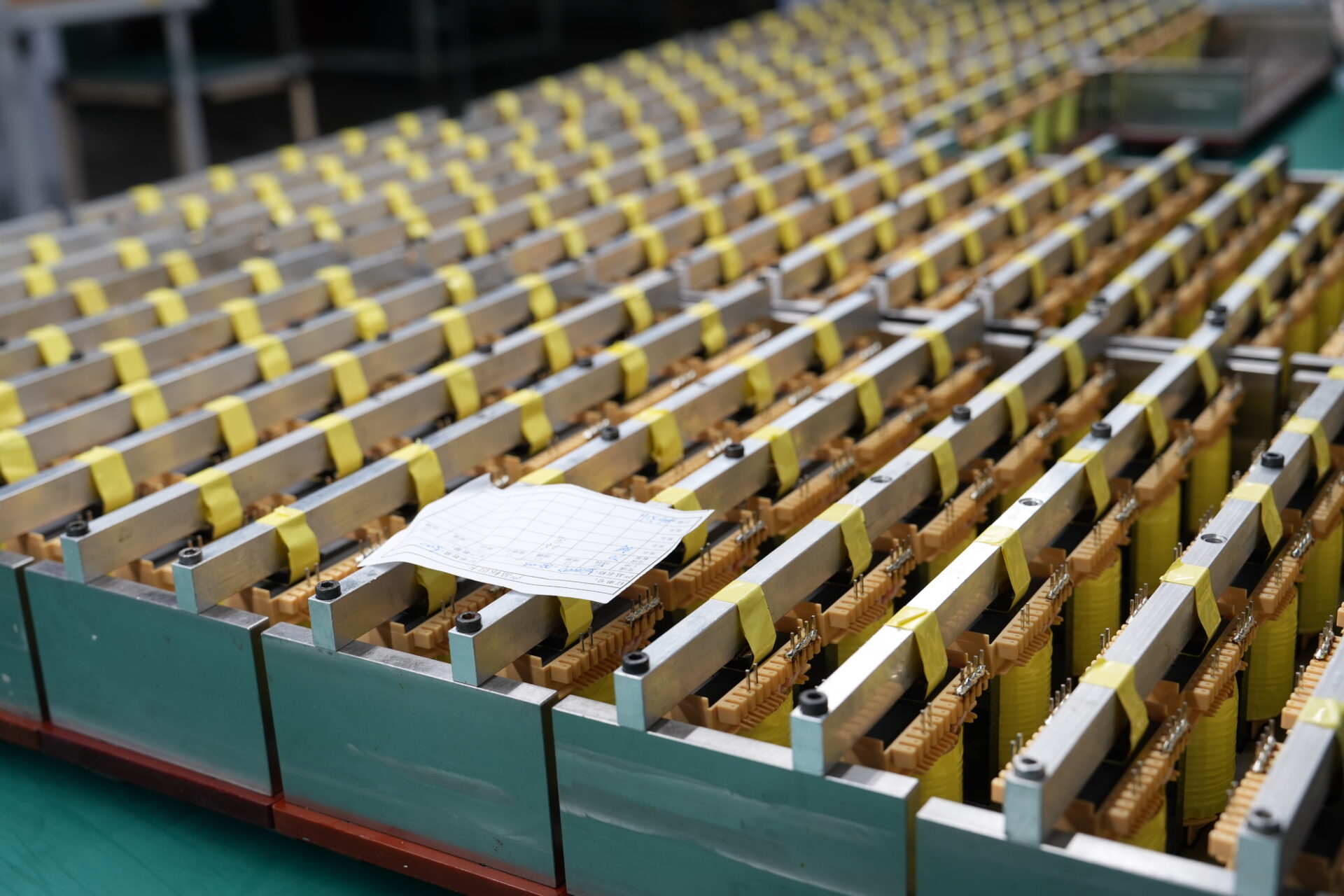
TPS Elektronik’s transformer diagnostic test service offered through its accredited EMC and electrical safety laboratory. This integration provides a significant advantage: a single partner can evaluate both the insulation condition of the transformer and its electromagnetic compatibility and safety compliance. For system integrators and panel builders, this reduces the number of test providers and streamlines documentation.
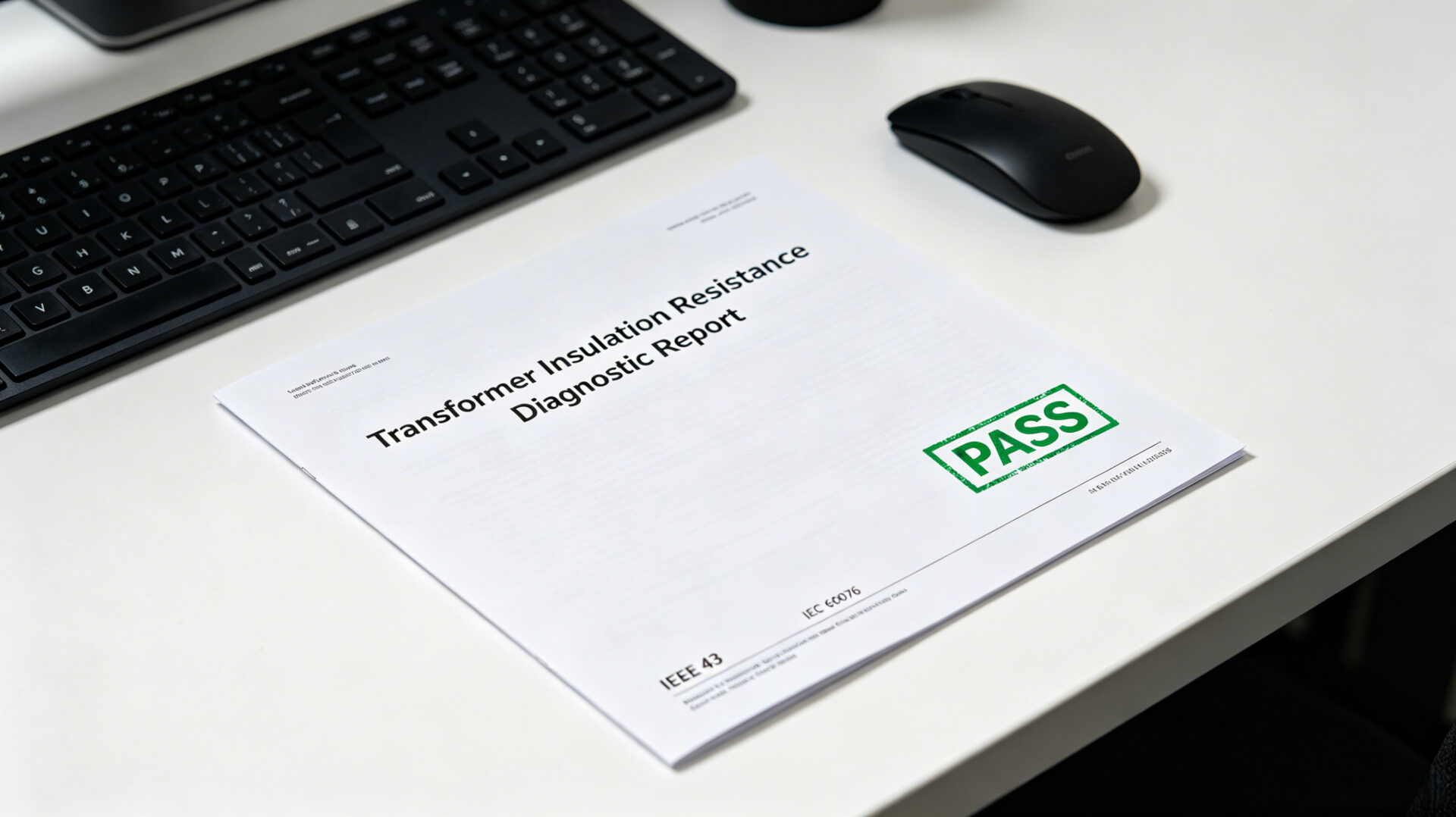
The TPS laboratory is equipped with calibrated megohmmeters capable of delivering test voltages up to 5 kV, as well as environmental chambers for temperature‑controlled testing. Every test report includes the raw measurement data, calculated DAR and PI values, a comparison to the relevant standard’s acceptance criteria, and a clear diagnostic recommendation. This documentation supports the customer’s internal maintenance planning and can be used as evidence for insurance underwriting or regulatory compliance. For more information on how TPS integrates electrical safety and EMC testing, explore our detailed guide on EMC and electrical safety testing for compliance and reliability and our case study on combined EMC and safety testing.
Discuss your transformer diagnostic testing needs with TPS →
5. RFQ checklist for transformer diagnostic testing
- Transformer nameplate data: Rated power, voltage ratio, impedance, year of manufacture, and insulation class.
- Test voltage required: Typically 500 V, 1000 V, 2500 V, or 5000 V DC, based on winding rated voltage.
- Test methods: Spot test, DAR, PI, or a combination; specify which windings to test.
- Temperature correction: Provide winding temperature or allow TPS to measure it for correction to a reference temperature.
- Previous test data: If available, supply historical IR test results for trending analysis.
- Applicable standards: IEEE 43, IEC 60076, or customer‑specific requirements.
- Documentation: Required report format, certificate of calibration, and compliance statement.
6. FAQ
What is the recommended test voltage for transformer insulation resistance testing?
IEEE 43 recommends a test voltage of approximately 1.5 times the rated line‑to‑line voltage, typically 500 V, 1000 V, 2500 V, or 5000 V DC. The exact voltage depends on the transformer’s voltage class and insulation rating.
How often should transformer insulation resistance be tested?
Baseline testing at installation, followed by periodic testing at intervals of 1 to 3 years, depending on the criticality of the transformer and the operating environment. TPS can help establish a testing schedule based on your specific equipment and risk profile.
What is a good Polarization Index value?
A PI value above 2.0 generally indicates good insulation condition. Values between 1.5 and 2.0 suggest marginal insulation, and values below 1.0 indicate seriously degraded insulation that requires immediate investigation.
Can TPS perform on‑site testing, or must the transformer be brought to the laboratory?
TPS primarily performs testing in its laboratory environment, which ensures controlled temperature and humidity for the most accurate results. On‑site testing can be arranged for large transformers that cannot be transported; contact TPS to discuss feasibility.
Where can I learn more about TPS’s broader testing capabilities?
Visit the TPS EMC laboratory service page, or read our resources on EMC testing news and EMC testing case studies.