

For system integrators, panel builders, and engineering-driven procurement teams, selecting a power supply is not only about wattage.
It also involves thermal margins, EMC behavior, safety documentation, and whether the system passes acceptance testing without rework.
The TPS-GSH180S Series is a compact, single-output open-frame AC/DC switch-mode power supply designed for industrial integration. It supports 85–264Vac or 120–370Vdc input, includes active power factor correction (PFC), and provides reinforced isolation up to 4000Vac.
Typical applications include industrial control systems, automation equipment, and communication devices where space, efficiency, and compliance requirements must be considered.
What TPS-GSH180S Is (and What “Open Frame” Means)
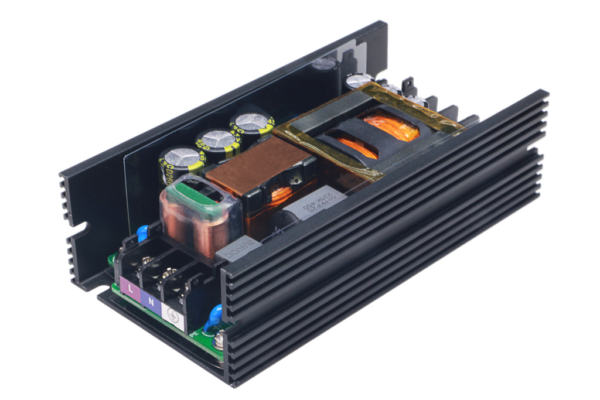
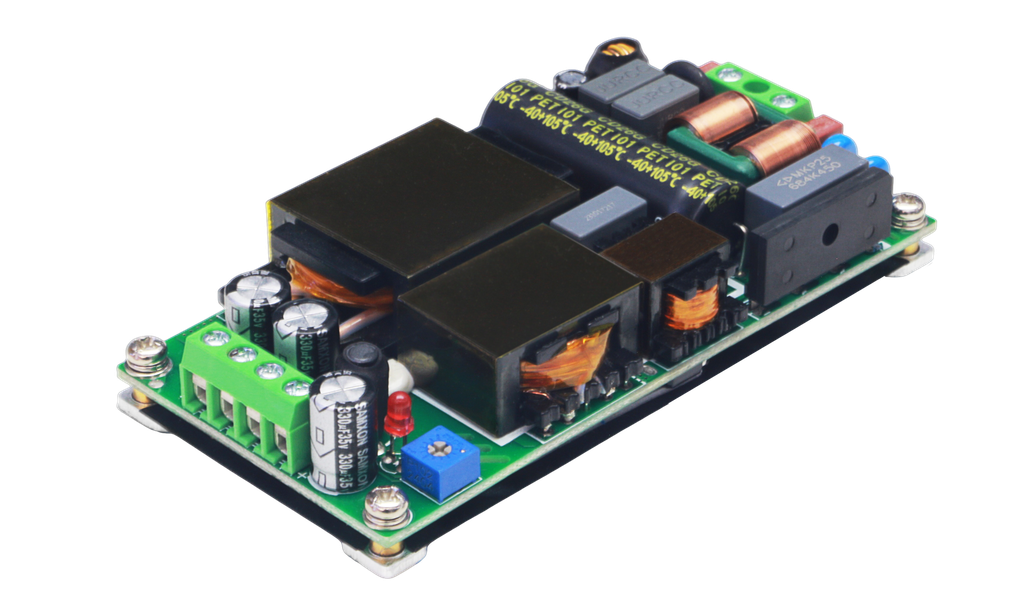
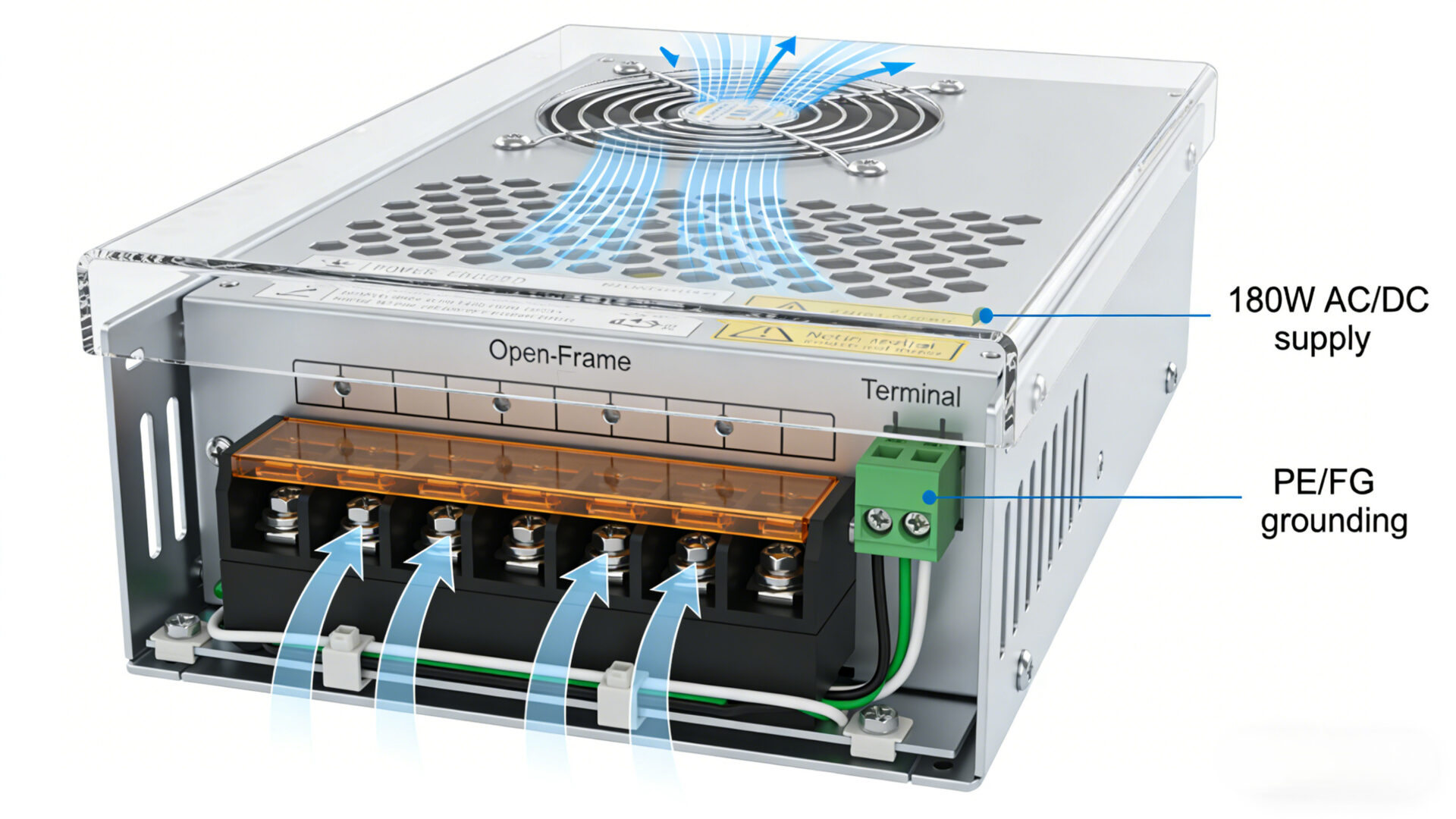
The TPS-GSH180S Series is an open-frame AC/DC power supply, meaning the PCB and components are exposed and intended for integration into a larger system.
In practical applications, an enclosure or protective cover is typically added to:
Provide touch protection
Support controlled airflow
Establish a defined EMC and grounding environment
Open-frame designs are commonly used in:
Machine controllers
Industrial HMIs
Communication gateways
They offer:
Compact dimensions
Flexible mounting options
Efficient thermal coupling
However, system-level design (airflow, mounting, grounding) determines whether operation remains within safe limits—especially when approaching higher power levels.
SKU Selection: Matching Voltage to Application
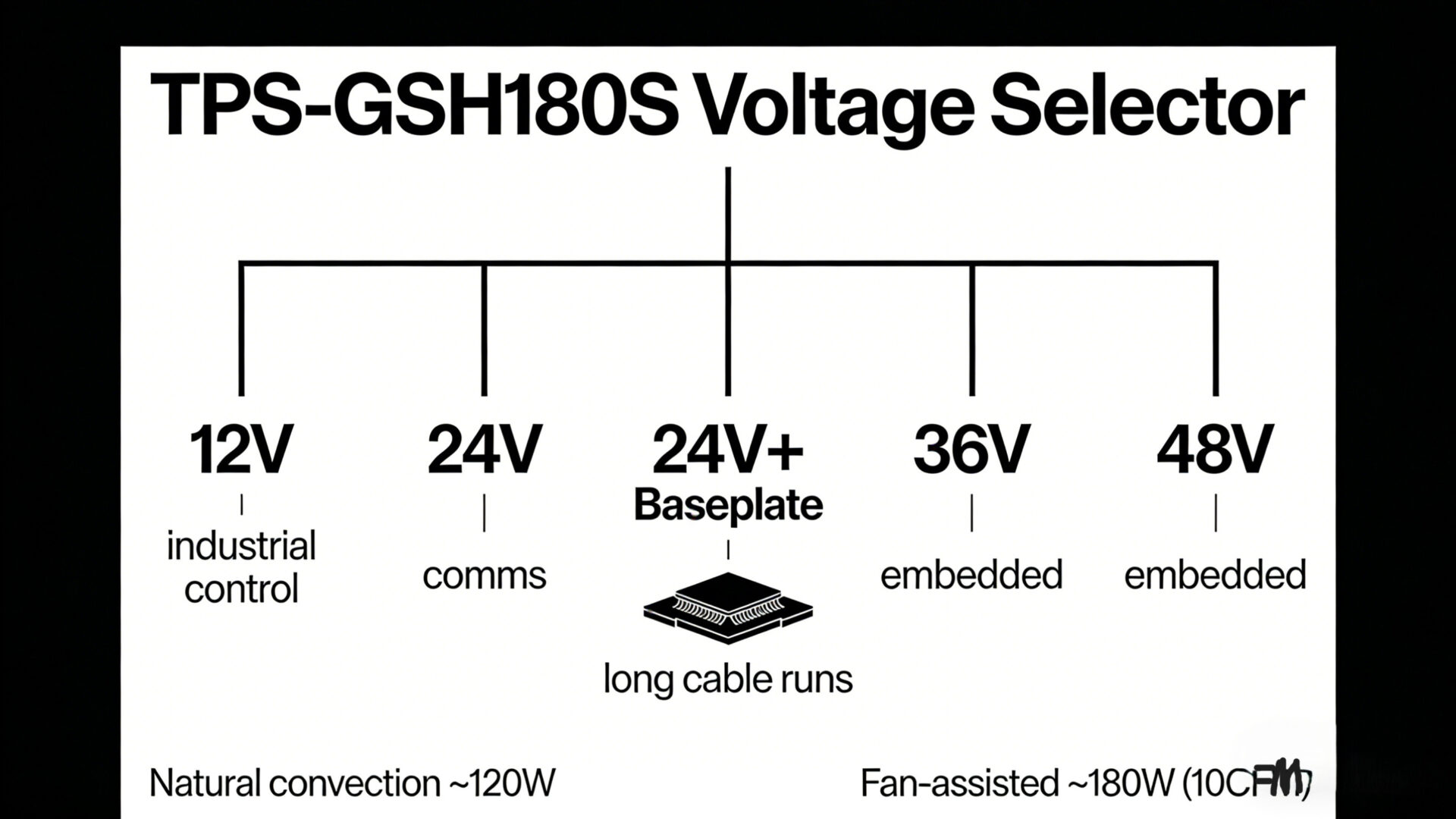
The TPS-GSH180S series covers common industrial DC voltage rails:
12V – Embedded systems, sensors, legacy rails
24V – Standard industrial control systems (PLC, I/O, relays)
24V + Baseplate – Improved thermal spreading and mechanical stability
36V – Specialized industrial or communication loads
48V – Telecom-related systems, long cable runs, motor drivers
Selection should consider:
Load requirements
Cable losses
System architecture (point-of-load vs. centralized supply)
Electrical Performance Considerations
Wide AC/DC input, PFC, inrush and low-line derating
Wide Input Range and PFC
The unit supports 85–264Vac and 120–370Vdc input, enabling use across different global supply conditions.
Active PFC is included, with typical performance indicating high power factor at nominal load.
System-level note:
Inrush current is specified as a cold-start peak. In multi-PSU systems, sequencing or inrush limiting (e.g., NTC or active solutions) may be required.
Low-Line Derating
At lower input voltages, available output power is reduced.
This means:
Operation at low-line conditions requires derating
Power supply selection should consider worst-case input scenarios
Output Regulation, Ripple, and Adjustment
The series provides a regulated single output with adjustable voltage to compensate for:
Cable voltage drops
System tolerances
Typical adjustment ranges include:
12V model: approx. 11.4–12.8V
24V model: approx. 22.8–27V
36V model: approx. 33–39V
48V model: approx. 45.6–54V
Ripple specifications are defined using a standard measurement setup (20 MHz bandwidth with parallel capacitors).
Using different measurement conditions may lead to higher observed ripple values.
Protection Functions
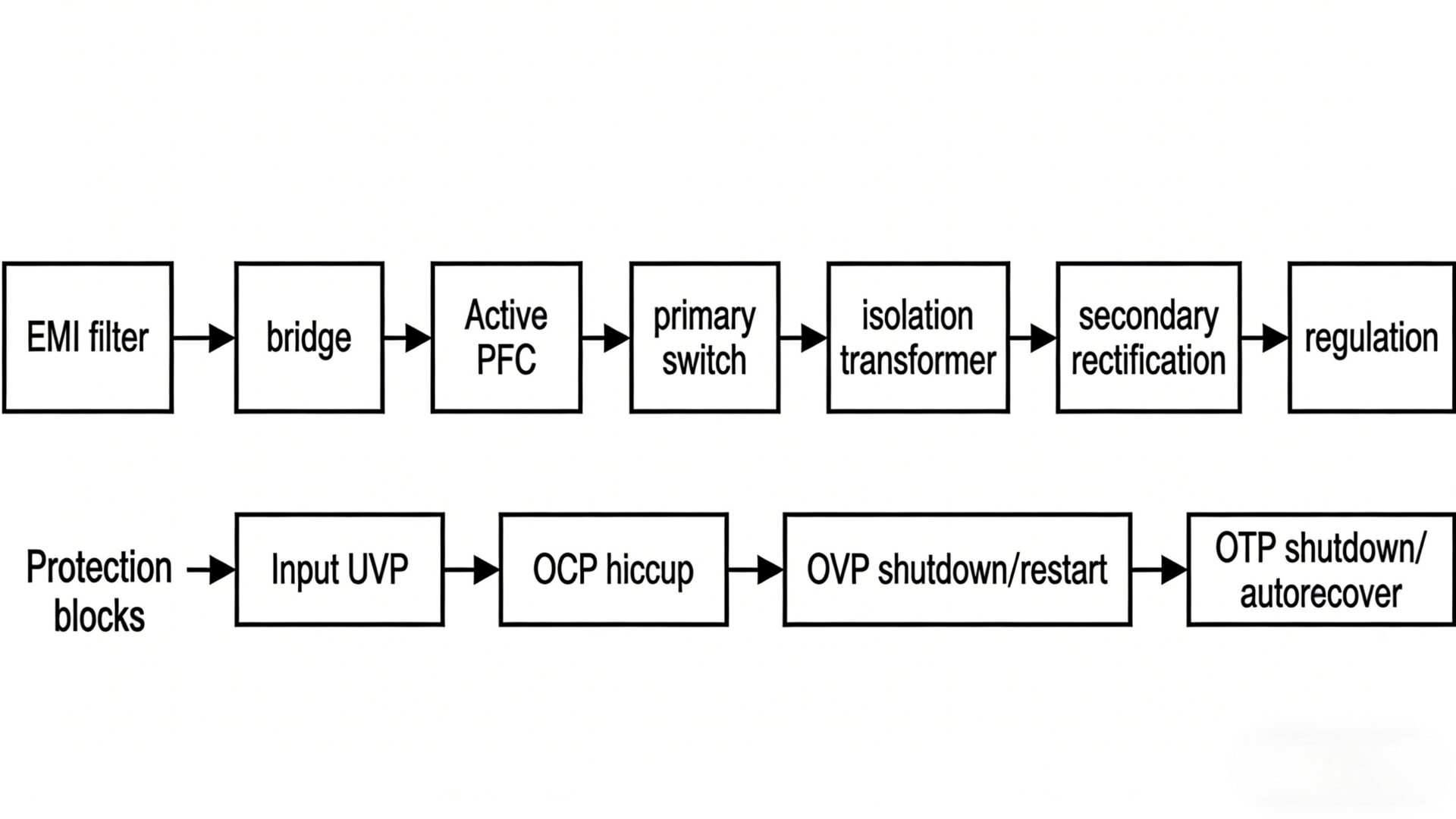
The TPS-GSH180S includes standard protection mechanisms for industrial applications:
Undervoltage protection (UVP)
Overcurrent protection (OCP, typically hiccup mode)
Overvoltage protection (OVP)
Overtemperature protection (OTP)
Short-circuit protection
These functions are designed to support predictable fault behavior and automatic recovery under defined conditions.
Thermal Strategy and Derating
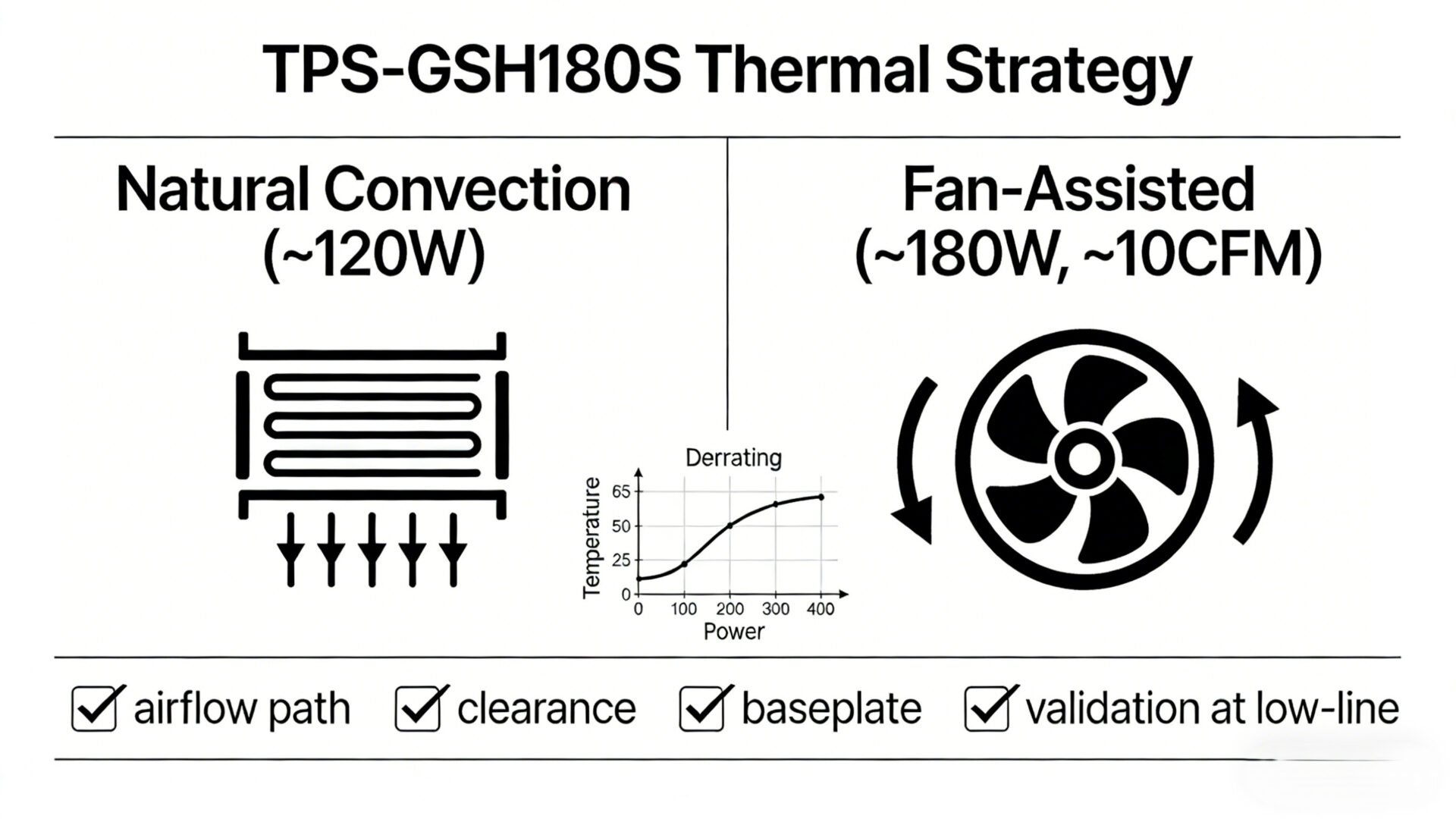
Two operating conditions are typically considered:
Natural convection (approx. 120W class)
Fan-assisted cooling (~10 CFM) (up to 180W)
Important integration considerations:
Internal enclosure temperature may exceed ambient
Hotspots can form near switching components
Airflow must be defined—not assumed
Practical design recommendations:
Define airflow paths (intake and exhaust)
Avoid obstructing airflow with cables
Consider baseplate versions for improved heat spreading
Validate performance under low-line conditions
Mechanical Integration
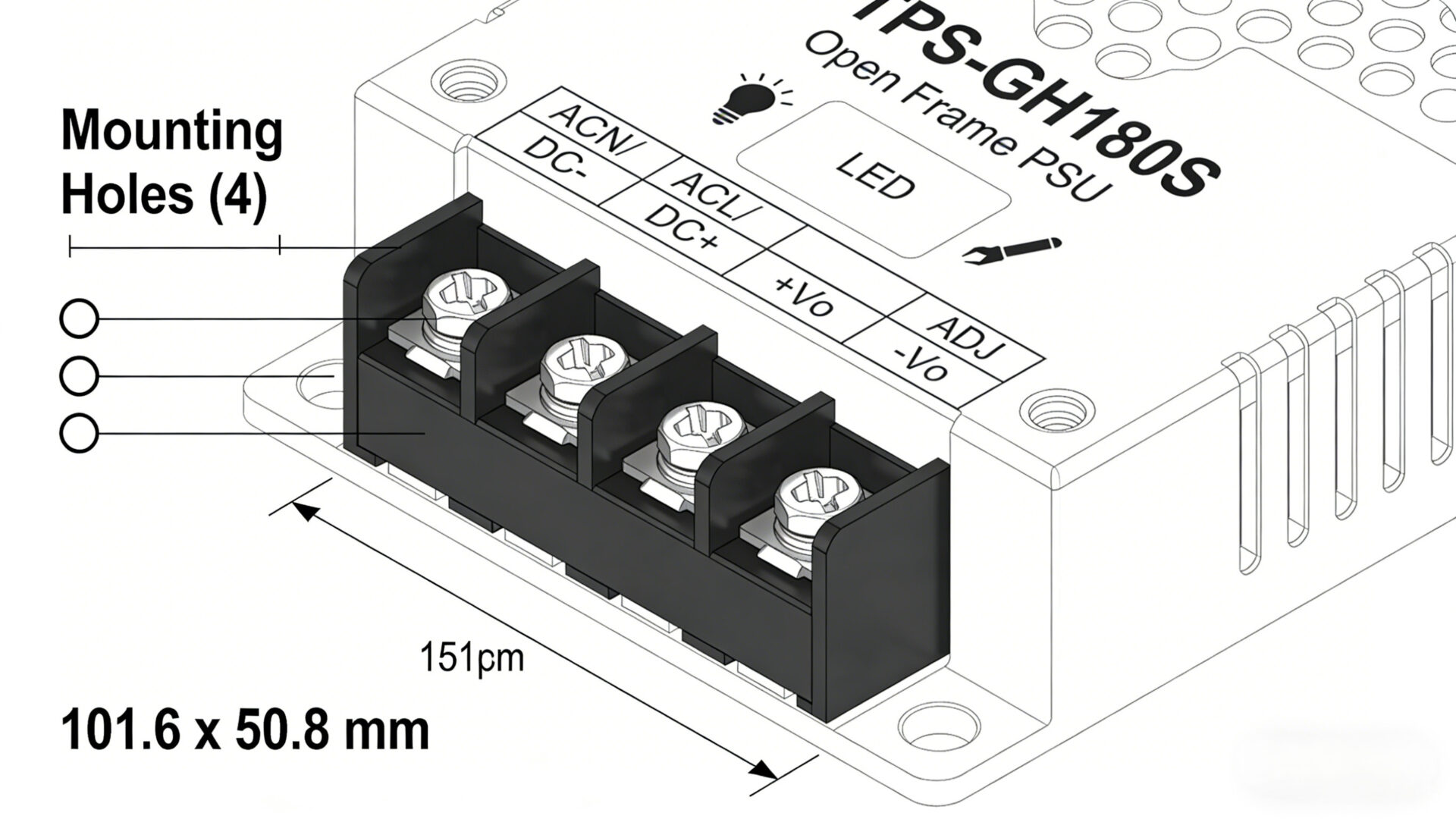
The unit is compact (approx. 101.6 × 50.8 × 17.8 mm), with a slightly increased height when using the baseplate variant.
Key integration features:
LED indicator for status visibility
Adjustable output (ADJ point)
Defined mounting and connector layout
For production:
Use standardized harnessing to reduce assembly errors
Define output voltage adjustment procedures
Consider thermal interface materials if mounting surfaces are uneven
Compliance and EMC Considerations
The datasheet references alignment with:
IEC 62368-1 (safety standard)
CISPR 32 / EN 55032 Class B (emissions)
IEC/EN 61000-4 series (immunity tests)
Important:
System-level compliance depends on:
Enclosure design
Cable routing
Grounding strategy
The PSU should be considered a contributing component rather than a standalone compliance solution.
Application Guidance by Voltage
12V – Suitable for embedded systems and legacy loads
24V – Common choice for industrial control systems
24V + Baseplate – Improved robustness in thermally demanding environments
36V / 48V – Useful for reducing current in higher-power or long-distance applications
RFQ Checklist
To streamline quotation and evaluation:
Required SKU and quantity (prototype → series)
Minimum input voltage conditions
Cooling strategy (natural vs. forced)
Mechanical constraints and mounting
EMC environment and cabling
Documentation requirements
Providing these details can help reduce clarification cycles during evaluation.
When to Consider Alternative PSU Types
Depending on your application, other form factors may be more suitable:
DIN-rail PSUs – For standardized cabinet installations
ATX / IPC PSUs – For PC-based or industrial computing systems
1U rack PSUs – For rack-mounted equipment
FAQ
Is TPS-GSH180S enclosed?
No, it is an open-frame design. In most applications, it is installed within a system enclosure.
Can it operate at 180W continuously?
This typically requires fan-assisted cooling and appropriate thermal design.
Is output voltage adjustable?
Yes, within defined ranges depending on the model.
Does it ensure EMC compliance?
It supports compliance, but final system performance depends on integration.
Which variant is commonly used?
24V is widely used in industrial control applications.