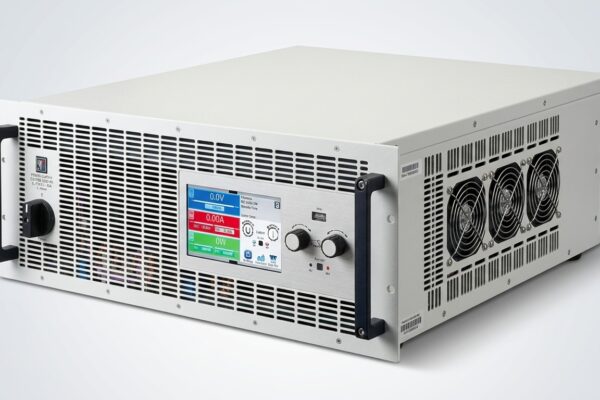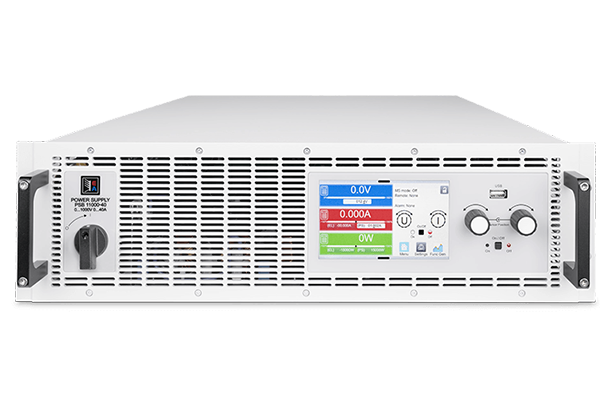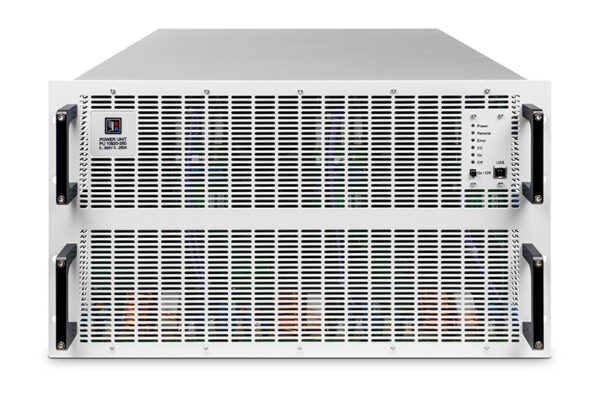


For system integrators, panel builders, and electrical engineers, the reliability of Automated Test Equipment (ATE) hinges on one critical component: the power source. A slight fluctuation in voltage or a delayed transient response can invalidate hours of testing, leading to false failures or, worse, passing defective products. Navigating the market to find the right programmable power supply for sale requires more than just looking at top-line wattage; it demands a deep understanding of integration, control interfaces, and load behavior.
As a leading global sales partner for electronics, TPS Elektronik helps procurement teams and engineers cut through the noise. This guide breaks down how to match output power, voltage ranges, and form factors to your exact ATE requirements, ensuring you make the right investment.
Consult our experts for programmable DC power supply selection →
1. The Critical Role of Automated Test Equipment Power
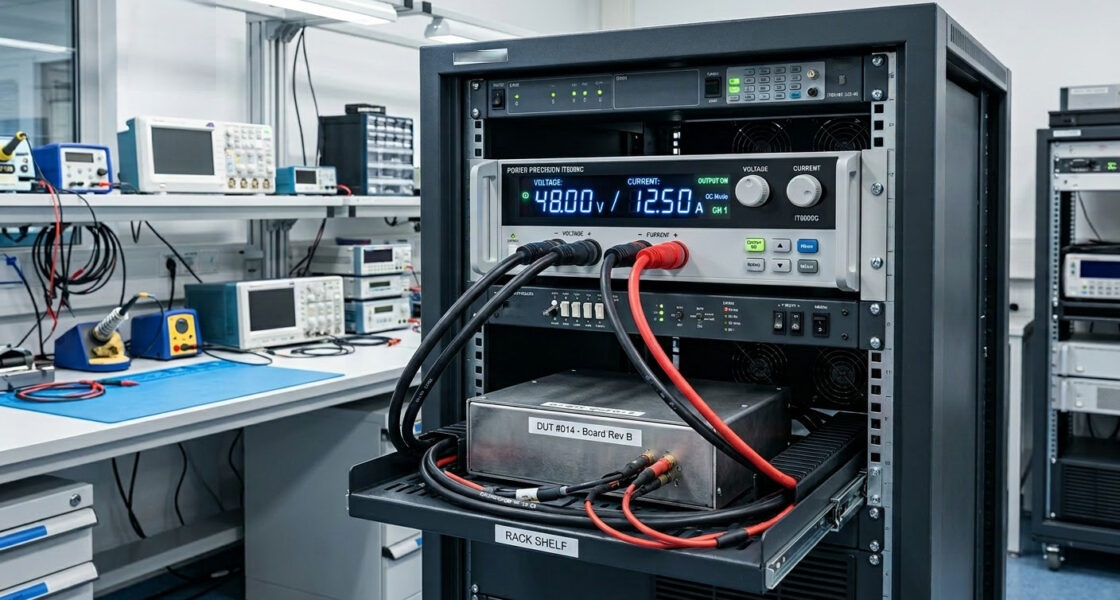
In modern manufacturing, ATE systems are tasked with validating complex PCBs, automotive components, and aerospace modules. The automated test equipment power source must simulate real-world conditions, including battery voltage drops, power surges, and noisy electrical environments. This makes selecting power supply for ATE a foundational engineering decision.
A standard bench power supply is insufficient for these tasks. Engineers require a unit that can be controlled programmatically via SCPI commands over LAN, USB, or GPIB interfaces. Understanding your specific programmable DC power supply application—whether it is semiconductor burn-in testing or automotive ECU validation—dictates the required precision and communication protocols. Proper selection directly impacts your quality assurance outcomes and overall production yield.
2. Decoding Programmable DC Power Supply Specifications
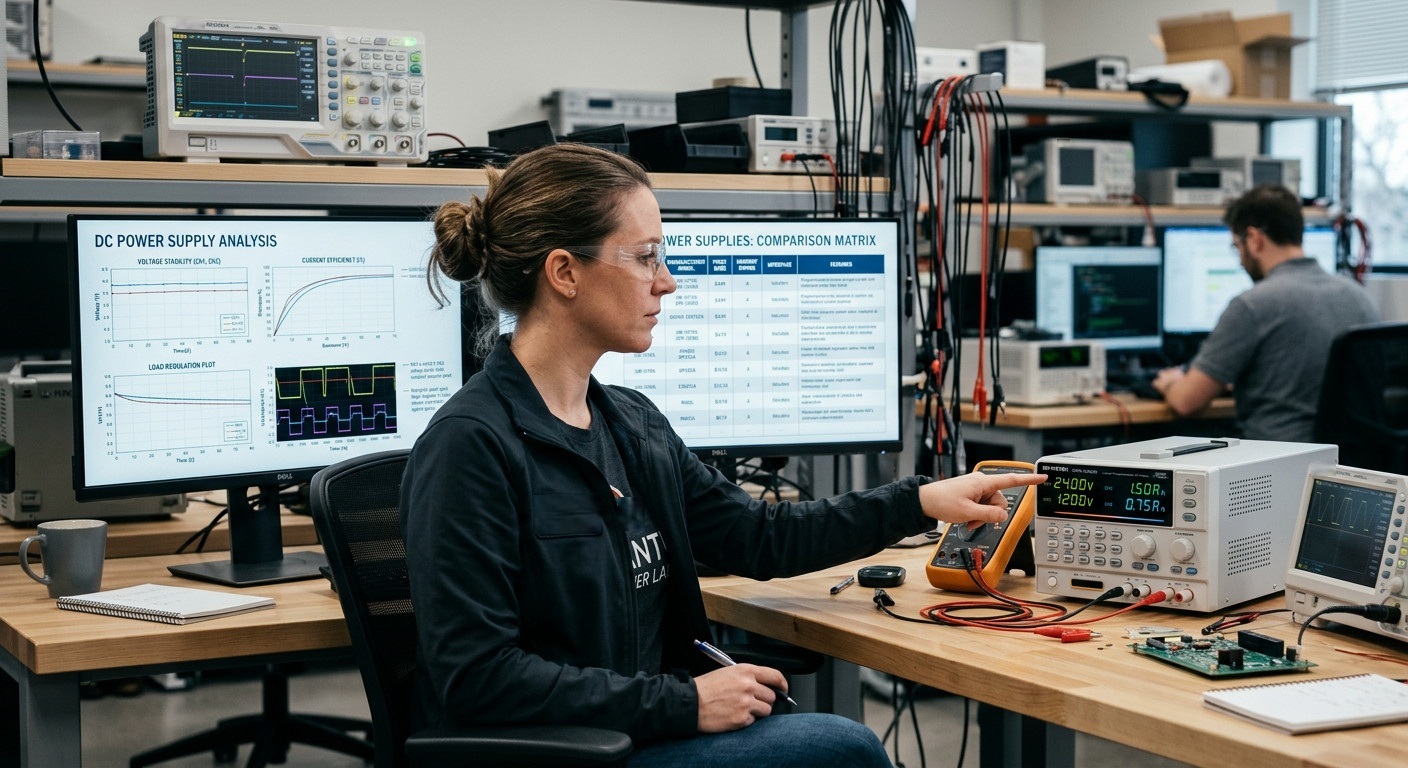
When evaluating a programmable DC power supply for sale, the datasheet can be overwhelming. To ensure seamless ATE integration, focus on these core programmable DC power supply specifications.
2.1 Programmable Power Supply Output Voltage and Current
The most fundamental parameters are the programmable power supply output voltage and the programmable power supply current output. However, modern ATE systems often benefit from “autoranging” or “wide-range” power supplies. Unlike traditional rectangular output supplies that offer maximum power only at maximum voltage and current, autoranging supplies provide full power output across a wider variety of voltage and current combinations. This flexibility is crucial for ATE DC power supply selection, as it allows a single unit to test a diverse range of devices under test (DUTs), reducing the total number of power supplies needed in the rack.
2.2 Transient Response and Slew Rate
When a DUT suddenly draws a massive amount of current (a load step), the power supply’s voltage will momentarily drop. Transient response is the time it takes for the voltage to recover to its programmed value. For testing sensitive electronics, a fast transient response (typically under 1 millisecond) is non-negotiable. Similarly, the slew rate determines how fast the supply can change its output voltage. High slew rates are essential for simulating automotive cranking profiles or aerospace power interruptions. These are critical programmable DC power supply requirements that separate basic units from high-performance ATE equipment.
3. Lab Grade vs. Industrial Programmable DC Power Supply
A common dilemma in programmable DC power guide literature is choosing between lab and industrial grades. A lab grade programmable power supply prioritizes ultra-low ripple and noise, high-resolution readbacks, and precise linear regulation. These are ideal for R&D environments and sensitive RF component testing.
Conversely, an industrial programmable DC power supply is built for the production floor. These units utilize high-efficiency switching topologies, offering high power density (more kilowatts per rack unit) and robust protection mechanisms (OVP, OCP, OTP). For panel builders and system integrators constructing end-of-line ATE racks, industrial-grade units offer the best balance of power, durability, and footprint. Ensuring these units meet international standards, such as those outlined by the International Electrotechnical Commission (IEC), is vital for global deployment.
4. Programmable Power Supply Price Comparison & Selection
Conducting a programmable power supply price comparison based solely on the sticker price is a mistake. Procurement teams must evaluate the Total Cost of Ownership (TCO). A cheaper unit might lack built-in arbitrary waveform generation, forcing you to buy an external function generator. It might also have a larger physical footprint, consuming valuable rack space.
When performing a programmable DC power supply comparison, factor in:
- Integration Costs: Does it come with standard IVI drivers and LabVIEW compatibility?
- Scalability: Can units be easily paralleled for higher current output in the future?
- Reliability: What is the MTBF (Mean Time Between Failures)? Downtime on an ATE line costs far more than the power supply itself.
Understanding how to choose programmable power means aligning the feature set with your specific testing bottlenecks. Our supply chain optimization services can help you navigate these cost-benefit analyses.
5. Where to Buy Programmable Power Supply for ATE
Knowing where to buy programmable power supply units that meet stringent industrial standards is a challenge for procurement. You need more than a distributor; you need a technical partner. If you are looking for a programmable power supply for sale, TPS Elektronik offers unparalleled expertise.
As your global sales partner for electronics, we don’t just process orders. We analyze your ATE architecture, recommend the exact programmable DC power supply selection, and ensure global compliance for your systems. Whether you are expanding in the EU, US, or Asia, our 2026 global sales partner network ensures you get the right equipment, on time, and fully supported.
6. FAQ
What is the difference between a linear and a switching programmable DC power supply?
Linear power supplies offer extremely low noise and fast transient response but are heavy, large, and inefficient. Switching power supplies are highly efficient, compact, and offer high power density, making them the preferred choice for most industrial ATE applications despite slightly higher high-frequency noise.
How important is autoranging in ATE DC power supply selection?
Autoranging is highly valuable. It allows the power supply to deliver full power across a wider range of voltage and current combinations. This means one autoranging supply can often replace multiple traditional rectangular-output supplies, saving rack space and budget.
What communication interfaces are standard for automated test equipment power?
Modern programmable power supplies typically feature LAN (LXI compliant), USB, and RS-232/RS-485. GPIB (IEEE-488) is also common in legacy ATE systems. EtherCAT and EtherNet/IP are becoming popular in high-speed industrial automation environments.
Can TPS Elektronik help with programmable DC power supply requirements for custom ATE racks?
Yes. As a global sales partner, we assist system integrators in defining specifications, performing a programmable DC power supply comparison, and sourcing the exact units needed for your custom ATE builds, ensuring full compliance and integration.